Remembering George Verwer (1938-2023)

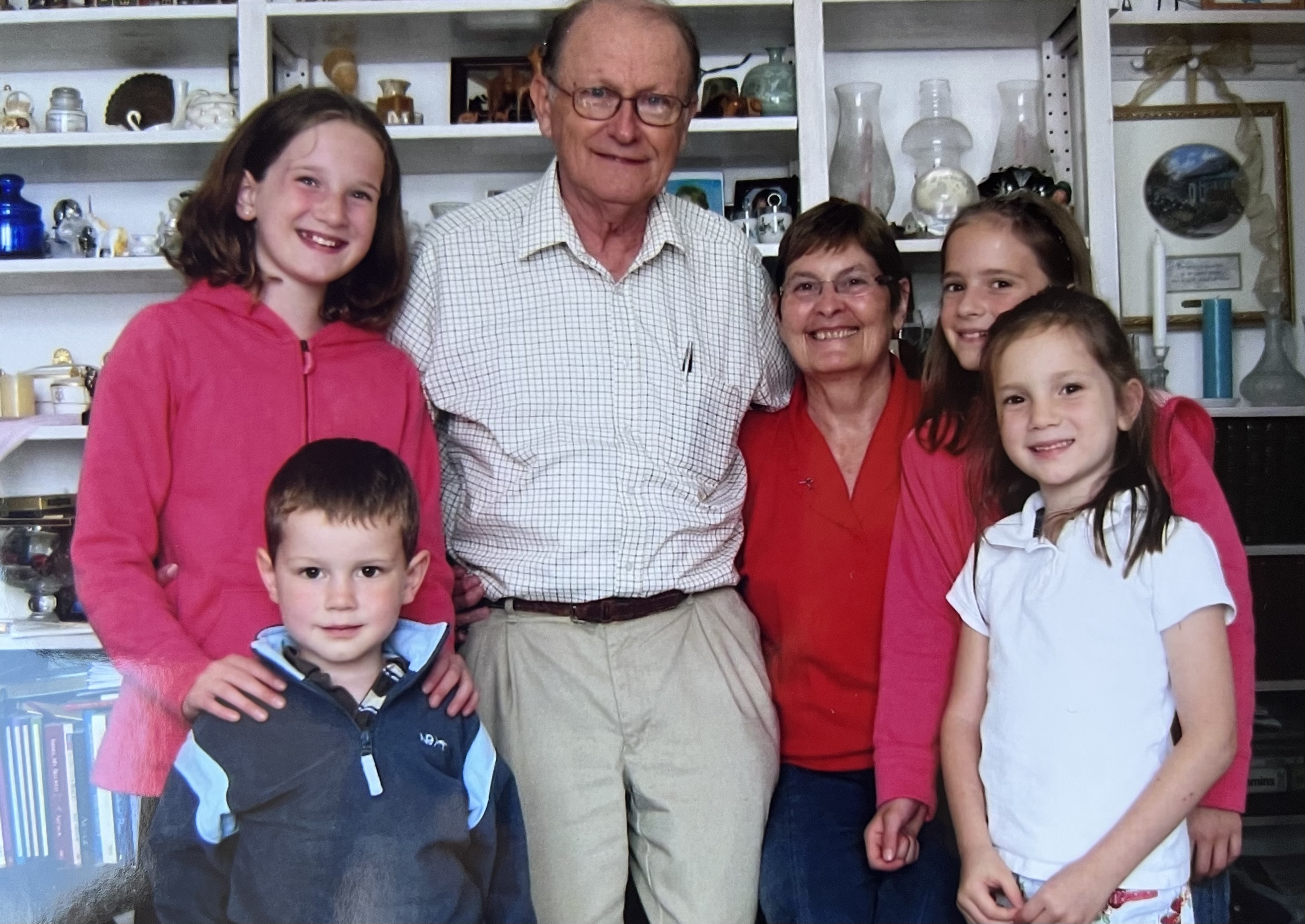
I just heard that George Verwer went to heaven late last night (14th April 2023).  So many memories are swirling as I remember all that George has meant to me and my family.  It is hard to overstate how much God has used George in our lives.

I probably met George when I was two years old at the commissioning service for the Doulos.  I don’t remember that, of course.  My earliest memory of George was being introduced to him by my Dad after a service in Bristol.  I was a teen.  I was struck by George’s enthusiastic greeting of my Dad – “One of God’s faithful warriors in Italy!”  It was George’s invitation back in 1962 that motivated my Dad to go over to Europe that summer, indirectly resulting in my parents going to Italy as missionaries.

Once I was introduced to George, he stayed in touch.  It is easy to think of George the public speaker, but many thousands also know of the George who continued to care for the next generation of OM kids.  He had no connection to me except my Dad’s involvement in OM thirty years before, but that was plenty for George.  I remember him phoning me one day.  He was on a train in Scotland and he wanted to let me know that he was praying for me.  Getting a phone call like that as a teen rocked my world.  I used to listen to cassettes of George preaching – those messages consisted of a sort of overflow of his energy, his drive, his gospel passion, and his transparency, blended with some oft-repeated doses of his humour. 

He often told of the time in Pakistan when a pigeon dropped a mess onto the sleeve of his suit.  “Praise God that elephants can’t fly!”  He would tell of the time he lost his temper with his long-suffering wife, Drena, kicked a box which turned out to be full of books, and stormed out of the house in pain, only to re-enter the house by the back door and repent of his sinful outburst.  He would share honestly about his struggles with lust.  He would pour out stories and statistics of the great need in the world.  He would recount God’s goodness through the years of OM’s history.  And somehow it would all fit together in one message.

When I spent a year serving on the OM Ship, the Logos 2, I got to work alongside George a little.  His gopher (travel companion and assistant) and I went to collect George and Dale Rhoton (co-founder of OM) from LA Airport.  George didn’t like the idea of waiting for Dale so he found an empty row of seats and sat down.  When we came back with Dale 45 minutes later George had covered a huge area of airport floor with piles of paperwork that he swiftly collected together.  It was a privilege to listen to George and Dale chatting together in the back of the car.  The third member of the original Send the Light trip to Mexico, Walter Borchard, also joined George during the 40th anniversary celebrations onboard.  (Note – I heard that Walter also went to be with the Lord just a few days before George did.)

I secretly prayed for some months about becoming George’s gopher as I really aspired to the role.  On my 21st birthday, he was onboard the ship and called for me to come to his room.  He found out it was my birthday and so gave me a half-eaten bar of Dairy Milk, as well as a bag full of correspondence that he thought I should look through.  More important than English chocolate, he asked if I’d ever considered being his gopher.  I was so thankful and promised to continue praying about it.

I met up with George again at the OM conference in De Bron, NL, that September.  We went for a walk around the conference site.  He had just left the skylight on his bus open and his wife’s laptop had been rained on.  He was feeling very guilty about that.  He asked again about the gopher role for the following year.  Maybe he sensed my hesitation, because he immediately followed up with, “you’ve met a girl?”  I explained that I had met a girl in Portland.  Of course, George knew her parents – also OMers from back in the earlier years.  “Ah!  Good Brethren stock!”  Actually, Melanie’s parents had met on an OM team, so Melanie’s very existence was a result of George’s ministry! He had prayed for her family for years too. I was disappointed to not be his gopher, but was encouraged by his understanding of my desire to go to seminary and not be travelling in the year before we married.

During the seminary years that followed, my wife and I pondered where our future might lie.  We wanted to be involved in missions.  But where?  We explored options all over the world but no doors seemed to be opening.  Then one day my mother-in-law passed me a note: George wanted me to call him.  I called him from the phone in the seminary building.  He asked me, “Are you prepared to leave America?  I know a lot of people like the salary that they can get from a US church. And I’d hate to see you stuck in a classroom teaching somewhere.”  I assured him that we were looking at missions options rather than salaries and we planned to leave the US.  “Come and be based here in the UK, we need trained Bible teachers like you. The UK is a place of real nee too . . . let me help you launch…”

Our church leaders all felt that this invitation was of God and they gladly sent us to be based in the UK with ministry details still to be determined.  Lots of people in OM warned us that George would not be arranging meetings for me and it might end in disappointment.  It turned out I did not need George to arrange meetings. I was happy to work loosely in his team and arrange my own opportunities with God’s help.  As it turned out, we ended up living next door to George and Drena for that first year.  Our third child was born “through the bedroom wall” of our adjoining houses.  He enjoyed that little fact.  “Which one of you was born next door?” he would ask my children on later visits.

During our time living next door to George, I enjoyed a number of walks with George as we talked about life and ministry and navigating the complexities of theological disputes and issues in world missions.  My wife and I enjoyed a meal out with George and Drena.  I was so enjoying his story of how he had been banned from India for smuggling two typewriters, but then saw the look on Drena’s face – she had endured a lot at George’s side.  The weekly prayer meeting at Forest Hill was always so much better when George was there.  He would whistle through worship songs, sort his mail during various phases of the meeting, spill little tidbits of random OM history in reference to any guests that happened to be there, and refer to an awful lot of ministry as “tremendous.”  George had a way of building people up, and building up their contribution to world missions – even though most would have felt massively intimidated by George’s global impact!

What was George’s impact?  George was a pioneer.  In an age where missionary boards wanted seminary graduates, George pioneered a missionary force of willing volunteers.  In a time when missionaries made a career commitment, George saw the value in short-term teams.  Then there was the idea of getting a ship – totally crazy, but God was in that craziness.  Mexico, Europe, behind the Iron Curtain, India, the Middle East and North Africa, etc . . . all across the world George’s pragmatic pioneering spirit has spread with OM.  And then there are the hundreds or thousands of ministries that have launched out of OM.  People who came to OM for a couple of months or a couple of years, but went on to have lifelong ministries under a different banner.  George’s impact and legacy as a missions pioneer is vast.

George was a prolific speaker.  If you were looking for careful expository preaching, that wasn’t George.  But if you were ready to hear the overflow of a life set on fire by Jesus, then George was pure gold.  Whether it was in front of thousands of students at Urbana, or a handful of saints in a little church, George spoke (often while holding a giant inflatable globe) and lives were marked.  The last time I heard him preach he had three sets of seven points.  It was classic George.  But it was still so good.  He might have been known as a “pied piper missionary speaker,” but his greater passion was always “reality in Jesus” – he knew that if people experienced that revolution of love that comes from really knowing Jesus, then missions involvement would follow naturally.

George believed and preached the radical grace of God for undeserving sinners. He would say, “Where two are three are gathered in my name, sooner or later there will be a mess.” It was not just a humourous line to get a laugh. It was the reality he lived time and again. People mess up, and God’s grace is critical. George would preach about that grace, and then he would live it as a leader drawing alongside strugglers as a fellow struggler and recipient of God’s great grace.

You might assume that George’s impact was all about leadership and speaking. After all, he was the International Director of OM (until 2003), a global missions pioneer, and had a full speaking schedule (apparently he dropped from 900x per year to just 350x per year after he retired!)  But even if he spoke multiple times in a week, there were still so many hours outside of those slots – George wanted to use all of his hours for Jesus.  Living next door for a season and working alongside him during those years, I noted several ministries that could easily be overlooked. 

Prayer.  George prayed for people.  He had his gopher put pictures of people on his phone so he could pray for people when he was on the London Underground and lost his phone signal.  If he couldn’t be talking to someone, then he could be talking to God about someone. He had photo albums full of ancient prayer cards – one day he knocked on our door to show us pictures of Melanie and me as little children.  Another time we had guests and our friend was shocked to meet George for the first time as he held out a picture of her with her family when she was a toddler – he’d pray through these collections of memories again and again. In these last years, George was excited to know that our children also went out with OM – to Ireland, to Albania, and to the Logos Hope. That’s three generations involved in missions, in part, because of George’s prayers.

Connecting.  George would get a phone call from someone.  He would introduce them to someone else.  He literally multiplied his ministry by connecting people to other people that could be an encouragement to them.  He asked me to get in touch with an evangelist that could do with a friend.  It might have seemed like a mess, but the chaos continually spawned more ministry fruit.

Giving.  George was one of those people who God seemed to trust with money.  After raising funds for OM over the years, he focused on his Special Projects for the last twenty years.  Bibles, books, the Dalit Freedom Network, under-supported OMers, etc.  George was constantly passing on funds to where they were needed most.  Only eternity will reveal just how much money was recycled for God’s work through George.  His extreme frugality was well-known in OM (George and Drena trading their wedding cake for gas to drive to Mexico is a well-known story from the early years).  He repented of some of the more legalistic emphases that grew out of his own personality quirks, but that frugality surely led to him being trusted as a faithful conduit of Kingdom funds.

Books.  You can’t have met George and overlooked his passion for books.  Every meeting had an overflowing book table, with his incessant attempts to convince people to take books (post-date a cheque for a year beyond your college graduation!)  His book pushes were superb.  There was Operation World, of course. Grace Awakening – how many times did he push Swindoll’s classic (and mention that the first section was a bit dull, which somehow didn’t seem to put you off reading it!)  Calvary Road – he loved Roy Hession books and worked with the Roy Hession Trust for many years.  He would refer to A.W.Tozer books just sizzling away on the book table.  And his own, Hunger for Reality and Revolution of Love were two powerful examples from the earlier years.  Then Messiology came later – some of his most controversial comments compiled in a book.  Yes, George had a passion for books that came through in every meeting.  But he didn’t stop outside of meetings.  He was constantly sending packages of books, plus calendars, and single sheet papers on subjects like making a prayer meeting work.  If you were on George’s mailing list, then these packages would reassure you that you were in his prayers too.

It was so sad to hear that George was nearing the end.  If you haven’t seen his final blog, please click here to do so.  Right to the end he spoke of the many who still need Jesus.  Hundreds of thousands have been involved in missions directly or indirectly because of George.  That means millions will have heard the gospel directly or indirectly because of George.  To many of us, George was a hero. Of course, he was no superhero.  He was far too real for that.  And he was definitely a little bit quirky and unique too. But he was a hero to my wife and me because of how God used him to mark our lives so profoundly.

Today I grieve for George and I also praise God for his willingness to give his all for Jesus. I will miss his energy and drive, I will miss his passion for Jesus and world missions, and I will miss his love for me and my family. I know there will be many around the globe who are sad at George’s passing, yet thrilled at George’s promotion.  Maybe one of his crowns could be a global jacket like he so often wore.  He will be thrilled to cast that down before his Lord!

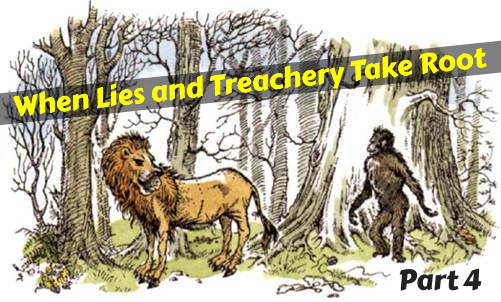
When Lies and Treachery Take Root – Part 4

In part 1, we set the scene and considered how a crisis can be used to wrest control, but the tyrants taking charge may not be impressive to all.  In part 2, the thin veneer of tyranny does not protect subjects from the harsh realities of the suffering that always follows.  In part 3, we scratched at the religious veneer to see that the biggest question in life is the right question at any time of change.  However, asking the right questions will not be welcomed, but oppressed.  Thus, the truth matters, even if everyone seems to be buying into the lies.  This brings us to this final post.  Surely the truth will set society free?  Ultimately, yes.  But we should not be shocked when a hypnotized people choose to stay under the spell.

20. Revealing the lie does not automatically break the spell.  “The light is dawning, the lie broken.”  It seems so simple.  Show everyone how they have been lied to and everything will be alright.  Well, not necessarily.  After defeating some captors, the king cried, “Now, Dwarfs, you are free.  Tomorrow I will lead you to free all Narnia.  Three cheers for Aslan!”  But, Lewis goes on, “the result which followed was simply wretched.” If everyone rallied to the side of the king, there was hope.  But not “if half the Narnians – including all the Dwarfs – just sat and looked on?  or even fought against him.”  Would the German population have rallied to the side of truth if there had been time for it to be revealed?  How many might have been saved if the populations of the communist soviet countries had revolted sooner?  And what if our own population does not react when lies are revealed?  The result of apathy to truth will be simply wretched.

21. When a lie is revealed, there may well be more sinister aforethought than previously realised.  By chapter 9, Jewel recognizes how much planning had taken place.  “We see that the Ape’s plans were laid deeper than we dreamed of.  Doubtless he has been long in secret traffic with The Tisroc.”  It is hard to fathom the depths of evil conspiratorial planning that may exist, but where is the benefit in believing everything is driven by good intentions and some accident?  Will we look back and wonder why we were so naively accepting of the lines we were fed? Perhaps we would do well to ask questions sooner, rather than just having to take stock of the damage once it is done.

22. When a lie is revealed, the evil tyrants will continue to spin yet more lies.  It is the most infuriating plot twist, but it is repeated time and again.  When the lie is revealed, it is met with yet more lies.  The Ape explained how a beast had dressed up and pretended to be Aslan.  “Jill wondered for a moment if the Ape had gone mad.  Was he going to tell the whole truth? . . . It was seen last night, but it got away.  It’s a Donkey!  A common, miserable Ass!  If any of you see that Ass—”  The Ape lied to cover his lies, and so retained control of the population!  “Jill looked at the King: his mouth was open and his face was full of horror.  And then she understood the devilish cunning of the enemies’ plan.  By mixing a little truth with it they had made their lie far stronger.”

It is a story that has been told again and again.  The Ape in its glory.  So much harm is done along the way, but eventually, every dressed-up Ape will be brought down.  May we learn from the story before we live unnecessarily through another chapter of the same old tale.  May we never accept any self-declared-wise old ape who sets himself up as the better leader to take us toward utopia.  The world does not need a year zero, a new beginning, a great leap forward, or a reset, no matter how great it might sound, or how urgently the need is portrayed.  What the world needs is truth, as well as humble leaders ready to serve the people, and for those who have met Aslan to make sure they are never fooled by a doddery donkey dressed up as divine.

When Lies and Treachery Take Root – Part 3

In part 1 we were introduced to the thin veneer of tyranny, and then in part 2, we noted how subjects will suffer nonetheless.  Now, let’s dig below the surface and ponder some of the religious aspects of the imposed new normal.

14. Different gods are treated as one.  A Lamb spoke up, “Please, I can’t understand. What have we to do with the Calormenes? We belong to Aslan. They belong to Tash.  They have a god called Tash.  They say he has four arms and the head of a vulture.  They kill Men on his altar.  I don’t believe there’s any such person as Tash. But if there was, how could Aslan be friends with him?”  The underlying impulse of tyrants is always a collective uniformity.  There is no space for diversity of thought or diversity of religion.  And so, like a recurring refrain, the religions are pushed together and effectively true religion is pushed out.  It was true in Narnia.  It was true in Nazi Germany.  It was true in the Soviet Union.  It is true in China.  It is always the same.  There is always one version of religious thought allowed, and the new leaders get to define it.

15.  The God question is the best question to ask.  Once the Lamb had spoken, we are told that they knew this was the best question anyone had asked yet.  It always is.  In a world where the boundaries are blurred and the gods are blended together, the most important question is always to ask about the true God.  After all, He will always be different, and better, than their imposed amalgam deity.

16. Good questions incite aggressive answers.  The Ape jumped up and spat at the Lamb.  “Baby!” he hissed. “Silly little bleater!  Go home to your mother and drink milk.  What do you understand of such things?”  The subjects are ridiculed if they dare to question.  The experts know best.  They always do.  If you question them, then you discover that you are questioning “The Science” itself.  Abusive relationships do not always require shouting and overt aggression.  However, the presence of shouting and overt aggression tends to be a good indicator of an abusive relationship.

17. The blending of gods will always mean the diminishing of the true God.  The Ape declared, “Tash is only another name for Aslan.  All that old idea of us being right and the Calormenes wrong is silly.  We know better now.  The Calormenes use different words but we all mean the same thing.  Tash and Aslan are only two different names for you know Who. . . . Tash is Aslan: Aslan is Tash.”  The true God always seems to be reduced when the proud claim to have new insight.  They know what is best and they should be trusted with the future.  But Lewis described how every tail was down, and every whisker drooped.  Except one.  The Ginger Cat asked a clarifying question – “Aslan means no more than Tash? . . . I think I am beginning to understand.”  When we add another god to the true God, the true God becomes nothing more than that other so-called god.  You can add nothing to the true God and make him better.  Some might use the ecumenical impulse for their own gain, but the Narnian beasts were right in their downed tails and drooped whiskers.

18. Silencing of contrary voices is always required for a tyrannical coup.  King Tirian cried with a loud voice and was silenced.  “If he had been allowed to speak, the rule of the Ape might have ended that day; the Beasts might have seen the truth and thrown the Ape down.”  Instead, with violence, the Ape put down the truth-crier.  “Take him where he cannot hear us, nor we hear him.”  Which is more important, that he not hear their lies?  Or that they do not hear his truth?  Since tyranny is always a fragile house of cards, it must surely be the latter.  Therefore, there will be ruthless silencing, censoring, cancelling and de-platforming of any counter-opinions.  After all, it is for the good of the people.  The destruction of free speech should always be a big red flag to thinking people.

19.  The pantomime leader is ridiculous, but you may be tempted to believe that he is real until you remember the truth.  In the next chapter, the Beasts are crying out to Aslan as he is paraded in front of them, briefly.  King Tirian looked on from a distance, “He had not expected Aslan to look like that stiff thing which stood and said nothing.  But how could he be sure? For a moment horrible thoughts went through his mind: then he remembered the nonsense about Tash and Aslan being the same and knew that the whole thing must be a cheat.”  The doddery old donkey in fancy dress almost fooled him, but the truth won out.

There is one more post to come . . . next time.

When Lies and Treachery Take Root – Part 2

In part 1, we introduced the sinister situation in The Last Battle – the created crisis, the prevailing atmosphere and the thin veneer of tyranny.  Now let’s continue our list of thoughts and ponder matters of authority, tyrants and how subjects are treated.

7. True authority is always kept out of reach.  A Boar asked the Ape about seeing Aslan properly and talking to him.  But it was not allowed.  In a truly free modern society, the authorities serve at the pleasure of the citizenry.  Ultimate power lies with the people, not in a palace, nor a secret government discussion.  In a dictatorship there is really no access for thinking subjects, only a carefully staged presentation that will have an impact on the crowds.  The Roman Caesars would go into hiding and then appear in a spectacular show of splendour.  “He is a god!”  The crowd would cry. But it was all staged. 

8. Tyrannical authority always knows better than you.  Accused of being an Ape, the Ape declares,   “I’m not.  I’m a man.  If I look like an Ape, that’s because I’m so very old: hundreds and hundreds of years old.  And it’s because I’m so old that I’m so wise.  And it’s because I’m so wise that I’m the only one Aslan is ever going to speak to.  He can’t be bothered speaking to a lot of stupid animals.  He’ll tell me what you’ve got to do, and I’ll tell the rest of you.  And take my advice, and see you do it in double quick time, for he doesn’t mean to stand any nonsense.”  Notice there is no reasoning, no discussion, no debate.  The tyrant knows better than you and so you must obey.

9. The subjects of tyranny are always necessarily treated as stupid.  Since the authoritative council of stakeholders is made up of experts, it means those under their rule must necessarily be treated as stupid.  “Stupid animals!”  They are to take what they are given and do as they are told.  It has always been true in every dictatorship down through history.  When you can smell disdain from on high, know that tyranny approaches again.

10. Freedom is turned into slavery.  Some of the horses were speaking about getting the work done quickly, in order to return to freedom.  “Well, you can get that idea out of your heads at once.  And not only the Horses either.  Everybody who can work is going to be made to work in future.  Aslan has it all settled with the King of Calormen – The Tisroc . . . All you Horses and Bulls and Donkeys are to be sent down into Calormen to work for your living – pulling and carrying the way horses and such-like do in other countries.  And all you digging animals . . .”  The Ape had no intention of releasing control and letting the Beasts run free again.  When freedoms are taken away, they are seldom returned without a struggle.

11. Slavery is described as for the common good, but it isn’t.  When the Beasts howled about being sold into slavery, the Ape snarled back, “None of that! Hold your noise!  Who said anything about slavery? You won’t be slaves.  You’ll be paid – very good wages too. That is to say, your pay will be paid into Aslan’s treasury and he will use it for everybody’s good.”  The repeated commonality in coups across the globe is the utopian vision of the betterment of society.  It is for your benefit!  Yes, there will be some work involved.  There must be, to make things better.  But your slavery, that is, your work, will make you free!  The Ape made promises to the Beasts of Narnia.  The Nazis put that assertion over the gates at Auschwitz.  The Communist Party always promises a collective utopia beyond the struggle.  And yet, who benefits?  It is never the common man and woman.  It is always the ruling elite.

12. The goal of the common good is described as a form of utopia, but the cover always slips.  The Ape described the goal of their newly imposed future.  “And all for your own good. We’ll be able, with the money you earn, to make Narnia a country worth living in.  There’ll be oranges and bananas pouring in – and roads and big cities and schools and offices and whips and muzzles and saddles and cages and kennels and prisons – Oh, everything.”  Actually, Narnia was pretty good before slavery was imposed.  The future only seemed to mean added restrictions and silencing for the subjects, but luxuries and control for the ruling elite.  Oh, you will own nothing, and you won’t be able to go too far, but you will be happy.  Utopian dreams with revealing slips.

13. The new and false freedom is defined by the tyrant.  “You think freedom means doing what you like.  Well, you’re wrong.  That isn’t true freedom.  True freedom means doing what I tell you.”  A truly free society is a rare commodity on this earth.  Even in Narnia it seemed easily lost.  When tyrants take over, they get to set the rules.  And when they do, the people suffer.

Next time, we will continue our list. . .

When Lies and Treachery Take Root – Part 1

I feel sorry for the last book in a collection.  While many may enjoy the first, and probably the next couple too, not all readers will complete a series.  This was certainly true in my case.  It is only now, with my last pair of children, that I have finally cracked open The Last Battle and journeyed back into Narnia one last time.  What I discovered felt like a commentary on devilish and despotic democracide.  I had to check the publication date.  Was this written in 2023?  Obviously not, for it treads on far too many sensibilities for our day!

However, The Last Battle, the final chronicle of Narnia, remains eerily relevant.  I am sure it was to its own day, a day of reflection on the atrocities of National Socialism (Nazi-ism) in Germany, and a day of growing suspicion of the murderous evil of International Socialism (Communism) in the East.  Like all great stories, The Last Battle remains eerily relevant today, too.  “Narnia faced its fiercest challenge,” the back cover explains, “not an invader from without but an enemy from within.”  Indeed, so often the greatest threat to society lies within its own ranks.  And that threat does not always come from the most intelligent enemies of the state.  Often the mind behind the evil is devilish, while the actors used are less than impressive.  His antagonism to all that is good lies behind the puppet leaders used to enact the sinister effort to transform a safe society into something so much more malevolent.

By the time we reach the third chapter of The Last Battle, we already know that a self-serving Ape and his hapless Donkey have stitched up a lion’s pelt for some nefarious purpose.  We also join King Tirian and his Unicorn, Jewel, as they discover that Aslan has returned and ordered the felling of the holy trees and the murder of their dryads.  Arriving at the newly cut gash in the Narnian landscape, they discover Calormenes who are mistreating a Narnian talking horse.  It is all too much and they kill the two foreigners in a fit of rage. 

Struck by their noble consciences, they determine to surrender their fate to the justice of Aslan.  Whereupon we encounter “The Ape in its glory.”

I know that this is not directly related to biblical studies or preaching. But if you will indulge me as I share a brief series of reflections on a prescient work of fiction, here are twenty-two eerie parallels to ponder – parallels between Narnia, C.S.Lewis’ day, and even perhaps, our own.

1. A crisis was created and used by the leader of the coup.  The felling of trees, the gash in the landscape, the sale of noble tree trunks to the Calormenes, the profound upset of Narnian peace – it was all created by the one who now used that same crisis to wrest control of the territory and to serve his heinous purposes.

2. Death is in the air.  In the first chapter Shift cunningly manipulates Puzzle with the notion that he “shall probably die” if he tries to fetch the lion pelt from the pool.  Puzzle retrieves it and is “almost tired to death.”  In the second chapter the dryad is killed, then two Calormenes.  This is a story of death after death so that by the end, all the characters are dead.  Multiple characters state that it would have been better to be dead than…, and later on, we see Cair Paravel “filled with dead Narnians.”  Death becomes an everyday conversation when societies are taken over by tyrannical forces.  Lewis may not have known how accurate his picture was in the Communist east.  We may not know all that is swirling in our world today, but it does feel like the subject of death is hanging in the air.

3. Everyone is saying the same thing.  The King is struck by the fact that “the Horse said it was by Aslan’s orders. The Rat said the same.  They all say Aslan is here.”  Even though he had been warned that this was a lie, everyone was repeating the same message.  There is a strange power in a common story.  It will grow its own legs and generate its own credibility.  Sometimes a coup will take over a land by force, but not always.  Sometimes it is by stealth and the subjects will carry the tale of their own downfall willingly as if what they say is true.

4. For those that see clearly, it was clearly a charade.  There in the clearing, at the peak of the hill, “there was a little hut like a stable, with a thatched roof.”  But for those who could not see clearly this charade became their focal point.  “On the grass in front of the door there sat an Ape.  Tirian and Jewel, who had been expecting to see Aslan and had heard nothing about an Ape yet, were very bewildered when they saw it.”  As readers we can see through the whole charade – don’t believe what he says, he is a fancy-dress ape with a dressed-up donkey prop!  It is frustrating when others cannot see what is plainly before them.

5. Tyrants always look silly.  When the Ape, chewing his supply of nuts, was handed the king’s sword with its belt, “he hung it around his own neck: it made him look sillier than ever.”  Did the German population wonder about the short, shouting Austrian tyrant?  Did the bigger moustache of Stalin command the respect he may have thought it should?  And what of the potential tyrants in our day?  If you look carefully, they always look silly.

6. Tyrants are always self-serving.  “Now listen to me, everyone.  The first thing I want to say is about nuts. . . . I want – I mean, Aslan wants – some more nuts.”  The squirrels had already given the Ape more than they could spare.  That’s the thing about tyrants: they take everything from the people and lavish luxuries on themselves.  Beachfront villas, fine foods, private jets.

Next time we will continue our list . . .

(Illustration by Pauline Baynes)

8 Reflections on Preaching Through 1 Peter

In our church, we have just completed an eight-week series in 1 Peter. Here are some brief reflections that may be helpful:

1. This epistle is relevant. I know that is not breaking news to you, but it bears underlining. 1 Peter speaks to people that felt like oppressed outsiders in the society in which they lived. It did then, and it does now.

2. Suffering may be necessary. We have lived through decades of relatively little suffering, but times seem to be changing. Suffering is not permanent, “now for a little while.” And suffering may be part of the plan, “if necessary.” In 1 Peter 1:6 we are introduced to the possibility that suffering is not the result of bad luck, but divine providence. As we come towards Easter we have the ultimate example of deliberate and planned suffering.

3. Biblical background helps. There is the situational background of the readers, forcibly moved from Rome and repatriated to these five regions of modern Turkey. There is the historical background of Peter’s life and experience. Keeping that in mind, as he would have done, is helpful to shine a light on his call to be prepared (3:15), to stay humble and to resist the devil (5:6-9), etc. Then there is the textual background of Peter’s biblical awareness as he wrote. For instance, the situation behind Psalm 34 seems to be shining a light on much of Peter’s writing in this epistle.

4. Difficult texts still have simple points. Preaching the end of 1 Peter 3 and the start of 1 Peter 4 is not easy territory to navigate. There is the timing, location and content of Jesus’ preaching in 3:19; then the reference to Noah in 3:20; followed by the awkward reference to baptism in 3:21. It is exegetical difficulty piled on exegetical difficulty. I chose to give some minutes to explain that complexity, but not before I emphasised the simple point of this section: Jesus suffered and Jesus was victorious. It helps to keep a clear picture in mind when trying to make sense of the complex.

5. The letter has a strong DNA. God’s pattern is for suffering now to be followed by glory later. It was true for Jesus, it was true for Peter’s readers then, and it is true for Peter’s readers now. Suffering and then glory: this idea works its way through the entire letter.

6. Variation can help a series work well. We had a team of preachers on this series. One of the messages was preached in first-person. It came in the middle of the series and really helped the series to not feel monotonous in style. Different preachers helped the series, although it was important to make sure we were preaching a coherent series.

7. Non-Suffering forms of Christianity lead to harm. We seem to live between two extremes. One is the fatalistic idea that disaster is coming no matter what. The other is the idealistic idea that we should always be healthy, and wealthy and travel in a private jet. What is the healthy middle ground? It is not a gentle form of health and wealth – that is, things should generally go well for us if we simply trust, pray and obey. Many Christians seem to want to live with their basic orientation towards good circumstances. No, the reality is that we live in a fallen world filled with suffering. So let’s turn from gentle forms of health and wealth, and let’s engage a fallen and sin-marred world with our hope reaching out beyond this suffering to the glory to come. Our hope is not in our experience but in the character of our good God and his plan.

8. 1 Peter should prepare us for difficulty, but stir us to trust! Every problem we face in this world is a problem that exists within creation. 1 Peter urges us to look beyond this realm to the eternal realities. We look outside of this realm to the God who is so much bigger, the God who cares for us. “The dog bit me,” ~ yes, but God is bigger. “But it was a big dog,” ~ so what, God is bigger. “But it was a lion,” ~ it doesn’t matter, God is bigger. “Actually it was a killer whale.” ~ Ok, but God is still bigger than any problem we can face in this realm. What’s more, he already came and suffered, and is now sitting in victory. So we can be humble, be watchful, and be hopeful. We get to stand in the true grace of God whatever may come our way.

There are plenty more thoughts generated by two months in 1 Peter. But hopefully this list is a motivational starter for now…

____________________________

I have a series of videos on 1 Peter 2:1-10 that focus on the interpretation phase of Bible study. You can find them in this playlist:

Studying the Bible

The first half of preparing a sermon is studying the biblical text.  More than that, a fundamental feature of the Christian life is feasting on God’s word.  We all need to be able to study the Bible and enjoy the great gift of God’s word to us.  So, how should we do it?

In this video, I give a brief overview of the Bible study process.  Let’s think of it in terms of three questions, or four stages:

1. Look – what does the text say?  We need to develop our observational skills to be able to see what is actually written in the text before us.  Too many of us are too good at feeling familiar with the text and therefore skipping ahead.  A lot of Bible-handling errors and heresies would be avoided if we slowed down to see what is actually there.  What does the text say?

2. Learn – what does the text mean?  Once we have looked carefully at the text, we will get to the point of determining what the text means.  That is, not what does it mean to me – this is not an exercise in modern art appreciation.  What was the author intending to communicate?  Learning what the text means requires me to travel back in my mind to the original author’s situation, and try to make sense of what he wrote, in context, for the sake of the original recipients.  I have to go back then before I can think about lasting implications for today.

3. Love/Live – what should the text stir? Bible study should never end “back then.”  God did not give us the Bible as a historical curiosity.  It should ultimately have an impact on my life today.  So what should it stir?  Since it is primarily a revelation of God’s heart, character and plan, it should stir my heart to love Him.  Bible study that does not lead to greater love for God has gone astray.  My heart should be stirred by the God I am discovering in my Bible study.  But it is not enough to have a stirred heart.  This is not about a mere emotional response.  The Bible is intended to exact transformation in my life.  And that transformation works from the inside to out.  So my heart is warmed to God, and then my life should bear fruit as I am not just a hearer, but a doer of God’s Word.  Good Bible study will stir my heart to worship, and it will stir transformation in every area of my life.

What does the text say?  What does the text mean?  What should the text stir?  This is the Bible study process.  It might seem cumbersome at first, but this can, and should, become second nature to us as Bible readers.  Make sure you see what is actually there.  Look closely.  Go back then before considering today.  Expect God to change you from the core of your being out to the most specific activities of your day. 

In the coming weeks, I will be breaking down these stages on YouTube.  There will be a series of videos on Look, then another on Learn, and another on Love/Live.  I will offer some in written form here, but to catch it all, be sure to subscribe to the channel on this link.

Say, “Father!”

When I was a child, we attended a small church in Bristol, England.  Outside was a low wall forming a small courtyard where people would gather after church.  Teenagers would laugh and chat while younger children would weave in and out, playing tag.  It was a happy bubble of fellowship and laughter.

One Sunday, a group of local teenagers was on the other side of the street.  One picked up a stone and threw it at the church, smashing a small window high above the door.  As the glass shattered, that safe bubble burst.  I immediately ran inside and went straight to my Dad.  As far as I could tell, he was the tallest and one of the strongest men on earth.  I felt fearful and threatened, so Dad was the one I wanted to be close to at that moment.

The idea of a loving and protective father is not just important for children.  It is also important for all Christians.  In one well-known Bible passage, Jesus uses four words that should influence our lives every day.

In Matthew 6, Jesus addresses the subjects of giving, praying, and fasting.  In all three cases, he urges his followers not to make a show of their religious practice but to do them in secret.  After all, God knows what happens in secret, and he is all that matters.  So with the subject of prayer, Jesus warns against being showy visually or in our vocabulary.  And then, he gives a model prayer in verses 9-13.

When you pray, say, “Our Father in heaven….”

Familiar words.  You can probably quote the prayer.  Maybe you have noticed how it starts with one address, asks two things regarding the Father, and then three things regarding the family.  Let’s ponder the “address” some more. “Our Father in heaven.”

Many things should be true of a father.  Let’s be simplistic.  On the one hand, a good father is supposed to be an authority figure with power and strength.  On the other hand, a good father is supposed to be loving, kind, and close.  That immense strength has to be under control for the good of those under his care.

A. Our Father on Earth – Sadly, we live in a world where so many Dads have done a poor job of impersonating our heavenly Father.  They have been missing, angry, drunk, and even abusive.  Many Dads resemble the devil more than they do God.  But even if we did have an honourable Dad or even a Christ-loving Dad, we probably all feel a lack in our hearts.  Whether that is a slight lack or a gaping wound, it only underlines how we were created for closeness with a father.  We long for a father who is powerful and strong so that we can feel safe and secure.  We long for a father who is loving and close so that we can feel held and happy.  Our father on earth may not have been what we needed, but what about our Father in heaven?

B. Our Father in Heaven – Jesus was on a mission.  It was not just a mission to rescue us from sin and bring us into a relationship with God.  It was also a mission to reveal God’s heart to us.  What is our Father in heaven like?

i. Authority & Power – When the stone bursts the safety bubble of life, we need a Father who is big and strong.  In Matthew 8:23-9:8, we read three stories that show us a glimpse of God’s authority and power.  Jesus rebuked the winds and the sea during a great storm, and they obeyed him.  Jesus commanded demons to leave the two demon-possessed men on the other side of the Sea of Galilee.  Jesus forgave and healed the paralytic.  Jesus demonstrated his divine authority over creation, the spiritual forces of evil, physical healing, and forgiveness.  At the end of this trio of stories, we read, “When the crowds saw it, they were afraid, and they glorified God, who had given such authority to men.” (To one man in particular! – see Matthew 9:8)

ii. Love & Closeness – When the bubble bursts and the glass rains down, we need a Father whose heart is towards us.  In Matthew 7:7-11, Jesus encouraged his followers to pray and ask because of God’s good heart.  Who gives a child a slice of slate to chew on when they ask for toast?  Who thinks a poisonous snake is a suitable alternative to a healthy protein and omega-3-laden fish for a hungry child?  We are fallen creatures in a fallen world, but we know how to give good gifts to our children.  So “how much more will your Father who is in heaven give good things to those who ask him!”

iii. Who is in Heaven – There is one moment in Matthew’s Gospel where heaven bursts onto the scene.  In Matthew 17:1-7, Jesus takes three disciples up on a mountain, and the curtains are pulled back.  Suddenly they see Jesus in his heavenly impressiveness, conversing with Moses and Elijah.  Peter panics and suggests a tent-building plan.  Then there is a bright cloud and a booming voice from heaven. “When the disciples heard this, they fell on their faces and were terrified.” Quite right.  It was terrifying.  But notice that Jesus was not on his face.  Why not?  Because he knew the voice and the heart of the one who spoke.  On that mountain, they got to experience God’s terrifying power and authority, but take note of what they heard!  “This is my beloved Son, with whom I am well pleased; listen to him.” (v. 5). Our Father in heaven is both terrifyingly powerful and wonderfully loving.  Jesus has made him known to us!  That is why it is crucial to be sure that he is not just The Father in Heaven, or even Jesus’ Father in Heaven, but Our Father in heaven.

C. And What About Us? – Whenever we think about prayer, we tend to start thinking in terms of a religious burden.  “We are a month into a New Year, and I should do better at praying.  I need to be more diligent, more purposeful, etc.”  Maybe there is another way to look at this. 

If God has all authority and power, then that means I can come to him as one who is frightened and weak.  If God is loving and close, then I can approach him as one who is childlike and weary.  I don’t need to impress him.  I can just come as I am, start with “Our Father in heaven…” and then pour out everything on my heart.  What a privilege!

_______________________________________

Please see the new series of videos for 2023 – Enjoying the Word . . . all about enjoying Bible reading and Bible study.

Bible Reading Basics – Part 2

If you have a good Bible reading and study plan that works well, that’s great.  But what if you don’t?  What if others don’t get on with your approach?  Well, for you, or for someone else, this video might be helpful.  It shares a reading and study approach that I believe has a lot to commend it. 

There is flexibility – you choose what time to give to it. 

There is motivation – you choose where to put your energy. 

There is potential – I’ve not found a plan that seems more likely to build solid Bible-shaped believers.

One of the challenges of Bible reading is maintaining momentum. There are a number of momentum killers, like long lists of names and unpronounceable places. What should we do?

One way to evaluate your Bible times is by checking in on what is happening in your mind and heart the rest of the time. What does it mean to meditate on God’s Word day and night? Check out this video for more:

The question that I hear more than any other is this, “what should I do when I don’t feel like reading my Bible?” It is an important question. We all need a decent answer that can help us when we inevitably get those days. Here is a video that may be helpful.

Please click here to subscribe to the YouTube channel – thanks!

Bible Reading Basics – Part 1

When you first open the Bible, it is an overwhelming tome, to say the least.  Over time we can start to find our way around the Bible, just like we can learn to find our way around a big city – one landmark at a time.  In fact, the Bible gives us a great example of such landmarks right at the start of an important chapter.

Why do so many believers lose their love of Bible reading before Valentine’s Day?  Could it be that they are trying to read and study simultaneously?  Have you ever found yourself struggling through Leviticus and taking very little in while longing to be in Philippians (and knowing you won’t be there anytime soon)?  Perhaps it is time to make a helpful separation.

The Bible speaks of delighting in the words of God.  Other Christians sometimes seem to sound so delighted by the word of God.  So why do some of us never seem to reach those heights?  Perhaps a simple suggestion relating to concentration might prove helpful.