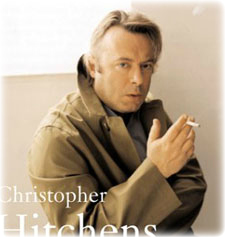
Christopher Hitchens Was Right

Normally I have my post hosted on the Cor Deo site every other Monday.  This time around I posted it a couple of days early because of the death of Christopher Hitchens.  I am going to link to it from here, as usual, because I feel it addresses an issue to which preachers have to be so alert.  That is, how does our message come across to those who aren’t already agreeing and affirming everything we say?

I am not talking about accommodating our message to non-Christians who want a more palatable and cheery message.  I am talking about not communicating an unnecessarily foolish shell of the gospel.  The gospel isn’t foolishness because it is illogical, silly and arbitrary.  It is foolish because it is so richly full of God’s self-giving love, a notion so alien to the selfish views of people and their expectations of the divine.  Christopher Hitchens railed against a god that most Christians don’t even believe in, but somehow his straw-man version of god struck a chord with many in the world.  We need to make sure we don’t feed the fallacy, but instead proclaim the powerful truth.  Here’s the post.

Saturday Short Thought – The Power of the Word

This week I have been thinking about the power of words.  Actually, even the power of few words.  I’ve been blogging about Proverbs – those powerful little dynamos of biblical wisdom.  I’ve been preparing to preach at two carol services where message length has to be kept tighter.  I’ve also been thinking too about the death of a man whose life was known for the absence of small talk, Christopher Hitchens.  I’ve blogged about his death and a strong lesson that I feel we need to learn as Christians, and especially as preachers, over on the Cor Deo site – please click here to go there.

So on one extreme there are those that seek to wax eloquent to show their own so-called wisdom.  At the other extreme we have Biblical wisdom, such as that in Proverbs.  Then in the middle are preachers trying to share a word in season, especially in this season when so many make their annual pilgrimage to a place of worship.  And in the midst of it all, I can’t help but wonder at the Word of God who became flesh and pitched his tent among us.  Even before he learned to speak words on Mary and Joseph’s laps, he was the Word incarnate – so small, so tiny, yet the most powerful message the world has ever known.

Allow me to repeat the words of Richard Sibbes that I shared here a few weeks ago:

“We cannot too often meditate of these things.  It is the life and soul of a Christian.  It is the marrow of the gospel.  It is the wonder of wonders.  We need not wonder at anything after this.” (Sibbes, Works 5:485)

______________________________

Next Week – 

Survey Results: Missing Ingredients in Effective Preaching

Preaching Proverbs 5: Random Thoughts

To finish off this series of posts on preaching Proverbs, here is a randomly organized collection of brief thoughts.  See what I did there?

1. Preaching topically may be fine.  I’ve avoided the more obvious approach of addressing a subject that Proverbs addresses with multiple references, but it’s fine to do that.  And it would be fine to not be exhaustive, why not just focus more on two or three proverbs and aim for effectiveness over exhaustiveness?

2. Preaching a shorter sermon will be appreciated.  I’ve shared how a full-length sermon may be possible from a two line truth, but why not preach short?  Finish ten minutes early and your listeners may talk about the message for years!

3. Preaching a section may be effective.  You can check out Bruce Waltke and discover structure that you’ve never seen before.  Or you can go where my Hebrew prof suggested . . . preach a series of apparently random proverbs since that is how life is experienced from our perspective.

4. Remember that Proverbs is primarily observation, not promise.  Don’t turn an observation of life lived under the covenant of Deuteronomy 28-30 into a promise for all people of God in every age.

5. Preach a pugilistic match-up of contemporary wisdom with Proverbial sagacity.  That is, take a saying from our culture and watch it lose in a fight with one of God’s inspired sayings.

6. Preach Proverbs with humour and with poetry.  Help people see what life is like and what it could be like with a healthy dose of sanctified wit and biblically saturated poetic presentation.  Certainly the main idea should be proverbial, poetic, memorable, pithy, precise.

7. Preach Proverbs for living with godly wisdom, don’t preach godly wisdom to fuel the fires of self-centred success.

8. Provoke further thought, don’t bore listeners into submission as if your extensive knowledge is the focus.  Their further thought, in the fear of Lord, worked into their hearts and lives: that is the focus.

And if you don’t have it yet, get hold of a copy of Jeff Arthurs book, Preaching with Variety – his chapter on Proverbs alone is worth the price of the book.  Actually, the rest is good too . . . and I will be giving a copy away on the facebook page promotion later this month – click here to go to the promo information.

Add to FacebookAdd to DiggAdd to Del.icio.usAdd to StumbleuponAdd to RedditAdd to BlinklistAdd to TwitterAdd to TechnoratiAdd to Yahoo BuzzAdd to Newsvine

Preaching Proverbs 4: Sayings and Sermons

Yesterday I described two masterpieces of the art of preaching Proverbs (click here to see post).  Both the explanatory emphasis of the first and the applicational emphasis of the second affirmed the possibility of a full-length single saying sermon from the Proverbs.  What were some of the key features of these sermons?

1. Repetition.  In both cases the preachers repeated the main idea (the proverb) multiple times.  It never felt forced or tedious, but it did tattoo the truths on the hearts of those listening.  Proverbs are designed to be memorable.  While we don’t have the memorability of the original language to aid us, repetition certainly helped.

2. Memorability.  We don’t have sound-play in the wording like the Hebrew, but memorability can be achieved in other ways.  In the first example Haddon Robinson achieved memorability by pursuing visualization.  That is, through vivid description, the listeners could see what he described, and having seen it on the screen of their hearts, they wouldn’t forget.  In the second example, Gene Curtis achieved memorability by a different type of sound-play.  Not the sounds of the words, but the clever use of a repeated first line of a song.  Actually, this musical marker was so effective in flagging up the need for the proverb because he ended the mini-rendition by tweaking the tune into a melancholic minor key each time – a refrain introducing the main idea each time.

3. Non-linearity.  Neither sermon imposed what felt like a foreign sermon structure on the text.  There was no overt three point with sub-point presentation involved.  Both felt relaxed and slightly circular, yet on paper could have been defined using standard outlining, of course.  There wasn’t the urgency of a narrative, or the driving progression in logic of an epistle.  The structure seemed to fit the genre.

4. Application.  Both sermons were marked by specific, tangible, relevant and vivid application.  While the one placed greater emphasis on explanation, both felt absolutely preached to the listener, to mark the listener and to bring about transformation.  I’m sure many of us could manage it, but surely it must be wrong to turn a practical, vivid, life truth, into an academic curio.  It takes great intellect to make something simple and clear, but a lesser preacher can impress and confuse the listener.  Hey, was that a contemporary antithetical distich?  Nice.

Tomorrow I’ll finish the series . . .

Add to FacebookAdd to DiggAdd to Del.icio.usAdd to StumbleuponAdd to RedditAdd to BlinklistAdd to TwitterAdd to TechnoratiAdd to Yahoo BuzzAdd to Newsvine

Preaching Proverbs 3: Full-Length Single Saying Sermons

Jon provoked this series of posts by asking if it is possible to preach longer than five minutes on a proverb (particularly the two-line kind), without preaching topically through a whole subject.  I believe it is.  Not just in theory, but based on my experience as a listener.  Two, perhaps three messages stand out to me, that have been on a single two-line saying, and have warranted the full sermon length they were given.  So, two ways to pursue fully orbed Proverb preaching:

The Every Angle Jewel Explanation Approach.  The message I have in mind is one I head a few years back from Dr Haddon Robinson.  Seemed like a simple saying, until he started probing it.  Like a connoisseur of fine jewels, Robinson took up that little saying and methodically turned it in every direction, probing each facet to gradually determine the richness of the meaning of the proverb.  Technically he used carefully developed paragraphs of thought.  Experientially it was like sitting at the feet of a wise sage giving a guided tour of a fascinating thought.  In the process of explanation I learned about metallurgy, about Hebrew culture, about the language used, and most importantly, about myself as the light reflecting from that jewel shone into corners of my life.  There was no bony structure sticking out, or jerky transition into time for an application.  It was relaxed, it was measured, it was well-crafted, it was a message that marked me.

The Every Direction Intersection Application Approach.  Ok, so my label is almost as long as a proverb, but I’m not Solomon.  The message I have in mind is one I heard in seminary chapel over a decade ago.  Dr Gene Curtis preached a masterpiece of a sermon that still influences my ministry today.  A typical two liner.  A full length sermon.  A lot of marked listeners.  How did he do it?  He explained the proverb, which didn’t take long, but then he applied it.  Then he applied it again.  Then he applied it again.  Multiple situational applications, all driving home the same point, the main point of the proverb.  In this particular case he also used the first line of a children’s Sunday school song to reinforce the point and offer a musical memory marker along the way.  If you can imagine a busy intersection in the centre of a large city, a roundabout/rotary with multiple roads leading off it, that was his sermon.  He left the world of the Hebrew sage and entered the office of the pastor, the conversation of the spouse, the lap of the parent, the phone call of the friend, etc.  Each time showing the relevance of the proverb, each time reinforcing the same point, each time returning to the text and then heading off on a different exit point.  I would love to have preached a sermon so effective.

I was impressed recently with a sermon by Andy Stanley on a single proverb, which was excellent, but despite the impressive feats, perhaps it didn’t quite attain to the two I’ve described.  (Or perhaps it had the strengths of both!)

Add to FacebookAdd to DiggAdd to Del.icio.usAdd to StumbleuponAdd to RedditAdd to BlinklistAdd to TwitterAdd to TechnoratiAdd to Yahoo BuzzAdd to Newsvine

Preaching Proverbs 2: Persons Present and Powerful

Yesterday I suggested we must beware of legalistic moralizing when preaching the Proverbs.  Tomorrow I’ll offer two simple approaches to full-length sermons on single proverbs.  Today I want to share two more “foundational thoughts” that I think should be kept in mind.

Thought 2 – We should preach Christ, but let’s not be overly speculative and force Christ into every line.  I won’t delve into the issues, good and bad, with preaching Christ as “lady wisdom personified” in this post.  It is possible to preach Christ from Proverbs, but it isn’t a game where the most creative link wins a prize.  Some of what is done with good intentions does come across as Christian gymnastics and even the most informed listener struggles to see how anyone else would have come to that conclusion from that text.  Let’s be careful not to lose biblical credibility while trying to “preach Christian.”  Better to preach Christ in light of the larger flow of biblical revelation than to make a hop, skip and jump from a rock badger to the Rock of Ages.

Thought 3 – Proverbs gives us a compelling framing imagery of the two women.  Proverbs is a literary piece of art.  Now we do lose so much in terms of the assonance, alliteration, word play, etc. – kind of like translating “a stitch in time saves nine” into Italian, or “raining cats and dogs” into Korean.  And we are not really attuned to Hebraic parallelism when it comes to poetic writing forms.  But we shouldn’t miss how the collection of short, memorable and pithy sayings is wrapped in a frame of human imagery.  Specifically the two personified ladies of wisdom and folly.  Which path will the young man take?  The road to destruction in response to the heady flirtation of harlot folly, or the wonderful blessing of marriage to lady wisdom?  I would be inclined to allow that kind of overt literary framing to provide an overriding narratival snapshot into which the issues of wisdom and folly can be placed in relational terms rather than mere burdens of behavior.

So much more could be said on both of these thoughts, so feel free to comment and share your thoughts.

Add to FacebookAdd to DiggAdd to Del.icio.usAdd to StumbleuponAdd to RedditAdd to BlinklistAdd to TwitterAdd to TechnoratiAdd to Yahoo BuzzAdd to Newsvine

Preaching Proverbs 1: Epilogues and Exhaustion?

Jon sent me an email about Proverbs.  He asked whether I thought the preacher heading into Proverbs is bound to either preach for a five minute mini message or an exhaustingly exhaustive topical study of an entire subject?  Isn’t the preacher guaranteed to impose a homiletical structure on a simple saying, or preach a plethora of cross-references in order to fill the time?  And, why haven’t I written more about preaching Proverbs on this site?

First, the question about this site is easy to answer.  I have neither preached from Proverbs, nor heard a sermon from Proverbs in the last few years and so my thinking hasn’t been provoked on this important issue.  I was involved in a preacher’s retreat on the subject of preaching Proverbs a while back, but thanks to Jon for provoking my thoughts!  (Actually, Jon’s written a lot on this specific issue, for example this post on preaching Proverbs.)

So, three thoughts on preaching Proverbs, before I explain two ways I believe a full-length sermon can be worthwhile on a single proverb!

Thought 1 – We need to be wary of preaching moralistic legalism.  This is a danger everywhere in the Bible – “so the moral of the story is . . . be a good boy/girl and obey your parents!”  This is too common in preaching, and massively misses the mark of preaching the extravagant relational grace that infuses the Bible with the life of God’s love.  This is especially easy in Proverbs.  Be good.  Try hard.  Be disciplined.  Be like this man.  Don’t be like that one.  Let’s be careful to prayerfully ponder the proverb we plan to preach in light of the bigger context of Scripture and in light of what our listeners really need.

Tomorrow I’ll offer two further thoughts before getting to two full-length sermon approaches that I have seen work very effectively.

Add to FacebookAdd to DiggAdd to Del.icio.usAdd to StumbleuponAdd to RedditAdd to BlinklistAdd to TwitterAdd to TechnoratiAdd to Yahoo BuzzAdd to NewsvineLike This!

Saturday Short Thought – Lone Ranger Ministry?

This week I have blogged about delivery, which in many ways is all about the connection between preacher and listeners.  Preaching is an inherently communicative ministry, yet it can be such a lonely ministry.  Some preachers are too busy and don’t spend the time they need to, alone with God.  Other preachers are too independent and don’t spend the time they need to, connecting with others.  Preaching involves lone time in preparation, and often a desire to remain alone after preaching (since a spent preacher can feel so vulnerable during post-preaching interaction).

Three slightly random thoughts to finish the week:

1. The preacher should never be truly alone.  Preparation time should be saturated in prayer, and enjoyed in fellowship with the God we represent. If we have any encouragement from our union with Christ, if we have any comfort from His love, any fellowship with the Spirit . . . surely we do.  We must.

2. Preacher’s benefit from interaction with each other.  This week we had our second preacher’s workshop at church.  I am excited about this group and hope that in time it will become a special gathering that will not only educate and develop preachers, but will create a sense of team in the preaching ministry of the church.  Sharing resources, sharing feedback, sharing enthusiasm, sharing encouragement.  I wouldn’t want to miss out on that!

3. In a small way preachers can benefit from online connections.  I find some benefit from mutual encouragement with other preaching friends online.  Comments on this site make a difference in my ministry.  So this week I have launched the Biblical Preaching facebook page – a place for preachers and listeners to connect and share resources, discussion, encouragement.  The slightly less formal surroundings there will, I hope, allow interactions that will feed into the content of this site.  I’ll also share the odd link to helpful resources there too.  The more people that know about it and “like” it, the more value it will have.  Would you help by “liking” the page (you can click on the like button in the facebook box to the right, or go to the page and like it there), and perhaps share the link with others via facebook and twitter?  Thanks so much.  Don’t miss the chance to win two great preaching books too – click here for promotion information.

__________________________________

Next Week: Powerful, Provocative, Pithy – Preaching Proverbs

Can I Tread on Some Special Toes?

It is coming up to the time of year when people are making resolutions.  One of the big ones in churches is to read the Bible through in a year.  So perhaps you are thinking of encouraging people to do this by suggesting a reading plan.  Here’s where I am going to tread on some special toes.

 “I don’t think the Robert Murray M’Cheyne reading plan

is a good idea.”

There, I said it.

His plan, which is still widely promoted by various big names, essentially involves reading four chapters per day.  This takes people through the whole Bible plus a bit of repeating (NT & Psalms, I think) in a year.  I think it is great to help people get into the Bible, and I know many have been helped by it, but I don’t think this is the best way to go.

Essentially the problem with the plan, and others like it, is that the reading is segregated.  So readers start in Genesis, Ezra, Matthew and Acts all on day one.  I don’t want to stir up a sanctified riot, but I don’t think this is a good idea.  Why not?

1. It treats the Bible chapters as vitamin pills rather than the feast that they are.  That is, it creates a sense of “balance” without encouraging readers to really savour the taste of the text as it flows.

2. It hinders the reader from reading the text in context.  In a busy life it is hard enough to keep track of one flow of thought, let alone four.

3. It doesn’t encourage the reader to get “in the zone.”  I don’t know anyone that would advocate reading four novels at a time, a page from each, each day.  How much better to invite people beyond the first few minutes of distracted reading and into the zone where they get gripped by the narrative and don’t want to put it down?

4. It promotes a tick-box approach to Bible reading as a discipline, rather than an overt opportunity to engage with God’s heart as revealed in the epic revelation.  So many people view Bible reading as a laborious discipline that they must force themselves to do.  But the people I know who delight in the Bible tend to be people who devour it, rather than dipping into it.

Suggestion?  Why not encourage and invite people to read the Bible aggressively and relationally, as if God has a personality and is personal.  That is, by reading His Word with a passion to know Him, readers/listeners might get to know His personality and grow in their personal relationship with Him.

Perhaps it is worth pondering how to encourage people by enthusiastic invitation, rather than by affirming the “difficulty” and “trudgery” of “getting through the Bible” in a year or three.  Here is a link to my friend Ron’s article on Bible reading – as “Bible presenters” lets be sure to be genuine Bible enthusiasts that do more than try to fire up the so-called disciplined wills of our listeners!

Add to FacebookAdd to DiggAdd to Del.icio.usAdd to StumbleuponAdd to RedditAdd to BlinklistAdd to TwitterAdd to TechnoratiAdd to Yahoo BuzzAdd to NewsvineLike This!

7 Tone Balances

The tone of our preaching is so important.  Yet this is a balancing act.  Seven “tones” to balance in biblical preaching:

1. Serious yet joyful – We handle the most serious of content in the most serious of circumstances.  Yet we have more reason than any to have joy.  It isn’t right for a biblical preacher to come across as flippant and silly, but neither is it right to come across as sombre and melancholic.

2. Textual yet relevant – We preach as inhabitants of two worlds: the world of the inspired text and the world of our listeners.  It is possible for our tone to be too much in one or the other and for our preaching to be undermined as a result.

3. Contemporary yet genuine – We preach as fellow humans in the present situation.  It is incarnational to not come across as a prophet who has been locked in a victorian time capsule.  Yet we need to be genuine in this, no good pretending to be contemporary  in ways we are not, people see through that.

4. Authentic yet appropriate – In a culture that increasingly craves authentic communicators, we must show the real us when we speak.  Listeners don’t connect with plastic preachers.  Yet we must be appropriate in what we share.  Sometimes too much information undoes everything around it.

5. Welcoming yet exclusive – We preach as those who represent the welcoming spreading graciousness of Christ, yet as those who stand with Him in His claim to absolute exclusivity.  We can’t be welcoming in a way that offers hope to those on a hopeless path.

6. Warm yet warning – We preach as ambassadors for Christ.  He wasn’t stone cold like some preachers are, Christ was compelling and warm.  Yet the self-righteous found Christ to be one who warned, rather than warmed them.

7. Winsome yet real – Maybe this has been covered already, but let me reinforce it.  We speak as representatives of a God who seeks to woo the wounded.  Our preaching tone should be winsome and Christlike, but that won’t work if it is mere catchphrases that aren’t supported by a deeply stirred reality.

Add to FacebookAdd to DiggAdd to Del.icio.usAdd to StumbleuponAdd to RedditAdd to BlinklistAdd to TwitterAdd to TechnoratiAdd to Yahoo BuzzAdd to Newsvine Like This!