Preaching to a Mixed Crowd – Part 3

So we have covered five principles for preaching to a mixed crowd in part 1, and in part 2.  Now, I’d like to share a starter guide to evaluating the mix that makes up your congregation.  Take this list and prayerfully think through it, making notes about the different groups in your church.  Consider which groups are bigger, and which are smaller but still present.  Then, perhaps share your thoughts with someone else involved in the leadership of your church.  Together, you will be able to pray for your church and preach more effectively to your church.

1. Believers and not-yet-believers – what is the mix?  How would you describe the believers?  How would you describe the not-yet-believers?

2. Bible literate and Bible unaware – what is the range of biblical awareness in your church?  Where do the majority currently stand on that continuum?

3. Churched and unchurched (guests/newcomers) – how often do you get visitors coming to the church?  Do people feel confident to bring guests along? 

4. Mix of ages in the church – what is the proportion of children, youth, students, young adults, established adults, older working-aged adults, retirees, and older seniors?

5. Lifestages in the church – as you consider the ages, how would you describe the life stages?  Are people out of work, jumping between jobs, established in their careers?  Are the empty nesters settled or struggling?  What is the nature of the life experience of the seniors in the church?

6. The gender mix in the church – there are two options, but what do you observe about numbers?  In couples where only one is a believer, which gender is typically a believer? 

7. Education and employment – what type and level of education do people have in the church?  How many had no higher education?  What about university educated?  What about vocationally trained?  Or higher degrees?  What type of employment do people have?  How financially stable and secure are the households in the congregation?

8. Family dynamics – consider the make-up of the church in terms of married and single.  Are the married couples doing well relationally?  And what about the single people?  How many are content long-term single, disappointed long-term single, young adults, newly single by divorce, etc.?  And what about parents?  Parents of young, of teens, of adults?  Broken marriages?  Blended families?  What about those with responsibilities for elderly parents?

9. Nationality and culture – how many of the church are local first language speakers?  What about non-local first-language speakers?  And non-local second language speakers?  Are internationals newly arrived or more settled? Are the internationals from various nations, or are there larger groups from specific countries? What are the dynamics within those groups and between the groups?

10. Is the congregation typical of the locality, or is the congregation “travelling in” to a central hub?  Do people live in the community the church is trying to reach?  Where do guests come from?  Are guests able to connect with church regulars?

11. What other factors come to mind as you evaluate your congregation?

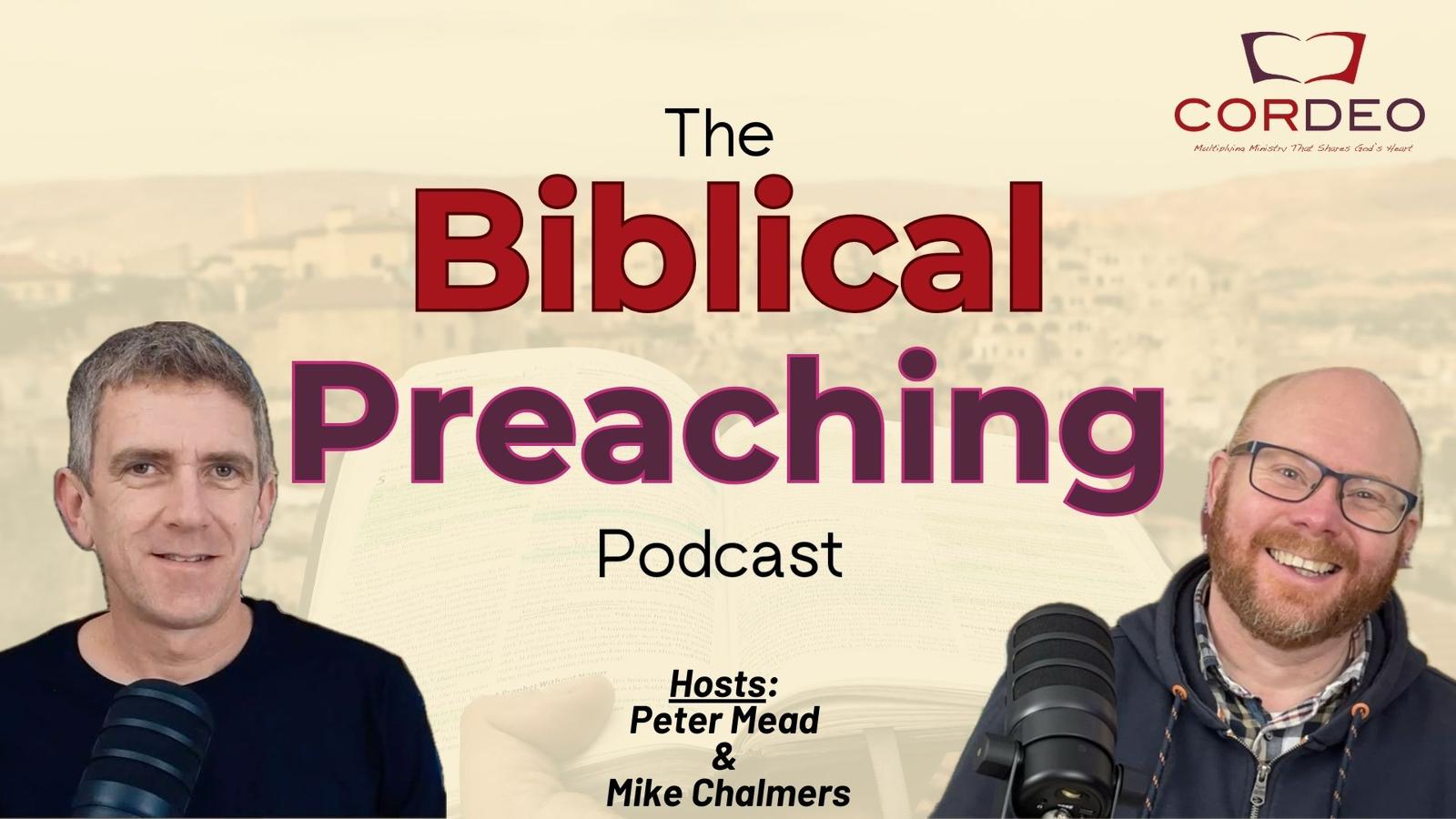
If you haven’t seen it yet, please check out our discussion about preaching to a mixed crowd on The Biblical Preaching Podcast.

Preaching to a Mixed Crowd – Part 2

When we preach, we always have a mixed crowd, so we are thinking about five principles to help us preach effectively. Yesterday, we started by affirming that it is possible to preach effectively to a mixed crowd and by assuming that we have a greater mix than we can see. (Remember, for our discussion of different mixes at play, please check out the latest episode of The Biblical Preaching Podcast.)

So, continuing our list:

3. We need to learn about our listeners.  When it comes to our own church, we can consider several levels of analysis.  We can think about the culture in which our church exists and the specifics of the locality.  Is it urban, suburban, or rural?  Is it close to the cultural centre of society or at a distance from what is happening in the “big smoke?”  Then we can think about our congregation: What are the typical profiles of people?  Are there many people in a certain age and stage of life?  What about typical education levels or employment types?  There is a more specific analysis, too – pastorally, to get to know the individual people and families in the church.  (As a guest speaker, you may only be able to analyse the level of culture, locality, and a brief guess at typical profile, but your preaching will still be better for it!)

4. We need to preach sermons that aim to land in the lives of our listeners.  It is tempting to preach generic biblical truth and hope that listeners will grab hold of that truth for themselves.  Don’t settle for vague generalisations.  Our task is not only to be comfortable in the world of the biblical text but also to be targeted in our relevance to specific situations.  Listeners will translate and personalise specifics but allow generalisations to float on by. Authentic expository preaching is not only faithful to the biblical text, but it also requires effective communication from the preacher that emphasizes relevance to the listener.  True expository preaching also relies on God to be at work:

5. We need to pray for God to work in a profoundly personal way.  We know that God cares about congregations with an awareness of the groupings within that congregation.  Take, for instance, how God inspired Paul to give Titus specific instructions for each group in the church (Titus 2:1-10), or to help Timothy think about different groups in the Ephesian church (1 Timothy 5:1-2).  We know that God cares about individuals (for instance, see Psalm 17:6-8).  And we can be confident that God wants to continue his work in his people and complete what he has begun (Philippians 1:6).  So let’s be sure to pray that as we preach, God will land the message in very targeted and specific ways in those that hear us.

Please check out the conversation on the latest episode of the podcast. We really appreciate any help in getting the word out about this new resource. In the next post, I will offer a starter guide for evaluating the mix that makes up your congregation.

Preaching to a Mixed Crowd – Part 1

We always preach to a mixed crowd.  The mix may differ, but the one thing we can be sure of is that there will be a mix.  Older and younger, male and female, biblically aware, newcomers to the Bible, church regulars and guests, and so on.  In fact, in the latest episode of The Biblical Preaching Podcast, we work through six types of mix that we often have in our churches.

In this series of posts, I will share five principles to think through as preachers:

1. We must believe the Bible can be effectively presented to mixed groups simultaneously.  Traditionally, many churches have targeted their preaching at either believers or not-yet-believers.  So you might have an evangelistic event and a Bible study separately.  However, it is possible to preach the Bible to believers and non-believers simultaneously.  And if we do that, we might avoid some of the mistakes that come from assuming Christians have moved past the gospel (see Galatians 3:1-3 for a strong warning on this!)

2. We should assume a greater mix than we can see in a congregation.  There are two reasons for this.  First, because there is a greater mix than we can see.  People may look similar on the outside but be very different in reality.  And second, we should assume a greater mix because we want a greater mix than we can see.  For example, how will people in a small church that often has no guests present be confident to bring guests in?  One way will be for the preacher to consistently preach as if guests are present so that church members grow in confidence that they can bring a guest and it won’t feel awkward.  Preach to the mix you have, and preach for the mix you want.

Click here to see the episode on YouTube.  Come back tomorrow for the rest of the principles in this series.

Getting Stuck in Sermon Prep (Podcast Post 7)

I was chatting about preaching with a friend on Sunday after preaching in his church. We talked about ways we sometimes get stuck.

Sometimes, the outline won’t quite work, and we keep looking at the text until eventually something clicks. Once it clicks, we can’t understand how we could not see the passage’s logic before.

Sometimes, the details of the message are the issue. What illustrations would work? How can I introduce the sermon? And so on. Again, the breakthrough moment is always a real relief and cause for rejoicing.

Sometimes, everything seems jammed up, and we simply can’t get the sermon to work.

In the latest episode of the podcast, Mike and I discuss seven specific logjams and offer some ideas that might help you break through the next time you get stuck.

But here is a thought: let’s be careful not to see the ideal as a jam-free future. While logjams can feel like hard work, there is also a blessing in them. Without the logjam, there might not be the desperate prayer. Without prayer, there would not be sweet moments of answered prayer as God lifts us in preparation for Sunday.

Why Biblical Preaching? (Podcast Post for Episode 1)

The Biblical Preaching Podcast is live!  My plan is to build on episodes with blog posts here so that you can get extra content on the blog, but also hopefully want to check out either the podcast or the related videos on YouTube.

In Episode 1, we discuss “Why Biblical Preaching?” 

People often raise the issue of a changing society.  The logic is simple – our world is changing at a rapid rate.  Technology is advancing faster than ever; people are bombarded with highly stimulating, rapidly moving content, and consumers access information differently than they did even a few years ago.  Therefore, many say that a verbal monologue delivered to a gathered congregation must be a mode of communication that should be consigned to history.  Spurgeon’s Victorian England may have needed preachers, and maybe Lloyd-Jones’ twentieth-century London required preachers, but surely we now live in a different world?

In the first part of the podcast, we discuss the question, “why preaching?”  We mention three reasons:

1. Because of the Biblical example – From Moses and Joshua, through the times of the Old Testament prophets, to the ministry of Jesus and the apostles in the early church, the consistent example is that of spoken messages pointing people to God’s person and purpose in this world.

Note: The world of the Bible is not monolithic.  There were vast shifts and changes between the preaching of Moses in Sinai, and the message of Joshua in the Promised Land, to the proclamation of Paul in Athens or Miletus.  And yet, through all the rising and falling of great empires, the shifting of cultures, the progression in God’s plan of history, still the pattern is consistent.  God’s messengers spoke a word that changed lives and shifted history.  It could be considered arrogant to think that our brief period of change should override millennia of shifting contexts in which preaching was a primary means of God working in the world.

2. Because of Biblical instruction – Paul’s final letter, written to Timothy, closes with the instruction to preach the Word.  It is fascinating that he does not focus on spectacular spiritual gifts or any other possible emphases for continuing ministry beyond his own time.  Instead, he urges Timothy to prioritize reading God’s Word and preaching it!  In other places, we can see instruction that would lead us to consider preaching as a critical component of gospel ministry.

3. Because of theological reality – What is God like?  He is a revealing, speaking and incarnational God.  In preaching, we see all persons of the Trinity in action – the Father’s loving initiative driving the whole mission of God in this world; the Son’s revealing of his Father and rescuing of humanity is the focus of both Scriptural and biblical preaching; and the Spirit woos, convicts and changes hearts through preaching.  In the podcast, I note how preaching (in this case, including spoken testimony), plays a key role in the story of salvation.  Where humanity fell into sin by doubting the word of an apparently absent God, so God wins a redeemed people back based not on a great show of power but based on the apparent weakness of words spoken in the kingdom of darkness.

In the second part of the podcast, we get into why we use the label “Biblical Preaching” and whether that is the same as “Expository Preaching.”  I will let you listen to the podcast to find out more!  Please check out the podcast, follow it on your podcast platform of choice, and thank you in advance for every interaction with the podcast or YouTube clip, as it helps the algorithm spread the content to more people.  Positive reviews are invaluable as we get the podcast going – thank you!

Click here to find the podcast on Apple Podcasts, and click here to find it on Spotify, or search for The Biblical Preaching Podcast on whatever app you use to find podcasts. And here is the YouTube video if you like to watch:

Introducing the Biblical Preaching Podcast!

I’m excited to announce the launch of our brand-new podcast: The Biblical Preaching Podcast! Unlike the many great sermon podcasts, this podcast is designed for those who preach, those who are learning to preach, and anyone who cares deeply about the ministry of preaching.

My Cor Deo colleague, Mike Chalmers, will join me as we discuss all things preaching. Together, we’ll explore this ministry’s joys, challenges, and complexities.

Here’s what you can expect:

  • Engaging Discussions: Insights into various aspects of biblical preaching.
  • Special Guests: We’ll feature some amazing voices from the world of preaching—our first guest joins us next week!
  • Encouragement for Preachers: Each full episode concludes with a segment designed to encourage those in preaching ministry.
  • Bitesize Episodes: Shorter episodes focusing on one specific aspect of preaching.
  • Related Blog Posts: From time to time, I’ll share blog posts that dive deeper into themes we discuss in an episode. These posts won’t be mere transcripts but will provide additional perspectives, practical tips, or reflections to help you take the conversation further.

Our hope and prayer for this podcast is simple: that it will strengthen and encourage biblical preaching in churches around the world. Where biblical preaching thrives, the church grows healthier, and healthy churches reach their communities.

We want this podcast to be a gathering point—a place where preachers can connect, reflect, and grow together. This is your conversation! We’ll celebrate the goodness of God, explore the transformative power of rightly handled Scripture, tackle the complex realities of ministry, and share the joy of seeing lives changed through the preached Word.


How to Listen & Connect:
🎙️ Listen to the Podcast on Your Favorite Platform:

📺 Watch Episodes on YouTube:
Subscribe to our channel for video versions of the podcast and exclusive content: YouTube Channel.

🖋️ Read the Blog
Continue to visit BiblicalPreaching.net for posts related to specific episodes, offering fresh insights and practical takeaways.


Can You Help Spread the Word?
We’d love your help in making this podcast a resource for as many people as possible! Here’s how you can support us:

  • Subscribe on your favorite podcast platform and/or to the YouTube channel.
  • Like and Comment to share your thoughts and join the conversation.
  • Follow Us for updates on new episodes and blog posts.
  • Share with your friends, fellow preachers, and anyone who might find this helpful.
  • Review the podcast on your favourite podcast platform – apparently, positive reviews are the most helpful thing!

Thank you for your prayers and support. We’re excited to see how God uses this podcast to encourage and equip preachers worldwide!

7 Defining Moments in Your Sermon – Part Four

We have thought about two moments before the sermon starts, two in the introduction and two in the body of the sermon. 

What about the conclusion?  Let’s go there for the final defining moment:

7. The landing – We know the end of the message is important.  During preparation, we might have prayed and dreamed of a huge revival breaking out.  During delivery, we might just be desperate to be finished and away from the microphone.  But between those two extremes we can see that the conclusion does matter.  There is both the quality of the landing and the fact of the landing.  The quality is determined by both tone and content.  It is a chance to review the main points of the message, to restate the main idea again, and to bring a sense of conclusion to the whole.  The tone can be encouraging, upbeat, hopeful, and faith-stirring rather than critical, harsh and guilt-trippy.  As well as the quality, there is also the fact of landing.  Arrive.  Get there.  Stop talking.  Don’t elongate the message in the hope that your fourth attempted landing will prove to be better than the first three.  Robinson used to say that it is best to end a sentence or two before people expect you to end. Review, encourage, finish. 

So there we go, seven defining moments of the sermon.  But I need to add one more:

Bonus – Clearly stating the main idea.  Of course, no matter how hard I try to point away from the obvious moments to some that people may not be aware of, I still feel the need to underline the importance of a well-defined main idea in the message.  Too many preachers preach without it.  The main idea needs to be clarified by the preacher, otherwise it will be hastily cobbled together in the minds of your confused listeners.  It is your job to make sure the message is coherent.  Nothing holds a message together so well as an accurately defined main idea.

What would you add to this list?  What are the defining moments in a sermon?

7 Defining Moments in Your Sermon – Part Two

As we work through this list of seven defining moments in the sermon, we have so far thought only about the unseen preparation of all involved and the first impressions before the sermon really starts.  Now let’s consider two that are part of the introduction to the message:

3. The motivation to listen – Most sermons will have the same elements: a beginning, a middle, an end, a Bible passage explained and applied, and some illustrative material to help communicate.  Now, all of these standard elements can be better or worse.  But they tend to be present.  However, the motivation to listen is by no means guaranteed.  It is not guaranteed from the listener’s side, and it is not guaranteed in the details of the sermon.  How could it be missed?  Easily.  Too many preachers assume that their listeners are interested in Elijah’s encounter with a widow or Paul’s answer to the church’s question.  And too many introductions offer something less than motivation. 

We can easily settle for familiarity or interest.  Familiarity introductions are the ones that refer to something we all experience – you know, going upstairs and forgetting what you went up to get.  Everyone smiles and relaxes a bit.  Then, the message continues as if that connection is enough.  Or interest introductions are the ones that raise eyebrows with an interesting tidbit – you know, that it is impossible to lick your own elbow.  Some knew that, some didn’t, some try it, etc.  And the message moves on.  Familiarity introductions and interesting introductions are probably better than just launching into 1 Kings 19 and its background, but better by far would be an introduction that makes listeners want to hear what is coming. 

Inasmuch as you are able, motivate listeners to listen.  Robinson used to talk about surfacing a need in your listeners that the passage would then be able to address.  Use your introduction to grab their attention, convince them that they need what this passage is going to show them, and win their hearts to be open to you as you lead them into the passage.

4. The overview – At the end of the introduction, it is easy to skip the overview.  Generally, you should not skip it.  Give people a sense of the shape of the message.  We are going to see the problem described, and then the solution.  Or Paul gives three truths that we will look at together.  Or the passage comes to us in two chunks, verses 1-5 and verses 6-9.  Or we will see the transformation we need is coming, the triumph over death is certain, and the therefore that changes how we live – the transformation, the triumph, and the therefore.  The overview can be detailed or a very high-level glimpse, but if it is missing, the listeners are slightly in the dark as to where the message is headed.  If your message is an inductive shape, then make sure the question that is going to be answered is clear: what is the critical ingredient that we need if we are to have a ministry like the master?

Feel free to comment about introductions – what works well?  What do you hear that doesn’t connect or help the listener?  Introductions are critical to the effectiveness of a sermon.  Next time, we will look at two more defining moments in the sermon.

7 Defining Moments in Your Sermon Preparation – Part Four

There are multiple defining moments in the sermon preparation process. We have thought about starting the process, shifting from passage study to message formation, becoming conscious of who will be listening, and the unplanned interruptions that seem to prevent a smooth preparation. There is one more defining moment left. It is one to add if it doesn’t happen naturally:

7. The realization of insufficiency.  You want to be a good steward of your opportunity to preach.  You desire to give your best, both in terms of exegetical rigour, and pastoral sensitivity in sermon crafting.  And perhaps the process has allowed better than normal focus, with more clear hours for preparation than you expected.  Maybe nothing broke at home, no hospital visits were necessary, and everything was unusually peaceful and supportive along the way.  Will you go into preaching feeling confident in your preparation, your skill, and your work of sermonic art?  I hope not.  When we feel we have “the best of sermons” then we tend to discover the false promise of self-sufficiency.  If God has not brought you to humble dependency through a log jam, or through an interruption, or through years of preaching experience, then it is totally acceptable to bring yourself to the place of total dependency.  Some combination of “apart from you, I can do nothing” prayer content along with a flat-on-your-face prayer posture is highly appropriate.  One of my teachers always prayed that he had a stick but needed God to come through as he threw it on the ground.  You want to be the most prepared preacher possible, but you must preach with a profound sense of your dependence on God.

What other defining moments do you recognize in your sermon preparation process?

Okay, here is a bonus one as I reflect on the list:

Bonus: The recognition of the coherence of the passage. Thinking back to the study of the passage, it is critical to arrive at the recognition that the passage holds together. It is easy to skip past this once you start to see some points that will preach. But actually, for your message to feel coherent, you need to recognise that the passage is also coherent. What unifies it? How does it hold together? How do the points and details relate to each other? Assume the Bible writer was not jumbled or scattered in his thinking, and keep thinking until you can see how it is a single unit of thought.

7 Defining Moments in Your Sermon Preparation – Part Three

Defining moments are pivotal decisions that will impact the essential nature of your sermon. So far we have thought about getting started, and about the move from passage to message. Now let’s add a couple of unplanned moments that tend to show up quite often in the process:

5. The moment of breaking through a log jam.  Most messages are not a smooth journey from passage selection, through each sequential step, to a pulpit-ready sermon.  Somewhere along the way, there tends to be a log jam and we get stuck.  It could be the wording of the main idea.  It might be a needed illustration.  Or perhaps the sermon is ready, but the introduction feels bland and in need of a major overhaul.  Sometimes the whole thing might feel okay, but flat.  You are stuck and you feel it.  What can you do?  Sometimes the jam is the necessary reminder to really pray about the message – wrestling with God for some kind of breakthrough.  Sometimes the jam needs to break you free of your computer – stand and preach it out loud, then when it seems to flow better, go back and try to capture what you said into your outline.  Sometimes the jam will break only after you take a break – pray about it and leave the preparation for a walk, a night’s sleep, or a conversation with someone else.  I suspect new preachers will know the panic a log jam can create in your heart.  And I suspect that seasoned preachers will know how often a log jam occurs in the preparation process, and then proves to be a defining moment.

6. The interruption or even, the attack.  Maybe you have a nice predictable rhythm.  Perhaps you start preparing on a certain day, then take X number of sessions to study the passage, move on to shape the message on another day, and then have X number of hours to complete the message.  It may be nicely and neatly regimented by years of practice.  But then there is the interruption.  It is almost predictable.  The washing machine breaks, the family member’s computer goes down, the phone call from the congregant in a crisis, the thing that demands several hours that you do not have to spare.  It happens.  If it happens so often that you feel under-prepared every time, perhaps you need to review your standard plan for sermon preparation.  Perhaps it is time to lift some stress and get further into the process sooner in the week.  At the same time, it is good to recognize that God has used many sermons that felt under-prepared from the preacher’s perspective.  Sometimes the interruption, or even spiritual attack, is the necessary mechanism to push our dependence back onto God, where it belongs.

Do you experience variations of the log jam and the interruption? How often?