To start the week, I’ve posted over on the Cor Deo site. What happens when we leave Christ out of Christianity? Click here to go to the post.
Christianity
Truth Through Personality 6
I have been blogging about the basic requirement that preachers should themselves evidence growing fruit of the Spirit in life and ministry. It is a disaster when the truth of the gospel is undermined by a perceived lack of Christlike character in the preacher.
So we’ve gone through the fruit of the Spirit in pairs, but we skipped the first. Or did we? Perhaps the four pairs lay out what that first fruit looks like.
It shows in the joy that comes from resting in the goodness of God, and the peace of healthy ordered relationships with God and others.
It is patient in trusting God’s work in the lives of others who often need longer than we feel is necessary (just as we do too!), with a kindness that is giving for the good of those also still in process.
It has an inherent goodness that reflects the profound quality of God’s character, as well as the gentleness that is fitting for someone reflecting God’s manner of authority.
It has a faithfulness that speaks of both trusting and persisting for that which is good and right, while always retaining the appropriate self-control of a life lived in the desires of the Spirit rather than the impulses of the flesh.
We have had several interrupted nights in a row as a virus has worked through our family. The loss of sleep does add a certain strain to daily life! Under pressure, does the fruit of the Spirit show? I’m sure I am not the only one who wishes it showed more. But the solution isn’t to strain in my own effort to look good under pressure, the solution is to grow as one walking in step with the Spirit. I hope that my preaching next week, next year, in twenty years time, will show a more Christlike personality than it does now. I’m sure I’m not the only one.
Faint Not: The Discouraged Preacher 3
Yesterday we looked at some of the causes of discouragement. But what should we do about it? Maybe one or more of these suggestions might be the prescription for your particular situation:
1. Cry Out to God. God was never a huge fan of our independent autonomy, in fact, that notion of functioning apart from Him came with a hiss. Yet in our upside-down world we can so easily assume that the right response is to grit our teeth and press on, not bothering God with our struggle, but somehow proving something by our faithfulness. Uh, no. What we prove by such independent proaction is anything but faithfulness. Faithfulness carries an implicit sense of trusting dependence upon, and responsiveness to, God. We are not being faithful when we leave Him out, even if everything we do is technically right.
So while our flesh may urge us to press on alone, our hearts should cry out to God. Be real with Him. He is not delicate. He is not easily offended. Look at the prayers coming from Job, Jeremiah, David, et al., as they vented heavenward in the Hebrew Scriptures. Why do we think we shouldn’t do the same? God is not offended by our venting frustration or expressing fear. He probably is hurt by our stony silence, however. Cry out to God. Be honest. Be real. Tell Him you need Him. Express utter dependence. Express utter frustration with Him if that is the case. When you’ve poured your heart out and all your strength is gone, lying face down before Him completely spent, then perhaps He’ll pick you up and ask if you are prepared to trust Him. To serve Him. To be His. Like a fire in my bones, as Jeremiah wrote, I have to preach.
2. Cry Out to Another. Just as our flesh likes to go it alone on the vertical dimension, so we are prone to going it alone on the horizontal. It isn’t appropriate to blab our problems to everyone. But it also isn’t appropriate to share our problems with no-one. Prayerfully consider who would be a wise confidante in a time of discouragement. Be careful not to slip into gossip or slander, but be willing to be vulnerable with someone who cares, who will pray, who might offer wise counsel, who will give courage to move forward.
Tomorrow we’ll add to the list, but feel free to add your thoughts at any time.
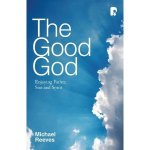
Review: The Good God, by Mike Reeves
Whatever else we may be or do, we present God to others. We present God in our preaching of the Bible, and we present God as we live our lives. A critical question, then, has to be this: which God do we present?
Mike Reeves’ new book, The Good God, from Paternoster, is exactly what the doctor ordered for the church today. And not one of those miserable doctors that prescribes some yucky fluid in a plastic bottle. I mean one of those doctors that suggests a break in the sun and a feast of good food to help you feel better from all that ails you. The church today needs to bask in the sun and feast on the truth offered so gloriously and accessibly in this little book.
Mike introduces the reader to the God who is loving, giving, overflowing, relational. With his light and accessible manner, Mike shares a profound taster of just how good God is. Clearly Mike loves God and it shows throughout. Some books on the Trinity can come across as a technical manual of heresies to avoid. Others as an exercise in premeditated obfuscation. This little book sizzles with energy, addresses the issues with clear insight rather than excessive technicality, and stirs the reader’s heart to worship, to delight, and sometimes even to laugh in sheer joy.
Mike’s biblical references scattered throughout don’t come across as a defensive attempt to prove a point, nor as a theological citation method that distracts the reader. Rather they subconsciously stir the reader to want to get back into the Bible and see this good God afresh. As you’d expect from a Reeves book, there are also enjoyable windows into church history as key voices from folks famous, and not so, pop up to share a thought along the way.
The book is shaped, well, um, trinitarianly. An introductory chapter invites the reader into the pre-creation love relationship that is the Trinity. Then the book looks at creation, redemption and the Christian life (as in, Father, Son, Spirit, although brick walls can’t be built between the roles of each in each chapter). The book closes with a chapter that asks who among the gods is like you, O LORD? I won’t give away the end of the book by sharing Mike’s answer, but I know if you start, you’ll want to read to the end anyway!
I will say this though, the advance of anti-theist “new atheism” gets a clear response in the final chapter. Oh, and for one final twist, just when you feel like there’s nothing left to add, he also addresses three of the big issues that Christians sometimes throw out in opposition to an emphasis on God’s loving relationality. Superb.
This book is a must read and a must share. As you read it you will think of others you wish would read it – from atheists to strident single-author-reading Christians. But most of all, I think you will be thankful that you read it. I am genuinely excited about how God will use this book in the years ahead!
To pre-order your copy in the UK, click here or the book image above. Note – the book will be released in the USA later in 2012 by IVP under the title, Delighting in the Trinity: An Introduction to the Christian Faith.