10 Questions for Your Preaching Year Review

TenbAs we come to the end of another year, it is good to look back and take stock.  Be careful though, it is easy to do this in a way that isn’t helpful.

As you look back, don’t emphasize things like ‘what fruit has my ministry produced?’, or ‘which was my best sermon?’, or ‘whose life has changed the most under my ministry?’  These kinds of questions put your focus entirely on yourself.  Negative versions of the same questions still do the same.

The right way to look back is in conversation with God.  Here are ten questions that may help:

1. What am I thankful for in respect to the opportunities I have had to preach?  Whether you have preached a couple of times, or a couple of times a week. Whether it has been to one church, or to multiple groups, give thanks.

2. Where have I seen prayers answered in respect to my preaching?  Take time to reflect on prayers answered as you look back over the specific preaching opportunities you have had.  Were there some challenging sermon preps that came together as you prayed?  Did certain people hear certain messages?

3. Where might my prayers have been answered without me knowing during this year?  This is the important impossible one – what might have happened that you don’t know about?  A lot.  Ponder and pray about that.

4. What sermon preparation has most stirred my heart during this year?  A specific text, or a certain series?

5. What lessons does God want me to learn from what has happened this year? Lessons about preaching, about life, about ministry, about yourself, about Him?

6. What life change have I seen that I can give thanks for?  It could be gradual or sudden, salvation or growth. Give thanks for the privilege of being a part of what God is doing!

7. How has God protected my integrity during this year of ministry?  You could be out of the ministry right now. How has God guarded you from that?

8. How has my intimacy with Christ developed (or faded) during this year?  Don’t automatically self-evaluate. Ask God to search your heart and show you His perspective on this.

9. What should I be thankful for in terms of provision to allow my ministry?  Whether it is paid employment that allows you little time to prepare, but pays the bills, or ministry-related income that makes it possible . . . give thanks.

10. Is there anything else that I should give thanks for as I finish my review?  Family support? Key friends? A mentor? A preacher you look up to and learn from? A book that has helped?  Challenges that have shaped you?  Take time for God to bring to mind whatever has been missed in the earlier questions.  Gratitude is the critical ingredient in a truly faith-driven ministry.  Give thanks.

The Incarnation is Not Just for Christmas

Boxing Day(This post appeared yesterday on www.trinitytheology.net)

The morning after Christmas Day is quiet. In our house it is quiet because the children were wiped out by a long and fun day yesterday.  In other houses it is quiet because everyone is out shopping for bargains in the sales.  For many, the magic of Christmas has now given way to a gradually growing anticipation of return to work or school.

So let me be up-front about this.  I have a vested interest in a continued interest in the truth of Christmas. After all, Pleased to Dwell is a book I have authored and I would like it to be of interest to folks for more than just a few weeks each year.  Maybe that is my motivation in pondering the subject of this post, but I hope that is not my only motivation.

Christmas is in the DNA of the Christian faith.  Why?  Because God’s Son didn’t just become one of us to launch an annual holiday. It wasn’t a publicity stunt to stir the sales of Christmas cards and boost end-of-year retail revenue. God’s Son became flesh and dwelt among us because that was the ultimate expression of the heart of God – a heart that wants to draw our hearts out of the black hole of our self-loving-vortex (think January sales), and back into true communion with the God who made us.

The Son of God didn’t become one of us for some temporary period of time, or on some fleeting agenda. He became one of us forever so that we can be united to Him forever.

Whether Pleased to Dwell continues to be a blessing to folks for the next few months is not important. Whether we a gripped by the wonder of the Incarnation and the every day, forever lover of our souls, is.


Preaching Christmas

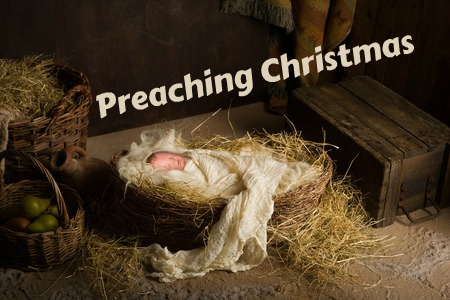
MangerJesus2Christmas is an amazing opportunity to preach to people who normally wouldn’t be coming into church.  Here are seven top suggestions for making the most of the opportunity:

1. Pray a lot – there is a spiritual battle going on and the enemy wants to keep people distracted from the truth of the gospel. In the busy world of Christmas service planning, he can also keep preachers distracted from the wonder of the gospel too!

2. Preach fact – the Christmas message is not, as most tend to think, another holiday season fairy tale and religious myth.  Luke launched his gospel with a declaration of the trustworthiness of his message, let’s take a leaf out of his book.  Look for ways to make it clear that there was an original Christmas.

3. Correct carefully – nobody likes a cavalier critique of comfortable traditions, so be careful when you point out that Jesus was not born in a cattle shed, or that Mary wasn’t timing contractions as she arrived in Bethlehem, or that the Wise Men actually arrived months later.  One of these “facts” is probably wrong, but even truth can be unhelpful if people think you are just being critical, or there is no benefit in the clarification you bring.

4. Celebrate sensitively – it is easy to hype up Christmas like a children’s TV presenter, but for many people it is a bittersweet season.  Be sure to take a moment in the message, or in a prayer, to recognize the difficulties as well as the joys.

5. Proclaim good news – yes, Christmas is a season of giving and cheer and peace.  Yes, this is a good year to mention the famous Christmas truce of 1914.  But remember that Christmas is not about stirring sentimentality and periodic pauses for peace, it is ultimately about something on the vertical plane and not just the horizontal.  Jesus came to us to bring us to God.  Don’t preach just a nice message, be sure to preach the best news!

6. Undermine assumptions – as well as communicating the gospel message in some way, remember that there is also an opportunity to undermine some common assumptions.  Making clear that there is a historical reality to the Incarnation is a good idea, and why not take the chance to clarify the nature of God’s character too?  Everyone comes into church thinking they know what God is like.  If they don’t really know Jesus, then they don’t.  Christmas is a great moment to point people not to speculations about the Majesty of God, but to bring them to the manger to meet the One who makes God known to us.

7. Worship personally – if the Christmas message has grown old for you, then you can’t preach it well.  Take some time out with your God and let Him stir your heart afresh.  Then you can preach Christmas.

Preaching Holiness – Postscript

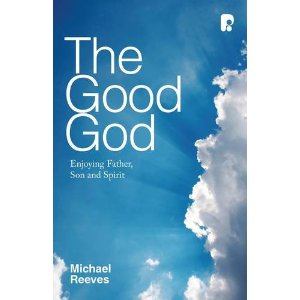
Holiness2This week I have been sharing some thoughts about holiness.  Obviously much more could be written, but just to finish the week, let me offer a quote from Michael Reeves’ 2012 book, The Good God (in the USA it is called Delighting in the Trinity).

“People even say things like ‘Yes, God is loving, but he is also holy’ – as if holiness is an unloving thing, the cold side of God that stops God from being too loving.

Balderdash! Poppycock! Or at least, it is if you are talking about the holiness of the Father, Son and Spirit.  No, said Jonathan Edwards,

Holiness is a most beautiful, lovely thing. Men are apt to drink in strange notions of holiness from their childhood, as if it were a melancholy, morose, sour, and unpleasant thing; but there is nothing in it but what is sweet and ravishingly lovely. ‘Tis the highest beauty and amiableness, vastly above all other beauties; ‘tie a divine beauty.

What is holiness, then?  The words used for holiness in teh Bible have the basic meaning of being ‘set apart’. But there our troubles gegin, because naturally I think I’m lovely. So if God is ‘set apart’ from me, I assume the problem is with him (and I can do all this in the subtlest, most subconscious way). His holiness looks like a prissy rejection of my happy, healthy loveliness.

Dare I burst my own bubble now? I must. For the reality is that am the cold, selfish, vicious one, full of darkness and dirtiness. And God is holy – ‘set apart’ from me – precisley in that he is not like that. He is not set apart from us in priggishness, but by the fact that there are no such ugly traits in him as tehre are in us. ‘God is God,’ wrote Edwards, ‘and distinguished [that is, set apart from] all other beings, and exalted above ’em, chiefly by his divine beauty‘ (for the connection between holiness and beauty, see verses like Psalm 96:9).

Now the holiness of a single-person God would be something quite different. His holiness would be about being set apart away from others. In other words, his holiness would be all about aloof distance. But the holiness of the Father, Son and Spirit is all about love.  Given who this God is, it must be. Edwards again: ‘Both the holiness and happiness of the Godhead consists in this love. As we have already proved, all creature holiness consists essentially and summarily in love to God and love to other creatures; so does the holiness of God consist in his love, especially in the perfect and intimate union and love there is between the Father and the Son.”

good-godThis extended quote has been from pages 93-94.  One more sentence to finish, “the holiness of the triune God does not moderate or cool his love; his holiness is the lucidity and spotlessness of his overflowing love.”

Okay, just one more, “The beautiful, loving holiness of this God makes true godliness a warm, attractive, delightful thing.  It is not about becoming more mean and pinched, for this God is not mean and pinched.”

If you don’t have a copy of Mike Reeves’ book The Good God (Delighting in the Trinity in the USA), be sure to get yourself a Christmas present, it is a must read.

Preaching Holiness – part 4

Holiness2This week we have been pondering the preacher and the theme of holiness.  There is so much more that could be said about each point, but hopefully we have had something to think and pray about.

15. Every sliver of unholiness will be judged and purged.  We really have no clue of how good that will be!  (That includes the unholiness of “older brother” religiosity . . . which means more of our lives will get there “as through fire” than we probably realize.  Nevertheless, what an utter relief the purging of all sin will bring to ransomed souls.)

16. When we make holiness sound like sour pickled vegetables we don’t motivate anyone to think beyond this life.  The New Creation will be wonderful in many respects, not least because of the total absence of sin and pain and tears, as well as the presence of Christ Himself.  Too many in our churches still have lingering images of sterility and fun-free hymnathons.  The Bible gives a lot of future glimpses to motivate us in the present.

17. Jesus was holy and magnetic, often our version of holiness is anything but.  The truly holy person is fully alive.  At the same time that person will be profoundly attractive and deeply offensive.  (And if the Gospels are an indicator, then such Christlikeness will be attractive to needy people, and offensive to religious people.)

18. The great threat to holiness in the church is not just the worldliness of culture, but also the pseudo-holiness of church culture.  Just as a weekend of binge behavior in a degraded society is horribly empty, so too is a relationally empty performance devoid of meaningful engagement with God and others (sometimes polite conversation can be empty too).

19. Preaching for holiness cannot be restricted to applications of conduct, nor even of conforming the mind…it must seek to engage and stir the heart.  It is not what goes in from the outside that defiles a person (i.e. religious duties and traditions), but what spews forth from the heart.  So preach in such a way as to engage the heart.  Informing the mind and pressuring the conduct will never suffice when the heart of the problem is the, uh, heart.

20. The overwhelming use of the term “Holy” in the New Testament is in reference to the Spirit of God.  Let’s be sure that our preaching is pursued with a thoroughly biblical and growing understanding of the role of the Holy Spirit in respect to our sanctification.  Too much Christianity still ignores the Spirit or turns Him into some sort of battery pack (either highly visible or highly invisible).  It is by the Spirit that we are united to Christ.  True relationally rich holiness is our privilege in the Gospel!

21. If you long for greater holiness in the lives of people in your church, don’t preach for “holiness.”  Instead, pray and preach for spiritual vitality in their relationship with Christ.  If we, and they, will love God, then what we want to do will be profoundly holy.  The Gospel does a work on our wants!
So much more could be said, but let’s pray for the beauty of God’s holiness to pervade our lives, our ministry and our churches . . .

Preaching Holiness – part 3

Holiness2This week we are chewing on matters of preaching and true godly holiness.  I won’t review where we have been already, but please do go back to the first posts if you missed them.

10. People need instructing in holiness, but never in a sermon severed from the glorious good news of the Gospel.  There are plenty of instructional sections in the New Testament epistles, for example.  Don’t go joyriding in an Imperative Harvester, but instead keep the instructions firmly planted in the rich soil of Gospel content within the context of their own Bible book.  We might take weeks to preach an epistle, but the original hearers heard them in one sitting.  So make sure you aren’t plucking instruction and losing the rich theological setting for them.

11. The preacher’s personal holiness matters beyond words.  This is more than conformity to high standards of integrity.  It also shows in your love, your joy, your peace, your patience, your kindness . . . oh wait, I see what is going on here (it’s back to the tangible reality of the Holy Spirit again!)

12. Holiness is not merely movement away from something, it is movement towards someone.  False holiness will come across as a sour reaction against everything, whereas true holiness involves movement toward God, and out of ourselves toward others.  Christlikeness involves being like Christ, who was no sour hermit.

13. We must think root and not just fruit in respect to holiness.  If we ignore the appetites deep within, then we can give the impression that holiness is something people should pretend to like (while really only obeying through gritted teeth because they would much rather be sinning).  The new inner relish given by the Spirit results in genuine hatred of sin and delight in God’s holiness.

14. The world should not be allowed to define holiness … neither contemporary culture, nor your parents’ culture.  While some let contemporary cultural values shape their own, others let the cultural values of a previous generation do the shaping. Be Bible soaked so that it shows in your life, your personality, your attitude, etc.

(Probably) the final part of the series will go live tomorrow…

Preaching Holiness – part 2

Holiness2We are pondering God’s holiness and our preaching.  Let’s continue the list of thoughts:

5. The Gospel is not just a solution for the guilt of our un-holiness, it also includes a recipe to generate true holiness.  Often preachers offer a way to get rid of the guilt, but leave listeners feeling that the pursuit of holiness and their ongoing commitment to Christ’s cause is a burden planted firmly on their shoulders.  The Gospel isn’t simply about forgiveness of sin, it also includes the transformation of the human heart and the wonder of union with Christ by the indwelling Spirit of God (the Holy Spirit).

6. The compulsion stirred in a Gospel-gripped heart is infinitely stronger than our most vehement tirade.  We will always be drawn to the notion that our pressurized guilt trip will bring about change, but only because we don’t fully understand humans or the Gospel.  Peer and preacher-pressure may manufacture diligent religious duties, but a delighted heart will give anything for the One loved.  Preach Him that others might love Him.

7. Show me a heart that truly loves Christ, and I will show you a life that is growing in holiness.  If the people in our churches could just catch a glimpse of the wonder of God’s pure love in Christ then the result would be incredible growth in holiness.  Our privilege is to seek to know Him more and offer Him more effectively.

8. True holiness momentum comes not from the pulpit, but from the stirred heart.  So preach and present the One who stirs hearts.  Our task is not primarily to instruct and constrain.  It is to present and invite.  Offer the most compelling Christ that you can and you will barely scratch the surface of the richness of the One who for all eternity has brought infinite delight to the heart of the Father in heaven.  We could always do better at preaching Christ.  Let’s stop wasting time and energy preaching performance and give ourselves to the Christian minister’s great privilege.

9. What spills from the preacher’s heart on Sunday must first thrill the preacher’s heart during the week.  If our lives are too caught up with the business of the church enterprise instead of prayer and ministering the Word, then we may give leadership speeches, but we won’t be preaching Christ out of the overflow of our own hearts.  In this sense, holiness momentum is generated via the pulpit, but the starting point is private delight in the wonder of Christ.

More tomorrow…

Preaching Holiness

Holiness2Holiness is a huge theme in the Bible.  It should be a huge theme in our preaching.  Sadly, what is often preached about holiness seems to fall woefully short of the richness of the biblical reality.

I remember hearing one preacher say confidently that what our nation needs is to be moralized.  I suspect he didn’t understand what he was saying.  Moralizing is a danger in preaching, not because we don’t want to see society transformed, but precisely because moralizing won’t do the job.  Pressuring people to conform to certain standards won’t generate holiness in our churches or our land any more than pressuring a tone deaf choir to sing in tune will lead to sweet music.

Here are a few key thoughts to ponder on holiness and preaching:

1. People don’t make themselves holy, God’s Holy Spirit makes people holy.  It is so tempting to pressure people to conform to some standard, but we must preach out of a conviction that God changes lives.  The clue is in His title, the Holy Spirit.  This reality should influence our pre-preaching prayer, our content and our manner in the pulpit.

2. When we only present holiness as being “set apart from” something, it can sound so sour and empty.  What passes for holiness in many churches is so sour and strange that it seems a million miles from the wholeness of life and love we see in Jesus as we read the Gospels.  True holiness is not pinched, it is fully alive.  True holiness is not a barrel of vinegar, it is a feast of true and abundant life.

3. God’s holiness is not sour, it is infinitely beautiful and attractive.  When we present God as a celestial killjoy, we misrepresent the God whose abundant heart created and infinite generosity created unfettered joy and vibrant life.  God’s holiness is not the sterile hygiene of an operating theatre, it is the fullness of the rich loyal love He enjoys within the Godhead…

4. God’s holiness is not balanced against His love – it is the reality of His loving Triunity.  Too often we offer strange balancing acts that seem somewhat foreign to the presentation of Scripture.  God is not infinitely loving, but only 50% that way.  It is not true that He is love (but also something else, with the “but” being an adversative).  God is love.  And that love is perfectly faithful, loyal, pure, just, righteous and holy.

The list continues tomorrow…

Prayerfully Pondered Impact

impact2For many years people considered communication to consist merely in the transfer of propositions from one mind to another.  Many preachers still do.  Actually there is a lot more going on.  Without getting too technical, Speech-Act Theory analyses communication using three measures instead of one.  There is quite a bit of scope for this communications theory to help preachers consider their task.  Here are the three measures:

A. There is the actual set of words that comprise the communication, which can be evaluated for meaning, but only incompletely.

B. What the theory underlines is that speech doesn’t just say something, it is always delivered with the intent to do something.  Some acts of speech are typically used as clear examples, such as, “I pronounce you husband and wife” … in the right context, those words actually do something.  In reality every act of speech is given with the intent to do something.  There is the intended impact of the speaker that is communicated with and by the actual words used.  So you might use the same set of words, but with different intent depending on numerous other factors, to communicate the following: a threat, a promise, a flirtatious hint, etc.

C. Once we open up the realm of the intent of the speaker beyond mere analysis of propositions (which we automatically do as listeners), then there is a third measure to bring into the mix . . . the actual effect of the speech-act.  What actually happens may be intended or unintended, and it may be multi-layered.

If you want to chase Speech-Act Theory, by all means search for it, or for the terms locution, illocution and perlocution.  For now I want to probe this final element described in respect to preaching…

Do the actual effects of our preaching match our intended effects?  Obviously we have a significant added dimension as preachers – that God brings conviction, transformation and growth.  Nevertheless, it is definitely worth pondering our impact prayerfully.  Here are some possibilities:

1. Do people take our tone in the way we intend?  You might mean to come across as loving in what you say, but actually be felt to be antagonistic, negative or aggressive.  You might intend to couch certain content in a tone of hope, but come across as uncertain and hesitant.

2. Does the main goal of the message get through?  We do look to God to bring about transformation, but that doesn’t excuse us from prayerfully intending certain impact.  Are we seeing that impact over time?

3. Do secondary but significant goals get achieved in your preaching?  For instance, you might intend for your listeners to be motivated to read their Bibles during the week, but does your preaching bring about that motivation?  Prayerfully pondering actual impact might lead to some tweaks in your preaching that will help your church.

Pondering Passage Purpose

arrow target2As a preacher studying a passage it is tempting to be purposeful in pursuing your own message, but to ignore the purpose of the passage. Maybe you are intrigued by the passage, or perhaps wondering how it could be preached.  Yet somehow, in the mix, we seem to lose sight of looking for why the writer wrote the text.  That is, rather than simply looking for what the writer wrote, we also need to ponder why the writer wrote it.

1. Look at the context – It is vital to look at any passage in its context.  What is going on around the text you are focused on?  What is the flow of thought or logical progression in the book?  What does the book generally say about its purpose (perhaps in the introduction, conclusion or “letter-frame”)?  If you have ever studied hermeneutics at all, you should be committed to the importance of context – not just for words, but also for sections.

2. Look at the content – This tends to bear the weight of our study efforts.  What words are used?  What are those words referring to?  How are sentences structured?  And so on.  Content is very important, especially when it is understood in context.  But combining contextual study with analysis of content is not the whole process.  Don’t miss the next one for a fuller grasp of the meaning of any text:

3. Don’t forget to consider the intent! – Content in context will do a lot to explain the “what” of a passage.  But unless we are deliberate, we can fail to recognize the “why” of a passage.  This may seem circular, but unless we are alert to the “why,” then we can’t fully grasp the “what.”  Look for clues in context, in content, in tone, in attitude, in the presence of imperatives, etc.  Some of this is hard objective analysis, some of it requires more of a subjective feel . . . which is not license to impose intent, but recognition that we must really listen to a text and be gripped by it, rather than merely passing it under the microscope of our preconceived expectations.

Passage purpose is easily neglected, but if it is, our preaching may feel like analysis . . . without vitality.  If we start to prayerfully get to grips with the intent of the original author, then we will tend to find the Divine Author getting to grips with our hearts through the passage.  Once we find some clarity on the purpose of the passage, then we also have a great starting point to consider the purpose of our message.  Pursuing the author’s purpose tends to fit with God’s purpose in my heart, and then helps with clarity on His purpose in my preaching that passage to others.