This is the time of year when people summarize and review the year that is coming to a close. So I decided to do that. At least for me it is good to look back over a year’s worth of posting on this site. According to my stats, the top post continues to be one from back in 2007 on Sermon Titles, followed by another golden oldie on Preaching Psalms. Actually it is hard to review stats for 2010 since most people read the posts as they sit on the Home page. So I came up with the very arbitrary standard of checking which posts received the most comments (which could mean they were the worst posts, of course!) So here are the results . . .
Review
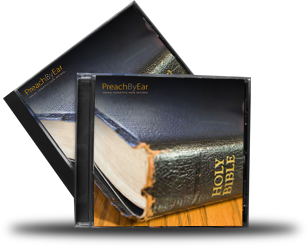
Review – Preach By Ear, by Dave McClellan
Dave McClellan is a graduate of Grace College and Denver Seminary, as well as having a PhD in Rhetoric & Communication from Duquesne University. He is the pastor of The Chapel at Tinkers Creek.
What if there were a different way to prepare and to preach? What if we have learned preaching in a primarily literacy-based worldview? What if preaching were really an oral form of communication – not just in delivery, but in every respect? What if there were a genuinely oral homiletic? Preach By Ear leans heavily on Walter Ong’s work in respect to orality and literacy. Since the massive changes wrought by the printing press, we have gained so much. But Dave McClellan suggests we may have lost much as well.
He argues compellingly that preaching is intended to be genuinely from the preacher, rather than an external, arms length, process. Yet the effect of literacy is to separate thought from the person. Hence so much of today’s preaching is prepared via book study that is held at arms length, then delivered leaning on notes that keep the sermon separate from the preacher and completed before the event of delivery. McClellan suggests that while preaching has moved back and forth on the orality-literacy scale through the centuries, the 20th century saw the most extreme move to the literacy end of the scale ever.Homiletics was separated from rhetoric and the approach we are familiar with is not as balanced and effective as we may think it is.
As well as leaning Walter Ong, McClellan also looks to Quintillian for rhetorical input. The DVD’s contain a 7-part series of presentations, with each part ranging from 15-25 minutes in length (the final part – “homework” – is a bit longer). On the one hand the full series is necessarily brief and lacking in the extra background and footnotes that a book might offer (as well as more worked examples to help the viewer see how Preaching By Ear can be genuinely expositional in practice). On the other hand, the series didn’t need to be any longer (it is up to the viewer to apply the lessons learned in a way that handles the text well). It achieves its purpose of introducing an alternative approach to preaching and sermon preparation well. It may make you want to pursue aspects of the subject further, or simply start getting experience with this different approach.
This double DVD set is very well produced and enjoyable to watch. While it is not exactly “Hollywood” in production quality, it goes well above and beyond a video of a seminar. The quality of production is clear in the clips available on the website – see below. Anyay, in the 7-part series on the DVDs, Dave McClellan lays a foundation for an orality-based approach to preaching and then offers some instruction. The first three parts present the concept of orality and literacy, a theology of orality and a brief (but interesting) history of preaching. The next three parts are concerned with preparing the preacher, preparing the message and delivery. The final part offers a series of practical suggestions to help the viewer become better prepared for genuinely oral preaching.
I would encourage you to get hold of this DVD set and ponder its content. Perhaps you’re already kind of thinking this way. Perhaps you’re at the opposite end of the scale. Wherever you are at in your preaching, I think it would be worth adding Preach By Ear to the mix.
By the way, during July the DVD’s are on sale for 50% of the normal price. To see preview clips and order the DVD set, please go to PreachByEar.Com
Review: The Making of a Mentor, by Ted Engstrom & Ron Jenson
Subtitle: 9 Essential Characteristics of Influential Christian Leaders, 2005.
A decade ago I took a class on mentoring and had to read Howard Hendricks (As Iron Sharpens Iron) and Ted Engstrom (The Fine Art of Mentoring) among other books. They convinced me of the critical importance of this subject. From my experience in life and ministry, and my observation of both, I am increasingly convinced of the importance of mentoring.
This is not a preaching book, nor is it a book written for preachers. However, if leadership is influence, and if preachers are leaders, then we must consider the issue of mentoring. What a tragedy for so many preachers to pour their lives into preaching (for the sake of others), yet never to invest their lives directly into other individuals. While I might be pushed to agree with Martyn Lloyd-Jones that preaching is the highest calling, I would suggest that mentoring is the heart of Biblical ministry.
Ted Engstrom and Ron Jenson teamed up to write The Making of a Mentor. While not setting out to write an endless list of “how-to’s,” they have included a lot of practical and helpful advice in this short book. However, the focus is on the kind of person who will mentor effectively. It is a book of personal testimony combined with a description of godly maturity that will lead to effective personal investment in the lives of others.
They begin with testimony of their own mentoring experience, demonstrating a chain of mentoring down through four “generations” of mentorees. This includes two friend to friend relationships, and one father to son relationship. I suspect some British readers may find the vulnerability and willingness to talk about themselves uncomfortable, but I feel this is a great start to the book. It is a contemporary demonstration of Paul’s self-giving in 1Thess.2 – a passage to which they return repeatedly throughout the book.
The bulk of the book works through nine characteristics of influential mentors, each chapter combining testimony with biblical support and finishing with helpful responses from a variety of Christian leaders in various fields. (I enjoyed noticing people I’ve known at seminary and elsewhere . . . perhaps you’ll know some of them too?)
To pique your interest, the nine characteristics considered are encouragement, self-discipline, gentleness, affection, communication, honesty (vulnerability), servanthood, godliness and confrontation.
I won’t share more detail here, but I would encourage you to get this book and prayerfully read through it. The summary of main points in the appendix is very helpful, the tone is encouraging and the content is often inspiring.
I’d love to encourage more preachers to mentor other preachers, but also remember the greater number of people (non-preachers) ready to be mentored simply by you, a more mature believer. I remember hearing Howard Hendricks describe how meeting with a group of five men every week over a period of time meant so much to him. He said something like, “if I die today, I die satisfied because of those men!” What about you? What about me? Will we die satisfied because of life-on-life investment in key individuals?
Review: Explosive Preaching, by Ron Boyd-MacMillan
Subtitle: Letters on Detonating the Gospel in the 21st Century.
Published in 2006 by Paternoster.
I partially reviewed this book several weeks ago. Please take a look at that “pre-review” (click here). My opinion of the book has not changed as I’ve finished it. It is creative, insightful, humorous, challenging and helpful. There are small moments where you may find it annoying, but better to provoke reaction than to leave no mark at all!
To be honest the third section, on the history of preaching, was decent and helpful, but perhaps not quite as good as I’d hoped for. Nevertheless, it is worth reading. The final section, on the life of the preacher, is excellent. Although somewhat scattered with a feel of “mopping up” the bits that were left over, these chapters were nevertheless worth the price of the book.
I have heard that this book is hard to get hold of in the USA. If that is the case, then it is a real shame. Even if you need to order the book from a UK seller on Amazon marketplace, I would encourage you to do so (I order books from the US this way at times, and have never had a problem).
A lot of book about preaching tend to say the same thing again. This one doesn’t.
Pre-Review: Explosive Preaching, by Ron Boyd-MacMillan
Subtitle: Letters on Detonating the Gospel in the 21st Century.
Published in 2006 by Paternoster.
I was urged to get this book in a brief lunch-time encounter last month. Based on the enjoyable nature of our conversation, I trusted the advice of this new friend and bought the book. I’m glad I did. This book is comprehensive in scope and highly helpful in content. The author works for Open Doors International and serves, among other things, as a tutor to preachers and speech-makers.
It contains 31 “letters,” I suppose in the style of Screwtape Letters, although essentially the letter style is not really sustained within each letter to any meaningful extent – it simply allows the author to pour forth his thoughts. Since I am only half-way through the book at this point, I can only give a pre-review. I’ll review the whole book once I get to the end. This is the book I have been referring to over the past few weeks.
So far I have read this book with an almost constant smile on my lips, even though I acknowledge that much of the content is very serious, sobering and challenging. The book is still an entertaining read. I suppose it is also tempting to be as condescending toward the book as the author is toward other homiletics writers (perhaps myself included – would I fit in his category of puerile homiletics writers that keep on stating the obvious or making the whole task seem unnecessarily complex?) But rather than feel condescending toward a book with an edge, despite our denominational, ecclesiastical and even slight theological differences, I would rather engage with the book and learn from it.
The first two sections of the book deal with the problems in preaching and the elements of preaching. So far I’ve found much that has been challenging and helpful. I am looking forward to the subsequent sections on the history of preaching and the life of the preacher. I suspect this book might creep into my top books page, but I’ll read the whole of it before I make such a major decision!
Review: Bibleworks 8
I’ve had Bibleworks for many years (since the Hermeneutika days!), but I’ve had Bibleworks 8 for just a couple of weeks. Is it worth upgrading from an older version? Is it worth buying Bibleworks for the first time? Yes and a qualified yes. The qualified yes is that it is worth buying Bibleworks for the first time if you are serious about biblical exegesis, especially original language work. If all you want is a Bible on the computer and the ability to do a simple search for a word in the English Bible, then you can get cheap or even free software to do that. Bibleworks is not a library of commentaries, although it does have an increasing set of quality reference tools built-in. Bibleworks is not a collection of public domain reference tools that are freely available elsewhere. Bibleworks is about serious biblical exegesis, especially in the original languages.
Some things don’t change. The basic feel of the program is the same as before, although the user interface is now more logical in its organization. You still get more Bible versions than you’ll know what to do with, including numerous foreign language versions (great for missionaries), a significant array of Greek and Hebrew grammars and access to such things as the Belgic and Westminster Confessions, and Schaff’s church fathers.
Most things keep improving. In reality there are now more of the above versions (TNIV, NIrV, plus Japanese, Chinese, Korean, Macedonian, Russian, Arabic, etc.), grammars and historical texts. I was interested to see that Waltke & O’Connor as well as Dan Wallace’s grammar are now included without needing to be unlocked (Jouon and Muruoka are included too, but I haven’t got into that yet!) There is now another set of NT Greek diagrams to compare with the previous set (which leads me to ask why this was not available when I was in seminary, and also to make some passing comment about how easy it must be now compared to “back in my day!”) Apparently, you can now listen to the English text read aloud (if you’re on Vista, which I’m not, so I can’t comment on how that sounds).
The real heart of Bibleworks is how easily it allows complex searches and access to text related information. Both are easier and better in version 8. The Analysis Window is clearer and more sensibly organized. Now there is more information close to hand when working in a text. I like the context tab, which gives lists of word frequency in the pericope, chapter and book. The stats tab gives visual representation of the current search results, and the X-refs tabs gives sets of cross-references associated with the current verse (which I suppose some preachers will enjoy too much!) Phrase matching and related verse tools are impressive new features, finding the same wording elsewhere in the canon. Grammatical searches are easy to use with auto-complete features. Not only does Bibleworks have lots of searching tools, it also has them very well integrated.
The text export function is now far more sophisticated, so once I figure out how to use it, I won’t have to reformat every verse I import to MS Word (and once I check the instructions I am sure it will become clearer how to get this feature to work the way I want it to!)
Overall impression so far? I didn’t know if I’d notice the difference, but I do. I’m glad I’m blessed with Bibleworks 8 and I would encourage others who do serious exegetical work with original languages to jump in and join me. I have Logos/Libronix, but honestly always go back to Bibleworks for working with the Bible (and to Libronix for the excellent commentaries). I cannot compare Bibleworks with Gramcord or Accordance as I don’t have or use either, but I can compare Bibleworks 8 with 7, 6, 5, 4, 3.1, etc. It’s better.
For more info, pricing, full database lists, etc., please go to bibleworks.com or if you’re in UK/EU go to bibleworks.co.uk
I would be interested to hear from other Bibleworks users what features you find helpful in your sermon preparation.
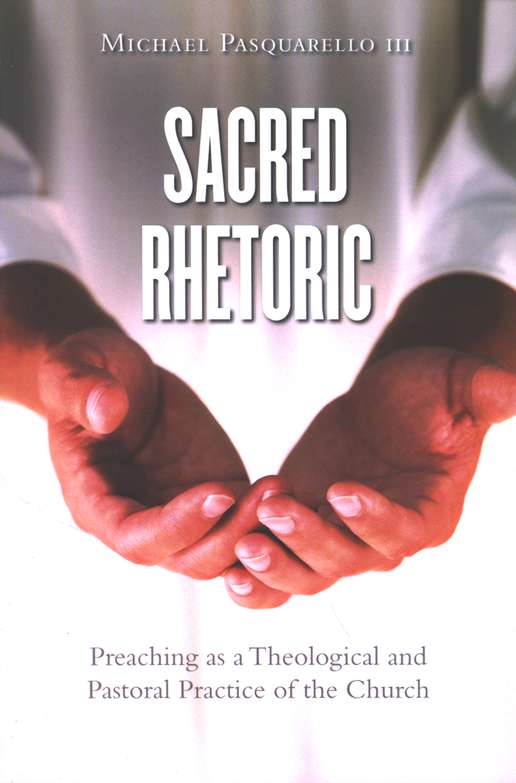
Review: Sacred Rhetoric, by Michael Pasquarello III
Subtitle: Preaching as a Theological and Pastoral Practice of the Church (2006)
Pasquarello is concerned by modern approaches to preaching. He sees contemporary approaches as being obsessed with “how-to’s” at the cost of having lost the divine-human conversation – we’ve mistakenly traded in communion for consumption. The field of homiletics, by establishing itself in distinction from the related fields of theology, exegesis, spirituality and worship, has somehow lost its moorings and become merely a technical field of somewhat sanctified communication.
This book offers nothing new, but rather seeks to reconnect us to the past. It seeks to offer the possibility of engaging with ten esteemed mentors in the field of preaching, ten mentors from church history. From them we can reignite a passion for true preaching – that which is “a theological and pastoral activity [of the church] that locates us in God’s story, drawing the world with us toward our true end: peace and friendship, communion with the Triune God.” As Steinmetz suggests in a quote in the conclusion, “Only when we have regained our identity from the past can we undertake our mission in the present.” (Both quotes on p135.)
The majority of the book is not a critique of present practice, but rather a presentation of ten preachers from the past. Beginning with a slightly more lengthy treatment of Augustine, the book moves on to consider such esteemed names as Gregory the Great, Benedict, Bernard of Clairvaux, Bonaventure, Aquinas, Erasmus, Latimer, Luther and Calvin.
I do not feel adequately prepared to make judgment on whether the presentation of these men is either accurate or rightly balanced in terms of historical detail. What I do know about church history suggested the presentations were on track. However, as a reader I can say that this book stirred my heart for the privilege of preaching – participating in the central action of God’s story in this age.
Although short (139pp), this is not a quick read. It takes time to ponder the presentation of each preacher. It takes time to digest the relative benefits from conversation with each one. It takes time, but it is worth it, for we are surely not participating in something new in our generation. We stand as preachers, as those engaged in the glorious calling to sacred rhetoric. Whether or not you are a regular reader of church history, this book is well worth reading as we seek to participate in God’s ongoing story.
Review: Preaching for Special Services, by Scott M. Gibson

They say you shouldn’t judge a book by its cover. In this case I think you shouldn’t judge a book by its size. This short one-hundred page book is well worth having for several reasons that I will list below. Honestly, I only picked it up in order to scan it and make space for a new book on my “preaching books to read” shelf. I’m glad I did.
This book is focused on “special services.” That means weddings, funerals, baptisms, infant presentations, the Lord’s Supper and a selection of other events in the final chapter including evangelistic sermons. In each chapter Scott Gibson presents a brief but well-informed history of preaching on that occasion in Jewish and Christian history. He briefly outlines elements of a theology of preaching for such an event. Then he addresses the issue of developing the sermon, before the closing section on delivering the sermon. There is a sensitivity and gracious spirit throughout. The book follows the Haddon Robinson approach to sermon preparation.
Three reasons why I’m impressed with this little book:
1. It gives specific, helpful and gracious instruction for how to prepare and present a biblical sermon at these special services. For many preachers these events tend to be an extra burden in the schedule, but for those present or involved, these events are long remembered. Gibson offers help to the preacher, who will remain in the shadows of the event and yet brings a word in season for those gathered.
2. I suppose this book could be written simply with the sections on how to develop and deliver the messages. I certainly wasn’t expecting the valuable historical and theological elements in these chapters. Although short, these concise sections add great value to the book.
3. Scott Gibson does not try to re-create what Robinson has done so well in terms of the big idea approach to sermon preparation. What Gibson does throughout the book is concisely and helpfully integrate and contextualize Robinson’s model (for example the careful concern for a sermonic purpose statement in each chapter). Some who have read Robinson may find that elements “click” in their understanding when reading Gibson’s specific-occasion application of that model.
(And, a minor fourth point, unlike Gibson and Willhite’s Big Idea of Biblical Preaching, this book was almost bereft of editorial oversights. There’s a sermon purpose statement error on page 97, and an extra word in a book title on page 99, otherwise the book seemed “clean.”)
(Published in 2001)
Review: Preach the Word, edited by Leland Ryken & Todd Wilson
Subtitle: Essays on Expository Preaching in Honor of R. Kent Hughes (2007)

Kent Hughes is a name I have been aware of for many years, but honestly I have never heard him preach or read any of his books. Still, this book of essays written in his honor caught my attention. Collections of essays in honor of individuals of spiritual stature range in quality from excellent to extremely ordinary. Sometimes their quality of production falls far short of the person’s life and ministry they are intended to honor. Not so in this case. This book is a quality production from Crossway and a decent collection of essays from an impressive list of contributors. This book is worthy of our attention.
Divided into four parts, the book contains sixteen essays, culminating in a gracious and encouraging biographical essay on the life and influence of Kent Hughes. By the end of this book, you will have greater motivation to pursue the exposition of God’s Word, and a greater passion to expand that ministry by influencing the next generation. Not a bad legacy to honor Kent Hughes’ ministry.
The first part is concerned with Interpretive Principles and Practices. The book begins with a call to expository preaching from David Jackman. John MacArthur offers a sound although very basic introduction to inductive Bible study. Paul House considers the preaching of Old Testament narratives with a focus on three sermons from Acts. Wayne Grudem offers a helpful chapter on rightly interpreting the Bible. The only chapter to surpass Grudem’s contribution in this section is the excellent offering on “The Bible as Literaure and Expository Preaching” by co-editor, Leland Ryken.
The second part focuses on Biblical and Historical Paradigms. Bruce Winter helpfully considers Paul’s approach to warfare in reference to the thought processes of his listeners – how to preach to minds not fully renewed. Duane Litfin’s chapter on Paul’s kerygma foolishness in 1Cor.1-4 is superb. In my notes I remarked the book was worth the price for this chapter alone. Wallace Benn moves the book into church history with a straightforward summary of Richard Baxter’s classic, The Reformed Pastor. J.I.Packer then adds another heavyweight and inspiring article (in power, not in density), a delight of a chapter on Charles Simeon.
The third part concerns Contemporary Challenges and Aims. Here you find Phillip Jensen and D.A.Carson’s more engaging lecture on contemporary challenges in ministry. Philip Ryken then offers a very good call for expository preaching that is evangelistic, doctrinal and practical.
The fourth and final part focuses on Training and Example. Peter Jensen considers the seminary setting, where he rightly wishes that expository preaching were the primary goal of the entire faculty. Jon Dennis offers a detailed list of eight principles for multiplying ministers from 2Tim.2:2 and its surrounding context. David Helm brings in British church history again, in an engaging article that looks for a generation of preachers to be trained.
This is a solid book, well worth buying and reading. The essays are all decent and worthy of their place, although it must be recognized that the offerings of Leland Ryken, Duane Litfin and J.I Packer (perhaps with David Helm’s historically birthed effort attached to Packer’s consideration of Simeon) – these stand out as especially worthy of note and worth the price of the book!