Book Review: Is There a Doctor in the House?, by Ben Witherington III

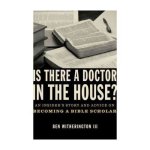
Is There a Doctor in the House?  An Insider’s Story and Advice on Becoming a Biblical Scholar, 2011, Zondervan.

I picked up this little book thinking it would only appeal to my interest in academia, but found it to be of value to all involved in Bible handling – students, preachers, teachers, scholars.

The label “scholar” gets thrown around a little too easily.  If one person in the church is starting to learn biblical Greek, they get labelled a scholar.  They may  barely even be a student yet!  In this book, Witherington reflects on his experiences as a student, pastor, teacher and writing scholar.  His manner is winsome, his sometimes amusing experiences shine through, and his insight helps the reader to see just what is involved in being truly earnest about God’s Word.

He begins with an excellent illustrated guide to a PhD, before explaining his own experiences getting a PhD in Durham in the 1970’s.  It is great to read of his exposure to such scholars as C.K. Barrett, C.E.B. Cranfield, T.H.L. Parker, etc.

Even if you don’t care to understand the differences between the British and American doctoral systems, the book quickly moves into a survey of the necessary fields of study required of biblical scholars.  While brief and maintaining momentum, these chapters give helpful insight into language study, historical/cultural background study, literary sensitivity, as well as integrating biblical research into theological and ethical studies.

The latter chapters address the necessary subject areas of research and writing, hermeneutics, key skills in lecturing and teaching, as well as the character issues that can easily get lost in the mix.  The book ends with a brief survey of the sacrifices involved (not just for the scholar, but also for the spouse), and a resounding, “I would do it all again!” from a man delighted by the privilege of his study, his career, his vocation.

I interact with folks who hold to a kind of self-taught piety.  They have their library of 66 and the Holy Spirit and consider themselves to be un-credentialed scholars.  Maybe some are, in some way.  But where their attitude becomes derisory toward academic biblical scholarship, I do get concerned.  This book should be required reading for all who care to sit in judgment over the academy, as well as those fascinated by it.

Most of all, this book graciously raises the bar on our commitment to really doing the work involved in handling the Bible well, and offering the fruit of that study to others in ministry.

(If you are in the UK, click here to go to the book on Amazon.)

Add to FacebookAdd to DiggAdd to Del.icio.usAdd to StumbleuponAdd to RedditAdd to BlinklistAdd to TwitterAdd to TechnoratiAdd to Yahoo BuzzAdd to NewsvineLike This!

Saturday Short Thought: Ajith Fernando on Technology & Theology in Preaching

This week I have been thinking out loud about technology and sermon preparation.

Later today I will be adding a book review of a book on biblical scholarship by Ben Witherington III.  Let me quote a brief segment that is relevant to our subject this week:  “We begin to believe we can find anything on the Internet if we are just computer and web savvy enough.  This is false.  You can waste a lot of time searching for things on the Internet, when what is needed is to travel to an actual library or consult with scholars in person.”  (Witherington, Is There a Doctor?, p85).

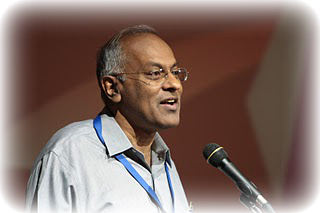
The LinkedIn preacher’s group has also had a bit of a discussion going on this subject – if you are on LinkedIn, please join the group.  I asked Ajith Fernando if I could quote his comment on this site, and he graciously agreed.  Ajith is the Teaching Director for YFC in Sri Lanka and is a regular expositor at well-known Christian conferences around the world.

Technology could be a help or a hindrance to good preaching. One of the biggest problems in the church is that our leaders are technicians when they should primarily be thinkers, theologians–that is, with everything they do coming from reflecting on the teaching of the Scriptures. For example, the great John Stott who was in every way a great theologian of the Christian life applied to contemporary life was not computer savvy. I use technology a lot. But I try to make it something that helps me do technical work (e.g. exegesis) faster and more efficiently than before so that I will be freed to give extra time for thinking, meditating, applying etc, etc.

Add to FacebookAdd to DiggAdd to Del.icio.usAdd to StumbleuponAdd to RedditAdd to BlinklistAdd to TwitterAdd to TechnoratiAdd to Yahoo BuzzAdd to NewsvineLike This!

The Downside of Technology and Sermon Prep

Sermon preparation does not require technology.  A Bible, maybe some paper and a pen, time and the Holy Spirit.  These seem to be the necessities (and it would be possible without the pen and paper, if necessary).  But this week I’ve been looking at various technological helps for sermon prep.  Undoubtedly all that has been mentioned has value and can be very helpful.  Yet it would be remiss to end the week without waving these four flags of caution:

Time – Using technology can undoubtedly save time.  Reorganizing a message using cut and paste is much quicker than rewriting the whole message.  Almost instant access to the right page in a commentary, or almost instant concordance searches are amazing innovations in our generation.  But technology can also sap time.  My mind immediately jumps to two, one of which I haven’t mentioned this week.  Social networking can be a massive time sapper.  So can preparing Powerpoint.  I haven’t mentioned Powerpoint because it is really a technology designed to help presentation, rather than preparation.  I will say this though – it is worth pondering whether the two or three hours (and more!) had been spent in improving the oral clarity of the message, would the message have been more compelling, gripping, clear, etc.?  In many cases, the answer is a definite yes in my opinion.  Anyway, I’ll leave powerpoint and similar for another series.

Distraction – Using technology offers instant access to so much, but it can also offer distraction from the task at hand.  I’m not saying we shouldn’t use computers (and alarm clocks, phones, etc.)  I am saying that we shouldn’t be naïve to the distraction that technology, especially the connected technologies online, can bring to our week.  Maybe it would be worth keeping an accurate time log to discover just how distracted you get in a typical week!

Booklessness – I mentioned this earlier in the week.  With all the benefits gained from online libraries and electronic books, etc., there does seem to be something lost when we don’t have a physical, tangible, real paper book on the desk before us.  It may be hard to explain, but there does seem to be something about actually looking at paper, rather than being gradually blinded by the screen.  There is something about actually retaining information, rather than merely being an expert in where to find it.

Prayerlessness – I pray when I’m working on the computer.  But not always.  Sometimes the combination of overwhelming information and the urgent though not always important needs, not to mention the noise of social media . . . well it can add up to seasons of prayerlessness.  Even if that season is an hour, it seems to me that that is too long.  If I weren’t using technology, would I be prayerless for an hour?  Our churches need preachers who are walking very closely with God, who pray, who read . . . people that used to be referred to as “divines.”  I don’t think it is just the label that has gone out of fashion.

Add to FacebookAdd to DiggAdd to Del.icio.usAdd to StumbleuponAdd to RedditAdd to BlinklistAdd to TwitterAdd to TechnoratiAdd to Yahoo BuzzAdd to NewsvineLike This!

Bible Software and Sermon Prep

This post isn’t a fair comparison of Bible software, but it is a suggestion that you look into the value of something beyond the free options.  I shared a free option on Monday, and others have followed in the comments.  If you are in a position to invest financially in software, then Bible software is well worth considering.

There are three “big boys” that I’ll mention.  Feel free to add your experience with any of these, or others you’d care to mention too.

 Available on PC and Mac, Logos offers an impressive array of content.  I’ll be honest, I’m still getting used to the pure Bible functions of Logos, as I have been a Bibleworks user for so long (and still reach for it on my netbook at times).  But it seems to me that Logos is improving and at least catching up in terms of exegetical function.  Where Logos seems to stand alone is in the array of commentaries and research materials you can get on it.  My suggestion is to prioritize the quality commentaries and resources so that they are the ones that you automatically go to when you are looking at a passage (i.e. there are plenty of resources on Logos that you shouldn’t feel bad about ignoring – it’s still worth the price for the quality ones!)

 In simplistic terms, if you want lots of books, go to Logos.  If you want to work with the text itself rather than commentaries, especially in the original languages, then Bibleworks is fantastic.  It is a PC based software (although some do run it on an emulator on the Mac, I haven’t gone down that route).  Truth is that Bibleworks is probably capable of much that you will never use.  I would say that people with any original language knowledge probably need something beyond the free options, and this is definitely one to consider for PC folks.  If you don’t use Greek and Hebrew, then Bibleworks will still prove very helpful, but you may find the cost prohibitive (as with all three).

 I can’t speak for this one as I haven’t gone there.  Accordance is the Mac based Bible software.  Users I know seem to delight in it, primarily for its intuitive Bible-handling interface, but it also has Logos-like collections of resources that can be added at a cost.  I suppose Accordance would argue: what is the point of emulating a PC on a Mac?  If you have a Mac, you know how it works, and so do the Accordance folks as they’ve always designed their software for this platform.

For many, these software options represent a luxury that is simply out of reach financially.  For that reason I am thankful that the gap between free and expensive is not as big a gulf as it would be in most purchases.  For those who have experience of any of these, I’m sure others would appreciate your comments.

Add to FacebookAdd to DiggAdd to Del.icio.usAdd to StumbleuponAdd to RedditAdd to BlinklistAdd to TwitterAdd to TechnoratiAdd to Yahoo BuzzAdd to NewsvineLike This!

Disconnected Technology and Sermon Prep

Yesterday I blogged about some of the ways we can be connected to others as we prepare a sermon.  Today let’s unplug the router and think about disconnected technology that may be helpful:

Word Processor – I suspect this is by far the most popular sermon prep tool.  Recording notes in our biblical study, cutting and pasting information in, typing out manuscript or outline, being able to format for fading eyes, etc.

Recording Equipment – While the word processor records through the input of our deftly moving fingers, there are other recording devices that can be useful.  I mentioned audio recording on smartphone apps yesterday, and the same would apply to any type of dictation device.  Sometimes you may not have, or be able to safely or efficiently use, a pen and paper.  And speaking of paper, every time I fly and look in those shopping catalogues in the sky, I’m always drawn to the scanner pens.  Scanning sections of a book to then transfer into the word processor, seems like a nifty gadget.  Anyone use one?  Worth it?

Bible Software – This is a big category, so I’ll post on this separately tomorrow.

Alarm Clock – Here’s a clever little piece of technology.  Some of my most productive hours are early, but without my alarm I often wouldn’t see them!  And for “bi-vocational” preachers, I suspect this is a must.

Square Scolls – Talking of all this newfangled gadgetry and advanced technology, let’s not forget one innovation that surpasses everything listed so far this week – the book.  There is a very real danger that preachers get caught up in contemporary technology and miss the powerful combination of some earlier advances in technology – the codex and the printing press.  What a privilege to own even a single book!  It is intriguing how technology is supposed to save time, yet sometimes it seems to create noise and squeeze out time from things that really matter.  Preach well this week, get your nose back in a book!

Add to FacebookAdd to DiggAdd to Del.icio.usAdd to StumbleuponAdd to RedditAdd to BlinklistAdd to TwitterAdd to TechnoratiAdd to Yahoo BuzzAdd to NewsvineLike This!

Connectional Technology and Sermon Prep

This week I am looking at the use of technology in sermon preparation.  Yesterday I shared three online research tools that I find helpful, but there’s more to “connected” technology than accessing articles and notes.  Here are a few more possibilities to consider:

Social Media – I see some real advantages and disadvantages to the use of social media like Facebook, Twitter and LinkedIn (if you are on any of these, please click the link and let’s connect there).  Sometimes asking a question on one of these sites can get a helpful response from folks in your network, which may be useful in sermon preparation.  I certainly don’t use this as much as some do.  I have seen the Facebook page associated with this site used a bit along these lines, and the LinkedIn group for Biblical Preachers is certainly growing as a helpful venue for pre-sermon discussion.  But if I’m honest, I see the main pro and con on a fairly simplistic level: good connections tend to post helpful links to resources that may be useful, but the noise generated by all social media can very easily become a significant distraction and time waster.

Quick Book Access – I don’t have a kindle or equivalent e-reader, but I do see one big advantage (apart from the benefits in travel) . . . instant access to a book. Generally, of course, it is better to be planning ahead and have what you need. But I’m sure I’m not alone in getting into situations where I suddenly realise a specific book would be really helpful and the clock is ticking.  A couple of times I have bought a book for access on a free Kindle app, just so that I can have instant access.  Luxury?  Absolutely.  But at the same time it is good to give our very best in sermon prep.

Note Taking – Smart phones can be just another source of noise and distraction, but they can be helpful too.  I’ve taken audio notes while out and about.  And I know some preachers delight in the free app Evernote, for example.  I think this does have good potential in terms of logging observations and illustration ideas, as well as capturing research information.

Telephone – Don’t miss the obvious!  Sometimes there’s nothing like getting on the phone to someone you trust and talking through your prep with them.  What can be achieved in twenty minutes in conversation with someone on your wavelength can sometimes break open a log jam in your thinking and save hours of low productivity preparation.

What other connectional technology do you find useful?

Add to FacebookAdd to DiggAdd to Del.icio.usAdd to StumbleuponAdd to RedditAdd to BlinklistAdd to TwitterAdd to TechnoratiAdd to Yahoo BuzzAdd to NewsvineLike This!

Online Research and Sermon Prep

This week I’ve decided to post about the use of technology in sermon preparation.  Searching for help with biblical study online can be hit and miss.  For most people it is mostly miss since they don’t know where they are looking.  Not every web-based resource is created equal.

Consequently people tend to end up looking at some blog from somebody pontificating without any credibility (not in every case, of course, but there are plenty of them out there).  Or you end up with free resources that lean on public domain materials, which may be ok, but often are very outdated and not the best place to be spending your energy.

Here are some sites I don’t think you should miss, and they are free.

net.bible.org – The NET Bible is an excellent translation that I hope will continue to gain in popularity.  I know some of the translators and have really enjoyed using this version in recent years.  Now the new online study environment is one not to miss.  The NET Bible, other versions too, as well as the excellent translators’ notes (explaining why they made the decisions they did with the text in a way that is accessible to non-original language scholars), plus Thomas Constable’s class notes (Bible exposition prof’s notes covering the whole Bible – while I might not agree with every detail, these are a solid resource that most people would have published years ago – I love it when people give away quality material!), plus numerous articles from experts like Dan Wallace (Greek Grammar Beyond the Basics, etc.)  You need to check this out.

Other Bible sites – it is worth looking at Biblia.com (especially if you have a Logos account, sign in and access more resources, but even without there is some helpful stuff there).  I’m sure the usual suspects will be mentioned in comments too.

www.biblicalstudies.org.uk – This resource is growing all the time.  A friend of mine has been plugging away at this for years (I’d love to see more people catch the vision and support him so he can do this even more efficiently).  There is a growing resource of pdf articles from theological journals and magazines on this site, as well as its sister sites related to theology and historical studies.  Obviously journal articles are of different quality, but all have been published.

www.theologynetwork.org – This is a great site associated with UCCF which provides written, audio and video resources.  Especially strong in areas of theology and historical theology, if you don’t have this site bookmarked you are missing out on a massive set of free resources.

There is so much online, but I’d suggest you get these three sites bookmarked and start there rather than simply googling the passage you are studying.

Add to FacebookAdd to DiggAdd to Del.icio.usAdd to StumbleuponAdd to RedditAdd to BlinklistAdd to TwitterAdd to TechnoratiAdd to Yahoo BuzzAdd to NewsvineLike This!

Saturday Short Thought: The Deeper Side of Confession

This week I have shared some candid thoughts from the perspective of the preacher.  But I haven’t gone into the whole arena of confessing sin as a preacher.  Here’s a reality that won’t rock anyone’s world: preachers sin.

Trouble is, preaching carries with it a certain pressure to live up to a false reputation.  People seem to expect sinlessness and preachers find it easier to preach from that alien platform.

Having said that, listeners do respond well to honesty from the preacher.  I suppose we should call it “appropriate vulnerability.”  And there’s the challenge – some vulnerability is helpful, appropriate, even at times, powerful (though that might not be the best motivation to pursue it in your preaching!)  Equally, some vulnerability undermines the preaching event, distracts the listeners and can inadvertently excuse sin for others.

How do we know the difference?  I think this is an arena where we need real and vulnerable conversation as well as vulnerable preaching. We need to be in conversation with others about the reality of our walk with Christ and our struggles in this world.  Listing a week’s worth of battles with materialism, internal anger attacks, lust struggles, relational tensions, lapses into laziness, etc., almost certainly won’t help your sermon on Sunday.  But it would almost certainly help your walk with Christ to walk in the light with a trusted friend or two.

Perhaps it is in those genuine rather than superficial, grace-giving rather than condemning, and loving rather than competitive friendships that we can determine what level of confession is appropriate by way of vulnerability?

I have been looking at Uzziah and Hezekiah – two godly leaders that seemed to lose it at the heart level later on in life.  Perhaps age is a factor worth pursuing in all this as well.  Younger folks have their struggles.  Older ones are not safe.

I suppose this is still not the deepest side of confession, but I won’t venture into the realm of ministry disqualifying issues today.

I hope this week of posts have been helpful in some way.  Let’s be praying for each other as we step into the pulpit tomorrow and preach the Word – what a privilege!

Like This!

________________________________________

Next Week: Technology and Sermon Preparation

A Starter for Ten?

It’s great to have another guest post, this time from a Welshman in Italy.  Huw Williams was in the Cor Deo programme in 2011 and every week Huw and I enjoyed great conversations about preaching as he pursued his mentored personal study in the area of homiletics.  Since finishing Cor Deo, Huw and Alison have moved to Turin, Italy, where Huw is the pastor of the International Church (check out his blog here).  Huw’s practical insight here is so on target for us all as we try to be clear and effective biblical preachers…

____________________________________

Over the Christmas period, I found myself preparing three short talks, each of around ten minutes. As a newbie to the rhythms of the preaching calendar (I’m at the end of my first three months in full-time pastoral work) there were a few surprises in store for me. Here are a few reflections.

Firstly, I have learned that it’s difficult to speak for only ten minutes and say something. (I guess it’s relatively easy to speak for ten minutes and say nothing but I’m assuming none of us are interested in that particular art.) I was struck by how hard I had to work on my material to say something of substance, in (I hope) an engaging way and remain within the time limit. In my naiveté, I had reasoned along the lines of “well, I normally preach for around 30 minutes, so this should be a third of the preparation time.” 

Won’t be making that mistake again.

In turn this caused me to reflect on my ‘regular’ preaching, by which I mean, those times when I am going for the 25-30 minute sermon. If I find it a challenge to distil and expound the message of a passage into ten minutes, then isn’t there a possibility that my longer sermons might just have a bit of unhelpful padding around them?

What I mean is this; I’m a pretty convinced exponent of the one-point sermon (which you can read about elsewhere on this blog) and as part of my weekly sermon preparation, I usually try and get to a one-sentence passage summary. I find it a great exercise, to try and condense all my text-observation study into a single summary sentence, which usually serves as my key preaching point.

But what happens next is perhaps the weak link in my preparation chain. Because it is at this point that I simply start writing. And writing. And writing. And what begins with a single sentence summary, often turns into – a few hours later – the realisation that my sermon is too long and unwieldy.

So here’s a thought. What if in my preparation, I moved from summary statement, to 10-minute sermon, and then to ‘full length’ sermon? What if my ‘ten-minute version’ was a halfway house in the preparation journey? Having reached this post, and if things have gone well, I have found a way of saying what I trust the text is saying, succinctly and briefly. Now the final stage in my journey – all those extra minutes – are all then put to the use of complementing the argument; further sharpening, further illustration, further application, all of the one main argument of the text.

I think I’ll try it. Perhaps I’ll let you know how I get on.

Add to FacebookAdd to DiggAdd to Del.icio.usAdd to StumbleuponAdd to RedditAdd to BlinklistAdd to TwitterAdd to TechnoratiAdd to Yahoo BuzzAdd to NewsvineLike This!