Why I’m Not Rushing to Two-Person Preaching – Part 2

If our churches follow cultural trends, which they tend to, does this mean we are facing the prospect of “sanctified banter preaching?” After all, it seems like everywhere we look in the media, there are now two presenters, two DJ’s, two hosts. So do we have to consider having two preachers simul-preaching? I suspect not…

I remember sitting at a big Christian convention where three speakers rotated through the morning session in soundbites. The blessing of hearing one was only frustrated by the ranting of another, it felt bitty and unprepared. But what if it were done well?

I’m not convinced. There are venues where it could work and it could work well. But I’d lean more toward it in a teaching situation than in a preaching situation.

As with some powerpoint/media intensive preachers, I get the sense that the preparation would be radically changed. Instead of time spent with God in prayer, the powerpointer sometimes seems to spend hours in mouse-clicking creativity. Actually, (in many cases they seem to end up not spending enough time with God, or in preparing the powerpoint fully, but that is another issue.)

So the collaborationist preaching pair might spend hours in scripting transitions and dialogue, hopefully without the tacky banter that seems so plastic on some TV shows, yet not have anywhere near the depth of time spent in God’s presence.

The change in preparation would mean a potential loss of profundity. There is something about a preacher spending time with God in the text praying for the people, and then coming to speak to the people. I would love to hear this done by a pair of preachers who have really pursued God, His Word, His heart for these people, etc.

I fear that profundity would disappear if the 2-person preaching were seen as a contemporary solution to a contemporary problem (like the acetate and the powerpoint were also seen as ways to fix poor preaching in recent years).

Somehow the core has to be kept in place, and done well. Then there may be benefits to supplemental approaches like this. I’m not opposed, I’m just not convinced.

Add to FacebookAdd to DiggAdd to Del.icio.usAdd to StumbleuponAdd to RedditAdd to BlinklistAdd to TwitterAdd to TechnoratiAdd to Yahoo BuzzAdd to NewsvineLike This!

Why I Am Not Rushing to Two-Person Preaching

Whether we admit it or not, our churches are shaped by our culture.  When overhead projectors became the thing in business meetings, so suddenly preachers wondered how Wesley had survived without acetates.  Then preachers pondered the problems Spurgeon must have faced without powerpoint and projectors.

As well as technological influence, there are others too.  How regularly do we hear and see another “study” indicating people have shockingly short attention spans so we should keep our messages to less than 35 seconds?  It’s amazing how these “studies” seem to selectively focus on the criteria that make the point of the person writing – not exactly solid science in many cases.

So here’s one that surely must be coming . . . two-person preaching.  If I think back to the TV I saw in the 1980’s, I tend to think of individuals – film reviews?  Barry Norman sat in a black chair and looking at the camera.  Satire?  Clive James on his own with the occasional guest.  Now everything is done in pairs.  Presenters have their sidekicks for painfully choreographed repartee in some cases, or side-splinting banter in others.  Radio shows rely on the bouncing back and forth between DJs, and if one DJ is dominant, the other acts as a foil.  So should we expect to see more 2-person preaching?

There are positives that come to mind here.  Some of the best educational experience I had involved two professors co-teaching contemporaneously.  In Cor Deo we have deliberately adopted a two-mentor teaching model, and I delight in the advantages of that approach.  It offers the benefit of added perspective in discussion environments.  It offers the possibility of variation in voice and presentation.  It offers a tangible relational approach that fits for an inherently relational faith.

But when it comes to preaching, there are also negatives.  And I’ll share my thoughts on this tomorrow.  I’d love to hear other perspectives on this . . .

Add to FacebookAdd to DiggAdd to Del.icio.usAdd to StumbleuponAdd to RedditAdd to BlinklistAdd to TwitterAdd to TechnoratiAdd to Yahoo BuzzAdd to NewsvineLike This!

Saturday Short Thought: Taught by the Spirit (with Reeves Quote)

Here’s a concern I feel needs to be addressed as the week comes to an end:

“When we just prayerfully look at the Bible text, then the Spirit can direct us and teach us.” (Implication: if you look at “the words of humans,” such as in commentaries, then you will not hear God’s Spirit.)

I stumbled across the same notion in a conversation this week.  “You went to Bible school, but I’ve been taught by the Holy Spirit.”  But?  Just because one claims to only be taught by the Spirit, this does not mean one has received more training from the Spirit.

Whether we are talking about use of commentaries or the privilege of “formal” study, let’s not make this false step of restricting where God’s Spirit can work.  This is similar to the nonsensical idea that the Spirit works when we don’t prepare a message, but is absent if we do prepare.

We absolutely need God’s Spirit at work in us as we prepare to preach, both in respect to understanding the Bible text, and in terms of sensitively applying it to those who will listen.  As one person put it this week, “Hearing how God has spoken to the community over the ages about the text will only give the Spirit more chance to speak, not less.”

Not only does the Spirit want to work in our biblical study, and in our ministry, but in light of yesterday’s book review, he most certainly wants to work in our hearts too.  What does he want to do there?  Let me finish with a quote from Reeves’ new book (p73):

My new life began when the Spirit first opened my eyes and won my heart to Christ. Then, for the first time, I began to enjoy and love Christ as the Father has always done. And through Christ, for the first time, I began to enjoy and love the Father as the Son has always done. That was how it started, and that is how the new life goes on: by revealing the beauty, love, glory and kindness of Christ to me, the Spirit kindles in me an ever deeper and more sincere love for God. And as he stirs me to think ever more on Christ, he makes me more and more God-like: less self-obsessed and more Christ-obsessed.

Add to FacebookAdd to DiggAdd to Del.icio.usAdd to StumbleuponAdd to RedditAdd to BlinklistAdd to TwitterAdd to TechnoratiAdd to Yahoo BuzzAdd to NewsvineLike This!

___________________________________________

Next week: Two-Person Preaching?

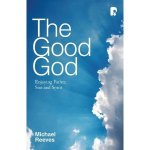
Review: The Good God, by Mike Reeves

Whatever else we may be or do, we present God to others.  We present God in our preaching of the Bible, and we present God as we live our lives.  A critical question, then, has to be this: which God do we present?

Mike Reeves’ new book, The Good God, from Paternoster, is exactly what the doctor ordered for the church today.  And not one of those miserable doctors that prescribes some yucky fluid in a plastic bottle.  I mean one of those doctors that suggests a break in the sun and a feast of good food to help you feel better from all that ails you.  The church today needs to bask in the sun and feast on the truth offered so gloriously and accessibly in this little book.

Mike introduces the reader to the God who is loving, giving, overflowing, relational.  With his light and accessible manner, Mike shares a profound taster of just how good God is.  Clearly Mike loves God and it shows throughout.  Some books on the Trinity can come across as a technical manual of heresies to avoid.  Others as an exercise in premeditated obfuscation.  This little book sizzles with energy, addresses the issues with clear insight rather than excessive technicality, and stirs the reader’s heart to worship, to delight, and sometimes even to laugh in sheer joy.

Mike’s biblical references scattered throughout don’t come across as a defensive attempt to prove a point, nor as a theological citation method that distracts the reader.  Rather they subconsciously stir the reader to want to get back into the Bible and see this good God afresh.  As you’d expect from a Reeves book, there are also enjoyable windows into church history as key voices from folks famous, and not so, pop up to share a thought along the way.

The book is shaped, well, um, trinitarianly.  An introductory chapter invites the reader into the pre-creation love relationship that is the Trinity.  Then the book looks at creation, redemption and the Christian life (as in, Father, Son, Spirit, although brick walls can’t be built between the roles of each in each chapter).  The book closes with a chapter that asks who among the gods is like you, O LORD?  I won’t give away the end of the book by sharing Mike’s answer, but I know if you start, you’ll want to read to the end anyway!

I will say this though, the advance of anti-theist “new atheism” gets a clear response in the final chapter.  Oh, and for one final twist, just when you feel like there’s nothing left to add, he also addresses three of the big issues that Christians sometimes throw out in opposition to an emphasis on God’s loving relationality. Superb.

This book is a must read and a must share.  As you read it you will think of others you wish would read it – from atheists to strident single-author-reading Christians. But most of all, I think you will be thankful that you read it. I am genuinely excited about how God will use this book in the years ahead!

To pre-order your copy in the UK, click here or the book image above.  Note – the book will be released in the USA later in 2012 by IVP under the title, Delighting in the Trinity: An Introduction to the Christian Faith.

Add to FacebookAdd to DiggAdd to Del.icio.usAdd to StumbleuponAdd to RedditAdd to BlinklistAdd to TwitterAdd to TechnoratiAdd to Yahoo BuzzAdd to NewsvineLike This!

The Preacher & Commentaries: Gathering Conversation Partners

Commentaries are conversation partners. They are not gurus who must be silently listened to and obeyed. They are not an equal panel of experts who deserve equal time at the microphone. And they are certainly not fools to be left unheard. They are conversation partners.

Conversation partners can be so valuable, but its worth picking them wisely. Conversation partners can be so helpful, but conversation requires both sides to speak. Thus it is important that we engage the text first in order to have an opinion to bring to the conversation. Then, when we get there, we can interact with the others at the table. Some of them we’ll find stimulating and helpful, others we might find inconsistent or agenda driven. We may tune some out. We may listen at length to others. But the key is conversation.

Don’t come to a commentary as a dumb animal ready to carry away whatever is offered. Converse. Let’s say I’ve been working in Romans and I am ready for some conversation. Who do I invite to the table?  What do I bring to the table? The more I bring, the better the conversation will be. “Doug, I see it this way, what about you?” “Tom, what’s your take on that?” “And James(Jimmy)? Oh, I see where you’re coming from! But what about these verses?” “Leon, anything to add?”

Now a conversation with Douglas Moo, Thomas Schreiner, James Dunn and Leon Morris – that would be worth having! Let’s bring in Cranfield, Murray and Calvin for good measure. This is the table to sit at in the biblical studies conference dining hall!

A few quick thoughts on buying commentaries (gathering the conversation partners):

1. If you can, try before you buy (library, google books, friend, etc.) If not, at least get good recommendations (such as on bestcommentaries.com).

2. Let your ministry provoke your purchases. I take a sermon series as a good excuse to buy a commentary or two if my library is lacking in that area. 2nd Chronicles now, Acts next.

3. Build a quality library slowly, rather than a junk collection fast. The personal library is a vital tool of the preacher. Even if it is only five books, if they are five good books, then it is worth having! Don’t rush, don’t get into debt, and don’t buy books with more hype on the cover than content in the pages.

4. Building an electronic library may save you money, but it may not. Last week we looked at software options – here’s the link.

Add to FacebookAdd to DiggAdd to Del.icio.usAdd to StumbleuponAdd to RedditAdd to BlinklistAdd to TwitterAdd to TechnoratiAdd to Yahoo BuzzAdd to NewsvineLike This!

Radio Interview: The Leadership File

A few weeks ago I was invited to head into London for an interview on Premier Christian Radio, with Andy Peck on The Leadership File.  The show was broadcast on the 18th December, and is now available on demand in two 12-minute segments:

Part 1 is here

Part 2 is here

(I can’t get the media player to work on Safari, but it will on Firefox.  I know others have had issues.  I had to install Quicktime plugin on Firefox on a PC.  Anyway, hopefully you can get it to work, here’s the page for the show.)

Add to FacebookAdd to DiggAdd to Del.icio.usAdd to StumbleuponAdd to RedditAdd to BlinklistAdd to TwitterAdd to TechnoratiAdd to Yahoo BuzzAdd to NewsvineLike This!

The Preacher & Commentaries: Don’t Preach Them

Commentaries are resources for preachers, not sources for sermons.  They are tools that help us in the passage study phase of our preparation.  They are not a sermon bank of material waiting to be pilfered and preached.

If you read the introductory preface to a commentary (which would be unusual behaviour, I suspect!) you will see that the commentary or series is targeted toward a specific audience.  Perhaps it is aimed at non-Greek trained lay people, or at seminarians, pastors and Bible teachers with some Greek, or whatever.  In reality, these categories are so broad that I would prefer to view them not as targeted communication, but as descriptions of a range within which the writer offers his or her explanation.

Preaching is different.  When you preach your goal is not just explanation to a broad audience, but targeted transformation in a specific audience.  You can be much more specific in knowing who your listeners are and what they need to hear – not only by way of explanation, but also with an emphasis on application.

Here are three more related comments on preaching and commentaries:

1. Watch out for atomisation.  The vast majority of commentaries are highly atomistic.  While a good commentator will be aware of the discourse level unity of the passage, it is hard to find commentaries that are overtly aware of the macro level flow within a book.  It seems to me that often the commentator is so engrossed in the phrase-by-phrase explanation, that a stretch and coffee break before proceeding with the writing can lead to a sense of atomisation in the end product.  The preacher is not offering a book where the listener can go back and review the section introduction, or re-read complex sentences.  The preacher is offering an aural exposure to both explanation and application of a text.  Different.

2. Only quote a commentary if the quote is exceptionally valuable.  You don’t need to prove you read commentaries (or checked in with Calvin, or whoever).  You don’t need to feel inadequate to be the preacher (though we all are) – they invited you to preach, not Doug Moo or Tom Schreiner.  Study and prepare to the point that you can effectively explain and apply the text.  Only quote a sentence or two from a commentary if it really is uniquely pithy, arresting, compelling and gripping, not to mention helpful!

3. Don’t feel obligated to cite your sources.  If you do quote, no need to cite sources every time.  Preaching is not an academic essay.  Sometimes the reference to an unknown name can be unhelpful, sometimes (depending on the name), downright distracting or humourous!  If who it was makes a difference, cite them (i.e.Churchill), but if not, just say “one writer put it like this…” (anyone who cares can always ask you afterwards).

Tomorrow we’ll think about gathering good conversation partners around us.

Add to FacebookAdd to DiggAdd to Del.icio.usAdd to StumbleuponAdd to RedditAdd to BlinklistAdd to TwitterAdd to TechnoratiAdd to Yahoo BuzzAdd to NewsvineLike This!

The Preacher and Commentaries: They Shouldn’t Be Out Alone

Commentaries should not be out alone.  It’s much safer if they travel in groups of at least two.

Let’s say that I have done my work in the text and want to interact with a commentary.  I turn my chair and reach toward the shelf.  I tend to always grab at least two.  (Sometimes they are on the computer, but same principle applies.)  Why?  There are a couple of reasons:

1. Because different commentaries offer different strengths.  So I might choose to look at a single-volume commentary that will give me quick access to background matters and quick flowing summary of the passage.  But I also would benefit from looking closely at a key section in the passage, which I would get from a more technical exegetical commentary.  And I might go somewhere else again for slightly expanded applicational nudges.

So for a slightly overworked example, if I were working on a passage like Hebrews 11:13-16, I might find it helpful to get the overview of a single volume commentary like the Bible Knowledge Commentary or New Bible Commentary.  I might get slightly more coverage, but still not probing the text technically, from Expositors Bible Commentary or the Bible Speaks Today volume.  Then for technical wrestling with the text, I might grab for Ellingworth’s NIGTC, or Lane’s WBC, or Bruce in the NICNT series.  (Actually with Hebrews, I’d also be checking Koester’s ABC and maybe Attridge’s Hermeneia volume.)  Then there is Guthrie’s very good NIV Application Commentary too.  That’s quite the gang of scholars!  And I haven’t mentioned older ones like Owen or Calvin.

2. Because one voice tends to be more compelling than two in dialogue.  Ok, it is a bit unrealistic for most of us to have access to a library selection like that one, but we must be careful not to rely on a single voice.  Some people love MacArthur, or McGee, or Tom Wright, etc.  Even without raising concerns about single voice complete Bible series, I do want to raise concerns about just listening to one voice in a single book.  If you only read one, then they will probably seem compelling to you (or easily dismissed by your superior knowledge).  That is the main reason I always grab two from the shelf.  Compare and contrast, and you will reap more than double the benefit (as long as your collection isn’t completely mono-vocal in that it is all from the same theological camp).

Tomorrow I want to point out that commentary and preaching are not the same!

Add to FacebookAdd to DiggAdd to Del.icio.usAdd to StumbleuponAdd to RedditAdd to BlinklistAdd to TwitterAdd to TechnoratiAdd to Yahoo BuzzAdd to NewsvineLike This!

The Preacher & Commentaries: Don’t Lump Them All Together

I’d like to offer a few thoughts on the use of commentaries.  There are some extreme views around in Christian circles.  For instance, some seem to suggest that commentaries should be avoided at all costs, as if they have a sinister agenda.  Others will quote an interpretation and treat it as sacrosanct because it was in a commentary.

Two views, both with their unique issues, both making the same error.  The first view seems strangely oblivious to the unique privilege we have in our time of the accessibility of some very high quality resources, both in print and online.  They may prepare on an up to date computer and drive to church in a modern car, but be positively pre-modern in their non-use of scholarship.

The second view seems to be caught in the glare of flashbulbs as the wonder of publication seems to blind their discernment faculties.  Just because something is in print, doesn’t make it right.  We all know that with certain newspapers, but some lose that awareness when the book has a hard cover on it.

Both views are making the same mistake though – they both lump all commentaries together.  But, not all commentaries are created equal.   Some are devotional, others are technical; some are written for the preacher, others for the scholar; some take interpretation seriously, others seem to use the Scripture as a launch point for doctrinal or precious thoughts; some believe God inspired the Bible, others don’t; some are written by Reformed, others by Arminian, others by Dispensational, others by Roman Catholics, others by … you get the point.

Some don’t lump them all together.  More than once I’ve come across people who will quote Matthew Henry’s commentary as if it were second only to the Bible, yet express deep distrust of contemporary evangelical commentators.  Perhaps this is the power of the familiar, and therefore, perceived to be trustworthy?

So let’s be careful not to subconsciously treat all commentaries as equal – either by dismissing all, or automatically trusting all.  Even in a specific series, there will be stronger and weaker commentaries.  So when buying paper commentaries it makes most sense to pick and mix to get the best from different series (although with software options, it may make sense to buy complete series due to cost).

There are so many commentaries, but whatever we do, let’s not just lump them all together.  Some are worth their weight in gold, some quite simply aren’t. Tomorrow I will offer a safety warning for commentaries.

Add to FacebookAdd to DiggAdd to Del.icio.usAdd to StumbleuponAdd to RedditAdd to BlinklistAdd to TwitterAdd to TechnoratiAdd to Yahoo BuzzAdd to NewsvineLike This!