Neither Commentary Smoothie Nor Sermon Safari

Smoothie2Preach somewhere between commentaries and sermons.  Huh?  Don’t we read commentaries and preach sermons?  Perhaps.

Most commentaries are very atomistic.  In a sense, they have to be.  The writer focuses in on each verse, or sentence, in turn.  They try to plumb the depths of lexical, semantic, syntactical and cultural meaning.  Once that verse is exhausted they probably deserve a fresh cup of coffee and a break.  When they return it’s on to the next verse.

Commentators are a real blessing to us and we should be exceedingly grateful for the range and quality of commentaries available (never forget how greatly blessed we are if we can read English since the resources available are so numerous).  At the same time, let’s be wary that we don’t just preach a commentary (or a blend of information garnered from several commentators).  Our task is not to exhaustively present every detail, neither is it to place historic labels over sections of text, nor to give mini word studies for underlying Greek or Hebrew terms.

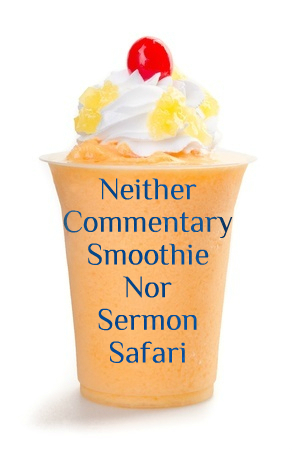
Commentaries are there to help us, but good preaching is not dramatic commentary reading or providing the equivalent of a commentary smoothie.

On the other hand, there are many sermons that are anything but atomistic in the way the text is handled.  They bounce off a text and range to and fro all over the canon without rhyme or reason, like mining ships exploring the outer reaches of theological possibility.

Somehow our preaching needs to fit between these two extremes.  We preach a text (or texts), but we need to present them in their context.  This means making sense of them in the flow of the book, and appropriately making sense of them in the flow of the Bible as a whole.  In effect we need to cut the log both in slice-ward directions, but also in long cuts along the grain.  How we balance those and make sense of the passage is part of the science and art of preaching.  But somehow that fits between the often necessarily atomistic approach of commentaries and the unnecessarily free movement of many sermons.


Resolved: No Resolutions

resolved2To finish this week of posts I want to re-visit one I wrote two years ago and develop it slightly.

Resolved: To make no New Year’s Resolutions for me to do, but to cling to the One who is at work in and through me according to His perfect plans for 2015.

A while back I really enjoyed reading the masterful biography of Jonathan Edwards by George Marsden.  It is fascinating to see the early resolutions of Edwards give way to a mature spirituality that was delighted in and by Christ later in his life.

Let’s face it, there are so many good resolutions that we could make as we head into another New Year.  Bible reading commitments, wider reading plans, personal prayer schedules, pursuit of ministry training ideas, grow theologically intentions, find a mentor strategies, evaluation and feedback gathering plans, sermonic self-improvement schemes, pastoral ministry visitation goals, personal fitness/diet/exercise/rest regimes, family scheduling tactics, and on the list goes.

All of these would be good ideas.  But making these determined and resolute teeth-clenched-and-muscles-flexed kind of personal commitments may well not be the best way to go.  That is, if we aren’t the autonomous self-made individualists that our culture and our fallen world like to convince us that we are.

Our life and ministry is much more about response to God’s Spirit at work in our lives than it is about our responsibility to act like the god of our own lives.  We are not the captain of our own destiny.  We are not sheriff of Me-ville.  We are lovers defined by who and what we love.  And as those who know and love the Triune God, we are in the best possible place to face a new year of uncertainties, trials, complexities and challenges.

My loving response to God’s love for me will result in some determined lifestyle choices and evidences of personal discipline.  This will also be true in my married life too – my loving response to my wife will look disciplined and diligent.  But I won’t talk about it in those terms.  At one level there is no real sacrifice involved in responding to the God we have.  Yes, it may look costly at times, but from the perspective of a captured heart?

As we head into 2015, let’s hold all our resolutions with a very loose grip, but squeeze tightly on the hand of Him who holds us, our families, our ministries and our year ahead in the palm of His hand.

Can we even begin to imagine what our Lord might do in us and through us in 2015?  Exceedingly, abundantly beyond all that we ask or even imagine . . . and certainly more than we can achieve by our own self-determined productivity and improvement plans!


Resolved: Read God’s Heart

resolved2Three years ago I wrote a post that really polarized readers.  I wrote a critique of a famous Bible reading plan.  If you want to see that post, click here.  As we start a new year, many of us, and many in our churches, will be making the determination to read through the Bible.  For some it will be the first time.  For many it will be a repeat attempt.  Sadly, for many, they will have failed more than they succeeded.

Here’s the bottom line for me – I want people to be reading their Bibles.  Whatever else goes into the mix of a personal devotional life, being exposed to the Scriptures is a critical ingredient (really it is the “without this, nothing” ingredient in the recipe for relationship with God).  Now it may be that someone you know is not a confident reader for whatever reason . . . know the audio options and be ready to promote them (even good readers would benefit from listening to the Bible too!)

Motivation Issues – I know the motivation of reading plans is to help give some structure and sense of progress to readers.  That is great.  My concern is that the plan can easily become both the focus and a taskmaster.  We should be concerned when there is a lack of motivation for God’s Word – both in our own lives, and those we care about.  A lack of motivation is not an irrelevant emotional blip that can be overcome by our great diligence, determination and accountability.

Motivation Matters – Let’s treat a lack of motivation as a flashing light on the dashboard of our lives.  When the oil light flashes I don’t “obey” it and choose not to drive the car.  Equally I don’t disregard it and press on.  I address the issue.  It is the same with a lack of motivation for Bible time . . . don’t simply obey it, nor ignore it, but address it.

Addressing Motivation – The best way I have found to address this motivation issue is to talk to God about it.  Be honest.  Out loud.  Tell him what is more attractive to you than His self-revelation.  That will typically be convicting and bring us back in humility with brokenness and renewed, albeit weak, hunger to hear from Him.

Best Motivation – The best motivation for Bible reading is a hunger to know God more.  Therefore the best motivator for stirring others to read their Bibles is to know God more and be infectious with it.  When you are captured by a person, others will want to know Him too.  This is a far cry from language of diligence, duty, discipline and so on.

Marital Accountability? – I don’t ask my friends to hold me accountable to pretend to love my wife and listen to her.  I may ask them to point out if they see me rationalizing a drift from healthy relationships though.  It is the same with the Bible reading.  I don’t need someone to crack the whip to make me do it, but I am wide open to hearing from a friend that I seem touchy or less excited about God than is normal.

I would love our churches to be filled with people eager to hear God’s heart as they chase Him in His Word.  I know that for our churches to be filled with this kind of people we will need our pulpits filled with this kind of preacher.


Resolved: Preach Christ

resolved2Here’s another resolution to throw into the mix as we head into another year.  How about making a prayerful determination to preach Christ, rather than the tempting alternatives?

Here are some tempting alternatives that are worth dumping in favour of Christ:

1. Don’t preach issues – It is tempting to be contemporary and to buy into the idea that what people really value above all else is contemporary relevance.  Of course the Bible is relevant and Christ is relevant, but that doesn’t mean your preaching should be salted with relevance like meat in a medieval barrel.  Some preachers are so concerned about being up-to-date that they lose sight of what they have to offer those sitting before them.  Relevance is important, but it is not the primary and central goal in preaching.

2. Don’t preach tips – Of course God’s way is the best way and lives gripped by the Gospel tend to work a whole lot better than lives lived according to the values of the world.  And yes, the Bible does include a lot of insight into living life, both legitimate and moralized.  But our job is not to be the weekly top tip provider for a people totally absorbed with successful living.  There should be a huge difference between our preaching and the self-help guru folks may pay a fortune to hear on Friday night.  The gospel will transform lives, but we are not called to be known as life coaches.

3. Don’t preach pressure – With all the best intentions we can easily undermine the work of the Gospel in the lives of those we preach to each week.  That is, we want them to be thriving spiritually and in life.  We know the damage sin can do.  So we will always be tempted to twist arms and pressure people to conform to an outward Christianity.  It makes church life easier if all messes are hidden and people act appropriately.  But pressure preaching assumes that listeners can fix themselves and that we can achieve God’s goals without any meaningful involvement from Him.  There will be moments where we seek to appropriately apply the pressure of God’s Word, but that is not what defines us as true Christian preachers.

4. Don’t preach yourself – Over the years our own flesh has this amazing ability to get used to being the centre of attention.  If you are naive enough to believe the polite comments you receive after preaching are objective evaluations of your ministry significance, then you can easily start to buy into your own hype.  Please don’t.

5. Do preach Christ – The Gospel is not a self-starting life-change program, it is good news that involves us introducing listeners to God in Christ.  Don’t preach self-help programs, or church programs, or Christian morality, or even Christianity . . . preach Christ.  Make 2015 a year marked by a weekly introduction to a heart-capturing Saviour!

Resolved: Preach the Text

resolved2I am not a huge advocate of resolutions.  But since everyone will be talking about resolutions this week, why not offer some nudges here?

Here are some preacher resolutions that might grab your attention:

Perhaps to pray more specifically and fervently, to apply your preaching more directly, to call for response more overtly, to preach from a book you’ve never touched before, to continue to develop by reading a preaching book (or maybe one each quarter).  Maybe you want to spend some time with a preacher who can shape your theology and influence your preaching?  (Perhaps Luther, Sibbes, Cotton, Newton, Edwards, Spurgeon?)  Maybe you could resolve to attend a conference or training event for further equipping, to take a formal class or distance learning course, to get specific feedback or pre-sermon input every other month, to begin the process of mentoring another preacher during the year, to get more involved in your church small group program so as to get to know your people more fully, to read through the Bible in English a couple of times or more, to read the New Testament through in Greek, to approach someone and request their input as a mentor, to preach first person properly for the first time, to preach from a difficult genre, to refresh or stretch yourself in exegetical skills, theology or some other area of “divinity” studies.  Do you have a resolution?

Here’s one you might like to try on for size:  Some time back I finished preparation for a Sunday  sermon on Hebrews 13:20-21.  I had some spare time and was curious what other preachers have done with the text since it is not a typical epistle paragraph.  So I did a search and a quick skim through about ten sermons on the text.  I entered the process with a small amount of interest, but I finished with a large amount of concern.  Some of the sermons had good content, they very orthodox, theologically solid, but why was it that none of the examples I looked at seemed to be trying to preach what the author intended?  Why did they feel like Bible truths strung together with passing reference to these two verses, rather than actually preaching the intended truth of these verses?

A suitable resolution for 2015 would be to always genuinely seek to preach the meaning of each text as intended by its author.  Let’s not preach messages from texts, or messages based on a text.  Let’s preach the message of the text.


10 Questions for Your Preaching Year Review

TenbAs we come to the end of another year, it is good to look back and take stock.  Be careful though, it is easy to do this in a way that isn’t helpful.

As you look back, don’t emphasize things like ‘what fruit has my ministry produced?’, or ‘which was my best sermon?’, or ‘whose life has changed the most under my ministry?’  These kinds of questions put your focus entirely on yourself.  Negative versions of the same questions still do the same.

The right way to look back is in conversation with God.  Here are ten questions that may help:

1. What am I thankful for in respect to the opportunities I have had to preach?  Whether you have preached a couple of times, or a couple of times a week. Whether it has been to one church, or to multiple groups, give thanks.

2. Where have I seen prayers answered in respect to my preaching?  Take time to reflect on prayers answered as you look back over the specific preaching opportunities you have had.  Were there some challenging sermon preps that came together as you prayed?  Did certain people hear certain messages?

3. Where might my prayers have been answered without me knowing during this year?  This is the important impossible one – what might have happened that you don’t know about?  A lot.  Ponder and pray about that.

4. What sermon preparation has most stirred my heart during this year?  A specific text, or a certain series?

5. What lessons does God want me to learn from what has happened this year? Lessons about preaching, about life, about ministry, about yourself, about Him?

6. What life change have I seen that I can give thanks for?  It could be gradual or sudden, salvation or growth. Give thanks for the privilege of being a part of what God is doing!

7. How has God protected my integrity during this year of ministry?  You could be out of the ministry right now. How has God guarded you from that?

8. How has my intimacy with Christ developed (or faded) during this year?  Don’t automatically self-evaluate. Ask God to search your heart and show you His perspective on this.

9. What should I be thankful for in terms of provision to allow my ministry?  Whether it is paid employment that allows you little time to prepare, but pays the bills, or ministry-related income that makes it possible . . . give thanks.

10. Is there anything else that I should give thanks for as I finish my review?  Family support? Key friends? A mentor? A preacher you look up to and learn from? A book that has helped?  Challenges that have shaped you?  Take time for God to bring to mind whatever has been missed in the earlier questions.  Gratitude is the critical ingredient in a truly faith-driven ministry.  Give thanks.

The Incarnation is Not Just for Christmas

Boxing Day(This post appeared yesterday on www.trinitytheology.net)

The morning after Christmas Day is quiet. In our house it is quiet because the children were wiped out by a long and fun day yesterday.  In other houses it is quiet because everyone is out shopping for bargains in the sales.  For many, the magic of Christmas has now given way to a gradually growing anticipation of return to work or school.

So let me be up-front about this.  I have a vested interest in a continued interest in the truth of Christmas. After all, Pleased to Dwell is a book I have authored and I would like it to be of interest to folks for more than just a few weeks each year.  Maybe that is my motivation in pondering the subject of this post, but I hope that is not my only motivation.

Christmas is in the DNA of the Christian faith.  Why?  Because God’s Son didn’t just become one of us to launch an annual holiday. It wasn’t a publicity stunt to stir the sales of Christmas cards and boost end-of-year retail revenue. God’s Son became flesh and dwelt among us because that was the ultimate expression of the heart of God – a heart that wants to draw our hearts out of the black hole of our self-loving-vortex (think January sales), and back into true communion with the God who made us.

The Son of God didn’t become one of us for some temporary period of time, or on some fleeting agenda. He became one of us forever so that we can be united to Him forever.

Whether Pleased to Dwell continues to be a blessing to folks for the next few months is not important. Whether we a gripped by the wonder of the Incarnation and the every day, forever lover of our souls, is.


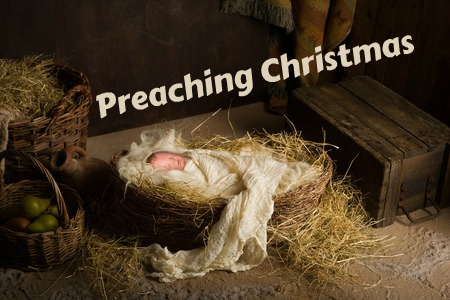
Preaching Christmas

MangerJesus2Christmas is an amazing opportunity to preach to people who normally wouldn’t be coming into church.  Here are seven top suggestions for making the most of the opportunity:

1. Pray a lot – there is a spiritual battle going on and the enemy wants to keep people distracted from the truth of the gospel. In the busy world of Christmas service planning, he can also keep preachers distracted from the wonder of the gospel too!

2. Preach fact – the Christmas message is not, as most tend to think, another holiday season fairy tale and religious myth.  Luke launched his gospel with a declaration of the trustworthiness of his message, let’s take a leaf out of his book.  Look for ways to make it clear that there was an original Christmas.

3. Correct carefully – nobody likes a cavalier critique of comfortable traditions, so be careful when you point out that Jesus was not born in a cattle shed, or that Mary wasn’t timing contractions as she arrived in Bethlehem, or that the Wise Men actually arrived months later.  One of these “facts” is probably wrong, but even truth can be unhelpful if people think you are just being critical, or there is no benefit in the clarification you bring.

4. Celebrate sensitively – it is easy to hype up Christmas like a children’s TV presenter, but for many people it is a bittersweet season.  Be sure to take a moment in the message, or in a prayer, to recognize the difficulties as well as the joys.

5. Proclaim good news – yes, Christmas is a season of giving and cheer and peace.  Yes, this is a good year to mention the famous Christmas truce of 1914.  But remember that Christmas is not about stirring sentimentality and periodic pauses for peace, it is ultimately about something on the vertical plane and not just the horizontal.  Jesus came to us to bring us to God.  Don’t preach just a nice message, be sure to preach the best news!

6. Undermine assumptions – as well as communicating the gospel message in some way, remember that there is also an opportunity to undermine some common assumptions.  Making clear that there is a historical reality to the Incarnation is a good idea, and why not take the chance to clarify the nature of God’s character too?  Everyone comes into church thinking they know what God is like.  If they don’t really know Jesus, then they don’t.  Christmas is a great moment to point people not to speculations about the Majesty of God, but to bring them to the manger to meet the One who makes God known to us.

7. Worship personally – if the Christmas message has grown old for you, then you can’t preach it well.  Take some time out with your God and let Him stir your heart afresh.  Then you can preach Christmas.

Preaching Holiness – Postscript

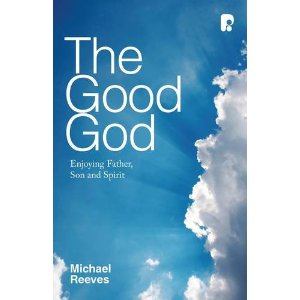
Holiness2This week I have been sharing some thoughts about holiness.  Obviously much more could be written, but just to finish the week, let me offer a quote from Michael Reeves’ 2012 book, The Good God (in the USA it is called Delighting in the Trinity).

“People even say things like ‘Yes, God is loving, but he is also holy’ – as if holiness is an unloving thing, the cold side of God that stops God from being too loving.

Balderdash! Poppycock! Or at least, it is if you are talking about the holiness of the Father, Son and Spirit.  No, said Jonathan Edwards,

Holiness is a most beautiful, lovely thing. Men are apt to drink in strange notions of holiness from their childhood, as if it were a melancholy, morose, sour, and unpleasant thing; but there is nothing in it but what is sweet and ravishingly lovely. ‘Tis the highest beauty and amiableness, vastly above all other beauties; ‘tie a divine beauty.

What is holiness, then?  The words used for holiness in teh Bible have the basic meaning of being ‘set apart’. But there our troubles gegin, because naturally I think I’m lovely. So if God is ‘set apart’ from me, I assume the problem is with him (and I can do all this in the subtlest, most subconscious way). His holiness looks like a prissy rejection of my happy, healthy loveliness.

Dare I burst my own bubble now? I must. For the reality is that am the cold, selfish, vicious one, full of darkness and dirtiness. And God is holy – ‘set apart’ from me – precisley in that he is not like that. He is not set apart from us in priggishness, but by the fact that there are no such ugly traits in him as tehre are in us. ‘God is God,’ wrote Edwards, ‘and distinguished [that is, set apart from] all other beings, and exalted above ’em, chiefly by his divine beauty‘ (for the connection between holiness and beauty, see verses like Psalm 96:9).

Now the holiness of a single-person God would be something quite different. His holiness would be about being set apart away from others. In other words, his holiness would be all about aloof distance. But the holiness of the Father, Son and Spirit is all about love.  Given who this God is, it must be. Edwards again: ‘Both the holiness and happiness of the Godhead consists in this love. As we have already proved, all creature holiness consists essentially and summarily in love to God and love to other creatures; so does the holiness of God consist in his love, especially in the perfect and intimate union and love there is between the Father and the Son.”

good-godThis extended quote has been from pages 93-94.  One more sentence to finish, “the holiness of the triune God does not moderate or cool his love; his holiness is the lucidity and spotlessness of his overflowing love.”

Okay, just one more, “The beautiful, loving holiness of this God makes true godliness a warm, attractive, delightful thing.  It is not about becoming more mean and pinched, for this God is not mean and pinched.”

If you don’t have a copy of Mike Reeves’ book The Good God (Delighting in the Trinity in the USA), be sure to get yourself a Christmas present, it is a must read.

Preaching Holiness – part 4

Holiness2This week we have been pondering the preacher and the theme of holiness.  There is so much more that could be said about each point, but hopefully we have had something to think and pray about.

15. Every sliver of unholiness will be judged and purged.  We really have no clue of how good that will be!  (That includes the unholiness of “older brother” religiosity . . . which means more of our lives will get there “as through fire” than we probably realize.  Nevertheless, what an utter relief the purging of all sin will bring to ransomed souls.)

16. When we make holiness sound like sour pickled vegetables we don’t motivate anyone to think beyond this life.  The New Creation will be wonderful in many respects, not least because of the total absence of sin and pain and tears, as well as the presence of Christ Himself.  Too many in our churches still have lingering images of sterility and fun-free hymnathons.  The Bible gives a lot of future glimpses to motivate us in the present.

17. Jesus was holy and magnetic, often our version of holiness is anything but.  The truly holy person is fully alive.  At the same time that person will be profoundly attractive and deeply offensive.  (And if the Gospels are an indicator, then such Christlikeness will be attractive to needy people, and offensive to religious people.)

18. The great threat to holiness in the church is not just the worldliness of culture, but also the pseudo-holiness of church culture.  Just as a weekend of binge behavior in a degraded society is horribly empty, so too is a relationally empty performance devoid of meaningful engagement with God and others (sometimes polite conversation can be empty too).

19. Preaching for holiness cannot be restricted to applications of conduct, nor even of conforming the mind…it must seek to engage and stir the heart.  It is not what goes in from the outside that defiles a person (i.e. religious duties and traditions), but what spews forth from the heart.  So preach in such a way as to engage the heart.  Informing the mind and pressuring the conduct will never suffice when the heart of the problem is the, uh, heart.

20. The overwhelming use of the term “Holy” in the New Testament is in reference to the Spirit of God.  Let’s be sure that our preaching is pursued with a thoroughly biblical and growing understanding of the role of the Holy Spirit in respect to our sanctification.  Too much Christianity still ignores the Spirit or turns Him into some sort of battery pack (either highly visible or highly invisible).  It is by the Spirit that we are united to Christ.  True relationally rich holiness is our privilege in the Gospel!

21. If you long for greater holiness in the lives of people in your church, don’t preach for “holiness.”  Instead, pray and preach for spiritual vitality in their relationship with Christ.  If we, and they, will love God, then what we want to do will be profoundly holy.  The Gospel does a work on our wants!
So much more could be said, but let’s pray for the beauty of God’s holiness to pervade our lives, our ministry and our churches . . .