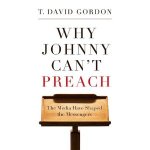
 David Gordon lists four types of failed sermon types that are prevalent today. The list is worth considering in full, but especially the first sermon type he describes. The first on his list, and the first on mine, is moralism. Here are some highlights that I have pulled from this section of the book:
Protestant liberalism was a way of understanding Christianity as essentially consisting of a particular moral framework, and of understanding Christ as essentially a great moral teacher. [It] often denied outright that Christianity was a redemptive religion. . . . Rather, it perceived Christianity as consisting of the discovery of a right and proper way to live an ethical life.
…Ironically, the very orthodox and evangelical Christians who protested against Protestant liberalism in the early twentieth century are quite likely to promote its basic emphases from the pulpit today.
…Moralism occurs whenever the fundamental message of a sermon is “be good; do good” (or some specific thereof). Whenever the fundamental purpose of the sermon is to improve the behavior of others, so that Christ in his redemptive office is either denied or largely overlooked, the sermon is moralistic.
…Go and listen to the typical sermon in the typical evangelical or Reformed church, and ask what Luther would think if he were present. Luther would think he was still in Rome. (Taken from pp79-81)
This is a huge issue. Moralism and legalism is a plague in some churches. Somehow the fresh and dynamic, personal and engaged reality of relationship with Christ tends to grow dim over time (and over generations). So in some churches today there are those who would essentially affirm the preaching of a Roman Catholic or Mormon or Conservative Moralist or child behavioural traditionalist guest speaker.
Legalism is not honouring to God. Legalism strangles the gospel. It chokes love. It throttles grace. It undermines the gospel. Let us be very careful to really preach the glorious grace of the gospel of Jesus Christ.
Moralism is always an attractive shortcut to producing churches full of people who look very christian. Let’s dare to take the path less travelled – to preach the transforming grace of God, His captivating love that doesn’t mass produce Pharisees, but will stir a response. The love of the Trinity in the gospel will always polarize, it will distinguish, it will certainly bother some of the core people in any church. But let’s not forget who bothered Christ the most – it was the moralistic legalists who mastered the form, yet missed the heart.













 Biblical Preaching