 Today’s post is a follow up to one of the most commented on posts from last year, concerning Bible reading. The post is hosted over on the Cor Deo site – just click here to go there.
Preacher’s Personal Life
Saturday Short Thought: Taught by the Spirit (with Reeves Quote)
 Here’s a concern I feel needs to be addressed as the week comes to an end:
“When we just prayerfully look at the Bible text, then the Spirit can direct us and teach us.” (Implication: if you look at “the words of humans,” such as in commentaries, then you will not hear God’s Spirit.)
I stumbled across the same notion in a conversation this week. “You went to Bible school, but I’ve been taught by the Holy Spirit.” But? Just because one claims to only be taught by the Spirit, this does not mean one has received more training from the Spirit.
Whether we are talking about use of commentaries or the privilege of “formal” study, let’s not make this false step of restricting where God’s Spirit can work. This is similar to the nonsensical idea that the Spirit works when we don’t prepare a message, but is absent if we do prepare.
We absolutely need God’s Spirit at work in us as we prepare to preach, both in respect to understanding the Bible text, and in terms of sensitively applying it to those who will listen. As one person put it this week, “Hearing how God has spoken to the community over the ages about the text will only give the Spirit more chance to speak, not less.”
Not only does the Spirit want to work in our biblical study, and in our ministry, but in light of yesterday’s book review, he most certainly wants to work in our hearts too. What does he want to do there? Let me finish with a quote from Reeves’ new book (p73):
My new life began when the Spirit first opened my eyes and won my heart to Christ. Then, for the first time, I began to enjoy and love Christ as the Father has always done. And through Christ, for the first time, I began to enjoy and love the Father as the Son has always done. That was how it started, and that is how the new life goes on: by revealing the beauty, love, glory and kindness of Christ to me, the Spirit kindles in me an ever deeper and more sincere love for God. And as he stirs me to think ever more on Christ, he makes me more and more God-like: less self-obsessed and more Christ-obsessed.


___________________________________________
Next week: Two-Person Preaching?

Review: The Good God, by Mike Reeves
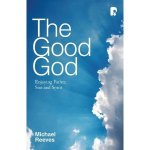 Whatever else we may be or do, we present God to others. We present God in our preaching of the Bible, and we present God as we live our lives. A critical question, then, has to be this: which God do we present?
Mike Reeves’ new book, The Good God, from Paternoster, is exactly what the doctor ordered for the church today. And not one of those miserable doctors that prescribes some yucky fluid in a plastic bottle. I mean one of those doctors that suggests a break in the sun and a feast of good food to help you feel better from all that ails you. The church today needs to bask in the sun and feast on the truth offered so gloriously and accessibly in this little book.
Mike introduces the reader to the God who is loving, giving, overflowing, relational. With his light and accessible manner, Mike shares a profound taster of just how good God is. Clearly Mike loves God and it shows throughout. Some books on the Trinity can come across as a technical manual of heresies to avoid. Others as an exercise in premeditated obfuscation. This little book sizzles with energy, addresses the issues with clear insight rather than excessive technicality, and stirs the reader’s heart to worship, to delight, and sometimes even to laugh in sheer joy.
Mike’s biblical references scattered throughout don’t come across as a defensive attempt to prove a point, nor as a theological citation method that distracts the reader. Rather they subconsciously stir the reader to want to get back into the Bible and see this good God afresh. As you’d expect from a Reeves book, there are also enjoyable windows into church history as key voices from folks famous, and not so, pop up to share a thought along the way.
The book is shaped, well, um, trinitarianly. An introductory chapter invites the reader into the pre-creation love relationship that is the Trinity. Then the book looks at creation, redemption and the Christian life (as in, Father, Son, Spirit, although brick walls can’t be built between the roles of each in each chapter). The book closes with a chapter that asks who among the gods is like you, O LORD? I won’t give away the end of the book by sharing Mike’s answer, but I know if you start, you’ll want to read to the end anyway!
I will say this though, the advance of anti-theist “new atheism” gets a clear response in the final chapter. Oh, and for one final twist, just when you feel like there’s nothing left to add, he also addresses three of the big issues that Christians sometimes throw out in opposition to an emphasis on God’s loving relationality. Superb.
This book is a must read and a must share. As you read it you will think of others you wish would read it – from atheists to strident single-author-reading Christians. But most of all, I think you will be thankful that you read it. I am genuinely excited about how God will use this book in the years ahead!
To pre-order your copy in the UK, click here or the book image above. Note – the book will be released in the USA later in 2012 by IVP under the title, Delighting in the Trinity: An Introduction to the Christian Faith.


Book Review: Is There a Doctor in the House?, by Ben Witherington III
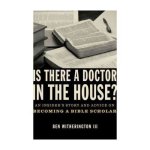
Is There a Doctor in the House? An Insider’s Story and Advice on Becoming a Biblical Scholar, 2011, Zondervan.
I picked up this little book thinking it would only appeal to my interest in academia, but found it to be of value to all involved in Bible handling – students, preachers, teachers, scholars.
The label “scholar” gets thrown around a little too easily. If one person in the church is starting to learn biblical Greek, they get labelled a scholar. They may barely even be a student yet! In this book, Witherington reflects on his experiences as a student, pastor, teacher and writing scholar. His manner is winsome, his sometimes amusing experiences shine through, and his insight helps the reader to see just what is involved in being truly earnest about God’s Word.
He begins with an excellent illustrated guide to a PhD, before explaining his own experiences getting a PhD in Durham in the 1970’s. It is great to read of his exposure to such scholars as C.K. Barrett, C.E.B. Cranfield, T.H.L. Parker, etc.
Even if you don’t care to understand the differences between the British and American doctoral systems, the book quickly moves into a survey of the necessary fields of study required of biblical scholars. While brief and maintaining momentum, these chapters give helpful insight into language study, historical/cultural background study, literary sensitivity, as well as integrating biblical research into theological and ethical studies.
The latter chapters address the necessary subject areas of research and writing, hermeneutics, key skills in lecturing and teaching, as well as the character issues that can easily get lost in the mix. The book ends with a brief survey of the sacrifices involved (not just for the scholar, but also for the spouse), and a resounding, “I would do it all again!” from a man delighted by the privilege of his study, his career, his vocation.
I interact with folks who hold to a kind of self-taught piety. They have their library of 66 and the Holy Spirit and consider themselves to be un-credentialed scholars. Maybe some are, in some way. But where their attitude becomes derisory toward academic biblical scholarship, I do get concerned. This book should be required reading for all who care to sit in judgment over the academy, as well as those fascinated by it.
Most of all, this book graciously raises the bar on our commitment to really doing the work involved in handling the Bible well, and offering the fruit of that study to others in ministry.
(If you are in the UK, click here to go to the book on Amazon.)


Saturday Short Thought: Ajith Fernando on Technology & Theology in Preaching
 This week I have been thinking out loud about technology and sermon preparation.
Later today I will be adding a book review of a book on biblical scholarship by Ben Witherington III. Let me quote a brief segment that is relevant to our subject this week: “We begin to believe we can find anything on the Internet if we are just computer and web savvy enough. This is false. You can waste a lot of time searching for things on the Internet, when what is needed is to travel to an actual library or consult with scholars in person.” (Witherington, Is There a Doctor?, p85).
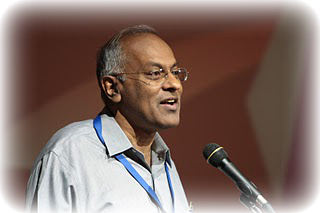
The LinkedIn preacher’s group has also had a bit of a discussion going on this subject – if you are on LinkedIn, please join the group. I asked Ajith Fernando if I could quote his comment on this site, and he graciously agreed. Ajith is the Teaching Director for YFC in Sri Lanka and is a regular expositor at well-known Christian conferences around the world.
Technology could be a help or a hindrance to good preaching. One of the biggest problems in the church is that our leaders are technicians when they should primarily be thinkers, theologians–that is, with everything they do coming from reflecting on the teaching of the Scriptures. For example, the great John Stott who was in every way a great theologian of the Christian life applied to contemporary life was not computer savvy. I use technology a lot. But I try to make it something that helps me do technical work (e.g. exegesis) faster and more efficiently than before so that I will be freed to give extra time for thinking, meditating, applying etc, etc.


The Downside of Technology and Sermon Prep
 Sermon preparation does not require technology. A Bible, maybe some paper and a pen, time and the Holy Spirit. These seem to be the necessities (and it would be possible without the pen and paper, if necessary). But this week I’ve been looking at various technological helps for sermon prep. Undoubtedly all that has been mentioned has value and can be very helpful. Yet it would be remiss to end the week without waving these four flags of caution:
Time – Using technology can undoubtedly save time. Reorganizing a message using cut and paste is much quicker than rewriting the whole message. Almost instant access to the right page in a commentary, or almost instant concordance searches are amazing innovations in our generation. But technology can also sap time. My mind immediately jumps to two, one of which I haven’t mentioned this week. Social networking can be a massive time sapper. So can preparing Powerpoint. I haven’t mentioned Powerpoint because it is really a technology designed to help presentation, rather than preparation. I will say this though – it is worth pondering whether the two or three hours (and more!) had been spent in improving the oral clarity of the message, would the message have been more compelling, gripping, clear, etc.? In many cases, the answer is a definite yes in my opinion. Anyway, I’ll leave powerpoint and similar for another series.
Distraction – Using technology offers instant access to so much, but it can also offer distraction from the task at hand. I’m not saying we shouldn’t use computers (and alarm clocks, phones, etc.) I am saying that we shouldn’t be naïve to the distraction that technology, especially the connected technologies online, can bring to our week. Maybe it would be worth keeping an accurate time log to discover just how distracted you get in a typical week!
Booklessness – I mentioned this earlier in the week. With all the benefits gained from online libraries and electronic books, etc., there does seem to be something lost when we don’t have a physical, tangible, real paper book on the desk before us. It may be hard to explain, but there does seem to be something about actually looking at paper, rather than being gradually blinded by the screen. There is something about actually retaining information, rather than merely being an expert in where to find it.
Prayerlessness – I pray when I’m working on the computer. But not always. Sometimes the combination of overwhelming information and the urgent though not always important needs, not to mention the noise of social media . . . well it can add up to seasons of prayerlessness. Even if that season is an hour, it seems to me that that is too long. If I weren’t using technology, would I be prayerless for an hour? Our churches need preachers who are walking very closely with God, who pray, who read . . . people that used to be referred to as “divines.” I don’t think it is just the label that has gone out of fashion.




Saturday Short Thought: The Deeper Side of Confession
 This week I have shared some candid thoughts from the perspective of the preacher. But I haven’t gone into the whole arena of confessing sin as a preacher. Here’s a reality that won’t rock anyone’s world: preachers sin.
Trouble is, preaching carries with it a certain pressure to live up to a false reputation. People seem to expect sinlessness and preachers find it easier to preach from that alien platform.
Having said that, listeners do respond well to honesty from the preacher. I suppose we should call it “appropriate vulnerability.” And there’s the challenge – some vulnerability is helpful, appropriate, even at times, powerful (though that might not be the best motivation to pursue it in your preaching!) Equally, some vulnerability undermines the preaching event, distracts the listeners and can inadvertently excuse sin for others.
How do we know the difference? I think this is an arena where we need real and vulnerable conversation as well as vulnerable preaching. We need to be in conversation with others about the reality of our walk with Christ and our struggles in this world. Listing a week’s worth of battles with materialism, internal anger attacks, lust struggles, relational tensions, lapses into laziness, etc., almost certainly won’t help your sermon on Sunday. But it would almost certainly help your walk with Christ to walk in the light with a trusted friend or two.
Perhaps it is in those genuine rather than superficial, grace-giving rather than condemning, and loving rather than competitive friendships that we can determine what level of confession is appropriate by way of vulnerability?
I have been looking at Uzziah and Hezekiah – two godly leaders that seemed to lose it at the heart level later on in life. Perhaps age is a factor worth pursuing in all this as well. Younger folks have their struggles. Older ones are not safe.
I suppose this is still not the deepest side of confession, but I won’t venture into the realm of ministry disqualifying issues today.
I hope this week of posts have been helpful in some way. Let’s be praying for each other as we step into the pulpit tomorrow and preach the Word – what a privilege!

________________________________________
Next Week: Technology and Sermon Preparation

16 Confessions – Part 4
 Inspired by a helpful post from Ron Edmondson sharing candid confessions of a church leader, I decided to offer a few from a specifically preaching point of view. I’m sure there is much more that could be added, but one thing that has come back to me via conversations around this theme is that preachers definitely need to have some genuine and vulnerable relationships, as listed at number 14 – safe places to be able to confess more than is being confessed here.
For now, let’s get up to the number 16 . . .
13. Most preachers will freely admit that we face the same temptations and seasons of spiritual dryness as everyone else. We need loving accountability and fellowship, but sometimes struggle to ask for it.
14. Most preachers are like everyone else and need some good close friends to be open with and mutually interdependent. Some preachers think they don’t need that kind of friend, but they do too. Actually many preachers feel lonely, both as preachers and as individuals.
15. Many preachers recognize that our spouse can have the toughest position in a church. They feel all the unresponsiveness to our ministry, and any critique of us, even more keenly than we do. And then they have all the dynamics of their own relationships too. Some churches do foster unrealistic expectations of spouses.
16. Many preachers love God and His Word and His people and the lost. Many preachers love the privilege of preparation, poring over His Word in need of God’s work in our hearts and looking to serve Him as He works in theirs; and the short-term roller-coaster of daring to dream and praying for life changing, even eternity changing moments where God breaks in; combined with the long-term adventure of seeing God at work in peoples’ lives as a process as well as a crisis. It is this privilege of participation in the greater work of God’s great church project that drives us on, stirs our hearts and keeps us pressing on, even in the midst of some pettiness or political brokering or perpetual politeness. Being involved in preaching ministry is a privilege, even when it isn’t always a pleasure.


