Book Review: Is There a Doctor in the House?, by Ben Witherington III

Is There a Doctor in the House?  An Insider’s Story and Advice on Becoming a Biblical Scholar, 2011, Zondervan.

I picked up this little book thinking it would only appeal to my interest in academia, but found it to be of value to all involved in Bible handling – students, preachers, teachers, scholars.

The label “scholar” gets thrown around a little too easily.  If one person in the church is starting to learn biblical Greek, they get labelled a scholar.  They may  barely even be a student yet!  In this book, Witherington reflects on his experiences as a student, pastor, teacher and writing scholar.  His manner is winsome, his sometimes amusing experiences shine through, and his insight helps the reader to see just what is involved in being truly earnest about God’s Word.

He begins with an excellent illustrated guide to a PhD, before explaining his own experiences getting a PhD in Durham in the 1970’s.  It is great to read of his exposure to such scholars as C.K. Barrett, C.E.B. Cranfield, T.H.L. Parker, etc.

Even if you don’t care to understand the differences between the British and American doctoral systems, the book quickly moves into a survey of the necessary fields of study required of biblical scholars.  While brief and maintaining momentum, these chapters give helpful insight into language study, historical/cultural background study, literary sensitivity, as well as integrating biblical research into theological and ethical studies.

The latter chapters address the necessary subject areas of research and writing, hermeneutics, key skills in lecturing and teaching, as well as the character issues that can easily get lost in the mix.  The book ends with a brief survey of the sacrifices involved (not just for the scholar, but also for the spouse), and a resounding, “I would do it all again!” from a man delighted by the privilege of his study, his career, his vocation.

I interact with folks who hold to a kind of self-taught piety.  They have their library of 66 and the Holy Spirit and consider themselves to be un-credentialed scholars.  Maybe some are, in some way.  But where their attitude becomes derisory toward academic biblical scholarship, I do get concerned.  This book should be required reading for all who care to sit in judgment over the academy, as well as those fascinated by it.

Most of all, this book graciously raises the bar on our commitment to really doing the work involved in handling the Bible well, and offering the fruit of that study to others in ministry.

(If you are in the UK, click here to go to the book on Amazon.)

Add to FacebookAdd to DiggAdd to Del.icio.usAdd to StumbleuponAdd to RedditAdd to BlinklistAdd to TwitterAdd to TechnoratiAdd to Yahoo BuzzAdd to NewsvineLike This!

Saturday Short Thought: Ajith Fernando on Technology & Theology in Preaching

This week I have been thinking out loud about technology and sermon preparation.

Later today I will be adding a book review of a book on biblical scholarship by Ben Witherington III.  Let me quote a brief segment that is relevant to our subject this week:  “We begin to believe we can find anything on the Internet if we are just computer and web savvy enough.  This is false.  You can waste a lot of time searching for things on the Internet, when what is needed is to travel to an actual library or consult with scholars in person.”  (Witherington, Is There a Doctor?, p85).

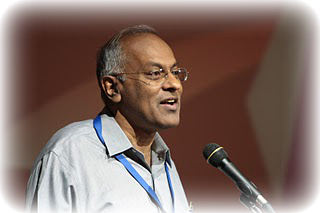
The LinkedIn preacher’s group has also had a bit of a discussion going on this subject – if you are on LinkedIn, please join the group.  I asked Ajith Fernando if I could quote his comment on this site, and he graciously agreed.  Ajith is the Teaching Director for YFC in Sri Lanka and is a regular expositor at well-known Christian conferences around the world.

Technology could be a help or a hindrance to good preaching. One of the biggest problems in the church is that our leaders are technicians when they should primarily be thinkers, theologians–that is, with everything they do coming from reflecting on the teaching of the Scriptures. For example, the great John Stott who was in every way a great theologian of the Christian life applied to contemporary life was not computer savvy. I use technology a lot. But I try to make it something that helps me do technical work (e.g. exegesis) faster and more efficiently than before so that I will be freed to give extra time for thinking, meditating, applying etc, etc.

Add to FacebookAdd to DiggAdd to Del.icio.usAdd to StumbleuponAdd to RedditAdd to BlinklistAdd to TwitterAdd to TechnoratiAdd to Yahoo BuzzAdd to NewsvineLike This!

The Downside of Technology and Sermon Prep

Sermon preparation does not require technology.  A Bible, maybe some paper and a pen, time and the Holy Spirit.  These seem to be the necessities (and it would be possible without the pen and paper, if necessary).  But this week I’ve been looking at various technological helps for sermon prep.  Undoubtedly all that has been mentioned has value and can be very helpful.  Yet it would be remiss to end the week without waving these four flags of caution:

Time – Using technology can undoubtedly save time.  Reorganizing a message using cut and paste is much quicker than rewriting the whole message.  Almost instant access to the right page in a commentary, or almost instant concordance searches are amazing innovations in our generation.  But technology can also sap time.  My mind immediately jumps to two, one of which I haven’t mentioned this week.  Social networking can be a massive time sapper.  So can preparing Powerpoint.  I haven’t mentioned Powerpoint because it is really a technology designed to help presentation, rather than preparation.  I will say this though – it is worth pondering whether the two or three hours (and more!) had been spent in improving the oral clarity of the message, would the message have been more compelling, gripping, clear, etc.?  In many cases, the answer is a definite yes in my opinion.  Anyway, I’ll leave powerpoint and similar for another series.

Distraction – Using technology offers instant access to so much, but it can also offer distraction from the task at hand.  I’m not saying we shouldn’t use computers (and alarm clocks, phones, etc.)  I am saying that we shouldn’t be naïve to the distraction that technology, especially the connected technologies online, can bring to our week.  Maybe it would be worth keeping an accurate time log to discover just how distracted you get in a typical week!

Booklessness – I mentioned this earlier in the week.  With all the benefits gained from online libraries and electronic books, etc., there does seem to be something lost when we don’t have a physical, tangible, real paper book on the desk before us.  It may be hard to explain, but there does seem to be something about actually looking at paper, rather than being gradually blinded by the screen.  There is something about actually retaining information, rather than merely being an expert in where to find it.

Prayerlessness – I pray when I’m working on the computer.  But not always.  Sometimes the combination of overwhelming information and the urgent though not always important needs, not to mention the noise of social media . . . well it can add up to seasons of prayerlessness.  Even if that season is an hour, it seems to me that that is too long.  If I weren’t using technology, would I be prayerless for an hour?  Our churches need preachers who are walking very closely with God, who pray, who read . . . people that used to be referred to as “divines.”  I don’t think it is just the label that has gone out of fashion.

Add to FacebookAdd to DiggAdd to Del.icio.usAdd to StumbleuponAdd to RedditAdd to BlinklistAdd to TwitterAdd to TechnoratiAdd to Yahoo BuzzAdd to NewsvineLike This!

Disconnected Technology and Sermon Prep

Yesterday I blogged about some of the ways we can be connected to others as we prepare a sermon.  Today let’s unplug the router and think about disconnected technology that may be helpful:

Word Processor – I suspect this is by far the most popular sermon prep tool.  Recording notes in our biblical study, cutting and pasting information in, typing out manuscript or outline, being able to format for fading eyes, etc.

Recording Equipment – While the word processor records through the input of our deftly moving fingers, there are other recording devices that can be useful.  I mentioned audio recording on smartphone apps yesterday, and the same would apply to any type of dictation device.  Sometimes you may not have, or be able to safely or efficiently use, a pen and paper.  And speaking of paper, every time I fly and look in those shopping catalogues in the sky, I’m always drawn to the scanner pens.  Scanning sections of a book to then transfer into the word processor, seems like a nifty gadget.  Anyone use one?  Worth it?

Bible Software – This is a big category, so I’ll post on this separately tomorrow.

Alarm Clock – Here’s a clever little piece of technology.  Some of my most productive hours are early, but without my alarm I often wouldn’t see them!  And for “bi-vocational” preachers, I suspect this is a must.

Square Scolls – Talking of all this newfangled gadgetry and advanced technology, let’s not forget one innovation that surpasses everything listed so far this week – the book.  There is a very real danger that preachers get caught up in contemporary technology and miss the powerful combination of some earlier advances in technology – the codex and the printing press.  What a privilege to own even a single book!  It is intriguing how technology is supposed to save time, yet sometimes it seems to create noise and squeeze out time from things that really matter.  Preach well this week, get your nose back in a book!

Add to FacebookAdd to DiggAdd to Del.icio.usAdd to StumbleuponAdd to RedditAdd to BlinklistAdd to TwitterAdd to TechnoratiAdd to Yahoo BuzzAdd to NewsvineLike This!

Saturday Short Thought: The Deeper Side of Confession

This week I have shared some candid thoughts from the perspective of the preacher.  But I haven’t gone into the whole arena of confessing sin as a preacher.  Here’s a reality that won’t rock anyone’s world: preachers sin.

Trouble is, preaching carries with it a certain pressure to live up to a false reputation.  People seem to expect sinlessness and preachers find it easier to preach from that alien platform.

Having said that, listeners do respond well to honesty from the preacher.  I suppose we should call it “appropriate vulnerability.”  And there’s the challenge – some vulnerability is helpful, appropriate, even at times, powerful (though that might not be the best motivation to pursue it in your preaching!)  Equally, some vulnerability undermines the preaching event, distracts the listeners and can inadvertently excuse sin for others.

How do we know the difference?  I think this is an arena where we need real and vulnerable conversation as well as vulnerable preaching. We need to be in conversation with others about the reality of our walk with Christ and our struggles in this world.  Listing a week’s worth of battles with materialism, internal anger attacks, lust struggles, relational tensions, lapses into laziness, etc., almost certainly won’t help your sermon on Sunday.  But it would almost certainly help your walk with Christ to walk in the light with a trusted friend or two.

Perhaps it is in those genuine rather than superficial, grace-giving rather than condemning, and loving rather than competitive friendships that we can determine what level of confession is appropriate by way of vulnerability?

I have been looking at Uzziah and Hezekiah – two godly leaders that seemed to lose it at the heart level later on in life.  Perhaps age is a factor worth pursuing in all this as well.  Younger folks have their struggles.  Older ones are not safe.

I suppose this is still not the deepest side of confession, but I won’t venture into the realm of ministry disqualifying issues today.

I hope this week of posts have been helpful in some way.  Let’s be praying for each other as we step into the pulpit tomorrow and preach the Word – what a privilege!

Like This!

________________________________________

Next Week: Technology and Sermon Preparation

16 Confessions – Part 4

Inspired by a helpful post from Ron Edmondson sharing candid confessions of a church leader, I decided to offer a few from a specifically preaching point of view.  I’m sure there is much more that could be added, but one thing that has come back to me via conversations around this theme is that preachers definitely need to have some genuine and vulnerable relationships, as listed at number 14 – safe places to be able to confess more than is being confessed here.

For now, let’s get up to the number 16 . . .

13. Most preachers will freely admit that we face the same temptations and seasons of spiritual dryness as everyone else.  We need loving accountability and fellowship, but sometimes struggle to ask for it.

14. Most preachers are like everyone else and need some good close friends to be open with and mutually interdependent.  Some preachers think they don’t need that kind of friend, but they do too.  Actually many preachers feel lonely, both as preachers and as individuals.

15. Many preachers recognize that our spouse can have the toughest position in a church.  They feel all the unresponsiveness to our ministry, and any critique of us, even more keenly than we do.  And then they have all the dynamics of their own relationships too.  Some churches do foster unrealistic expectations of spouses.

16. Many preachers love God and His Word and His people and the lost.  Many preachers love the privilege of preparation, poring over His Word in need of God’s work in our hearts and looking to serve Him as He works in theirs; and the short-term roller-coaster of daring to dream and praying for life changing, even eternity changing moments where God breaks in; combined with the long-term adventure of seeing God at work in peoples’ lives as a process as well as a crisis.  It is this privilege of participation in the greater work of God’s great church project that drives us on, stirs our hearts and keeps us pressing on, even in the midst of some pettiness or political brokering or perpetual politeness.  Being involved in preaching ministry is a privilege, even when it isn’t always a pleasure.

Add to FacebookAdd to DiggAdd to Del.icio.usAdd to StumbleuponAdd to RedditAdd to BlinklistAdd to TwitterAdd to TechnoratiAdd to Yahoo BuzzAdd to NewsvineLike This!

At Least 16 Confessions of a Preacher – Part 2

Continuing with this list of preacher confessions (perhaps for non-preachers to benefit from, or perhaps for other preachers to resonate with, or perhaps to stir vulnerable discussion that can be somehow helpful to all):

5. Some preachers really do wrestle prayerfully with the Bible text until they come to some level of understanding that they are willing to share in a public forum.  Please don’t hesitate to ask questions about the text, we have probably spent hours in it trying to make sense of all the details, and we probably have another 30-45 minutes’s worth of extra material that we had to cut out.  We are wide open to conversation about the text and how God is revealing Himself in it.  But to be honest, we may get inwardly frustrated if someone shuts down after ten minutes of listening and dismisses the message because it doesn’t tick some pet view they hold dear without any actual study of the text.

6. Following on from the previous one, most preachers are not looking for debates to win after they preach.  If you are willing to have a real conversation about the text and the God who loves us, we will willingly interact without trying to crush your view or pull out a Greek trump card to end the discussion.  If you only want to dismiss or correct us and aren’t open to actual conversation, we might be tempted to try to win.

7. Most preachers, most weeks, don’t finish the sermon with a deep sense of having hit the bullseye.  Preachers tend to feel fragile after preaching and would often rather curl up on their own somewhere than share conversations ranging from heated debate to stony politeness.

8. All preachers will admit that we aren’t always on “top form.”  This doesn’t mean we haven’t been preparing as we should, although it might.  There are a whole host of possible reasons, so please don’t assume you know the reason.

I’ll add another four tomorrow . . .

Add to FacebookAdd to DiggAdd to Del.icio.usAdd to StumbleuponAdd to RedditAdd to BlinklistAdd to TwitterAdd to TechnoratiAdd to Yahoo BuzzAdd to NewsvineLike This!

At Least 16 Confessions of a Preacher

I saw a post recently containing confessions of a church leader by Ron Edmondson.  I wondered if I could ride on the back of that and offer a few confessions of a preacher?  Maybe these hit the mark, maybe not.  Maybe you’ll add more, or maybe you’ll disagree that these should be here at all.  Let’s see:

1. Preaching is a strange experience of being involved in a work that is really God’s work, somehow trying to honour His Word, and feed His people, and represent Him to unbelievers . . . all things that are His work, yet somehow He involves me, inadequate on all three counts.

2. Preaching is a consistently overwhelming experience.  There is a sense of wonderful burden that comes from spending time in God’s Word and prayer for the church, coupled with the complicated reality of preaching to a gathering of people that are just as human as we preachers are.  Sweet agony.

3. People have very strange views of preaching.  Some people seem to think it is about ticking a list of random requirements that they hold us to, but don’t communicate with us (although they may be inclined to do so with others). Some people seem to think that our sermon is all they need for a week of living in a constant stream of anti-God media.  Some people seem to think the only thing that matters is not going over their defined time limit, no matter how much everyone else is engaged and benefitting.  Some people simply don’t seem to think about the preaching at all – like it’s a sort of strange vestige of ecclesial tradition, rather than something that might make a difference in their lives.

4. People have very strange view of the preacher.  Some think that you’ve received the message on a mountain like Moses and so it must be unquestionable.  Others think that the preacher is somehow not a real person and so likes to be critique fodder for the next two hours.  Still others think the preacher is trying to entertain so they applaud the performance and head back into real life without any sense that there might be something actually for them to receive in a life-changing way.

I’ll add another four tomorrow, but feel free to chip in at any time via comments!

Add to FacebookAdd to DiggAdd to Del.icio.usAdd to StumbleuponAdd to RedditAdd to BlinklistAdd to TwitterAdd to TechnoratiAdd to Yahoo BuzzAdd to NewsvineLike This!

Saturday Short Thought: Let Man Not Separate Holy Spirit and Personal Accountability

This week I have been thinking out loud about how we can fall into the trap of separating the Bible and aspects of preaching from the work of the Spirit.  This is a dangerous divorce in ministry.  I’ve thought about this in terms of Bible study and sermon preparation.  I’ve pondered it in respect to sermon content and sermon delivery.  One lingering thought remains…

There is a dangerous temptation for some to separate themselves from personal accountability by presenting things under the label of the Holy Spirit.

Maybe you’ve had one of those conversations with a lovestruck person who tries to hide from their responsibility by saying that God has told them to divorce their spouse and marry that other person’s spouse.  Or maybe the single who has the exception clause that God has told them to marry that person who has no regard for the Lord (but suddenly has a tenuous Christian connection through ancestry or somehow is a seeker whose salvation can be guaranteed).  It is so frustrating to pastor somebody hiding behind the shield of untouchability, because, after all, well, you wouldn’t want to argue with God, would you?

The same thing applies the other way around.  Listeners can be frustrated by preachers who claim God told them what to preach on, but then the message bears no thumbprint of God’s deep and fresh work in the preacher or the preaching.  Followers can grow weary of every decision a leader makes being the fruit of their personal heavenly hotline that therefore can never be questioned.  Surely the fruit of the Spirit should lead to deeper relational connections, not to greater relational superficiality?

By all means be someone who prays and longs to hear from God.  Be someone that only wants to do what the Spirit empowers.  Be someone that has a close and real walk with the Lord.  But don’t hide yourself from any personal responsibility by making that a shield behind which you hide.

As we move into 2012, let’s be preachers and leaders who walk very closely with the Lord, who saturate our ministry and lives in prayer, who yearn to know God more closely and please Him more profoundly.  But let’s not protect ourselves from potentially legitimate correction, instruction, and accountability from others by inappropriately hiding behind a front of unquestionable spirituality.

Add to FacebookAdd to DiggAdd to Del.icio.usAdd to StumbleuponAdd to RedditAdd to BlinklistAdd to TwitterAdd to TechnoratiAdd to Yahoo BuzzAdd to NewsvineLike This!

____________________________________________

Next Week: 

Confessions of a Preacher

Let Man Not Separate Holy Spirit and Preaching Preparation

Yesterday I wrote about the error of separating devotional spirituality from exegetical rigour.  Skill in handling the Word should not be divorced from personal spirituality and our walk with the Lord.  There is a very direct correlation.  I’ll stay with this theme of not creating false separation with three more preaching and Holy Spirit related posts this week.

Today I’d like to address the myth that preparation for preaching somehow reduces the involvement of the Holy Spirit.  You may know people who suggest something along these lines – “Oh, I don’t want to get in the way of the Holy Spirit, you know, and lean on my own understanding.”  

It is a very real danger that prayerless preparation can cause us to lean fully on our own strength and to dismiss the work of the Spirit.

but

It is a very real danger that failing to prepare can cause us not to lean fully on the Holy Spirit, but rather on the random cocktail of energy stirred within by nervous tension and adrenaline, drawing on reserves of content that are neither fresh, nor suddenly “spiritual” due to our irresponsible and inconsistent view of ministry.  (I am not here addressing the situation where preparation was not possible due to sudden need or massively impeded preparation due to unforeseen family/pastoral crisis.)

so

the right approach must surely be prayerful, Spirit empowered preparation.

1. The Holy Spirit does not guarantee that our interpretations of a passage are infallible.  He will work with us as we show our whole-hearted, whole-mind, whole-strength love for the Lord as we study His Word to seek to truly make sense of it.

2. The Holy Spirit inspired the Word of God, and so is not insulted when we try our hardest to handle it well.  Surely the insult comes when we brandish it as if it were merely magic words to be thrown at people.

3. The Holy Spirit is also at work in the lives of the people to whom we will preach.  Surely it makes more sense to prayerfully prepare to preach to them, than it does to busy ourselves with other things and then suddenly claim Spirit empowerment in the moment of preaching.  He is working in them all week, why not let Him work in the preacher too in anticipation of that preaching moment?

4. The Holy Spirit normally works far more consistently and progressively in both the preacher and the listener, rather than the relatively rare “intuitive flash” (which in some cases might very well be explained by other causes, though not always, of course).

5. The Word that the Spirit Himself inspired includes the instruction to a local church based preacher to “make every effort” in teaching the Bible accurately (2Tim.2:15).  He hasn’t changed His mind.

Add to FacebookAdd to DiggAdd to Del.icio.usAdd to StumbleuponAdd to RedditAdd to BlinklistAdd to TwitterAdd to TechnoratiAdd to Yahoo BuzzAdd to NewsvineLike This!