Vinegar and Preaching

I never liked vinegar growing up.  In recent years I’ve developed an appreciation for balsamic vinegar on salad, or cider vinegar on crisps (i.e. chips if you’re across the Atlantic).  But I don’t think I’ll ever develop a taste for it in the pulpit.

What am I saying?

1. The seriousness of the message can cause us to come across as sour.  The spiritual deadness of the lost, the reality of coming judgment for those who spurn God’s love in the Son, the harsh effects of sin in this broken world . . . these things all add up so that we don’t feel great levity in the pulpit.  Fair enough.  But let’s not give the impression that there is no joy in knowing God, or that the news we bring is something other than great news.

2. Some preachers turn every positive statement into vinegar by forced applications.  “Christ has overcome the world!  Have you?”  or “So husbands, will we go from here and love our wives as Christ loved the church?  Probably not.”  Be careful not to rush to application in such a way that every positive becomes a burden.  We should be relevant in our preaching, but often the relevance should not come from what we must do, but from leaning into what Christ has done.

3. Jesus wasn’t sour.  We are His ambassadors.  This means that we don’t just represent God’s Word (as in the content), but also we represent God completely – our demeanour, our character, our emotion, etc.  Do people who hear you preach get the sense that Jesus is winsome, compelling, engaging, or do they assume he must also be sour, bitter and twisted?

Let’s prayerfully ponder this issue, lest we pickle the people in the pews.

Add to FacebookAdd to DiggAdd to Del.icio.usAdd to StumbleuponAdd to RedditAdd to BlinklistAdd to TwitterAdd to TechnoratiAdd to Yahoo BuzzAdd to Newsvine

Bring Back Ba’al?

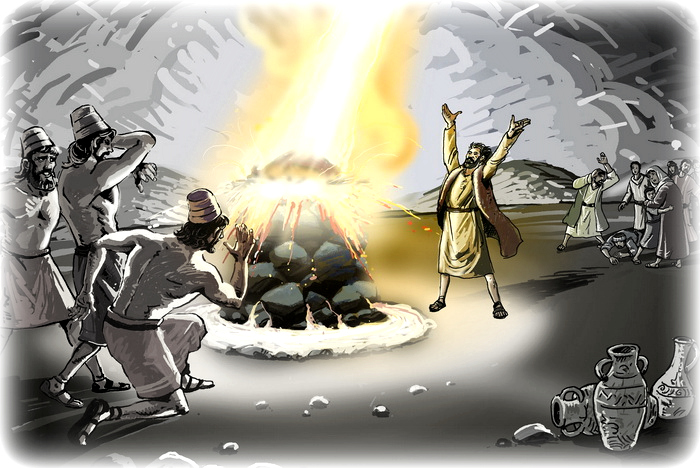
Following a recent set of posts on this site, I’ve added a further piece on the Cor Deo blog.  Should we bring back Ba’al?  I have no desire to promote any despotic and demonic deities, but I do wonder if we are too quick to assume that people are on the same page when it comes to the term “God.”  As preachers this is critical.  I was listening to Mike Reeves again recently at Transformission (click here to find Mike’s talks), and he made a very clear point in his first talk about why the good news isn’t typically perceived to be good news by the world around us: because of the god they think we are inviting them to.  Anyway, should we bring back the ba’als?  Click here to see today’s post . . .

Add to FacebookAdd to DiggAdd to Del.icio.usAdd to StumbleuponAdd to RedditAdd to BlinklistAdd to TwitterAdd to TechnoratiAdd to Yahoo BuzzAdd to Newsvine

Not Even a Hint – Racism in the Pulpit

The last couple of weeks have seen two high profile footballers accused of making racist remarks to opponents.  The world is rightly disgusted by this, even in the context of highly competitive and even combative sporting battle.  How much more should we in the church avoid all hints of racism?

If you are an overtly racist preacher, this post will not get to the heart of the issue.  I am writing more for those who don’t try to support a race discrimination position by twisting Scripture and becoming defensive.  I am writing for preachers who may accidentally give a hint of racism without intending to do so.

Here are three ways I have seen preachers fall into hints of racism that might prove helpful.

1. Cut out references to a “black heart” – Maybe in the context of a mimed drama it might be ok, but probably not.  Because of the way “black” and “white” are used as race markers, we have to be careful in using them as references to sinfulness and righteousness.  The Bible does speak of white robes, but a black heart?  Though your sins be as scarlet, sure, but not a black heart.  I heard one preacher make reference to “your disgusting black heart.”  He did so seemingly oblivious to who was sitting in front of him.  And to make things worse, he himself was from a place associated with racism in the past.  Probably best to just avoid the use of “black” as a reference to sin.  Not even a hint.

2. Generally don’t mimic accents from the pulpit – Again, I haven’t heard this done in a mocking way.  But it can feel mocking nonetheless.  I have experienced this with US folks faking a British accent, and with British folks faking a US accent (neither are very successful, which can lead to the feeling of implicit mockery).  When preaching Bible stories we are preaching about people in the Middle East, or Africa, or Mediterranean Europe.  Don’t fake an accent if it could be taken as mockery. Not even a hint.

3. Watch out for easy targets – In the English context there is much talk about racism and wanting to kick it out of sports, TV, etc.  Yet there seems to be open season on anti-American comments, or anti-French jokes.  I’m fully English and patriotically so, but I find myself reacting inside to anti-US comments from preachers.  In the context of the body of Christ united across Jew/Gentile lines, it just doesn’t seem appropriate.  Let’s go for a “not even a hint” approach, why not?

Are there other ways preachers inadvertently give a hint of racism in their preaching?

Add to FacebookAdd to DiggAdd to Del.icio.usAdd to StumbleuponAdd to RedditAdd to BlinklistAdd to TwitterAdd to TechnoratiAdd to Yahoo BuzzAdd to Newsvine

The Memorable Outline Myth – Part 2

So yesterday I did the unthinkable.  I pulled the pin from a grenade in the sacred space where the notion of a memorable outline is revered as the chief end of preaching.  I suggested that people might not be best helped by a set of textual labels that typically lack applicational relevance.  I even suggested that people might not review what we have made so memorable!

As I wrote yesterday, if the text yields a clear and applicational sequence of thoughts, by all means preach that.  But I fear that in many cases a pre-commitment to paralleled alliterated points may undermine the following aspects of preaching:

1. Is the text being presented authentically?  If you are dissecting and squeezing the text into an outline form, you may well be doing it an injustice.  Very few texts are actually written as equal paralleled thoughts.  Don’t give people a clever outline at the expense of really opening up the inspired text.

2. Is the listener motivated to return to this text, and the rest of the Bible?  If they feel incapable of “finding the three points” in a passage, they are less likely to be opening their Bibles (which is what they really need on Thursday, not just a vague memory of three uninspired descriptive labels from Sunday).

3. Is energy poured into future recall being lost from present impact?  Would it be better to have them feel the full force of the text’s impact at the point of preaching, and then be motivated to read more later in the day and the next day, rather than striving to cram in uninspired labels as a memory aid to help them remember a message that may have been only somewhat impactful on Sunday?

4. Is the main idea being undermined by a commitment to a longer list of lower value statements?  If you put your energy into one carefully crafted applicational representation of the main idea of the text, that single sentence summary would be more memorable and reach further and make more of a difference than a set of well-stated points that reflect smaller segments within the text.  Let the whole strike home to the heart in a single thought.

5. Is the projection of the outline teaching listeners bad listening habits?  That is, are we communicating to them that the point of preaching is primarily education, that the goal of listening is recall and that the measure of spirituality is the taking of notes?  It’s weird, but when my wife opens her heart to me and speaks, I don’t reach for a pad and a pencil, I open my heart and I listen.

Add to FacebookAdd to DiggAdd to Del.icio.usAdd to StumbleuponAdd to RedditAdd to BlinklistAdd to TwitterAdd to TechnoratiAdd to Yahoo BuzzAdd to Newsvine

The Memorable Outline Myth

I think this post will tread on some toes.  I do it in love.

I think there is a myth among preachers and among listeners, a myth that may be distracting energy from and dissipating the potential impact of the preaching event.  It is the myth of the importance of conveying a memorable outline.  It goes something like this:

Everybody knows that good preaching will offer a memorable outline of the points of the message, a set of “hooks to hang your thoughts on,” as it were. With this memorability, listeners will be able to go away and recall the message later in the week, thereby being changed by an encounter with God’s Word throughout the week.  In fact, this is so important, why not project the outline on the screen – it seems silly not to.

A couple of quick challenges, then I’ll suggest what may be lost in this pursuit of memorability.

A. How often do those who actually write down the outline go on to review and benefit from it, let alone those who walk out of church with just their memories to rely on?

B. How often do preachers actually make their points applicational so that remembering the outline will be life changing, rather than offering labels or titles for content that functions essentially as a set of poor commentary headings?

Now I know that this post is throwing a couple of grenades into a pretty sacred space for many preachers.  Let me offer a token caveat – if a text yields a clear, memorable and applicational sequence of points, praise the Lord and preach it!

I do believe every sermon should have an outline.  I am not promoting confused preaching.  But I think the outline is really the servant of the preacher.  The outline is for my sake, not theirs.  There are other things that are much more important for them to feel the impact of and walk away with.

Next time I will finish the post by suggesting various aspects of preaching that may be being undermined by this memorable outline myth.  And I won’t wait until Monday, I’ll post it tomorrow.

Add to FacebookAdd to DiggAdd to Del.icio.usAdd to StumbleuponAdd to RedditAdd to BlinklistAdd to TwitterAdd to TechnoratiAdd to Yahoo BuzzAdd to Newsvine

Easier to Read One

The other day I spent a great morning with a friend reading through some fairly weighty church history. For a couple of hours we stretched our thinking and responded with heavy hearts to an in-depth overview of medieval theology. One paragraph in particular caught my attention and my mind went back to this blog, especially in light of the Lit! review a couple of days ago.

I won’t try to give all the details here, but essentially the book was engaging a debate over the state of theological thought in the fourteenth and fifteenth centuries.  Was the fourteenth century about decline into chaos, or was it heading toward the harvest of medieval theology?  And then what happened in the fifteenth century? Was it all progress and growth, or was there largely a retreat to the great masters of the thirteenth century? And our thoughts should go on to consider what really happened in the sixteenth century as well – was that all progress, or was there some significant relapses there too?

Your brain might be stretching trying figure out who was around in those centuries, but that’s not the point, here’s the sentence:

[The intellectual decline is attributed to] “the indolence of ‘easy-going scholars,’ who found it ‘so much more convenient to study one author rather than ten or twenty.'”

Ok, one more bit, then back to today:

Like war-weary Europeans who surrendered to strong-arm rule in the late fifteenth century, many argument-weary scholars appear to have given their minds passively to the intellectual giants of the past on the eve of the Reformation.

So fast forward to today.  For most Christians, the preacher is the closest they typically come to a Christian scholar.  But the question that sits up to be answered is fairly obvious, I think.  Is my church being fed by preacher(s) who are enriched by good reading, or by preacher(s) who are “easy-going scholars?”  It is, after all, so much more convenient to study one author rather than ten or twenty.

If you’ve read this site with any sort of frequency, I’m sure you’ll have noticed that my real passion is to get preachers to genuinely preach the Word (rather than just preaching from, or using, or in association with, the Word).

But I would also encourage wider reading too.  Some preachers hardly read anything, and there is a “thin-ness” to their ministry.  Other preachers constantly read one author, and there is a “superficial tone of emulation” in their ministry.  Let’s be preachers who read, who read widely, who read quality, and who read so as not to give our minds passively to intellectual giants of the past, or the present.

Add to FacebookAdd to DiggAdd to Del.icio.usAdd to StumbleuponAdd to RedditAdd to BlinklistAdd to TwitterAdd to TechnoratiAdd to Yahoo BuzzAdd to Newsvine

Tweaking Ingredients in Preaching

I spent my first few years in Italy.  One enduring result on this is a long-term liking for Nutella.  The original and best chocolate hazelnut spread!  Australians might love their vegemite and the Americans their peanut butter, but this European can’t get away from Nutella.  Except for when I see it in American shops, that is.

In recent years I have seen it appearing in the grocery store during my visits to the US, and have bought a jar or two.  Same jar, same wrapping, same colour, but not same taste.  One ingredient is different – just the oil.  One ingredient on a long list, but it makes a difference.

The same is true with preaching.  One ingredient modified slightly and the whole product can taste wrong.  Here are some examples of tweaks that might ruin preaching:

1. Tweaking the tone from good news.  Same passage, same illustrations, same length of sermon, but if you replace the good news aspect of the message with pressure to conform, guilt for failure or legalistic righteousness, I guarantee the message won’t taste the same!

2. Tweaking “of” to “from.”  This is a common one.  Instead of passionately pursuing the preaching of the message of the text, many preachers choose instead to preach their message from the text.  That is, they use the biblical text as a starting point, but at the end the listeners don’t feel they know the text any better than at the beginning.  Don’t preach from a text, preach the text.  (I think this is the hardest one to spot in a mirror – every preacher thinks they are explaining the text.  Perhaps you should ask someone who knows the Bible well and be ready to listen to what they tell you!)

3. Tweaking the text to fit an outline.  Some preachers don’t go near this neighbourhood, but some seem to live there.  Its where the text is twisted slightly to help it fit in a certain outline.  Perhaps a three-point alliterated outline.  Is that really what the writer was doing in the text?  Was that his intended outline?  If not, you may leave a sour taste for listeners who sense that you’ve done a bit of a number on the text!

These feel like relatively small adjustments, but they leave a very different impression.

Add to FacebookAdd to DiggAdd to Del.icio.usAdd to StumbleuponAdd to RedditAdd to BlinklistAdd to TwitterAdd to TechnoratiAdd to Yahoo BuzzAdd to Newsvine

Book Review: Lit! by Tony Reinke

Lit! – A Christian Guide to Reading Books by Tony Reinke is bordering on a must read for preachers and church leaders.  Years ago it was a given that leaders have to be readers, but today I wonder if we’ve not bought into the notion that leaders have to be too busy to be real readers.  Headlines?  Yes.  Emails?  Of course.  Web browser?  Certainly.  Blogs?  Staying in touch.  Books?  Uh, too busy, sorry.

This book is a thoroughly enjoyable pithy little promo for the right kind of reading.  The first half of the book lays a theological foundation for books and reading.  The second half offers nine dynamite chapters of practical wisdom to help the motivated reader become a real reader.

When we commit ourselves to literature rather than a superficial spinning through surface hype, we find a richness of personal enlightenment that is truly of God.  Reinke doesn’t advocate an only-Christian book approach to reading, but he does clearly recognize two categories of books in the world.  The Bible.  And everything else.

The book engages with what to read, as well as how to read.  It addresses issues of conscience, of priorities, of benefits.  And it does it all in an engaging energetic manner that makes you want to keep reading, and pick up something else, something good, to read at the same time (if only that were possible!)

Should we read non-Christian books?  Absolutely – at least, the best of them, if we already have a well-formed biblical worldview (which I think he assumes too easily and most readers would also assume naively).   In fact, Reinke gives biblical examples of reading non-biblical authors as well as a couple of giants from church history on the subject.

Actually, with a passionate commitment to reading like Reinke, we are having to leave behind over 10,000 books for every one that we choose.  So we need to choose well, read discerningly, and benefit as fully as possible.

I’ve been struck many times by how many people do not read wisely.  “I can’t buy another book until I’ve finished the last one I started . . . three years ago!”  Bad logic.  Preachers need to be reading and we can’t afford to get log-jammed by a bothersome book.

Randy Alcorn writes of Lit! : “Seldom have I enjoyed a book more than this one.”  I concur.  Hence I read it in a day.  I think your ministry would be blessed if you enjoyed it too.

(If you are in the UK, click here to buy book.)

Add to FacebookAdd to DiggAdd to Del.icio.usAdd to StumbleuponAdd to RedditAdd to BlinklistAdd to TwitterAdd to TechnoratiAdd to Yahoo BuzzAdd to Newsvine

Eternal Preaching – Part 2

Last time I listed and rebutted five reasons that the future has been squeezed out of much of the preaching in our generation (not in every church, but in many).  One accusation is that preaching about the future isn’t worth it because it doesn’t offer any contemporary relevance.  You know the idea – “pie in the sky when you die” kind of talk, “too heavenly minded to be of any earthly use” and all that.  (Support that idea biblically!)

Here’s an application shotgun blast:

Biblical teaching on the future gives us encouragement in trials (John 14:1); comfort in griefs (1Thess.4:13-18); motivation for purification (1John 2:28-3:3); it moves us toward morality (Col.3:1-5ff); it drives us to diligent spotlessness (2Peter 3:14); it leads us to lay aside lusts (Rom.13:11-14); encourages exemplary living (1Thess.5:1-11); fires our faith (Heb.10:35-39); spurs us to strengthen our hearts (James 5:7-8); produces perseverance in our service (1Cor.15:58); fires us to finish well (2Tim.4:7-8); focuses our passion for preaching (2Tim.4:1-2); stirs worship as we see the sovereign plan of God (Rom.11:25-32); and offers blessing for both reading and heeding (Rev.1:3).

I could have added more, but you get the point.  (1) There is a lot of biblical content that points our thinking to future things and eternity.  I didn’t touch on the gospels, or the Old Testament, in that blast.  Two more mega rounds of applicational value.  If we are going to preach the Bible, we can’t help but point our listeners to the future.

If we are going to seek biblical transformation in the lives of our listeners, we can’t help but speak of the future.  As we see in the blast above, (2) the Bible assumes that our values are shaped by the future.  Where you treasure is, there your heart will be also.  Lay up for yourselves treasures in heaven.  Can a follower of Christ really represent Christ in this world without having eternally shaped values?

We live in a world marked by hopelessness.  Whether it is the forlorn agony of poverty, or the vain emptiness of wealth, we are surrounded by the hopeless. (3) Of all people, followers of Christ should be marked by hope, which is a biblical fruit of future focus.  If we preach a Christianity bereft of future reference, we snap a leg from the stool of truth on which we sit.  Sadly too many believers are trying balance on faith and love, but hope is strangely absent.

Let’s be sure to preach the Bible, shaping values and stirring hope.

Add to FacebookAdd to DiggAdd to Del.icio.usAdd to StumbleuponAdd to RedditAdd to BlinklistAdd to TwitterAdd to TechnoratiAdd to Yahoo BuzzAdd to Newsvine

Eternal Preaching – Part 1

Some sermons do seem to drag on towards eternity, but perhaps too few preach in light of eternity.  It seems to me that in many quarters the church has reacted against eschatological sensationalism by removing all reference to the end-times from the pulpit.  Perhaps the subject is seen as being divisive, difficult, obscure, irrelevant or embarrassingly sensational and therefore best left alone.

Here are my responses to these five common reasons for avoiding the subject of the future, then next time I’ll offer some positive reasons to go eternal in your preaching.

1. Eschatology is divisive.  After all, there are so many views on the millennium, the coming of Christ for the church, the details on the timeline, political implications today, etc.  Actually, most issues in the Bible are potentially divisive – the nature of God, the person of Christ, the role of the believer in salvation, the work of the Holy Spirit, etc.  If a subject is potentially divisive, surely we shouldn’t avoid it, but watch our attitudes and clarity when we do speak of it?

2. It is difficult.  I suspect many a preacher avoids all references to the future because they are pretty sure they aren’t sure where they stand on it all.  Like most subjects in the Bible, it is both complicated enough for a doctoral research pursuit, yet simple enough for a child to understand.  Avoiding a subject because it is difficult will lead us to missing out on the rich wonder of the Bible, and our listeners will never hear us mention the central subjects like the Triune God, the Incarnation, etc.

3. It is obscure.  Uh, no.  Biblical reference to the future is not limited to a couple of the more apocalyptic prophets.  Every book in the New Testament except one includes reference to the return of Christ, let alone all the other aspects of future teaching.  Obscure it certainly is not, if we read the Bible, that is.  I suppose the challenge is that many don’t and so judge Christianity by their cultural worldview instead.

4. It is irrelevant.  Again, no.  We’ll look at applicational value of future thinking next time.

5. It is embarrassingly sensational.  Sadly, it can be and often is.  There is too much hype and puff coming from some.  The solution to that is to offer our listeners the good example of being well grounded biblically, rather than leaving them to become newspaper and paperback theologians.

None of these reasons are enough to kick the future out of our present preaching.  Next time, we’ll start stacking up the positive reasons to bring back future and eternal preaching.

Add to FacebookAdd to DiggAdd to Del.icio.usAdd to StumbleuponAdd to RedditAdd to BlinklistAdd to TwitterAdd to TechnoratiAdd to Yahoo BuzzAdd to Newsvine