88 Questions Because Delivery Makes a Difference

Questions2How many good messages have been wasted by poor delivery?  You’ve probably heard the old statistical misquote that content equates to only 7% of communication.  There are so many flaws in applying that study to preaching, but don’t make the big mistake of thinking that content is somehow only 7% of the equation.  Yes, body language and tone will overwhelm and negate content, but the visual and vocal will never fix or replace the verbal.  Content matters massively.  While a lack of content can’t be fixed by delivery, good content can be lost in delivery.
Here is a quick checklist for self-evaluation.  There are 88 questions grouped into just 20.  Remember, your self-evaluation is probably unrealistic.  You probably think you are doing better than you are.  You think pauses are longer than they feel, tone is more varied than it sounds, smiles are more noticeable than they are.  Nonetheless, evaluation is worth it.  Evaluate your own delivery and look for an area or two to prayerfully focus on and improve.  Also ask a listener or two to look at this list for you – they may be polite, but any hint they give is worth following up on!

1. What does your tone and manner do for the listeners?  Do they feel secure, loved, protected, safe?  Do they get nervous, agitated, upset, or got at?  Your tone and your manner make a big difference to the listeners, so do you think about these elements of your preaching?

2. Does your delivery flow, or does it feel like you get stuck?  Why?  Can you maintain momentum through the whole message in a natural way?  If you get stuck, can you handle that without generating nerves in others?  Do you know when you typically get stuck?  Does explaining the text trip you up more, or is it thinking applicationally?

3. How is your eye contact?  Are you looking at notes, over peoples’ heads, at one section of the room only?  Is it fleeting, forced, intense?  Can you look at people without closing your eyes or other awkward habits?  Do you over-stare and create awkward intimacy for some or a sense of aggression to others?  Which part of the room feel ignored as you preach?

4. Speaking of notes, do they really work for you?  Do you know how much you look at them?  When you look at them, do you lose momentum?  Do they enable you to preach unnecessarily complex messages?  Does your preaching feel canned rather than authentic?

5. Does your preaching furniture create unnecessary distance and function as a barrier between you and your listeners?  Could you come out from behind that thing?  Could you communicate better by being on the same level as the listeners?

We will continue the list tomorrow . . .

Sunday Feedback – III

Feedback2Here is the end of the list of ten reasons not to get too excited about the feedback you receive right after preaching.  Remember what we saw in part 1.  The most valuable affirmation will combine elements of time, thoughtfulness and transformation.  When you get those, treasure them.  Make a note.  Keep a file.

When you get Sunday affirmation, be thankful, but don’t get carried away.  One of these ten reasons could be the main reason for it:

8. The “trigger words” mechanism.  People like to hear what they value.  Let’s say you preach a very poor message – biblically weak, unclear in organisation, unengaging in presentation, irrelevant to those present – but you use an illustration that mentions someone’s pet issue, what will they say?  “Preacher, that was a poor sermon, but I loved that your illustration mentioned my pet issue?”  Typically not.  Once those lights flash in their evaluation grid, you have become a hero!  The feedback will be skewed.

9. The “Satanic test” reality.  You’ve probably heard the oft-quoted statement from Spurgeon (I think), who was affirmed very favourably after preaching and responded with, “Madam, the enemy has already told me that!”  Nice anecdote, but it could be true in our situation too.  The enemy is not a fan of being obvious because it doesn’t tend to work so well.  Better to build up a preacher so their focus shifts from dependence on Christ . . . so we need to beware on a spiritual level what post-sermon feedback does to our hearts.

10. The “exit gauntlet” logistics issue.  If you are at a church where the preacher stands at the back and shakes everyone’s hand, then you have a couple of issues to face, actually, three.  One, most people will feel obligated to mutter some pleasantry to get past you.  Two, some people who actually want to talk to you won’t be able to because others are lining up to leave.  Three, because people don’t want to hold you up, they may feel obligated to step out into a rainy car park and thus end the time of valuable fellowship in the church.  Standing at the door may not be the best idea!

And there are probably some more . . . what would you add?

Sunday Feedback – II

Feedback2Continuing the list of ten reasons not to get too excited about the feedback you get right after preaching . . .

4. The “church culture” mechanism.  Different churches have different cultures.  Some will automatically affirm and honour the preacher in a laudatory manner.  Other churches will engage the preacher about life and family with barely a mention of the message.  Try to discern a local church pattern before getting excited or devastated by what you hear.

5. The “surrogate leader” reality.  Sometimes a person will gravitate toward a preacher because they yearn for the spiritual leadership and sensitivity they perceive in that preacher.  Perhaps their own husband is very weak, or perhaps their Dad is absent . . . it could be a middle-aged wife or a teenage boy, but sometimes the praise and feedback is more about what they don’t have in their life than about what you brought in your sermon.

6. The “single preacher” reality.  I’ve been married for fifteen years, so I feel out of touch on this one, but . . . if people respond to perceived spirituality when they know you are married, and if there is a lack of spiritual, godly, single men in the church (which there is), then I suspect preaching as a single man will get some feedback from the odd one or two that is more fishing than genuine feedback.  Just saying.

7. The “life appreciation” reality.  This is more likely in your own church than in one you visit.  It is where a church member really values who you are as a person – you love their family, show interest in their teenage son, buried their grandmother, or whatever.  They appreciate you.  Your preaching may be dire, but they want to love you and so affirm your sermon because that is easier than explaining what your presence and love means to them.

We’ll finish the list next time.

Sunday Feedback


Feedback2Feedback is not created equal.  Wise preachers learn to tell the difference.  I suspect more than a few ministries are launched and sustained on the empty energy of post-sermon politeness.  On the other hand, genuine and helpful feedback can strengthen your ministry for years.

Typically my approach is to say thank you for any feedback, then prayerfully evaluate what I am supposed to make of it.  Usually I find that meaningful feedback and compliments will come with a combination of factors – (A) Time – a week or a year later usually means more than five minutes later, (B) Thought – when people are really thinking about what was said, it will typically show, (C) Transformation – the best encouragements are not mere words, but supported by reality.  If all three are missing, then we may be dealing with empty feedback that has the nourishment value of a boiled sweet.

Here are ten reasons why I think it wise not to get too excited by feedback right after you preach.

1. The “competition” reality.  Sometimes people will heap on the praise because they have no real point of comparison.  Don’t assume they are thinking about your favourite preachers when someone tells you that haven’t heard any better.  It may simply be the case that they have a very limited experience of other preachers (sadly true in some churches you might visit), or perhaps…

2. The “memory” reality.  Perhaps positive feedback is skewed by a very limited memory.  What they just heard is the only sermon in their short-term memory, and so it stands out.  Don’t test a “best I’ve heard in months” comment with a “can you tell me the main idea and take home gems from last week’s message?” Chances are, your message may be equally misty come next Sunday!

3. The “polite override” mechanism.  Some people in churches have a politeness override mechanism that makes them say things to be polite that they don’t really mean.  It happens at dinner tables when a dish has been obliterated, but to be polite, they will maintain it is “really good!”  Call it dishonest, or call it polite, but remember it may happen after you preach.

We’ll continue the list next time!


Overcoming Preacher’s Block – III

Block2We are coming to the end of a list of suggestions for overcoming preacher’s block . . . how about:

7. Sleep.  Sometimes when you are stuck, you can be tempted to work late and miss sleep.  Don’t.  Get good sleep and then work productively tomorrow.  We are designed to need sleep.  It can be a real step of faith to leave an issue like this with God and curl up in His arms for the night.  Sadly, too many preachers seem to think God is impressed by sugar and caffeine fueled fatigue that results in a vicious cycle of tiredness and inability to concentrate.  We don’t get medals for staying up late and preaching poorly as a result.  Don’t turn the chance to preach into an opportunity to play a mini-martyr.

8. Confess.  Sometimes preacher’s block is really the fruit of indiscipline, inappropriate distraction, laziness, or some other sin.  I don’t want to come up with a pseudo-solution to avoid facing that.  If you have sinned and become aware of it, then deal with it.  Confess it to God, come back to the cross, repent and lean into His care for you again.  This isn’t some sort of mystical purging ritual.  It is healthy relationship.  You need to walk through the preparation and preaching with God close, so if you don’t feel close due to sin, then get it sorted.  Any short-cut or detour that tries to hide distance in this sense will be an unwise path to take.

What would you add to the list?  What do you do when you get stuck?

Overcoming Preacher’s Block – II

Block2Continuing our list of suggestions for breaking out of preacher’s block.  Yesterday we thought about Pray, Break and Talk.  Here are some more ideas:

4. Read.  Sometimes it is time for a fresh perspective.  Maybe another commentary on a key section.  Perhaps check some biblical studies books to see if the text appears in the scripture index.  Maybe try a lighter commentary for how they handle this section.  But beware, sometimes the last thing you need is more information in.  This is an option, but it may be the wrong option.  If your block is from a massive input of data and no clarity on how to let the right stuff out, then maybe steer clear of the books at this stage.

5. Write.  Sometimes I get stuck on an outline, or a certain part of a message.  Switching to writing may be helpful.  Perhaps you are struggling with the big picture of the message and need to switch to working out wording.  This may free you up to keep making progress on the message rather than staying stuck on an aspect of the message.

6. Preach.  We are a bit obsessed with “writing” our messages.  Whether it is outlines or manuscripts, we can easily lose sight of the orality of preaching.  The goal is not to write a sermon, but to preach one.  So sometimes the best thing to do is to step away from the keyboard or pen and start talking out loud.  If you were up now, what would you say?  Things that seem so clear on paper sometimes can’t come out of your mouth.  Paper is only one step better than in your head (who hasn’t had clarity in their minds that simply won’t get onto the page?  Well, spoken communication is a step beyond that.  You can feel clear on paper, but still not be able to express what you intend.  Once you hear yourself getting stuck, you know you have issues on paper.  And once you are trying to say it, sometimes you can find a quick detour that makes for an effective message! (Then go write it down.)

We’ll finish the list tomorrow.

Overcoming Preacher’s Block

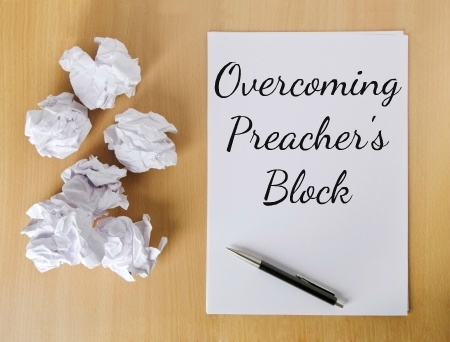
Block2Writer’s block is a famous challenge, but I suspect preacher’s block is an equally frequent occurrence.  The time ticks by and Sunday’s deadline keeps approaching.  What should you do if you feel stuck?  Here are eight suggestions.

1. Pray.  Seems obvious, but I need to make this overt.  Pray.  And pray honestly.  Stop praying nice little “Lord I commit this process to you for your blessing and glory” prayers.  Start praying really honestly.  “God, I am really struggling here!  I don’t know what the problem is and I am scared that I won’t be ready in time . . .” – or whatever is on your heart.  Sometimes praying something through out loud means that it is not only God hearing your heart, but you hearing your heart.  Maybe you’ll end up praying about some sin struggle, or about some fear, or a false motivation driving you, or whatever.  Pray as if God is able to take an honest statement or two – the Psalms and Job and Jeremiah suggest that He is.

2. Break.  Sometimes the best thing to do when stuck is to stop trying to move forwards.  Go for a walk, run an errand, read a book unrelated to the message, do some mindless sorting of the admin that has been piling up.  You could say that any break is worth it, but maybe not.  Five minutes on social media could expand to fill the next hour, watching a Youtube clip can be dangerous to your ability to focus, and beware that there is a difference between taking a break and becoming distracted in aimless, or purposeful, procrastination.  A genuine break can really help.

3. Talk.  Who turned preaching into such a solitary pursuit?  Sometimes the very best thing to do is talk to someone about your message.  Either what they say or what you say will be helpful to regenerate momentum.  It could be your spouse, a friend, another preacher, a mentor.  Sometimes talking about the message, the challenge you feel and what still needs to come together, will break open the logjam and help you start moving forwards again.

Tomorrow I will add some more suggestions . . .

Preaching and Patience


Patience2Life transformation is typically a gradual process.  We tend to focus on the sudden change stories, but even there, when we dig deeper, we tend to find a process that was ongoing for a while.  We can pray for and celebrate the big breakthrough moments, but let’s not forget that God is patiently building the church at all times.

Be patient with the church – By all means preach with expectancy and pray for monumental change, but remember that God has his plans and purposes at work constantly in all the lives that make up your church.  This Sunday’s message is part of that, but God isn’t building his lifetime transformation plan around one sermon.

Be patient with key people in the church – Everyone matters, but sometimes there is one person who dominates your thoughts and prayers for a season.  It could be a so-called “well-intentioned dragon” – a sometimes constructive critic whose stings have gotten your attention.  It could be a person of political influence with their complex motive-set.  It could be an energy-draining individual who needs us to give (and forgive) more than we feel able.  Pray for wisdom, strength, and patience.  God is at work, but rash moves tend to backfire.

Be patient with yourself – Sometimes it only takes one negative comment, or a feeling of failure, and suddenly the personal weakness list can seem overwhelming.  Before we know it, we have determined, in our self-god sovereignty, that this week is the deadline for definite transformation.  Slow down.  By all means do look to God and lean into the changes he wants to bring in your life.  But don’t determine that its now or never and then exasperate yourself with an ungodly panic.  He is at work and we need to be patient with ourselves as well as others.

I am not saying we should weaken our ministry with low expectations, excuse a lack of God-stirred effort as patience or settle for the sometimes easier option of not addressing a difficult situation.  I am simply remembering that God is able to walk at 3mph, yet while we fuss and moan about the lack of transformation, he takes us incredible distances.


Site News: Book & Guest Series

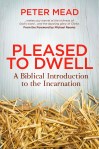
Pleased to Dwell v3Just a quick update to let you know that Pleased to Dwell: A Biblical Introduction to the Incarnation is now available for pre-ordering in both the UK and USA/Canada.  This book is written for a wider audience than just preachers, but I am sure preachers will benefit.  Here is one endorsement that suggests this is the case, from Rice Tice:

“What a really useful resource! I will definitely be reaching for this book … and I’m looking for freshness and depth, as Christ’s coming at Christmas is preached once more.As I read through it, I found that ideas for carol service talks just kept leaping off its pages.”

And Alex Strauch’s endorsement includes the following:

Whether you are exploring the claims of Christianity for the first time, a new believer seeking to understand the Bible better, or a seasoned Christian wanting to reinvigorate your love for Christ, this book is a must read. It is also perfect if you are a preacher looking to present the “big picture” of the gospel or planning a Christmas preaching series.  I wholeheartedly recommend Pleased to Dwell, and I am sure that many will love the Savior more as a result of reading this!

84009864e689597740e38e26128769cdThe best price I am aware of in the UK is from 10ofthose.com – who have also bundled it with Mike Reeves new book, Christ Our Life.  The bundle brings the price down even further.  If you buy the bundle twice, or add in Mike’s little yellow prayer book, then postage is also free.  (Disclosure: any books ordered via this link will give a small percentage to our ministry support fund – the same is true for the USA links below.)

704343In the USA, ChristianBook.com are already taking pre-orders for the book – click here to go to Pleased to Dwell.  They are also selling the new Ministry Essentials Study Bible from Hendrickson.  This Study Bible contains a lot of complementary articles on aspects of Christian ministry.  I was asked to write most of the section on preaching and sermon preparation.

There is more information on Pleased to Dwell, including endorsements and purchase information, if you click here.

Guest Series – Here on BiblicalPreaching.Net I am excited to host a series of guest blogs to mark the release of Pleased to Dwell in September.  I have some great posts lined up and am looking forward to running those in a few weeks time. (The book releases in the USA in November.)

Everybody Hides

fortress2[Originally posted on Cor Deo] Psalm 46 is always a highly valued text in times of war.  Which is probably why, for a while now, we haven’t heard too much about it.  Maybe we should?

In the past the news of an impending threat would come in the form of a breathless messenger coming from the next town.  Today we live with constant video access to every corner of the planet.  The net effect of this constant stream of information tends to be that we carry on with our own lives while getting drawn into non-news and entertainment, but with true news having little effect on us.  But every now and then the news does get our attention.

If we are looking beyond what the mainstream media chooses to highlight, there are some very disturbing things going on.  And when the news is genuinely disturbing, perhaps it is time to break out Psalm 46 again.

Overview of the Psalm – The Psalm falls nicely into three stanzas, each marked with a contemplativeSelah to give us pause for thought.  The first stanza begins with a launching idea that is then picked up in a refrain finishing the second and third stanza.  As far as Psalms go, this one is clear and simple.

It begins with the big thought that God is our refuge and strength, an always accessible help in troubling times.  Consequently, we will not fear.  Then the writer lists a set of natural disasters that would rock anyone’s world – earthquake, mountains moving, raging seas, etc.  I don’t think he is pondering natural disasters, so much as describing a hypothetical upheaval of all that seems stable.  Even if the whole created order were to return to utter chaos, we will not fear.  This must mean that the nature and character of God is more trustworthy than even the solidity of the mountains and the boundaries of the seas.  Selah.

With the first three verses laying the foundational thought, the writer then becomes overt about the threat of war.  He describes the tranquility of the city of God where He is reigning and present.  And just as our hearts calm to ponder what it will be like to finally live with God, suddenly verse 6 stirs us with the news that all around the nations are going crazy like a raging sea and slipping mountains!  The hypothetical collapse of creation stability is the experienced reality when it comes to the geo-political changes in the world.  But, immediately our perspective is checked with the realization that one word from God and the whole planet could be melted.  Therefore, we do not fear.

The refrain is beautiful: The LORD of hosts is with us, the God of Jacob is our fortress.  The LORD is the God who makes promises and keeps them – He cares about continuing to care for us.  He is strong – He is the God of angel armies.  If you have ever watched a well-drilled group of soldiers march past, it is intimidating.  Even a relatively small number.  Now imagine an angel, the kind that could kill 185,000 human soldiers in one night.  Imagine two.  Ten.  One hundred.  Imagine a number so big you could not count it, and that is the army of heaven, and our God leads that army, and He is with us.  Therefore He is our fortress and we run to hide in Him.  Selah.

The final stanza offers an invitation to come and look at what God has done, and implicitly, to anticipate what He will do.  He ends wars that seem overwhelmingly threatening.  He topples powerful foes that seem to strong to resist.  And finally in verse 10, God instructs the raging armies and belligerent power-hungry rulers to stop!  Stand still.  Be quiet.  Hush.  And know that He is God.  He will be exalted by all.

The perspective shift is powerful.  The raging nations and growing armies and plotting terrorists and geo-political upheavals are all very small compared to the utterance of our God.  He is the God of angel armies and He is with us.  He is our fortress and we run to hide in Him.  Selah.

When the threat really rises, everybody hides.  The question is, where do we hide?

Hiding Option 1 – The only good option is to run into the most powerful player in current history.  If it is clear who will win in the end, why not join them?  We know the end of the story, but often it is hard to not fear when the circumstances feel so grave.  Often it is hard to not fear when God doesn’t seem to offer immediate deliverance to everyone who is suffering for being His.  What if I have to face more than discomfort for my faith?  What if my life is threatened, is He still a fortress?  Think back to three men in Iraq two and a half millennia ago.  Our God is able to deliver us, but even if he doesn’t in the moment of this particular trial, we won’t bow to your statue.  Were they foolhardy?  Or were they gripped with the greater reality that the all-powerful God of angel armies was with them, so that even in death, they had confidence that they would be with Him?

Hiding Option 2 – The most pervasive option around us today is often known as “hiding our heads in the sand.”  It is pretending there isn’t a threat.  I recently visited Auschwitz and was sickened to think that people could somehow be oblivious to the hideous evil of that place.  If only they had had social media and smartphones, then everyone would have known.  Actually, don’t people still hide from things today?  The media seem so committed to diverting attention – whether it be spinning a story, or shifting from genocide to Hollywood, the media are experts at making the potentially best informed of all time into a number and dumber generation.  But we can’t simply blame the media.  We can do it to ourselves.  We are more than capable of hiding from reality.

There may be other reactions, but these seem to be the big two.  As the news stirs fear within me, will I distract myself with little things and pretend all is well, or will I run into my fortress – the God of angel armies, the God who has chosen to be with me?