A Fear Worth Facing

I think there is one fear that preachers may have, but may be unwilling to face.  It’s also true of struggling school teachers, or any public speaker.  It is the fear that the listeners may have already left the room, even though their bodies are still sat there.

The signs are obvious – fidgeting, vacant stares, shuffling, unusual levels of coughing or yawning, raised eyebrows, longing looks toward the clock on the wall or the watch on the wrist.  It may be that some people will wish they were somewhere else no matter what you do.  But what if the number grows from the few relatively unreachables to cross the line into an unacceptable range?

Some speakers may, I suspect, have a deep awareness of this reality every time they preach.  But it must be hard to see it for what it is.  Much safer to speak of spiritual warfare, or to critique the congregation, or to have a pithy grabber about Jeremiah and other unloved prophets, or to pretend the problem is not there at all.  But if it is, it is.

Perhaps some preachers would have the courage to take the faith step of calling it what it is.  If you are not engaging the listeners, be honest about that in your prayers.  I don’t recall who said it is a sin to bore people with the Bible, but I’m inclined to agree.

What if you’re not consistently boring, but dip your toe in now and then like most of us?  Then perhaps it is worth thinking about what it takes to engage a gathering of listeners.  It is important to be faithful to the text, but it is something other than that.  It is important to be clear in your content and delivery, but it is more than that.  It is important to be relevant in your message, but it is more than that.  It is the human to human communication characteristic of being engaging.

Possible ingredients to add to faithful, clear and relevant content, in no particular order: energy, smile, humour, confidence, gentleness, humility, authority, sensitivity, warmth, eye contact, vocal variation, naturalness, authenticity, laughter, affection, poise, and you can probably add to the list . . .

Add to FacebookAdd to DiggAdd to Del.icio.usAdd to StumbleuponAdd to RedditAdd to BlinklistAdd to TwitterAdd to TechnoratiAdd to Yahoo BuzzAdd to Newsvine

Bible Versions and Preaching – Do What?

Yesterday I shared a couple of thoughts on this issue, urging thought about what we say as preachers concerning Bible versions.  Today I’d like to offer a couple of thoughts about what we do with Bible versions:

3. Preach from the text people are looking at. Whether you like it or not, if most people in the church use one version, and that version is sitting in the seat in front of them, and that version is projected on the screen at the front, then you should probably be using that version when you preach.  Why do anything to undermine communication?  Now you may not prefer the NIV, many don’t, but if that is what people have in the congregation, you should probably use it for preaching.  By all means study in a translation you prefer (or original language if you can), but up-front use what people have in front of them.  I suppose that if I were in a KJV church, I would be tempted to do the reading from that, but then preach from a more understandable version (and perhaps not state that I’m doing so!)

4. Think carefully about bulk buys of Bibles for the church. When churches buy dozens of “pew Bibles” in a certain version, the ramifications are massive.  Some of you remember the decision being made thirty years ago, and some churches are still using the same “pew Bibles” from that decision.  More than that, many people in those churches are still using that same version at home, and repeatedly buying the same version when their Bible wears out (hopefully), because, after all, that’s what everyone uses in the church.  So it is a big decision.  And it can be a difficult, but potentially strategic decision to change the version used in the “pew Bible” and “from the front.”  I know of some churches that have made that change in recent years from NIV to ESV, for example.  This year we will see a revised version of the NIV coming out in a couple of months, probably with significant fanfare.  Whether churches switch to a different version, or make the transition to the new NIV, is up to each church leadership.  I would just suggest that there are moments when a decision to start replacing worn Bibles with more of the same version is not unlike signing a three-decade contract for your church.  Whatever is decided, let it be a thought-through and informed decision!

(NB Cor Deo podcast about relational Bible reading – click here.)

Add to FacebookAdd to DiggAdd to Del.icio.usAdd to StumbleuponAdd to RedditAdd to BlinklistAdd to TwitterAdd to TechnoratiAdd to Yahoo BuzzAdd to Newsvine

Bible Versions and Preaching – Say What?

Yesterday we asked the question about what to do with the 1611 anniversary, recognizing that each church situation is different.  Some would be wise to avoid overplaying it.  Others might use it as a great evangelistic opportunity.  Others may see it as an educational moment.  But what about Bible Versions and preaching?  Here are some largely non-1611 connected thoughts…

1. Inject gratitude into an often overly contentious issue. As a preacher, if the subject comes up, you have the opportunity to either stoke the fires of dispute, or to inject gratitude for the amazing privilege we have in our language.  Just read about what it took to produce Bibles in the past, or observe the work involved in a new translation, or consider the sacrifice paid by many in the world today if they are caught with one, or recognize the historical anomaly of easy book ownership, or even look at what is now available for free online (for example, check out the excellent NET Bible) . . . and you will see that we have great reasons to be very very grateful.  As a preacher your opinion may count for a little more than that of others, even if you are uninformed.  Be informed, but be careful too!

2. Be very wary of undermining trust in translations. People don’t automatically know the difference between the inspired nature of the original texts, and the authoritative nature of translations inasmuch as they accurately convey the original text.  Sometimes real damage has been done by a cavalier critique of some detail in one translation or another, leaving listeners feel that they cannot trust their version, or even any version in their language.  Surely this is not helpful.  Often there are far more subtle ways to convey a more accurate sense of the meaning of the text than outright critique of the translation (and remember that one of the hardest things to know is what you don’t know on a subject . . . so it’s probably safe to presume your knowledge, even combined with a commentator, may not be absolutely better than the translation committees of several Bible versions … there are some issues in translations, but be humble and careful what you say!)

Tomorrow I’ll share a couple more thoughts on this issue, feel free to comment.

(NB The Cor Deo podcast that just went live is a conversation about the role of the Bible in the believer’s life and relational Bible reading – click here to get to the player, or find Cor Deo on iTunes.)

Add to FacebookAdd to DiggAdd to Del.icio.usAdd to StumbleuponAdd to RedditAdd to BlinklistAdd to TwitterAdd to TechnoratiAdd to Yahoo BuzzAdd to Newsvine

Bible Versions

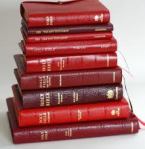
As I am sure you have heard already, it is now the 400th anniversary of the King James Version of the English Bible.  For some reading this site that will be nothing more than a quaint historical monument.  For others it will be a celebration because they and their church still use the KJV/AV (although probably not the 1611 version, I suspect!)  For many of us, we’re in a mixed setting.  That is, most have moved away from it to a more modern version, either in the RSV years, or the NIV publicity-fest, or to the NKJV in the early 80’s, or the NLT or ESV in more recent years.  But there may be one or two in our churches that still hold on to their KJV’s with a resolute commitment.

So do we ignore the anniversary in order to avoid any disputes over the “inspired” nature of the KJV (a claim never made by the original translators who acknowledge the inspired text was the original language, and they were reviewing earlier English Bibles for content and style).  Or do we take the opportunity to educate our churches on textual criticism, text families, translation philosophies and communication theory?  Or do we thank God for what the KJV did in its time, and for the example it set for modern translations to follow in later years?

Arguments over Bible translations tend to include a lot of opinion, but often not very informed opinion.  Perhaps we have an opportunity to inject grace into these disputes, as well as some carefully measured information.  Let’s be careful not to throw petrol on a smoldering fire.  Yet at the same time let’s not miss an opportunity to be thankful for all that God has given us in terms of the Scriptures in our own language.  There are still hundreds of millions of people without any portion of the Bible in their heart-language.  Surely we should be thankful for the plethora of Bibles available in English!

Tomorrow I’ll follow up this post with some thoughts on Bible Versions and preaching.

(NB The Cor Deo podcast, latest edition, focuses entirely on the issue of relational Bible reading.)

Add to FacebookAdd to DiggAdd to Del.icio.usAdd to StumbleuponAdd to RedditAdd to BlinklistAdd to TwitterAdd to TechnoratiAdd to Yahoo BuzzAdd to Newsvine

Too Subtle Transitions

I think I have written in the past about not going through the turns in your message too quickly.  If you take a turn quickly you can easily lose the passengers.  I was just discussing this with a friend, particularly one type of transition that doesn’t work so well.  Let’s call it the “conjoined rhetorical questions” transition.  Hardly pithy, but descriptive nonetheless.

Here’s how it might look:

Perhaps you are thinking that this instruction seems challenging, or perhaps you are thinking about how you’ve already failed . . .

This kind of sentence can function like a hinge between two sections.  But I suspect your listeners may get lost in the turn.  Essentially the transition here, potentially a major one in the message, comes down to the following: “…or…” – what shall we say, milliseconds in length?  Certainly easy to miss and the listeners will then find themselves subtly confused by your talk of past failure when you are talking about instruction for us in the future (they missed the turn).

What would it look like to slow this down?  It will seem pedantic in written form, but remember, oral communication is different than written communication!

So there you have it: the passage asks something of us that isn’t easy.  Perhaps you’re thinking how challenging it seems?  I’m certainly finding this to be a challenging instruction.  Not easy at all.  But hang on a second, hold on.  It is challenging, but perhaps you’re not looking ahead to the challenge.  Perhaps, like me, you’re looking back because you have failed in this area in the past?  That’s another issue we have to think about.  It’s challenging, yes.  But what about past failure?  Let’s think about that . . .

Instead of milliseconds, now I’m taking around thirty seconds, plus pauses.

Be careful not to rely on a conjunction to achieve a transition.  Too easy to miss.  Too easy to lose people.  And if they are floundering for a minute or two, your message is not communicating.

Add to FacebookAdd to DiggAdd to Del.icio.usAdd to StumbleuponAdd to RedditAdd to BlinklistAdd to TwitterAdd to TechnoratiAdd to Yahoo BuzzAdd to Newsvine

Shadows of the Fall

Add to FacebookAdd to DiggAdd to Del.icio.usAdd to StumbleuponAdd to RedditAdd to BlinklistAdd to TwitterAdd to TechnoratiAdd to Yahoo BuzzAdd to Newsvine

A biblical preacher should obviously be a gospel preacher.  And preaching good news implies also the preaching of bad news.  But often we keep the effects of Genesis 3 and the Fall in safe descriptions that don’t bring conviction to the lingering effects of Fall-living in church world.  The shadows of the Fall do not only cover the TV news, but cast their hue inside the church.  Could we preach with a greater sensitivity to how the temptation of Genesis 3 is subtly captivating Christian affections?

This post is available over on cordeo.org.uk – just click this line to go there.

Happy New Year

Add to FacebookAdd to DiggAdd to Del.icio.usAdd to StumbleuponAdd to RedditAdd to BlinklistAdd to TwitterAdd to TechnoratiAdd to Yahoo BuzzAdd to Newsvine

Happy New Year and welcome to the new look site.  Hope you like it.  The way I work with this site is typically to write a post each day on whatever I am thinking about.  Sometimes I’ll write a batch of posts (before travelling or when particularly exercised about something).  Consequently there is no real planning in terms of balancing the content on the site.  At certain times there will be a major focus.  This could be on a particular biblical genre, or aspect of sermon preparation, or element of sermon delivery, or a particular writer, etc.

All that to say, if you have a particular interest that you’d like to see appearing on here, or if you feel there are gaps that need to be filled (I know there are), then please comment and let me know.  If I am stirred by what I read I will write on it and you’ll have the chance to share your wise counsel via the comments.  Equally, if there aren’t too many suggestions, I’ll continue as I have been!

Happy New Year and thanks for visiting the site!

Review of 2010

Add to FacebookAdd to DiggAdd to Del.icio.usAdd to StumbleuponAdd to RedditAdd to BlinklistAdd to TwitterAdd to TechnoratiAdd to Yahoo BuzzAdd to Newsvine

This is the time of year when people summarize and review the year that is coming to a close.  So I decided to do that.  At least for me it is good to look back over a year’s worth of posting on this site.  According to my stats, the top post continues to be one from back in 2007 on Sermon Titles, followed by another golden oldie on Preaching Psalms. Actually it is hard to review stats for 2010 since most people read the posts as they sit on the Home page.  So I came up with the very arbitrary standard of checking which posts received the most comments (which could mean they were the worst posts, of course!)  So here are the results . . .

Continue reading

New Page

Just a post to let you know that I have added a new page to the site.  It is called “Welcome & Intro” and offers an introduction to the site for newcomers.  Hopefully this will be helpful to folks who are new to the site and could very easily get lost in the overwhelming mass of posts (currently almost 1,200).  If you want to take a look at the new page, please click here . . .

PS A brief preaching article has just appeared on ChurchLeaders.com – take a look if you are interested!