The Least Resolution for 2024

January does not just bring a new page on the calendar but a whole new calendar.  And with the new year, we tend to generate renewed commitments.  Maybe you have already determined what 2024 will mean for you.  Perhaps your mind has already pondered daily step counts, gym visits, dietary changes, or other healthy habits.  Or maybe you are thinking about Bible reading, daily prayer routines, or other spiritual goals.  May your resolutions last and bear good fruit!  But perhaps the resolution we need for 2024 is more foundational than healthy habits and more straightforward than spiritual practices.

As I write this, I am in Budapest, where I have just visited a museum of the political terror of the twentieth century.  As you can imagine, it is a sobering experience to see the vast walls of victims, the displays focused on the political prisoners, a room commemorating the persecution of the religious leaders, the torture chambers, the prison cells, and the gallows.  But perhaps the lingering memory for me will be the final room.  With red walls and hundreds of pictures, it felt like yet another presentation of victims.  But it was not.  It was a room of “victimizers” – ordinary people who were merely doing their job, simply following orders, just playing along, and thereby facilitating the evil machine.  We can remember the victims, and we must.  Yet we must also face the uncomfortable reality that most cogs in the cruel machine of death were ordinary people.

Fifty years ago, in February 1974, Alexander Solzhenitsyn was arrested in the Soviet Union and exiled to the West.  There, he was welcomed as a hero.  On the day of his arrest, he released a document entitled “Live Not by Lies.”  He knew the power of an ideology that sought to reshape society.  He also knew the power of individuals who simply refuse to lie (and the even greater power of a crowd joining together in this conviction).  He knew that the ideological system would totter and collapse when it ran up against the brick wall of reality, exemplified by many individuals refusing to play along with the evil fantasy.
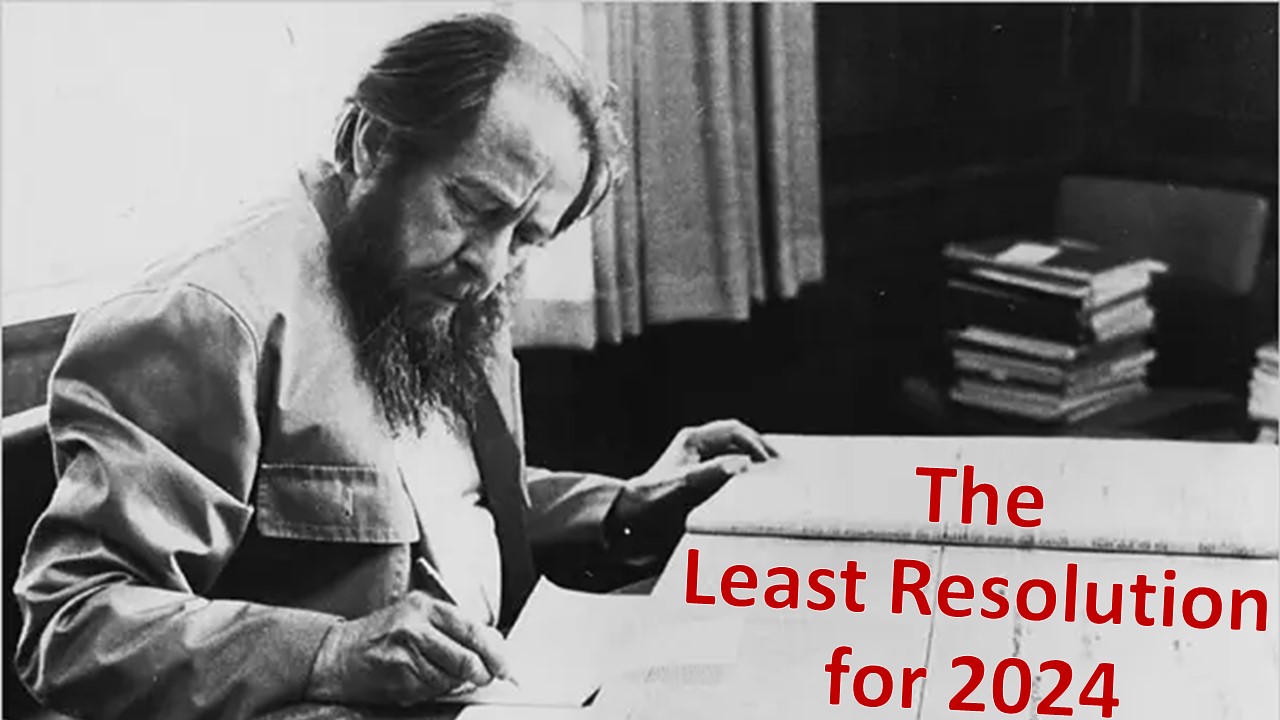
Fifty years later, perhaps it is time for us to revisit this document.  Are we living in times where some, on behalf of all, have determined what society should look like?  Do we see a mounting pressure to conform with what ‘they say’ is acceptable human thought and belief? Indeed, we should not be so naïve as to assume that the absence of marching military on our streets means we face no ideological threat. 

The pressure is growing for everyone quietly to conform.  More than that, the pressure is growing to affirm openly and celebrate what we know to be false.  Surely, it would be better to speak the truth now instead of growing our tendency to fit in and play it safe as the stakes mount.

Truth and Lies – Choosing not to lie was not an original idea for Solzhenitsyn.  Paul urged the Colossians not to lie to one another.  Not only had they put off their old self, but they had put on the new self to reflect their creator’s image (Colossians 3:9-10).  He told the Ephesian believers to speak the truth to one another since they were no longer defined by the lie (Ephesians 4:25).

In the Sermon on the Mount, Jesus addresses the anger underneath murder, the lust underneath adultery, and the daily consistency of speech beneath more flamboyant oaths (Matthew 5:21-37).  There is plenty of Old Testament support for the expectation that God’s people should be consistent speakers of truth (Exodus 20:16; Leviticus 19:11; Proverbs 14:5).  God does not lie, and his people represent him.

Fear and Lies – Solzhenitsyn knew the impact of fear on a population.  He wrote of the great threat facing humanity in his day, which was “about to flare up and engulf us.”  And he described the fear: “While we continue to smile sheepishly and babble; ‘But what can we do to stop it? We haven’t the strength.’”

God asked Isaiah’s listeners, “Whom did you dread and fear, so that you lied, and did not remember me, did not lay it to heart?” (Isaiah 57:11).  Their fear led to lies, as they forgot who was really in charge.

Our world seems to be changing at a frightening rate.  Trying to keep up with the latest adjustments to sense and morality can be tiring.  And it is increasingly revealing how much fear lies within most of us, who are so prone to play along with society’s expectations rather than speak what is true.  It is concerning how easily we fear and perhaps lie while forgetting who is really in charge. 

Some will capitulate completely and speak what is false.  Others hide behind a cloak of not wanting to “sound political” and speak out about the reducing set of acceptable Christian declarations.  Fear of being labelled and criticized leads many to hold back from speaking the simple truth.  After all, it is much easier to quote a Bible verse on social media or avoid the hot topics in conversation rather than offer the most minor form of resistance.

Solzhenitsyn wrote that the fear his people felt was not primarily a fear of nuclear death or a third world war.  The fear was of taking a “civic stance.”  He wrote, “We hope only not to stray from the herd, not to set out on our own, and risk suddenly having to make do without the white bread, the hot water heater, a Moscow residency permit.”  The penalty for a civic stance may have changed, but the fear of the herd has not.

History has never smiled on the timid, and yet each fearful choice always makes sense at the time.  How often do I justify timidity when society needs me to show courage and speak the truth?  We have almost constant opportunities to speak the truth about marriage, gender, sexuality, race, free speech, bodily autonomy, science, medical ethics, corruption, or whatever other prescribed view is being pushed at any given moment.

We cannot simply wait for an ideology to fall apart.  We must be part of the brick wall of reality into which it must crash.  And yet, it is always easier to “continue to acknowledge, glorify, and strengthen” that which we want to see collapse.  At the very least, we must not “recoil from its most vulnerable point.  From lies.”

Violence and Lies – Solzhenitsyn described how violence bursts into peaceful situations with great self-assurance.  “But violence ages swiftly, a few years pass—and it is no longer sure of itself.  To prop itself up, to appear decent, it will without fail call forth its ally—Lies.  For violence has nothing to cover itself with but lies.”

So, even under overt tyranny, people do not have to experience violence at all times.  The demand is only of a “daily participation in deceit” – the tribute paid to maintain one’s position under the power of the oppressive system.  Just play along, it is safer.

The connection between violence and lies is also not a discovery made under the rule of twentieth-century totalitarianism.  Micah wrote to the city in his day, “Your rich men are full of violence, your inhabitants speak lies and their tongue is deceitful in their mouth” (Micah 6:12).

We may not have to stand and fight against violence.  We may not even have to step out publicly and boldly declare the truth. “But let us at least refuse to say what we do not think!”

The Consequences of No Lies – In the Soviet Union, there was a cost to this most simple of stands.  It could cost your job and complicate life.  It could cost your success in education and impoverish your future.  But Solzhenitsyn was clear:

“And as for him who lacks the courage to defend even his own soul: Let him not brag of his progressive views, boast of his status as an academician or a recognized artist, a distinguished citizen or general.  Let him say to himself plainly: I am cattle, I am a coward, I seek only warmth and to eat my fill.”

To choose not to lie was not an easy choice in his day.  It will increasingly not be an easy choice for social standing, or even for physical wellbeing, in our day.  But the choice not to lie is “the only one for the soul.”

The implication of no lies is worthy of note. “The more of us set out together, the thicker our ranks, the easier and shorter will this path be for us all!  If we become thousands—they will not cope, they will be unable to touch us.  If we will grow to tens of thousands—we will not recognize our country!”

As we head into a new year, may we not simply play along with the world.  Instead, let us graciously, prayerfully, and wisely determine that whatever else may happen, we will not participate in the lies expected of us in society.  As representatives of God in this world, this is the least we must do!

(Source of AS quotes: https://www.solzhenitsyncenter.org/live-not-by-lies)
Look Out! Preparing for ‘23!

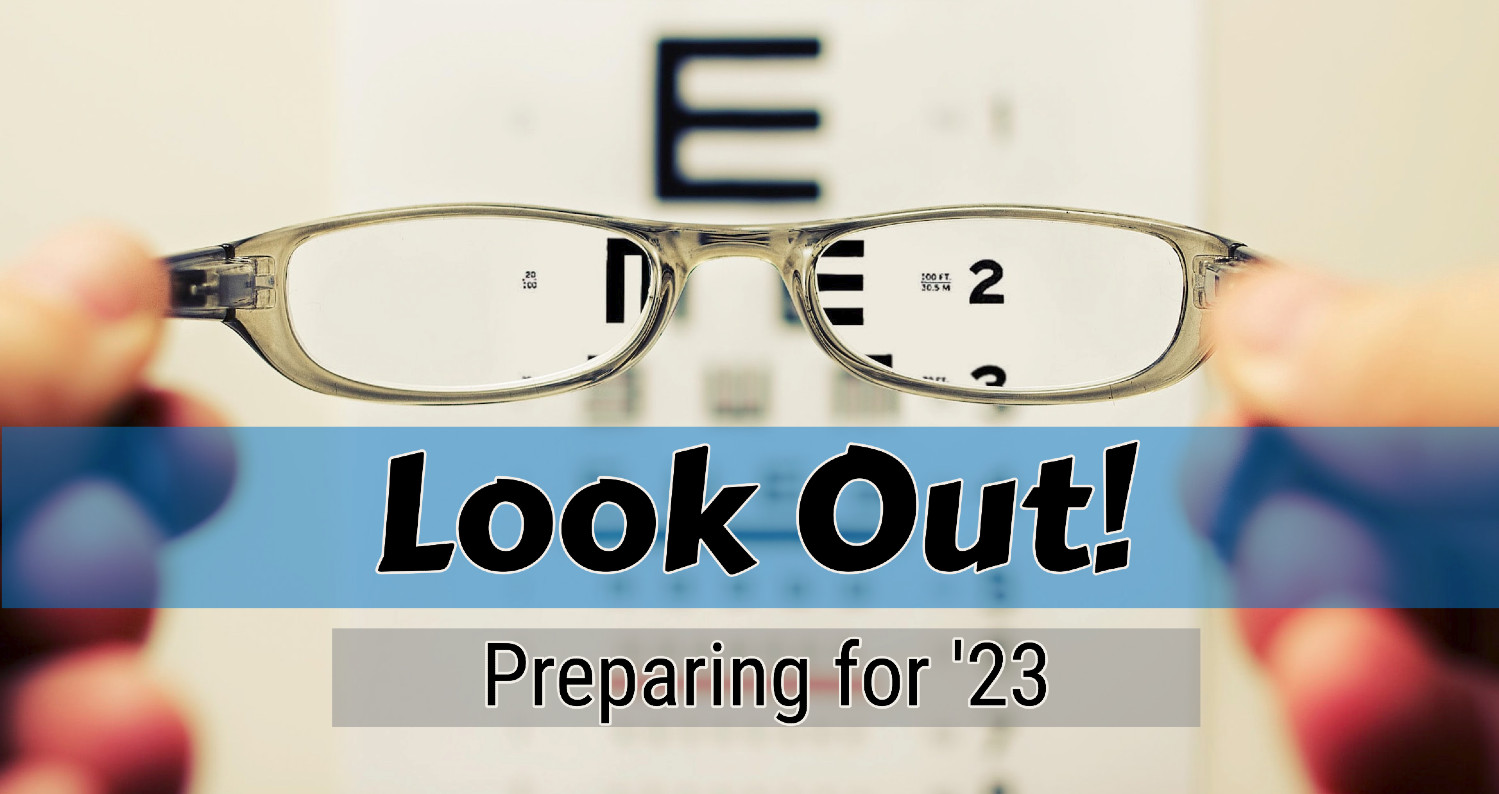
Solomon wrote thousands of proverbs. So when he writes, “Above all else…” – that should get our attention. What is “above all else” from Solomon’s perspective? In Proverbs 4:23, he tells us: “guard your heart.”  That is huge. He recognized that the heart is the governor of all our activity, but strangely he did not simply say, “control your heart.”  If we could just control our innermost desires, then we would have no problem living holy lives (or even being successful in any other pursuit of our choosing). Perhaps at the core of our being, we are responsive to external stimuli and not simply responsible free agents who can consistently choose whatever is best. The wise advice in this section of Proverbs is profoundly important for us as we head into another year.

In Proverbs 4:20-27, Solomon urges the reader to pay attention to his wise words – looking at them and keeping them in our hearts (v. 20-21). He underlines the critical role of the heart and the need to guard it (v. 23). He urges the reader to protect themselves from careless speech or from letting their eyes get drawn aside so that they should step away from their path (v. 24-27). Above all else, in 2023, we need to guard our hearts. I believe a great place to begin is with a prayerful eye evaluation.

I have been pondering a scale to help me take stock of what is getting through my eyes and influencing my heart. It is a scale that runs from -2 to +3.

Distractedly Entertained – Level 0? Long ago, this might have involved some children playing a game in the town square or an animal behaving amusingly. It was a break from the norm. Nowadays, we have entire industries actively targeting you with entertaining distractions. Scrolling through Facebook or Instagram, watching random YouTube videos about cats, men throwing CDs into a CD player, the most bizarre incidents in professional sports, and this list is designed never to end. Then there are video games, an endless Twitter stream, etc. Distracted entertainment has become a staple part of our cultural diet in recent years.

I think we can make a case for calling it Eye Level 0 entertainment because there is implicit moral neutrality to some of what distracts us. But once we consider all factors, is there really moral neutrality? Could we be hurting ourselves by believing that we can stand still in a world that is relentlessly moving away from God? Perhaps we would do well to call this entertainment Eye Level -1. The Bible does warn us about time-wasting, which can involve things that are not wrong in themselves. The average weekly consumption of distracted entertainment in our culture is stunning. Perhaps we have become more entangled than we realize. Let’s confess that entanglement and prayerfully take steps away from Eye Level -1 and the regret of lost time as we head into this new year. 

So we have Distractedly Entertained – Eye Level -1.

Sinfully Entertained – Eye Level -2. Any of the above activities can easily slide into sinful entertainment – where we seek satisfaction for sinful desires through what we watch. The classic example is pornography, an industry that has made its content far easier to access than ever before. But even without the things that a good filter will stop on your device, we can also fall into “pornographying” non-pornographic content. Perhaps we think of it as a more sanctified type of lust that does not rely on overtly provocative material – on social media, TV shows, movies, etc. And then there is envious window shopping or jealously obsessing over what the rich and famous wear and drive. There are so many contemporary forms of idolatry. “Search me and try me, O Lord…” – prayerfully ask God to show you where your distracted entertainment has morphed into something even more harmful than time-wasting.

Let’s get back to the positive end of the scale:

Intentionally Entertained – Eye Level +1.  There are legitimate uses of entertainment media. We need to evaluate prayerfully so that we don’t get sucked in by what our world is pushing us to think. However, there is a place for finding a TV show refreshing, a favourite movie can be restful, a shared football game can be social, a good book can be helpfully engrossing, etc. Where Eye Levels -2 and -1 leave us guilty, ashamed, worn down, frustrated, and empty, Eye Level +1 entertainment can be good for us. 

Informed – Eye Level +2.  In the old days, this might be found by listening to a report from a friend who has been travelling, reading the newspaper over breakfast, or watching a helpful documentary on the television. The rarity of access to information placed a premium on this commodity, but today, the situation has changed. We are bombarded with information. A well-chosen news subscription, a select list of Twitter accounts to follow, some helpful YouTube subscriptions, or a select set of blogs, etc., can be beneficial. The key seems to be planning rather than scrolling, or else we end up back in Eye Level +1 intentional entertainment, or even more likely, in Eye Level -1 distracted entertainment, or worse.

We are bombarded with the enticement to fritter away hours in Eye Levels -2, -1, +1 and +2As we get used to and dependent on technology and social media, we may even start to think that our mental health, knowledge and spirituality are to be found somewhere in Eye Levels -1, +1 and +2. Perhaps we even think that our ministry is helped and built up in Eye Levels +1 and, especially, +2. But let’s remember that there is another level.

Enriched – Eye Level +3.  There is something different about Eye Level +3. In the old days, time spent in the Book or good books was an obvious option in a world with a relatively limited range of alternatives. The significance of good reading was especially true for a serious-minded Christian, and even more so for a minister of the Word. Nowadays, this can be so easily lost. We live in a tidal wave of evil, distractions, entertainment, and information. But even if we avoid the worst of that flood, there is still a qualitative difference between being informed by a screen and being enriched by the page. Personally, I find that even reading the same author on a blog does less for my soul than spending time reading their book – is that just me?

We live in an age of hyper-distracted, entertained, and even a few well-informed, but largely unenriched people. It shows in our world today. Are we also living in a time of well-entertained and sometimes well-informed but largely unenriched believers? It shows in our churches and pulpits. So let’s do something radical. Let’s value that which enriches our souls and takes our relationship with God and others to someplace deeper than the norm.

As we head into 2023, let’s take stock of how God would want us to use our eyes this year. After all, they are an essential gateway by which we can guard our hearts.

________________________________________

In 2023 I am planning to release short videos related to Bible study. God has given us a great treasure. How can we read and study it for maximum understanding, enrichment and life impact? Please subscribe to this playlist to see the videos as they are released. Please like, comment, and share any that might be helpful to others. Thank you!

Dangerous Resolutions

design 4The New Year is traditionally a time for new or renewed commitments. January is the busiest month of the year for gyms and health clubs . . . and February is often the quietest!  New diets are typically added to personal fitness goals, and then perhaps there are personal productivity targets, or family scheduling ideals, etc.

In the church we can join in with another whole set of renewed commitments and resolutions – attendance goals, Bible reading goals, personal growth goals. I am sure most of us would be better off with improved Bible reading habits, prayer times, replacing internet “snack” reading with book reading, date nights with our spouses, regular together times with our children, better sleep hygiene, regular exercise, dietary self-control, etc.

But we need to be careful. There is a danger in resolutions. Don’t misunderstand me, I am not advocating a wholesale rejection of all good goals. I believe Christian leaders should be living lives characterized by heartfelt discipline and healthy physical, personal, relational and ministry habits. But we need to be careful.  Why?

We need to beware because there is a goal that is so overwhelmingly significant, but we can become distracted from it and pay it mere lip service if we are not careful.  Hear it in the words of the super-successful and disciplined converted rabbi and rising star of Judaism, the Apostle Paul:

But whatever gain I had, I counted as loss for the sake of Christ. Indeed, I count everything as loss because of the surpassing worth of knowing Christ Jesus my Lord. For his sake I have suffered the loss of all things and count them as rubbish, in order that I may gain Christ and be found in him . . . (Philippians 3:7-9)

This doesn’t sound like a momentary commitment renewal for Paul.  He was genuinely gripped by Christ.  This is not a passage suggesting we add in more consistent quiet times to our busy lives and call ourselves committed followers of Christ.  This is describing an absolute dismissal of all that had been grounds for Paul’s identity before, and its replacement by an utter passion for knowing Christ, gaining Christ, being in Christ.

How easily I fall into the trap of decorating my life with Jesus.  I don’t wear Christian jewelry or Christian t-shirts so much, but perhaps I sometimes just decorate my busy life with Christian ornaments. Can that be true for someone who is “full-time” in ministry?  I believe it can. When the ministries we do, along with the personal growth we pursue, is done with our gaze distracted from the one great goal, then perhaps we are falling back into building our identity on something other than Jesus.

How easy it is to have “a righteousness of my own that comes from” . . . what I do.  I can make all sorts of effort to live a moral life, to learn and grow for the sake of ministry, to be a good steward of my life, my resources and my opportunities, but to do all of this with my eyes looking in the wrong direction.  I can be looking at myself, building my resume, or looking at the needs around me, and yet not be truly looking at Christ himself, my one great goal.

Isn’t it frightening how easily we learn to say the right things to dress up our lives and ministries so that they look consistently Christian?  Sadly our sanctified selfishness, or sanctified worldliness – building the kingdom of me – might allow us to fool ourselves, but none of it fools God.

So as we head into another year, by all means make the kind of lifestyle tweaks that will enable you to be a good steward of relationships, life and ministry.  Aim to get to bed earlier.  Be more active.  Watch less, read more.  Spend less, give more.  Speak less, listen more.  But may every one of our resolutions and habits be utterly eclipsed by one great, overwhelming goal: that in 2016 I want to know Christ better.

Let’s pray that God, by His Spirit, would convict us of every way in which our devotion to Christ is superficial, or distracted, or false.  Let’s ask God to shine a light on all that should be considered loss compared to knowing Him better this year.  And let’s ask God, by His Spirit, to incline our hearts more passionately toward knowing Christ, and loving Christ, and gaining Christ, and being in Christ – that we may know Him and the power of His resurrection, and may share in His sufferings, becoming like Him in His death . . . the kind of absolute radical discipleship that makes complete sense in light of who He is and what He has done!

__________________________________________________


IMG_3944

As you launch into 2016, Foundations is a one-hour read that will make a difference to everything else you read and do in 2016.  Click here to find out more.