Review: Preaching, by Michael Reeves

Subtitled, A God-Centred Vision, this is a little gem of a book from Union Publishing.  It is not about preparation techniques.  Reeves writes, “I want to press deeper. For a rich, biblical theological understanding of preaching dramatically enhances preaching far more powerfully than any practical tip. . . . I want to cast a vision for preaching that is nourished by the very being of God, the glory of his Word, and the power of the gospel.” (p17-18)

As you can imagine, Reeves builds his book on both a theological and historical footing.  There are clear trinitarian foundations: “This is what the living God is like: not silent or speechless, but a God who speaks.” (p21)  And there are also historical insights worthy of note: “Preaching was the real engine room of the Reformation. . . . the Reformation demonstrated the astonishing, transformative power of the regular and clear preaching of God’s Word.  It stands as historical evidence that there is nothing inevitable about church decline.  The spiritual darkness of our day can indeed be checked and turned back.” (p24-25)  

The goal of preaching, theologically, is not just to learn about God, but to encounter him, to enjoy him, and be united to him.  And biblically?  True preaching must be expository, “in that it exposes the Word of God and makes that the food on which the church grows.” (p30)  Reeves is clear, true preaching must point us to the person of Christ.  While this is not a book of the mechanics of sermon construction, Reeves offers some critical advice.  “Preach Christ, not an abstraction.”  “Proclaim the reality, not a mere idea.”  “Show, don’t tell.” (p52-57)

While many preaching books will encourage preaching to the heart, and not just the head, this book explains what that actually means.  The preacher must convey more than mere information or emotion.  “(Preaching) is a heart-shaking assault on darkness and the very gates of hell, trumpeted forth so that sinners tremble and saints quake in wonder.” (p62)  And true preaching must lead to heartfelt worship, for “the triune God, who is love, is not truly known where he is not truly loved.” (p64)

We all know that preaching can tick many boxes, yet remain essentially shallow.  Reeves offers a simple cure for shallow preaching: get to the root of the issue.  We are not simply needing exhortation to better conduct.  We need heart transformation.  The affections are the key target in ministry– “Affections are deeper and more constant (than emotions): they make up the very grain of the heart and its inclinations.” (p73)

When the gospel is truly preached, “It is that gospel that will melt and renew hearts of stone.  It is that sight of the Son of Man, lifted up on the cross, proving the love of his Father, that realigns affections. . . . The sin that pleased us becomes odious. The God we flinched from becomes entrancing.” (p78-79)

This book really is a gem.  A book to read and read again for your ministry, and a book small enough to distribute to other preachers in your circle.   
Friday Quote – The Bible Bit of Biblical Preaching

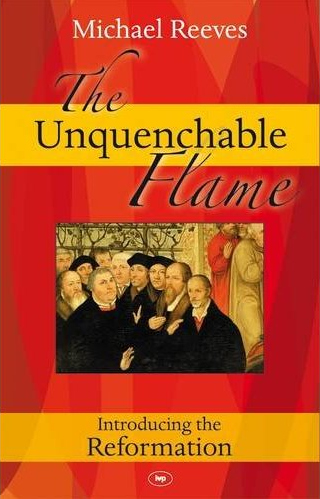
Here are some paragraphs that I read yesterday in Michael Reeves’ excellent book, The Unquenchable Flame (pp182-3).  Enjoy:

Erasmus was only ever able – and only ever wanted – to sponge down the system he was in.  He could take pot-shots at bad popes and wish people were more devoted, but because he was unwilling to engage with deeper, doctrinal issues, he could never bring about more than cosmetic changes.  He was doomed ever to remain a prisoner of where the church was at.  And so it must be in a world conquered by him.  For as long as doctrine is ignored, we must remain captives of the ruling system or the spirit of the age, whatever that may be.

Yet is all this fair to Erasmus?  Was he not the one who made the Greek New Testament available, so providing the coals for the Reformation?  Certainly he did, and yet his possession of the Scriptures (and his deep study of them) changed little for the man himself because of how he treated them.  Burying them under convenient assertions of their vagueness, he accorded the Scriptures little practical, let alone governing, authority.  The result was that, for Erasmus, the Bible was just one voice among many, and so its message could be tailored, squeezed and adjusted to fit his own vision of what Christianity was.

To break out of that suffocating scheme and achieve any substantial reformation, it took Luther’s attitude, that Scripture is the only sure foundation for belief (sola scriptura).  The Bible had to be acknowledged as the supreme authority and allowed to contradict and overrule all other claims, or else it would itself be overruled and its message hijacked.  In other words, a simple reverence for the Bible and acknowledgment that it has some authority would never have been enough to bring about the Reformation.  Sola Scriptura was the indispensable key for change.

However, it was not just a question of the authority of the Bible; the reason Luther started the Reformation, and Erasmus did not, was the difference in what they saw as the content of the Bible.  For Erasmus, the Bible was little more than a collection of moral exhortations, urging believers to be more like Christ, their example.  For Luther, this was to turn the gospel on its head: its optimism displayed its utter ignorance of the seriousness of sin.  As he saw it, what sinners need, first and foremost, is a saviour; and in the Bible is, first and foremost, a message of salvation.  As Richard Sibbes lamented, a century after Luther, it was all to easy to lose that controlling focus on Christ and his gift of righteousness, and yet that was the very heart of true reform.  For all that theBible was opened, without the message of Christ’s free gift of righteousness, there could be no Reformation.

Add to FacebookAdd to DiggAdd to Del.icio.usAdd to StumbleuponAdd to RedditAdd to BlinklistAdd to TwitterAdd to TechnoratiAdd to Yahoo BuzzAdd to Newsvine

Reformation Lessons for Preachers – Part 2

Yesterday I quoted at length from Mike Reeves’ message on Justification (available on theologynetwork.org).  Mike was addressing the intriguing question, “Why is it that Luther started the Reformation and Erasmus didn’t?” The first part of his answer focused on the contrast between their views of Scripture.  For Erasmus the Scripture was to be revered, but could be squeezed to fit his own vision of Christianity.  For Luther the Scriptures were the only sure foundation for belief, the supreme authority allowed to contradict all other claims.  Now for the second part of Mike’s answer to the question:

But it wasn’t just the authority of the Bible that made the difference, it was also what they saw as the content of the Bible.  For Erasmus the Bible was little more than a collection of moral exhortations.  The Bible is all about urging believers to be more like Christ the example.  Luther said, that’s just turning the Gospel on its head.  Our issue is sinners first and foremost don’t need to copy someone, sinners need a Saviour!  Sinners need, first and foremost, a message of salvation!  . . . Without the message of Christ’s free gift of righteousness, his free gift of himself and all that he has, there would be no Reformation.  Justification by faith alone was what made the Reformation the Reformation.  . . . It was this gracious message of a sweet Saviour’s free gift of righteousness that made life changing ministries life changing.

Reformation is not a moral spring clean.  It’s not a revolution against the old ways, anything old fashioned and ritualistic.  It’s not just about opening the Bible, but not finding the message fully.  This is a profound challenge for the church today – what message do people hear?

Our attitude to Scripture is the foundational issue for our preaching.  The message we preach from the Scripture is the more visible issue in our preaching.  Do we stand, no matter how much contemporary culture, even church culture, not to mention the attacks of the enemy himself, are arrayed against us?  Do we stand and preach the message of Scripture, because we are absolutely committed to Scripture, because we are absolutely committed to the God who gave us the Scripture?  Do we preach in light of these simple yet profound lessons from history?

Reformation Lessons for Preachers

There could be no end to posts dealing with lessons for preachers from the Reformation.  I’d like to focus in on one today, then another tomorrow.  Both of them were brought out very clearly in a series of messages by Michael Reeves on Justification (available, and well worth listening to, on theologynetwork.org).  In the final session of a great series of talks, Mike asks “Why is it that Luther started the Reformation and Erasmus didn’t?” Let me quote the first part of Mike’s two-part answer to this question:

Why is it that Luther started the Reformation and Erasmus didn’t?  Because Erasmus is the one who unleashed the Greek New Testament onto Europe.  He was getting the Bible out there, so why didn’t he start the Reformation?  Well, even though Erasmus was a constant and deep student of the Scriptures, the Scriptures didn’t actually do a lot for him because of how he treated them.  Erasmus kept banging on about how vague the Scriptures are (which is very convenient for his own theology), and so he gave them very little practical, let alone overruling, authority.  So although he looked at Scripture, the message of Scripture could be tailored, squeezed, adjusted to fit his own vision of what Christianity is.

The only way to break out of that suffocating scheme and achieve any substantial reformation and change in the world – well, it took Luther’s attitude, that Scripture is the only sure foundation for belief.  The Bible had to be acknowledged as the supreme authority.  It had to be allowed to contradict and overrule all other claims, because if it couldn’t do that, it itself would be overruled and hijacked by another message, as it was with Erasmus.  In other words a simple reverence for the Bible was never going to change the world, even quite a high view of the Bible was never going to do much.  Sola Scriptura.  Scripture alone was the indispensable key for change.  Without acknowledging that the Bible has that supreme and foundational authority there would be no Reformation.  No Reformation in peoples’ hearts, no Reformation in the world.

That final emboldened text is well worth a “selah” for preachers.  On this matter are we an Erasmus, or a Luther?