Preaching Easter (Podcast Post – Episode 6)

In the latest Biblical Preaching Bitesize, I share ten pointers for preaching Easter effectively.  The Easter story is the heart of the Christian faith, and a key moment in our church calendar.  So why might we struggle with preaching at Easter?

1. The story is so familiar.  The Easter story comes up repeatedly throughout the year as we present the gospel in various situations.  Sadly, the most wondrous news of all can become stale and predictable.  We can end up saying the same things about the cross and the same things about the empty tomb.  Listeners can bring assumptions from artistic images they have seen, or from presentations they have heard before. 

2. The wondrous truth can get buried.  Each passage that we might choose to preach is saying something about Easter.  But sometimes, that theological and potentially life-changing truth can get buried in the story’s recounting.  Or it can be lost because listeners get the sense they are listening to a famous old myth rather than the central moment of human history. When stories feel like a myth, listeners listen differently.

3. The preacher can feel flat.  Familiar material, a busy time of year, and a preacher recounting history rather than feasting on the Word of God can lead to a flattened heart at the front of the church.  We don’t want that, for our sake and theirs.

So, ponder the ten pointers in this Biblical Preaching Bitesize! To watch the Bitesize, click here.

And don’t miss the encouragement at the end.  What could be more powerful than a vivid image projected on the screen in a church using the best contemporary software?

To follow the Podcast, click here for Apple, or here for Spotify.

Thank you for helping to get this podcast to others by sharing it with people who care about preaching, as well as for any positive reviews, comments, etc. All good interaction with this material helps the algorithm put it in front of more people.

The Echo of Easter

I recently imagined a global tour that could be called the “tour of the tombs.”  That might not sound too exciting, but it would include great cities in Europe, the Middle East, Africa, Asia, and North America!  Were we to travel that itinerary, we would see the burial sites of philosophers and Pharaohs, Kings and Emperors, religious leaders and mass murderers.  It would be quite the tour!  And along the way, we would get an inadvertent “tour of the troubles.”  After all, Europe, Asia, the Middle East, etc., are all marked by political protests, persecution, death, wars, and terrorism.  The world of today is not so different from the world of our history books.

In the first century, the events of one Sunday led to one of the greatest books ever written.  Imagine being John, possibly the youngest of Jesus’ disciples.  For three years, being with Jesus had transformed his life.  He was there when Jesus taught, healed, and shook the world.  John was there when Jesus was arrested and crucified.  He was there the day Jesus rose from the dead and met with his disciples.  John was there when Jesus met the group by the Sea of Galilee, when he uttered the Great Commission, and when he ascended into heaven.

The three years were over, but for the next six decades, John served his beloved Jesus.  He saw the gospel spreading in Jerusalem and the persecution that arose.  He saw his brother and the other disciples systematically slaughtered over the following decades.  He lived beyond the destruction of Jerusalem, the dispersion of the Jewish people, and the rise of nasty Emperor Domitian.  John lived for six decades serving Jesus.  And it was for preaching Jesus that John was sent to the penal colony of Patmos in his old age.

Then, one Sunday morning towards the end of the first century, John heard the voice of the risen Jesus (see Revelation 1:9-11).  The voice commissioned him to write everything he saw so that the Revelation of Jesus might be sent to the seven churches John cared about in Asia Minor.

If you look at the introduction to that book, the book of Revelation (1:1-8), you will find that John believed it to be a uniquely special book.  In a dark and troubling world, it offered grace and peace from the eternal God, especially the risen and victorious Son, Jesus Christ.  John underlined how Jesus revealed the Father, has risen from the dead, rules over the kings of the Earth, has rescued sinners from this world, and, in the future, will return.  The Revelation of Jesus Christ was exactly what the aged John needed.  It is what we need, too.

So what was it that John saw?  When we read through Revelation 1:12-20, how Jesus is portrayed is striking. 

The risen Jesus is impressively powerful.  He is impressively dressed, with a God-like description of his features.  There is the eternal wisdom seen in the white hair, the penetrating eyes, the judging feet and mouth, the thundering voice, and the brighter-than-the-sun face.  It might be really obvious, but this is no description of a corpse.  Jesus is very much alive and impressively powerful.  If we think of the tour of the troubles in this world, what hope do we find in the many tombs of emperors and kings?  None.  But one tomb is empty, and death has been defeated – Jesus holds the keys of death and Hades!  We all need to be gripped by the wondrous vision of Revelation 1.  But don’t skim through the description too quickly.  Jesus is not only impressively powerful, but he also explains the cryptic imagery of lampstands and stars that appear in that vision, leading us to reconsider all those powerful features.

The risen Jesus is intimately present. I wonder how many times John had remembered Jesus’ words, “I am with you always, to the end of the age.” (Matthew 28:20)  Surely, those words had meant a lot during the difficult days when the apostles were being killed, when the Middle East was being rearranged, when John’s ministry in Asia was being opposed, when persecution was rising, and when John suffered on the prison island, kept away from the people he loved.  Jesus had promised to be present, and he was.  And now, this entire book was pointed in the direction of those seven churches.  When John turned, he saw Jesus walking in the midst of the lampstands, that is, the churches.  Jesus was present with John and with the churches.

Specifically, Jesus wore the clothing of a high priest (Rev. 1:13).  We can surmise that he was praying for the churches.  His features point to the purifying work of this high priest (Rev. 1:14-15) – the penetrating eyes, the feet ready to stamp out sin, etc.  And his thunderous voice proclaims boldly to the church (Rev. 1:15-16).  It is interesting that this is no whisper, but like the sound of many waters pounding on the shore – it makes me wonder how many of those churches had closed their ears to the words of Christ by closing their Bibles.  How many churches today are doing the same?

Jesus is risen; he is alive.  The Easter truth transforms our experience of this troubled world.  And the vision described in Revelation 1 declares a vital message.  The risen Jesus is both impressively powerful, and intimately present in the church today.  We need not despair at what we see around us.  We can look back to the empty tomb.  We can look forward to the return of Christ.  And we can look up, knowing that our great High Priest is praying for us, purifying his church, and proclaiming his word to this day.  Easter echoes down through the years. He is risen.  He is alive.  He is powerful and present.

Food and Following (Matthew 9:9-17)

It seems like food is significant in every culture.  Whether a culture is known internationally for its food or not, something about sitting down together to eat carries more significance than the mere fuelling of the body or renting restaurant space for a meeting.  In Jesus’ time, it is evident that table fellowship mattered greatly.

In Matthew 9:9, Jesus called Matthew from the tax booth to a new life as a follower of Jesus.  That may seem like a familiar idea to us, but having such despised sinners as followers was a radical act by Jesus.  Who deserves to be his follower?  Who deserves to be his apprentice, learn from him, become like him, relate to him, and be launched into a life of ministry representing him?  Did Matthew deserve it?  Do you or I deserve it?  May we never lose the wonder of the call to be his followers!

Immediately, we read of Jesus reclining at the table with many tax collectors and sinners.  Luke’s account points out that Matthew laid out a “great feast,” although Matthew was too humble to mention that detail.  (Luke 5:29)

The Fellowship Question (Matthew 9:10-13) – The meal sparked a fairly obvious food-related question – who should Jesus eat with?  To the religious evaluators, it was obvious that Jesus should not be eating with tax collectors and sinners. Indeed, they were the ones who’d earned the invite to the special meal.

I was recently with a pastor whose church seeks to reach out to the marginalized and the maligned of society.  He took my family to dinner, and we enjoyed a wonderful meal together at his favourite restaurant.  He told us how, when his church had started, they hired this restaurant and filled it with people who may never have eaten in a restaurant before.  The feast was a gift.  The gift was not just the food; it was a fantastic way to get to know a Jesus who would sit and eat with societal nobodies like Matthew’s friends.

It is interesting how Jesus responded to the question.  He differentiated between those who are healthy and those who are sick.  It is the sick who know they need the help of the physician.  After all, whoever says, “Let me allow my broken ankle to heal, and then I will head for the hospital,” or “Let me wait for this abdominal pain to pass before I go and get checked out?”  It makes no sense to hold back when you know you need help.

Jesus called the religious to soften their hearts toward those who knew their spiritual need.

The Fasting Question (Matthew 9:14-17) – Matthew follows up with another food-related question.  Why do Jesus’ followers eat?  Some of John the Baptist’s disciples wanted to know about fasting.  After all, the Pharisees were promoters of the Old Testament Law and promoted fasting.  Then, they were followers of the final Old Testament prophet and were into fasting, too.  So, indeed, if Jesus were a step forward religiously, he would promote fasting even more.  The Law, the Prophets, and now came Jesus; therefore, his followers should be fasting extra!  But they missed something: Jesus was not just another step forward. He was the goal of it all!

Jesus spoke in wedding terms.  A wedding day is not a normal day.  You never walk into a wedding reception and expect to find people fasting.  It is a day of feasting!  It cannot be a typical day when the bridegroom is present! 

Jesus went on to give two everyday examples to make a point.  Nobody would put a piece of unshrunk cloth onto an old garment because it would self-destruct when it got wet and dried again.  Everyone knew that.  Likewise, nobody would put new wine into old, hard, shrunk, leathery wineskins.  Again, it would self-destruct when the wine fermented and expanded.  Everyone knew that, too.  So, to Jesus’ point – his work was not just another step forward in the Old Testament line of promise.  It was the launch of something profoundly new that could not be contained in the old framework.

We may not be from a Jewish background and tempted to try to squeeze the radically new gift of New Covenant life into the framework of the Old Covenant.  But actually, we are all tempted to try to add the new life Jesus offers into the old way of religious effort that always characterizes humanity.  It is so easy to think that becoming a Christian adds a few more responsibilities onto my to-do list of moral efforts for respectable living.  However, that is not how it works.  It is a radically new life.

Jesus came to transform our lives by his presence.  He calls us to live a radically new life as his followers.  We are called to be with him, enjoy time together, learn from him, and be transformed from inside to out.  We are called to feast in joy because he has come.  We are called to fast in earnest because he is currently away.  Jesus is not asking you to become more religious; he is offering something far more radical than that.

As our thoughts are drawn to the first Easter, remember the radical nature of all that Jesus has done for us.  And then don’t settle for a modified version of religious living.  We get to follow the risen Christ through the year ahead.  Jesus offers a radically new life to really needy folks like you and me.

5 Easter Lessons from the Trials of Jesus

As we come to another Easter, our minds and hearts will be drawn back to the cross and the empty tomb.  This is the central hinge of human history, and ground zero of our faith.  As followers of Christ, we should never stray too far from his passion if we are going to follow him well, do good theology, or seek to offer hope in this world.  We are a people birthed, marked, shaped, and transformed by the cross and the empty tomb.

God gave us four Gospels, and all four essentially offer a preparatory retelling of the ministry years of Jesus, followed by a slower and more detailed account of the Passion Week.  That means we have many column inches given to other aspects of that first Easter.  As well as the crucifixion and the resurrection, we also have a lot of details about Jesus’ clashes with the authorities, the Last Supper and Upper Room, Gethsemane, and the arrest and trials of Jesus.  Let’s take just the trials, in particular.  What might we notice as we move towards another Easter?

1. The trials did not all happen in one night.  There are six trial hearings that occur between the arrest of Jesus and his crucifixion.  However, the Jewish authorities had long determined that he was guilty and deserved to die.  As we read through the Gospels we find their growing animus, their utter rejection of his authority, and their determination to put him to death.  This final night of trials was the end of a process, it was not the beginning.

2. The trials are divided between the religious and the Roman.  Jesus was arrested by a group of temple guards, with some Roman soldiers added to the posse.  He was taken first to Annas for what is effectively a pre-trial hearing, then to Caiaphas and the Sanhedrin during the night, and then for a brief ratification of their decision at first light.  The focus of these religious trials was Jesus’ teaching and identity.  Then the Jewish leaders took him to Pontius Pilate, the governor of Judea, for the Roman trial.  Here the focus was his threat to Roman rule, and the emphasis had to shift to political concerns.  Pilate offered a political peace offering to King Herod, a Roman-installed Tetrarch who had previously sent a complaint about Pilate to Caesar.  Herod had wanted to meet Jesus but soon sent him back to Pilate for the sixth and final trial of that night/morning.  Three religious trials.  Three Roman trials.

3. The trials feel rushed and disorganized.  The Jewish authorities had planned to arrest Jesus and deal with him before he could slip away from Jerusalem, but not during the feast.  And then, during the Last Supper, Jesus revealed to Judas that he knew about the planned betrayal.  Their secret was out, and so they rushed a plan into action.  The rush resulted in them struggling to find two witnesses that would agree in front of the defendant during the night trial, and then coming to Pilate without a clearly defined charge in the morning.  It all seems so chaotic and rushed – because it was.  They were not planning to execute Jesus on that particular day.  We can see that God’s plan for the timing required crucifixion on that particular day.  The authorities were not in control.

4. The trials helpfully point us to other key characters.  As we read through the trial accounts, we come across a number of incidental characters.  There are soldiers mistreating Jesus (quite likely to have been Samaritan conscripts, since the Jews would not have joined the Roman ranks).  There are the members of the Sanhedrin gathering in the shadows.  There is Pilate’s wife, whose dream only increases Pilate’s superstitious nervousness around this decision.  And there are some major characters too – Pilate was the most powerful man in the region.  He was used to criminals cowering and begging for mercy but was amazed at the silent strength of Jesus.  Peter had promised to die for Jesus, tried to kill for him in the garden, and then found himself in a series of mini-trials by the fire in the courtyard.  Peter wept bitterly at his failure, but Judas’ grief was different.  He was confronted by the deathly darkness of despair and plunged to his death that night.  As you read the trial accounts, notice everyone who is mentioned.

5. The trials shine a glorious light on Jesus.  And as you read the trial accounts, be sure to focus particularly on Jesus himself.  The arresting party wasn’t in control.  The mafia don of Jerusalem, Annas, was not in control.  The High Priest was not in control.  Nor Pilate the governor.  Certainly not Herod the visiting King.  No, the only one showing control, dignity, clarity of purpose, and strength of character, was Jesus himself.  Watch for when he remains silent.  Take note of what he says when he speaks.  See how he supplies the Old Testament quotes that the High Priest needed to seal the decision.  Recognize his gravitas before Pilate.  Just as Jesus’ words from the cross help to shape our theology, so should his words in these trials.  Jesus came to rescue us at such a great cost.  And Jesus came to reveal the heart of his Father with such great clarity. 

As we head into another Easter, let’s be sure to watch Jesus closely in the biblical text.  He is our humble and regal Redeemer, rescuing us and revealing God to us.  Thank God for Jesus, and thank God for the beautiful way he navigated those last hours before the cross.

_______________________________________

Join us for a mini-series that show how to study the Bible:

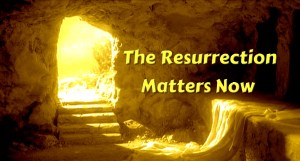
The Resurrection Matters Now

The Resurrection is at the very heart of the Christian faith.  After Jesus died in our place, bore the penalty for our sin, triumphed over the forces of evil and revealed the humble and sacrificial love of God for the world to win our hearts and our trust, then on the third day he rose from the dead: conquering death, vindicating the sacrifice for sin, and establishing a new hope for us all.  What is that hope?  Since Jesus is the firstfruits from among the dead, there is the promise of more resurrection to come –  ours!

Because of Easter our lives are changed.  We are no longer under condemnation, because Jesus was condemned in our place.  We no longer fear death, because Jesus has proven that death is defeated.  We are no longer living in darkness and confusion about God, because we know just how much he loves us, how far he would go to redeem us and how absolute is his victory over all that is against us.

But as another Easter comes and then fades away, I wonder if the present implications of the Resurrection have gripped me as they should.  I can look backward and forward, upward and outward, but are the Easter effects leaving the present me essentially untouched?  That is, I can think back to the first Easter, forward to the return of Christ, upward to heaven and outward to the world, but what about me here and now?  What difference does the Resurrection make to me, now?

Certainly, Easter is a past historic event with glorious implications for my future experience beyond death in this world.  Of course, Easter means that I have the certain expectation of being accepted by God rather than condemned, and it gives me a message to share with a needy world around me.  But is Easter all about past and future, heavenly status and evangelistic witness?

In what sense is my moment by moment experience of life marked and shaped by Easter?  Is the present effect just gratitude for heavenly blessings and my hope for the future?  Has Easter just changed my standing before God, and my ultimate destination beyond this life, but left me essentially a grateful anticipator of a better future?  Or has Easter actually done something in me now, something more than just stirring gratitude and hope, important as both surely are?

Let’s briefly chase the present significance of the Resurrection in the New Testament:

When John the Baptist announced Jesus’ arrival he pointed to two aspects of his mission.  Jesus was “the Lamb of God, who takes away the sin of the world” (John 1:29).  And Jesus was also “he who baptizes with the Holy Spirit” (John 1:33).  This is shorthand for the full expectation of the New Covenant promises in the Old Testament – Jesus was the one who would deal with our guilt, paying the penalty for it and carrying it away that we might be free of condemnation.  And Jesus was the one who would bring about an internal change in us by giving us the Holy Spirit to stir a new liveliness to God within us as our hearts are transformed and we enjoy not only the new status of being forgiven, but also the new experience of being adopted into God’s family.

Later in John’s Gospel Jesus makes it clear that his departure would make possible the coming of the Holy Spirit (John 16:7), and subsequently reveals in prayer what eternal life actually is: “that they know you, the only true God, and Jesus Christ whom you have sent” (John 17:3).  To be truly alive we need not only to have our guilt forgiven, but also to experience the very life of God himself, which is only possible through the renewed presence of the Holy Spirit in us.

After Jesus rose and later ascended, we come to Acts 2 and Peter’s explanation of the apparently drunken behaviour of the believers.  This was not drunkenness, this was the promised pouring out of the Holy Spirit.  How was this possible?  Because Jesus who had been crucified did not remain in the tomb, but rather than experience decay he rose and now was able to give the Holy Spirit.  For Peter, the giving of the Spirit was only possible because Jesus had not remained in the tomb.

My fear is that I can too easily miss this Easter reality and settle for a past, future and heavenly salvation, while missing the present reality.  Yes, Jesus has represented me, died for me, forgiven me, and given me confidence that death will not be the end of me.  But more than that, because he rose it means that I am no longer living simply a flesh-life with an added heavenly future.  Instead, I have the Spirit of God dwelling in me now.  So, Paul could say in Romans 8:11, “If the Spirit of him who raised Jesus from the dead dwells in you, he who raised Christ Jesus from the dead will also give life to your mortal bodies through his Spirit who dwells in you.”

Is that life that the Spirit gives simply a future grant, or is he speaking of a present tense new gift of life?  Doesn’t the fact that Jesus is alive today mean that I am not living my life alone, but in fellowship with him?  Do I not get to join Jesus in his mission to the world, and in his relationship with his Father?

When Dr Martyn Lloyd-Jones wrote about Romans 8 he referred to our union with Christ as “the ultimate doctrine.”  How true this is!  When Jesus rose from the dead it was not simply to prove that the offering had been accepted, nor to simply demonstrate victory, nor to just establish hope, also it was also to make possible our present union with him by the Spirit.  The Resurrection of Jesus has massive here and now implications!

Because Jesus rose from the dead that first Easter, it means that I can enjoy relationship with him now, not just in the future.  Because he rose from the dead I can know not only that my status is changed in heaven’s records, but I can know the love of heaven now, as it is poured out into my heart by the Spirit that has been given to us (Rom.5:5).  Because Jesus rose from the dead, I don’t just speak to needy folks out there, I can also see the stirring of my own heart in the daily experience of union with Christ.

This Easter let’s celebrate all that the Resurrection of Jesus means for us, not only in our anticipation of the future, but also in our experience in the present.

10 Pointers for Preaching Easter

10 targetfEaster is a critical season in church ministry.  There may be people in church who would normally not be in church. There will be regulars who need to be captured by the Easter story afresh.  Here are 10 pointers for preaching Easter:

1. Tell the story – whether people are first-timers, once a year attenders, or regulars, they need to hear the basic Easter story.  Jesus told his followers to have a regular reminder in the form of communion, so we can be sure that Easter itself should include a clear presentation of what actually happened.

2. Pick a passage – while you can preach a blended harmony of accounts, why not pick a specific passage and preach it properly?  At the very least, it will be a blessing for your own soul.  For instance, Luke’s account of the trials, crucifixion and resurrection of Jesus is marked by his distinctive “two witnesses” motif . . . underlining the certainty of what took place.  His use of the term “it is necessary” underlines the ‘must-ness’ of God’s plan.

3. Undermine familiarity – the frequency of reference to the death of Christ, combined with serene artistic impressions and popular jewellery, has made most people unaware of the reality of that first Easter.  Carefully pick a fact or two to help bring it home: Jesus was probably crucified at eye-level; the condemned had to lift his body weight to take a full breath.

4. Beware of shock and awe – people won’t be drawn by your graphic description of gory medical detail.  Rather, they will be won by the Spirit.  Be sure to preach Christ and him crucified, don’t try to shock people into a response.  Some may be hardened by exposure to Hollywood special effects, but others may grow faint at the mention of blood.

5. Recognize there is emotion in Easter – we certainly don’t want to manipulate emotions, but neither should we deny them.  Easter stirs emotions.  There will be sadness at what Jesus went through and why it was necessary (my sin). Yet also the joy and celebration of the resurrection – Easter mixes and stirs the emotions.   Preach in such a way as to make evident the emotion within the text you are preaching, while engaging with the mixture of response from those listening.

6. Make clear the truth of Easter – it is hard to think of a good excuse for not making clear the truth of Easter, including the fact of the Resurrection.  Apologetically this is ground zero for our presentation of the Gospel and Christianity.  Don’t miss the opportunity.

7. The Resurrection is more than proof – be careful that the Resurrection does not become simply the proof that theologically Christ’s sacrifice was accepted, or apologetically that Christianity is true.  Yes and yes, the Bible presents this truth and offers unparalleled historicity, but there is more.  The Resurrection introduces the wonder of New Covenant spiritual life now, and hope for the fulfillment of God’s plans in the future, and so much more.

8. The Crucifixion is more than payment – just as the Resurrection can get reduced to a source of proof, so the Crucifixion can be reduced.  Some will make it just an example for us.  That is very weak.  Some will present it purely as the payment for the penalty of our sin.  This is stronger, but still incomplete. Consider John’s Gospel emphasis on the cross as the revelation of the glory of God’s character, or as the means by which people are drawn to Christ.  (Obviously, if your passage is focused on satisfying the wrath of God against sin, then don’t fail to make that your emphasis!)

9. Clarify the ultimate identification – preaching any narrative will naturally lead to listeners identifying with characters in the story.  The Easter story is full of potential points of identification: deserting disciples, denying Peter, doubting Thomas, betraying Judas, power-hungry Caiaphas, self-protective Pilate, hurting Mary, mocking soldiers, shouting crowds, repentant thief, etc.  But don’t miss the central character: Jesus Christ came to identify with us, to bear our sin, to take our place, and to invite our trusting and adoring gaze in his direction.

10. Never lose the wonder – be sure that if you are preaching Easter to others, that it has first refreshed and thrilled your own soul.

Helmut Thielicke described Spurgeon’s humour as “Easter laughter,” that which comes as a “mode of redemption because it is sanctified – because it grows out of an overcoming of the world.”  May Easter so grip our hearts this year that our preaching points others to the wonder of the cross and the empty tomb, and so that our own souls burst out in praise to the God who would make such an event the centerpiece of His glorious redemptive plan!

Easter is Coming – The Power of Identification

I know Easter is still a couple of months away, but as a preacher it is never too early to think about Easter.  In fact, there is a sense in which commemoration of Easter is never more than six days away – the Lord’s Day is a weekly gathering because of His resurrection.  So here’s a thought regarding Easter (whether you’re planning for April or preparing for tomorrow’s message).

In preaching any narrative section, we need to consider whom listeners will gravitate toward, with whom they will identify.  We should consider how to encourage that or redirect that through our preaching.  In the case of the passion narratives, this tendency to identify can be powerfully used in our preaching.  Luther pointed to this when he wrote:

“Although Christians will identify themselves with Judas, Caiaphas, and Pilate; sinful, condemned actors in the Gospel story – there is another who took the sins of humanity on himself when they were hung around his neck.”

When it comes to the story of the crucifixion we find ourselves identifying with so many characters: Judas, Peter, fleeing disciples, Caiaphas, Pilate, Roman soldiers, Simon from Cyrene, mocking executioners, mocking crowds, mocking thief, repentant thief, followers standing at a distance, followers standing close by, even the Centurion.  Yet the wonder of it all is that we are invited to identify with the perfect One hanging on that cross, for in that act He was most wondrously identifying with us.

Consider how the natural function of narrative – to spark identification – can be utilized to communicate the wondrous truth of Calvary this Easter, or even this Sunday.

Preaching Easter (Pt4): Resurrection Implications

NT Wright made an interesting comment this week. He suggested that the New Testament presents many implications that come from the resurrection. However, the one that most preachers tend to emphasize is not really presented in the New Testament. Namely, “Because Jesus rose from the dead, we can go to heaven when we die.” I mention this not to affirm the comment, but to prompt our thinking and Bible study.

Before preaching the resurrection this Sunday, check your text for the implications that are present. For instance, in 1st Corinthians 15 we read that His resurrection gives us hope of our own (v16-20), the fear of death is removed (v26, 54-57), there are ethical implications (v32-34), motivation for ministry (v58), and even prompting to practical help for the poor (16:1, note Galatians 2:7-10).

Let’s preach the truth of the resurrection, let’s even allow our excitement to show, but let’s also try to be specifically clear in presenting the implications. It is easy in our excitement about the event to fall short in our relevance and application. Truly, everything is changed because Jesus rose from the dead. Part of our task is to help people see how that is true.

Preaching Easter (Pt3): Harmonization and the Gospels

Whenever we preach from the gospels we need to be aware that there may be up to four accounts of the story before us. In the past a great deal of emphasis was placed on harmonizing the gospel accounts. That is to say, placing all four side by side and seeking to combine them in order to have the “full” story. There is certainly a place for this practice, but how much of this should we concern ourselves with as preachers?

There are many elements in the Gospels that only appear in one gospel. In this case the issue of harmonization is largely irrelevant. But then there are events found in all of the gospels. The passion narrative, obviously, is found in all four.

Check all four gospels for accuracy in your preaching. If you are preaching from, say, Luke’s account, then it is helpful to check the other three. You wouldn’t want to undermine your preaching by telling the story in such a way that you make errors because you forgot to check the other gospels.

Preach the text rather than the event. Having checked the other gospels to make sure you are not presenting an error in your sermon, be sure to actually preach Luke’s account (or whichever you have as your preaching text). The gospel writers did not simply recount a transcript of a video taken the first Easter. They selectively chose the details to include in order to write an historically accurate theological presentation. Seek to preach the emphasis of the text you are in.

Preaching Easter (Pt1): Back to Basics

In some ways Easter is not like Christmas.  The Christmas story tends to remain largely unmentioned for eleven months of the year.  So when the advent season comes round again people expect to hear the basic Christmas story.  But the events of the first Easter get mentioned and preached on throughout the year.  So there is a temptation for us as preachers to try and get clever with our Easter messages – perhaps hyper-creative, or super-subtle, or whatever.

Our regular listeners need to hear the basic Easter story.  Jesus told his followers to share bread and wine, “in remembrance” of Him.  In a sense the Easter story never grows old for Christ’s followers – it means too much to us.  So as a preacher don’t feel pressure from somewhere to say something that is somehow clever or different.  There are plenty of biblical passages that can be used, and people will appreciate a clear preaching of any of them.

Remember that irregular listeners need to hear the basic Easter story.  At Easter time there is a higher likelihood of visitors.  Maybe they feel they should go to church at Christmas and again at Easter.  Maybe they are visiting family who go to your church and politely join their hosts.  These people don’t need some kind of creatively opaque and nuanced message.  They need the message of the text clearly presented and applied.

As a preacher you may be feeling the pressure to do something different this year.  I’m not suggesting we should be boring or predictable.  I’m not saying that creativity is inappropriate.  Let us be as effective as possible in our communication of the biblical message of Easter.  However, let’s remember that sometimes it is very effective to simply preach the basics – the story from the text, the implications for us today.