The Bible as a whole is rich and complex, filled with sweeping narratives and occasional snapshots of human experience. But when we come to the events of Easter—the week that culminates in Jesus’ death and resurrection—we are gifted with four separate accounts that lead us with remarkable clarity through the story that changed the world.
In a sense, the whole of Scripture builds toward these final chapters of Jesus’ life. In the Gospels, the earlier material—the teaching, miracles, travels, questions, and encounters—serves as a backdrop for what is about to unfold in Jerusalem. In Mark’s Gospel, Jesus repeatedly tells His disciples that He will go to Jerusalem, be betrayed, suffer, be killed, and rise again. Yet time after time, they hear the words without really absorbing their meaning.
The Easter narrative can be so gripping. It isn’t just a story to be read from a distance; the event draws us in, challenges us, and demands that we ask the fundamental question: Where do I see myself in this story?
Coming to Grips With the True Intent of Jesus
At the heart of the Easter story is a truth we can easily overlook: Jesus came to die. That’s not an incidental part of the narrative; it is the very purpose of His journey to Jerusalem. Yet Jesus’ willingness to die was unlike any other leader we know. In a world familiar with leaders who pursue power, prestige, or security, Jesus’ path reveals something radically different: a love willing to endure pain and rejection for the sake of others.
Reading the Gospel accounts, we see Jesus in the Upper Room with His disciples, acutely aware of what is coming. We see Him in Gethsemane wrestling in prayer, yet surrendering His will to that of the Father. We see Him before religious leaders and political authorities, stunningly silent and unyielding in His purpose. And finally, we watch Him walk towards the cross—not as a defeated prisoner, but as One who knows exactly why He’s there.
Easter is more than a historical narrative. Easter is an invitation to identification. It invites us not only to observe what happened but to see ourselves within it. Do we recognise echoes of Peter’s bold assertions followed by denial in our own lives? Do we recognise our own moments of fear or confusion in the disciples who couldn’t understand what Jesus was trying to teach them? Do we find, perhaps uncomfortably, a reflection of Judas’ betrayal in our own failures of loyalty and trust?
And yet, beyond these personal mirrors, Easter points us to a more profound truth: this is a story about God choosing to identify with you—to step into your world, to face suffering, to take on death itself, and to rise again.
The Cross: More Than a Symbol, It Is the Centre
The temptation with Easter is to relegate it to sentiment—a religious milestone marked once a year among chocolates and spring flowers. But Scripture repeatedly anchors us in the reality of what happened: the cross was real, and Jesus’ death was intentional. He was not a victim of circumstance. He chose to walk into the reality of suffering out of love for us.
Every step of Jesus’ journey that week reveals a divine deliberateness. In the Garden of Gethsemane, His sweat, like drops of blood, reflects the profound weight of what lay ahead. Arrested, tried, mocked, beaten, and crucified—Jesus remained steadfast, because His mission was not only to die, but to die for us.
It’s essential to notice that the Gospels don’t shy away from the brutality of these scenes. They foreground them with vivid detail not to glorify violence, but to ensure that the cost of our redemption is not diminished in our minds or hearts. Christian faith isn’t grounded in a sanitised, sentimental version of events; it is grounded in the stark reality that God became flesh and bore the full weight of human brokenness to bring us life.
Resurrection: The Heart of the Matter
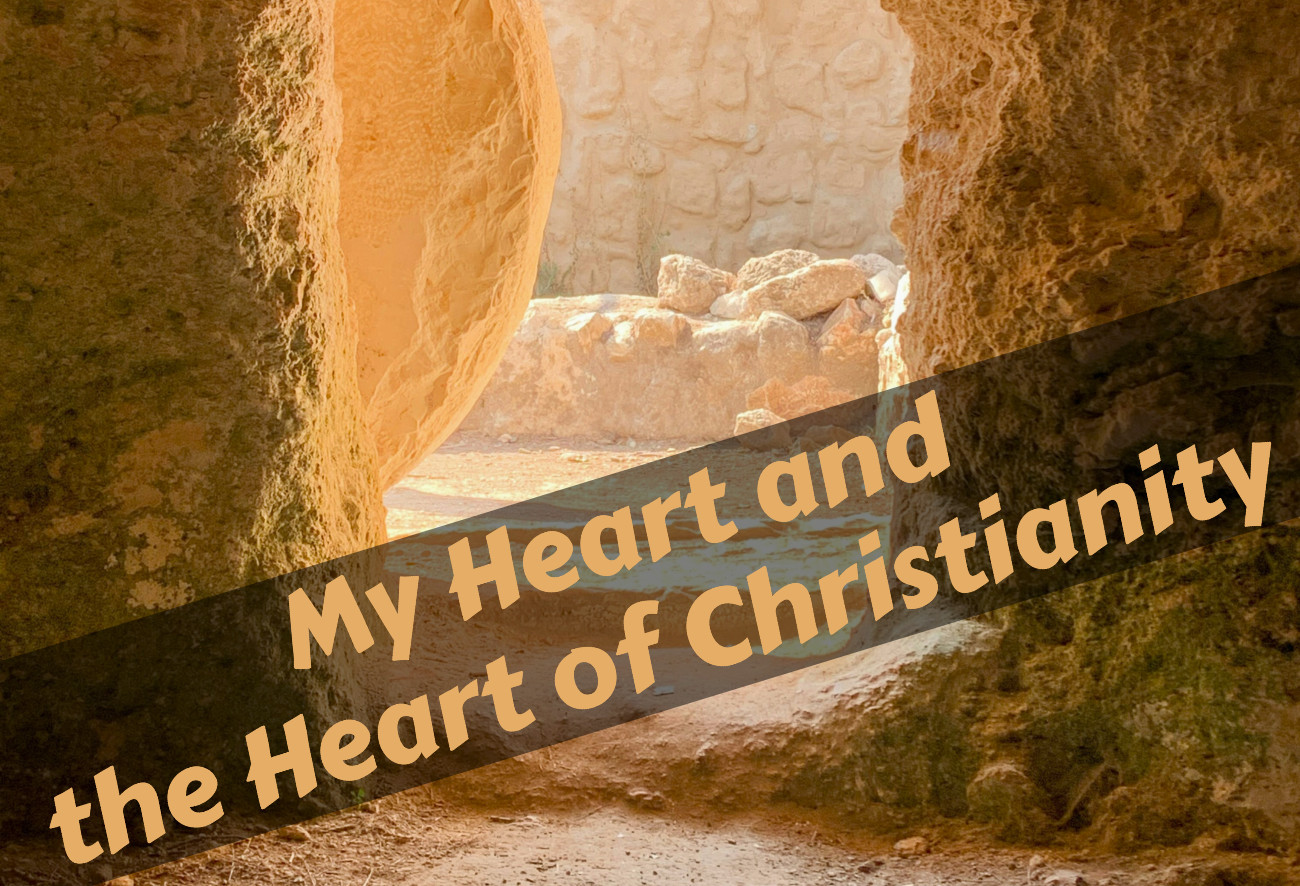
Of course, the story doesn’t end at the cross. The resurrection is not an add-on or a happy ending to make us feel better. It is the climactic affirmation that death is defeated, that life has conquered the grave, and that hope is real. Jesus’ rising from the dead isn’t just an ancient event; it is Easter for you and for me.
When we come face to face with our own mortality, our own failures, our deepest fears and regrets, the resurrection declares that nothing ultimately has the final word except life in Christ. We do not have an abstract hope. Easter hope is a living, breathing reality that Jesus extends to each of us individually—offering forgiveness, renewal, and purpose.
Easter Isn’t Just History—It’s Personal
That’s where Easter becomes personal. The phrase “for me” is not a sentimental addition we tack onto the end of a historical reflection. It is the Gospel’s own invitation to you. Jesus’ death and resurrection were not distant events observed by people like us; they were acts of divine love for you. Jesus intended to die, and His death was meant for you.
Easter was not merely about individual salvation in isolation from the world. Instead, it means that in Jesus’ journey to the cross and beyond, God has drawn near—embracing humanity’s pain, confronting death itself, and offering life that is both present and eternal.
So this Easter—whether it feels familiar, challenging, overwhelming, or hopeful—let it be a moment of recognition. Let it be a moment where we see ourselves in the story, not as distant observers but as invited participants. Let us stand with the disciples in wonder, with Mary in grief and joy, with Thomas in doubt and awe. And let us embrace the central claim of the Gospel: life is not about me identifying with biblical characters so I can learn from them, but in discovering that Christ identified with me, died for me, and rose again for me.
___________________________________________________________