Making Truth Understood

So we’ve thought about making biblical truth memorable, and making it known, but what about making it understood.  Is that what preaching is?  Yes.  And no.

1. Contemporary listeners need help understanding the Bible.

There is a significant distance between today’s world and the world of the Bible.  As the preacher, you have a key role in helping to bridge that divide.  This means overcoming differences in culture, in language, in politics, in religion, in worldview, in geography, in customs, in perspectives, etc.  When you preach the Bible you need to help make sense of a very different world for the sake of those in yours.

This means we can’t just read the text and then apply it.  We have to make sense of what is going on.  This means plumbing not only the historical setting and context, but also the literary setting and context.  We have to help people make sense of not only a strangely different world, but also an unusual collection of texts.  People need to understand the canonical structure, the development of thought, the informing theology feeding into a passage, the shape of the story beyond the passage, the nature of the genre of the passage, the forms of literary design within the passage, etc.

And all this means that as preachers we have to make value judgments.  We can’t just dump all the information we know and learn into a message.  This would make it overwhelming and too long.  So we must decide what needs to be said, this time, to make sense of this passage.

2. Your listeners need more than just understanding, but not less.

Just to make matters worse, understanding is not the only goal.  It is the foundational step.  That is, without understanding, then we cannot build effective application, and we cannot expect genuine transformation.  It is no shortcut to bypass understanding and go straight to application, pressing for compliance or hoping for transformation.  Application and transformation must be built squarely on clear understanding of the text.  God is not into radically new revelation.  He has given us His Word to transform lives. He invites us to engage Him there, and as we do so, He also encounters us to change us now.  God hasn’t appointed us to simply explain the truth of His Word, nor to simply seek transformed lives by means of pointed application.  He has appointed us to put it all together – explain, apply, pursue transformation.
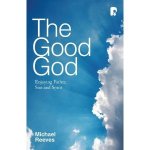
Review: The Good God, by Mike Reeves

Whatever else we may be or do, we present God to others.  We present God in our preaching of the Bible, and we present God as we live our lives.  A critical question, then, has to be this: which God do we present?

Mike Reeves’ new book, The Good God, from Paternoster, is exactly what the doctor ordered for the church today.  And not one of those miserable doctors that prescribes some yucky fluid in a plastic bottle.  I mean one of those doctors that suggests a break in the sun and a feast of good food to help you feel better from all that ails you.  The church today needs to bask in the sun and feast on the truth offered so gloriously and accessibly in this little book.

Mike introduces the reader to the God who is loving, giving, overflowing, relational.  With his light and accessible manner, Mike shares a profound taster of just how good God is.  Clearly Mike loves God and it shows throughout.  Some books on the Trinity can come across as a technical manual of heresies to avoid.  Others as an exercise in premeditated obfuscation.  This little book sizzles with energy, addresses the issues with clear insight rather than excessive technicality, and stirs the reader’s heart to worship, to delight, and sometimes even to laugh in sheer joy.

Mike’s biblical references scattered throughout don’t come across as a defensive attempt to prove a point, nor as a theological citation method that distracts the reader.  Rather they subconsciously stir the reader to want to get back into the Bible and see this good God afresh.  As you’d expect from a Reeves book, there are also enjoyable windows into church history as key voices from folks famous, and not so, pop up to share a thought along the way.

The book is shaped, well, um, trinitarianly.  An introductory chapter invites the reader into the pre-creation love relationship that is the Trinity.  Then the book looks at creation, redemption and the Christian life (as in, Father, Son, Spirit, although brick walls can’t be built between the roles of each in each chapter).  The book closes with a chapter that asks who among the gods is like you, O LORD?  I won’t give away the end of the book by sharing Mike’s answer, but I know if you start, you’ll want to read to the end anyway!

I will say this though, the advance of anti-theist “new atheism” gets a clear response in the final chapter.  Oh, and for one final twist, just when you feel like there’s nothing left to add, he also addresses three of the big issues that Christians sometimes throw out in opposition to an emphasis on God’s loving relationality. Superb.

This book is a must read and a must share.  As you read it you will think of others you wish would read it – from atheists to strident single-author-reading Christians. But most of all, I think you will be thankful that you read it. I am genuinely excited about how God will use this book in the years ahead!

To pre-order your copy in the UK, click here or the book image above.  Note – the book will be released in the USA later in 2012 by IVP under the title, Delighting in the Trinity: An Introduction to the Christian Faith.

Add to FacebookAdd to DiggAdd to Del.icio.usAdd to StumbleuponAdd to RedditAdd to BlinklistAdd to TwitterAdd to TechnoratiAdd to Yahoo BuzzAdd to NewsvineLike This!