Preach Deeper

I just came across some notes I made a while ago.  It’s a three part description of preaching that I hear.  This is simplified, but perhaps helpful as a stimulus to move from approach 1 to 2 and from 2 to 3.

Approach 1 – Springboard Preaching (Inadequate approach to preaching)

This is where the preacher touches down in a passage just long enough to bounce out of it and into their own thoughts.  A word or phrase may be taken on the journey through the message, but it has long since been ripped out of its passage context.

Approach 2 – Highlight Bounce Preaching (Adequate, but “amateur” approach to preaching)

This is where the preacher is a little more aware of the context of the passage and moves through the passage noting highlights along the way.  Typically these highlights will reflect the best bits of Bible study done in preparation (often the best study moves out of the passage, so the message also can jump to other passages, but I did not want to complicate the diagram!)  This is better than Springboard Preaching, but let me show you a better way!

Approach 3 – “Plumbed” Passage Preaching (Preferable approach to preaching)
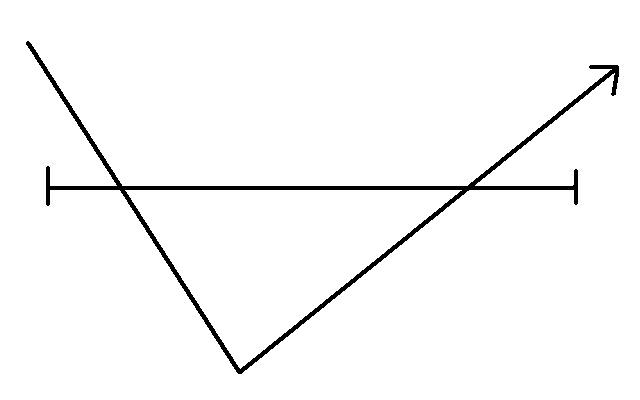
This is where the preacher has studied the passage in its context and is able to present the message of the passage to some depth.  This is not a series of mini-messages on various passage details, but it allows the details to work together to shape a single message that truly represents the passage in question.  The depth may vary according to time, skill of the exegete, etc.  But this approach to preaching will result in a coherent message, satisfying presentation of the passage and more accurate understanding of the meaning of the passage.  (Please note that it is never possible to fully “plumb” the depths of the passage, so the term is used relatively!)

For simplicity, I have presumed that each message is based in one text and that each message is making connection to the listeners by way of application.  I have assumed that there is a sense of progress in each message.  (None of these can be assumed in real life preaching!)  The simple focus here is on how the passage is handled.  Let’s strive to be Approach 3 preachers whenever possible.

Revisiting Preaching Style

I’ve written about style before, but it’s worth revisiting.  Not surprisingly, I am resonating with much of what Jay Adams wrote about style back in ’82.  The reason I resonate is that I still come across pockets of preaching activity that fall into the three inadequate styles he lists in his book (I will quote and condense):

Preacher’s Style – This is a stilted style pockmarked with King James’s terminology and Elizabethan constructions (beloved, unto, beseech, the person of, babe, vale, etc.)  This sort of style, unknown to the apostles, who spoke an elevated (by their content) fish-market Greek, or even the translators of the KJV/AV who wrote exactly as they talked.  This style is a modern travesty totally without previous history or biblical warrant.  Cleanse your preaching of all such “preachy” language.

Scholastic Style – This technical, super-sophisticated and bookish style is equally unhelpful.  The great biblical, theological terms must be used, but not without exlanation, nor should be be used in profusion.  Don’t sound like a theological treatise (or an academic essay).

Chatty Style – This approach majors on the slang and jargon of the day and lacks all form and order.  Again, Adams sees this as unhelpful to effective communication.

Good preaching style is a plain (but not drab), unaffected (but not unstudied) style that gets in there and gets the job done without calling attention to itself.  It should always be clear and appropriate to both content and mood.  The best analogy Adams sees is the news reader on TV.  Our preaching style should not be lower than this, but should be elevated by its content slightly above this standard style with its standard use of language.

That’s Adams take a generation ago, what now?  I know some still choose preachy, scholastic or chatty styles.  Is there a better standard than the TV newsreader?

Practice Preaching With Senses

In yesterday’s post I highlighted a helpful point from Jay Adams’ book, Preaching with Purpose, in which he emphasized the need for preaching to all five senses.  For some of us this may come easy.  For others of us, this will take some real work.  Here are a couple of practice exercises that may help.

The Study Search – Adams suggests working within the confines of your study.  Touch, smell, taste, listen, and look at everything around you.  What does that wood feel like?  What does that old book smell like?  How does the painkiller tablet taste?  What about the sound of the door opening?  And that pile of stuff on your desk, what does it look like?  Take a few minutes and observe carefully.  Perhaps in the process you will come up with numerous similes and anecdotes to vivify your preaching.

The Scripture Search – Take a poetic passage – a psalm or song.  Carefully comb through it looking for sensory language or allusions (direct or implied).  Make note of ways to preach that text so that the senses are fully engaged.  For instance, try Psalm 113 or 133 for starters.  Then consider a narrative passage – life is lived with five senses, so this shouldn’t be too hard.  What sensory language could be used to communicate this narrative vividly?  Perhaps try Luke 15, or Genesis 39.

Appeal To All Senses

Just a quick quote today, again taken from Jay Adams, Preaching With Purpose:

Most homiletics books speak about “illustrating” truth and making it “vivid.”  But those terms refer to communication by means of appeal to but a single sense: the sense of sight.  That failure, so inherent in the very single sense vocabulary of homiletics, has led to dull, lifeless preaching.  Of course, there are many dull, lifeless preachers for whom it is difficult to “paint word pictures” that appeal to the sense of sight, let alone learn to help congregations to taste, touch, smell, and even hear with the ear.

I think this is a helpful point.  Listeners have five sense and preachers can communicate to every sense by means of carefully chosen words and well-crafted delivery. I remember sitting under the teaching of David Needham, a master of using words and emotion that caused us to salivate as he described the taste, smell and sound of the golden delicious apples of his Californian childhood!

Adams goes on in the same paragraph to make the same point I want to make today.  When we appeal to the full range of human senses, we only do what the Bible does so often.  Be sure to look carefully in your preaching text for any sense appeal that is already there.  Then think carefully about your message, each detail, and how it can deliberately target various senses as you preach.

Don’t Stop Short

Tomorrow’s passage is relevant for our listeners.  Hopefully by this stage in preparation we see the relevance and have a message that will present the idea of the passage, built on explanation of the details, with applications that point to the relevance.  But it is always easier to only go 75% of the way there.  Don’t stop short.

Don’t just ask a vague question when the passage is set up for a probing question.  Don’t just make a vague application.  Help people see the specific ways in which this passage can make a difference in their affections, their belief, their conduct.  Their thinking and their actions should be changed by biblical preaching.  It’s easy to keep it general, vague and maybe even nice.  But don’t stop short, push through and drive the message home (with grace, of course, but home nonetheless).

Dense Packing Doesn’t Prosper

It is commonly referred to as a mistake new preachers make, but we can all fall into the trap.  A sermon will not work well if it is too overwhelming.

Let’s say you study the passage for several hours.  You discover interesting bits of information regarding background, structure, syntax, grammar, word meanings, not to mention parallel passages, cross-references, informing theology and later use of this text in the canon.  You discover fascinating insights through archaelogical reference tools, an interesting textual critical debate concerning one word that may or may not be original, and an interpretational debate that has gone back and forth since Calvin’s commentary was published.  Plus you stumbled across some useful anecdotes, an amusing story or three in a database of illustrations and you heard a great opening remark that you’d love to fit in, somehow.  Several hours of preparation will yield a significant resource pool of information.

But then you have to pack up what you intend to carry into the pulpit.  You only have a limited time.  Listeners only have a limited capacity to take information onboard.  After all your work, you have enough to load up three large suitcases and a trunk, plus a carry-on bag and a personal item.  But you can only pack a small suitcase and take it with you into the sermon time.  Prayerfully select.  Leave some of your work neatly folded for a future journey.  Graciously drop some of it in the waste.  Pack only that which will help you achieve your message purpose and drive home your message idea with application for their lives.  And don’t mention all that you couldn’t bring with you.

When you travel into the pulpit, just take one small case.  Don’t overstuff it either, tempting as that may be.  In the preaching journey, dense packing doesn’t prosper.

Content Differences in Preaching and Lecturing

In his book, Preaching with Purpose, Jay Adams regularly distinguishes lecturing from preaching.  One is designed to inform, the other to motivate appropriate response and change.  One is about the Bible, the other is about the listeners and God, from the Bible.  But does this mean that applicational preachers will say less about the Bible than “lecturers” in a pulpit?  Not according to Adams:

The preacher explains the text just as fully as does the lecturer; in fact, more fully.  He explains the ‘telos’ as well.  Everything of importance that the lecturer might say about the passage (and, lecturing lends itself to by-paths, discussing unimportant details, it must be remembered) the preacher can say also.  The difference is in how they handle the same material; the difference is in their orientation and use of it, and in how they say what they say.

So a Bible lecturer in a pulpit may state truth, but the listeners don’t know why they are looking at it when it is presented.  The listener to true preaching will know the why as well as the what, of that which is presented.

A call for expository preaching is neither a call for apparently irrelevant informing (even with application tacked on at the end), nor is it a call for applicational messages weak in content.

Communicate Relevantly . . . Carefully

As a preacher who desires to be firmly planted in the world of the Bible and the world of the listeners, it can be a real challenge to be appropriately specific in your preaching.  In a small church, everybody knows everyone and can easily figure out who you are referring to if you give a specific example – confidentiality undermined.  In a larger church, people may not know who you are referring to.  However, the person you are referring to can easily sense you are referring to them, and suddenly their trust can feel undermined.

Here are a few suggestions, perhaps you can add others:

Instead of defaulting to more general applications, translate away from one specific to another. Don’t refer to specific marriage problems when you’ve been counseling a couple in that area, but perhaps the application would work in terms of parenting struggles, work relationships, etc.  Remember that people will translate one specific that you preach into the specific situation of their own life experience.

Keep a record of specific observations, potential illustrations, etc., so that you can adjust them and use them at an appropriate time. Right now everyone knows that particular marriage is on the rocks.  You have an example from the situation that could be helpful, but right now is not the time to use it, even if confidentiality is protected.  So having a good record system allows you to decide when to bring in an example to your preaching.

Always review carefully before you preach, considering how it could be taken as well as how you intend it. It may be easier to become non-specific and generic, but the result is not worth it.  So keep the specificity in your preaching, but be careful to review ahead of each sermon to make sure you are aware of any potential land mines.

Tomorrow Will You Preach, or Just Report?

One reason that a lot of preaching in churches seems to fall short is that there is a lack of engagement with the people present.  I’ve heard numerous messages that fall into the category of relatively dispassionate lecturing.  The speaker stands as a reporter of the facts of their research.  They study a text, then that information is presented.  Then maybe there is an attempt at application.  But it falls short.

The preacher is not a reporter of facts found during their research.  The preacher is called to speak to the listeners from God’s Word.  The Bible is not exhibit A.  It is the source of the message for us, today.  The Bible doesn’t sit off to one side and get pointed at during the presentation, it sits in the hand of the preacher as the source and driver of the message for us.

So often the problem is a lack of engagement.  First, a lack of engagement with the life of the preacher during preparation.  If the Word of God does not speak into the life of the preacher, then the Bible will be presented at arms length, as an exhibit.  Second, a lack of deliberate engagement with the lives of the listeners.  Tomorrow, be sure to preach the Word to them, don’t just talk about the Word in their hearing.  Today, make sure you’ve opened yourself up to the text you’re planning to preach.

If you are a preacher, your role is more than merely reporting.

No Greek or Hebrew? A Tip

A very significant proportion of preachers around the world have had no training in the original languages.  After hearing yet another example in the last weeks, I’d like to give a tip regarding “this word literally means…” Generally speaking, unless you have thoroughly researched it.  Don’t use it.

The latest example I heard from the leader of a Bible study.  The verse seemed to be clear enough in content, but then we were given an exciting insight into the Hebrew text, “in the original language this word literally means . . .”  Interesting, perhaps even exciting, but actually, wrong.  It struck me as being slightly bizarre at the time, but not having my Hebrew text in front of me, and not wanting to “lord it over” in some way, I just made a note to check it later.  There’s no way it could be understood that way, unless the source of the alternative understanding had a particular theological agenda (which I’m fairly sure I can guess).

Sometimes “this literally means” might be helpful. It’s rare, but now and then this kind of background linguistic knowledge can add a nuance or some colour to our understanding of a passage.  One example is where a dynamic equivalent translation is “hiding” the repetitious use of a term (eg.”flesh” in Romans 6-8).  It is helpful to know there is a theme being repeated, and that the term used has particular connotations lost in some dynamic translations.

Often “this literally means” is not helpful. Remember that a decent translation (of which we have many in English) is the work of scholars trying to convey the meaning of the original text.  That means they tried to choose words that would express the thought and meaning of the original.  An “insight” that moves us in a new direction is not helpful if that insight is not accurate.  Without a decent amount of training in the original languages it can be hard to tell if someone knows what they are writing or speaking about.  Typically it is worth checking the “insight” against more than one academic commentary, or asking someone with genuine skill in the language (i.e. not just a course or two).

Sometimes “this literally means” is borderline heresy. Here’s the real danger, not just that our dabbling in “original language” comments lead our listeners slightly off track (although that is bad enough), but that we actually verge on heresy.

We are so blessed with good translations in our language.  If you have not had opportunity to seriously study Greek and Hebrew for a couple of years or more, it’s best to not pull out the “this literally means” type of comments.  Just as you may get it wrong, so do others, and some of them get their insights published!