Easter and Apologetics

As I trawl the archives for Easter posts from past years I find a few that speak of apologetics.  Here is one I wrote after attending a conference focused on the resurrection in 2008:

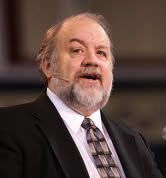
Yesterday I attended a day conference about the resurrection held in Westminster Chapel.  NT Wright and Gary Habermas were the speakers, along with a brief session with Antony Flew.  He is the British philosopher who caused a real stir a few years ago by giving up his atheistic position to state that the evidence had convinced him of the existence of God.  His position is essentially deist, but he was asked what it would take for him to accept the deity of Jesus.  “Well, I suppose it would take something on the magnitude of what you’re talking about today, an otherwise impossible thing like a resurrection from the dead.”  When asked the same question about the Holy Spirit, his response was the same – “If the resurrection is true then everything else would come with it.”

Here is a non-Christian thinking more clearly about Christianity than many Christians.  How easy it is for us to slip into a very lazy apologetic, either directly or in testimony.  It goes along the lines of, “Obviously I can’t prove my faith, it’s like a leap in the dark really, but you just believe and then you know it is true.”

This easter season, let’s be sure to clearly communicate that the Christian faith is founded very firmly on historical fact.  The biblical record carries an unparalleled historicity.  If Jesus rose from the dead, then the implications are massive, but if he didn’t really rise, then let’s give up and do something else with our lives.  As preachers we are in the prime position to communicate the facts of easter and that the Christian message is not an invitation to take a leap into the dark.  As preachers we may also need to sensitively follow up on a testimony given by someone else that both affirms them, but also clarifies that actually Christianity is based and built on fact.

Add to FacebookAdd to DiggAdd to Del.icio.usAdd to StumbleuponAdd to RedditAdd to BlinklistAdd to TwitterAdd to TechnoratiAdd to Yahoo BuzzAdd to NewsvineLike This!

Easter and Luther

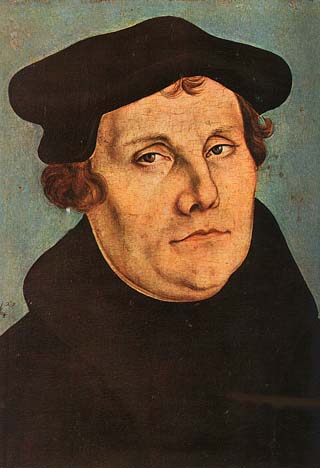
This week I’m relaxing slightly by trawling the archives for Easter posts from previous years.  A couple of posts from 2009 included some of Luther on the subject of Easter.  In The Aim of Preaching Easter I quoted Pasquarello’s comment on Luther’s preaching:

Luther’s homiletic aim was to demonstrate, by means of the Gospel, that the resurrection is more than an idle tale or a painted picture that evokes admiration and religious sentiment. . . . He hoped that in telling others the Easter story, the presence of the risen Christ might elicit faith’s true confession: “Christ is my Savior and King.”

Furthermore, it isn’t enough to preach Easter because it is Easter, we do it to change lives.  Luther wrote,“Although Christians will identify themselves with Judas, Caiaphas, and Pilate – sinful, condemned actors in the Gospel story – there is another who took the sins of humanity on himself when they were hung around his neck. . . . And today, Easter Sunday, when we see him, they are gone; there is only righteousness and life, the Risen Christ who comes to share his gifts.” (Sermons, 125, cited in Pasquarello, 120)

What should our Easter preaching do for Christians?  Again, same book,“Christians are now free to look away from their sins, from evil and death, and to fix their gaze upon Christ, which is the logic or grammar of faith.”

In The Power of Identification, also in 2009, I quoted Luther on the issue of who we naturally identify with in the Easter story:

“Although Christians will identify themselves with Judas, Caiaphas, and Pilate; sinful, condemned actors in the Gospel story – there is another who took the sins of humanity on himself when they were hung around his neck.”

Let me finish with my follow up comment from that post:

When it comes to the story of the crucifixion we find ourselves identifying with so many characters: Judas, Peter, fleeing disciples, Caiaphas, Pilate, Roman soldiers, Simon from Cyrene, mocking executioners, mocking crowds, mocking thief, repentant thief, followers standing at a distance, followers standing close by, even the Centurion.  Yet the wonder of it all is that we are invited to identify with the perfect One hanging on that cross, for in that act He was most wondrously identifying with us.

Add to FacebookAdd to DiggAdd to Del.icio.usAdd to StumbleuponAdd to RedditAdd to BlinklistAdd to TwitterAdd to TechnoratiAdd to Yahoo BuzzAdd to NewsvineLike This!

Saturday Short Thought: Profound Trust

This week I’ve been pondering the factors involved in preaching profoundly.  That is, how do we pursue the kind of substantially transformative messages that are fitting for Christian pulpit ministry.  I suspect we’ve barely scratched the surface.  I’d like to add one more thought today.

Yesterday I enjoyed lunch with a good friend and we were talking about preaching among other things.  We were thinking about how preaching can be part of how we define ourselves as a movement – for instance, in the past it might have been in reaction to Catholic theology, or more recently in reaction to Liberal theology.  Consequently our preaching can carry a subtle desire to demonstrate that we take the Bible seriously.  But then a mis-step can occur.

In our attempt to demonstrate a commitment to the Bible, we can create sermons that are actually an artificial structure placed on the passage.  That is, we seek to show our approach to the Bible and end up transmitting our own cleverness in serious sermon construction.  The Bible can almost become an exhibit for our trustworthy theology, or for our view of the Bible. There is a danger in this.

The danger is that we preach our own message from a passage, rather than preaching the message of the passage.

I am convinced that life-changingly profound preaching is not about a deep trust in a specific sermonic form, or even in conveying our system of theology, but rather in a profound trust in the Word of God.  When we do everything we can to present the text God has given us, to re-present it to our listeners so that our message not only says what the text says, but does what the text was intended to do, then I think we are getting closer to profound preaching.

Its a good question to ask ourselves before we preach tomorrow: am I trusting in my system of theology, in the sermonic form I believe reflects “true preaching,” or even in the compelling illustrative material I’ve come up with?  Or am I really trusting in the biblical passage to work deeply in our lives as we ponder the passage together?

Add to FacebookAdd to DiggAdd to Del.icio.usAdd to StumbleuponAdd to RedditAdd to BlinklistAdd to TwitterAdd to TechnoratiAdd to Yahoo BuzzAdd to NewsvineLike This!

Profound Transformation

As we finish up the series of 20 nudges toward more profound preaching, let’s ponder the goal of profound preaching: profound transformation.  Surely that is our goal?  Lives changed from the core of their being, from the inside out.  That is the nature of new covenant ministry, it seeks to do what the old covenant could never achieve, hang on, I’m into the first point…

17. A transformed life comes from the inside out, not the outside in.  Conforming folks to churchy culture and respectable behaviour is not too difficult.  Having said that, for centuries people have been trying and failing with a transformation by Aristotle’s external ethics approach, because we are designed as heart-driven creatures.  Maybe it’s time we followed Luther in rejecting the Philosopher’s theology and recognized the transformative power of a biblical new covenant ministry.

18. A transformed life actually has new wants, so profound preaching must penetrate the heart of the listener.  You know the old maxim, if you aim at nothing, you’ll probably hit it every time.  So surely we must at least be aiming to preach so that God’s Word can engage and penetrate the heart – to aim for information transfer only, or pressured behaviour only, is to aim to miss.

19. A transformed life is not about memorised outlines, but about the Word impacting life in the moment of preaching, and continuing to do so subsequently.  So the main idea of the passage and its application needs to be remembered.  This takes work.  Too often we pour our energies into helping folks remember outlines, or we put no effort into helping them remember and they walk away with untargeted illustrations and anecdotes.  Main idea and application – in the moment of preaching, and in the days to follow.

20. True transformation is humanly impossible, only God can do it, so pray hard and preach by faith!

Add to FacebookAdd to DiggAdd to Del.icio.usAdd to StumbleuponAdd to RedditAdd to BlinklistAdd to TwitterAdd to TechnoratiAdd to Yahoo BuzzAdd to NewsvineLike This!

Profound Presentation

It is obvious that profundity should be sought in preparation and matters of explanation and application.  But what about presentation and delivery?  Here are a few suggestions:

13. There is nothing profound in being dull, discouraging, distant or disconnected – cut that out.  Some may assume that profound is the opposite of entertaining and therefore seek to be deliberately dour and detached.  Apparently then the glory goes to God and not to the preacher.  Apparently this path guarantees no manipulation.  I disagree on both counts.  I don’t think God is glorified by poor incarnational presentation of His Word.  And I do think it is possible to manipulate by a detached intellectualism.  We need to see preaching as an act of communication and recognize that communication is always more than content alone.

14. Profound impact usually requires genuine connection, so know that interpersonal aspects matter.  I often mention that I wouldn’t buy a car from someone who won’t look at me, so surely that matters even more with something important like the truth of God’s Word.  Eye contact, personal warmth, open gestures, facial expression, vocal variety, etc.  These are all part of the package when a communicator connects effectively with a listener.

15. Profound impact often comes when there is an appropriate level of personal vulnerability and heartfelt conviction.  When a passage is preached at arms length, with both the text and the message being an exhibit offered to the listeners, there will be a significant reduction in impact.  When a passage has worked in and through a preacher, then the message can come through and from the preacher, and the communication can be both vulnerable and heartfelt.

16. Conviction, passion, enthusiasm, and so on, cannot be effectively faked.  A stunning message learned verbatim and copied down to the last detail of delivery will not be the same as the original.  Why?  Because the copycat communicator cannot copy genuine conviction, and they cannot offer genuine personal passion through the mask of someone else’s message.

Tomorrow I’ll finish the series with a consideration of profound transformation – the goal in all of this.  What would you add to this list?

Add to FacebookAdd to DiggAdd to Del.icio.usAdd to StumbleuponAdd to RedditAdd to BlinklistAdd to TwitterAdd to TechnoratiAdd to Yahoo BuzzAdd to NewsvineLike This!

Profound Application

Profound preaching is not dense, complex or over peoples’ heads.  Neither is it merely historical, lacking any hint of relevance and application.  The person shaking your hand at the door may tell you “that was deep!” but really mean “that was over my head and apparently irrelevant!”  That is not our goal.  True biblical preaching should be profound in the right sense of the word – deep, weighty, serious, life-changing.  So let’s move on to matters of application:

9. Instructing conduct is probably not profound, motivating it biblically probably is.  I say probably because if your motivation method is to guilt trip listeners as you twist their arms to force them into external conformity, then that is not profound.  It is poor.  The Bible stirs life change and so should our preaching (by God’s grace, of course).  We tend to hit truth in explanation and conduct in application, but the Bible goes deeper than a behavioural model of motivating humans:

10. Application should go deeper than a to-do list, probing into thinking patterns and beliefs.  There is a place for practical to-do suggestions, but if that is the staple application of a preaching ministry, the long-term fruit will be flimsy even if numerous.  Christianity isn’t about conforming behaviour to external standards, but about response to the truth of who God is and what He has said to us.  But again, the Bible goes deeper than cognitive approaches to life change:

11. Application needs to target the affections, because the Bible does.  Discourse moves us, narratives engage us, poetry stirs us – the Bible reaches to the heart of the listener.  Sadly too many preachers assume their role is merely to pressure behavioural change, or educate for cognitive adjustment, but these approaches don’t fully present the message and method of the biblical passages.  We must wisely, honestly, carefully and prayerfully engage the hearts of our listeners with the biblical text.

12. While relevance should be a given, transformational application is rare, so pursue it.  For instance, how easy it is to preach “don’t be anxious” from the Sermon on the Mount and end up imploring people to try harder not to fret!  But the passage points listeners to how much God cares for them.  Let’s not promote a pseudo-relevance through just being strongly against something, but rather offer the text’s bigger alternative that attracts and woos.  To think of a common Old Testament example, by all means let’s smash idols, but not because we are just anti-idol, rather because God is so much better.

If explanation and application can be more profound, we are on the right track.  Tomorrow we’ll look at aspect of our presentation and delivery.

Add to FacebookAdd to DiggAdd to Del.icio.usAdd to StumbleuponAdd to RedditAdd to BlinklistAdd to TwitterAdd to TechnoratiAdd to Yahoo BuzzAdd to NewsvineLike This!

Profound Explanation

Yesterday we pondered some aspects of profundity in preparation for preaching.  Today let’s probe a little more on the issue of profundity in explaining a biblical text.  Almost every preacher does some sort of explanation of a text, but what makes for a high enrichment without unnecessary obfuscation, uh, unnecessarily complicating it or overwhelming listeners?

5. Help listeners feel the original situation, don’t just bring imperatives over to today.  To be a bit more specific, help listeners feel the original relational situation.  If they can enter into the felt intent of the author, then the force of the text will be more effectively communicated.  The writer didn’t typically write to simply convey information – discourse intended to move, narrative intended to engage, poetry intended to stir.  As much as people claim to like straight application or direct commands, the truth is that application will always be more effective when the authority of the text is felt in its context.

6. Be theologically enriched, but don’t impose your theology.  Walter Kaiser speaks of an informing theology that is flowing into a passage – it might be the backdrop of the Fall, the plan of the promise, the history of the nation, etc.  Don’t treat a passage as if it were a standalone story in a sterile vacuum, but don’t trample all over it with your theological system either.  Be sensitive to the hints in the text, to the passage in its context, and in its place in the greater story.

7. Select the pertinent elements of explanation, don’t be exhaustive.  It is tempting to want to show all the study that has gone into the message, to cite all the commentaries, to note all the interesting anomalies in the syntax or the cross-references in your Thompson Chain Reference.  Think through how much explanation is really necessary and genuinely helpful.  Be targeted and purposeful.  Omit anything that isn’t genuinely helpful. Better to give just enough explanation and leave space for application and relevance throughout the message, rather than over-packing the explanation and making it too dense, too broad or too irrelevant.

8. Seek to plumb the text, don’t just harvest imperatives.  I see this a lot with preachers in the epistles.  Rather than offering the uniquely inspired content of a passage, they make it feel much like any other and simply present what we must do.  But that is like judging a person by their shoes and wristwatch – why not get to know them as a whole person?  Get to know the passage, its flow, its logic, its relational framing, its purpose, its mood, its tone, its strategy.  Then preach the imperatives as part of the whole.

Tomorrow we’ll move onto aspects of profound application.

Add to FacebookAdd to DiggAdd to Del.icio.usAdd to StumbleuponAdd to RedditAdd to BlinklistAdd to TwitterAdd to TechnoratiAdd to Yahoo BuzzAdd to NewsvineLike This!

Profound Preparation

This week I’d like to ponder what it might look like to pursue a more profound preaching ministry.  While most would acknowledge that preaching should neither be dense nor inaccessible, this does not mean that shallowness and dumbing down are the order of the day.

Profound preaching must surely start with profound preparation.  Four suggestions to get a week-long list going:

1. Begin with humble recognition that you yourself need to be changed by God.  It is too easy to think of preaching preparation as being about you the preacher pursuing a message to preach to them, the needy recipients.  At this point in the process you stand very much in their shoes, needing to hear from God.  You need to encounter His heart in His Word.  You need to be marked deeply and changed by a God who communicates, who cares, who challenges and who changes.  It makes no sense to have profound faith for the sake of others, but not an openness and humility in yourself.  The preparation of a sermon will be a privilege, an opportunity for God to mark your life profoundly.

2. Study the passage to know God, not just the facts.  It is easy to treat Bible study as a pursuit of non-trivial trivia.  Don’t.  Study the passage in order to know God better.  What is His self-revelation saying of Him?  How are the characters responding to Him?  Wherever you are in the canon, the passage is theocentric, so make sure that your heart is too.

3. Don’t mix your message preparation with your Bible study.  As a preacher who cares about the congregation, or as a preacher desperate to be ready on time, it is tempting to blend passage study with message formation.  Keep the stages separate.  You have the privilege of doing some in-depth Bible study, take advantage of that!  You may not be able to help thinking of who you will be preaching to, but try to keep those thoughts until you’ve really gotten to grips with the passage (or better, until God has gotten to grips with you through the passage).

4. Saturate your preparation in prayer.  This should go without saying, but it can’t, so it won’t.  The entire preparation process should be absolutely pickled in prayer.  Prayer in passage study, prayer in personal response, prayer in “audience analysis,” prayer in message formation, prayer for delivery, prayer for life change, prayer for immediate impact, prayer for long-term fruit, etc.

Tomorrow I’ll offer a few more thoughts, this time on profound explanation in preaching.  Feel free to comment any time.

Add to FacebookAdd to DiggAdd to Del.icio.usAdd to StumbleuponAdd to RedditAdd to BlinklistAdd to TwitterAdd to TechnoratiAdd to Yahoo BuzzAdd to NewsvineLike This!

God’s Representative

I’ve only had one job with an official uniform. Whenever I wore it, I knew I was representing the company.  People would see me doing my job and they would see the whole company.  If I left a positive impression, the company benefitted.  If I didn’t, it didn’t.

Preacher, you represent God.  And I’m not primarily concerned about what clothes you wear.  I am referring to what demeanour you wear, what character you wear, etc.

Since this post is just sent out into the ether, can I be blunt?  Some preachers seem to not know the God that I know through His Word.  At least, if they do know Him, it doesn’t show.  Hang on, let’s stay blunt – it should show.

Some preachers minister to a church just by being there.  Somehow their interactions are genuinely caring, their demeanour reflects a God who is relational, their manner reflects a gospel that is good news, their lives reflect a relationship with a God who changes us from the inside out.  Others don’t.

I think it is vitally important to communicate the meaning of a text as accurately as possible.  But I know that communication includes more than the words used to explain the passage.

Communication includes demeanour, smile, manner, personality, body language and vocal tone.  When Jesus spoke, broken and sinful and needy people were drawn to him.  When Jesus spoke, only the hyper-religious seemed to get upset.  When some of us speak, it seems like only the hyper-religious can connect.  Surely this ought not to be?

Take for example, how moody God is.  I hope you’re thinking He’s not moody.  But some people preach as if He were – sometimes He is in a loving mood, sometimes He’s in an angry mood.  Surely if we read the Bible carefully we’ll see that God is love, which can help explain some of the tougher sections.  He isn’t wrath, which must then “balance” the loving side.

Should we therefore not preach judgment sections, or rebuke sections?  Of course we should, but perhaps we’d be closer to God’s heart if we were to preach through tears rather than clenched teeth?

When we stand to preach from God’s Word, whether we like it or not, whether we know we’re inadequate or not, we are representing God – a personal God, a God who has revealed Himself, His heart, His values.  We represent Him.  Do we represent Him accurately?

Add to FacebookAdd to DiggAdd to Del.icio.usAdd to StumbleuponAdd to RedditAdd to BlinklistAdd to TwitterAdd to TechnoratiAdd to Yahoo BuzzAdd to NewsvineLike This!

Canonical Representation

Yesterday I pondered the nature of the preaching event as representing the text being preached. Let’s push that further.  My sermon this coming weekend needs to also represent the whole of the canon.

This doesn’t mean that I need to try to cram in the whole of the canon.  I have observed some preachers who seem convinced their role is to quote as many different books as possible.  I counted 25 out of 27 New Testament books in one sermon – that was quite a feat (or ordeal, depending on your perspective!)

There is value in showing how your passage fits in the whole, especially when earlier themes are feeding into the preaching passage, or when it offers a sense of anticipation that needs to be followed through.  There is value in helping people see how the whole story of the Bible flows.  (It is worth saying that there are also reasons to stay focused where you are – it is much easier to go on a wild safari in the back seat of a concordance than it is to clearly go below the surface in your specific passage.)

So this weekend, whether I refer to other passages or not, I need to remember that I am representing the whole canon.

This means the God of my message shouldn’t come across as if our only revelation were this specific passage.  How sad to preach a passage and leave listeners with the sense that God is petty, or nasty, or soft, or distant, or whatever.  This passage is one piece of a bigger whole that we represent as we preach.

This means that the whole scope of God’s plan shouldn’t come across as being simplistic – it’s all about me and my forgiveness, or it’s all about us and our salvation.  Paul warned the church in Rome not to become arrogant through a simplistic salvation model.

We should neither automatically cross-reference, nor always stay only within our passage.  We need wisdom to choose how overtly we engage the rest of the canon.  But the fact remains, we represent the whole Bible as we preach a part of it.

Add to FacebookAdd to DiggAdd to Del.icio.usAdd to StumbleuponAdd to RedditAdd to BlinklistAdd to TwitterAdd to TechnoratiAdd to Yahoo BuzzAdd to NewsvineLike This!