Preach Deeper

I just came across some notes I made a while ago.  It’s a three part description of preaching that I hear.  This is simplified, but perhaps helpful as a stimulus to move from approach 1 to 2 and from 2 to 3.

Approach 1 – Springboard Preaching (Inadequate approach to preaching)

This is where the preacher touches down in a passage just long enough to bounce out of it and into their own thoughts.  A word or phrase may be taken on the journey through the message, but it has long since been ripped out of its passage context.

Approach 2 – Highlight Bounce Preaching (Adequate, but “amateur” approach to preaching)

This is where the preacher is a little more aware of the context of the passage and moves through the passage noting highlights along the way.  Typically these highlights will reflect the best bits of Bible study done in preparation (often the best study moves out of the passage, so the message also can jump to other passages, but I did not want to complicate the diagram!)  This is better than Springboard Preaching, but let me show you a better way!

Approach 3 – “Plumbed” Passage Preaching (Preferable approach to preaching)
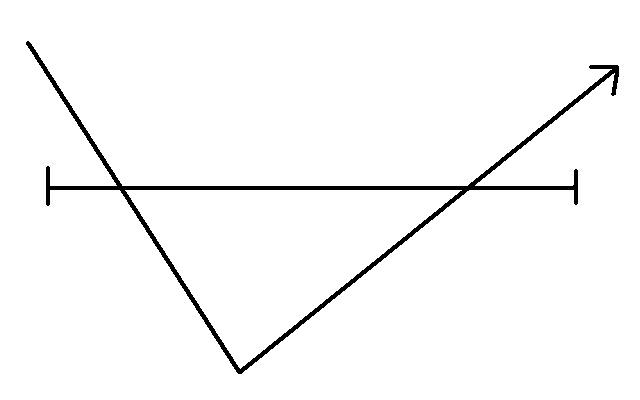
This is where the preacher has studied the passage in its context and is able to present the message of the passage to some depth.  This is not a series of mini-messages on various passage details, but it allows the details to work together to shape a single message that truly represents the passage in question.  The depth may vary according to time, skill of the exegete, etc.  But this approach to preaching will result in a coherent message, satisfying presentation of the passage and more accurate understanding of the meaning of the passage.  (Please note that it is never possible to fully “plumb” the depths of the passage, so the term is used relatively!)

For simplicity, I have presumed that each message is based in one text and that each message is making connection to the listeners by way of application.  I have assumed that there is a sense of progress in each message.  (None of these can be assumed in real life preaching!)  The simple focus here is on how the passage is handled.  Let’s strive to be Approach 3 preachers whenever possible.

Content Differences in Preaching and Lecturing

In his book, Preaching with Purpose, Jay Adams regularly distinguishes lecturing from preaching.  One is designed to inform, the other to motivate appropriate response and change.  One is about the Bible, the other is about the listeners and God, from the Bible.  But does this mean that applicational preachers will say less about the Bible than “lecturers” in a pulpit?  Not according to Adams:

The preacher explains the text just as fully as does the lecturer; in fact, more fully.  He explains the ‘telos’ as well.  Everything of importance that the lecturer might say about the passage (and, lecturing lends itself to by-paths, discussing unimportant details, it must be remembered) the preacher can say also.  The difference is in how they handle the same material; the difference is in their orientation and use of it, and in how they say what they say.

So a Bible lecturer in a pulpit may state truth, but the listeners don’t know why they are looking at it when it is presented.  The listener to true preaching will know the why as well as the what, of that which is presented.

A call for expository preaching is neither a call for apparently irrelevant informing (even with application tacked on at the end), nor is it a call for applicational messages weak in content.

Holding Back the Obvious

Sometimes a passage very obviously points beyond itself.  For instance a passage with an obvious parallel to today, or a passage that points forward to Christ.  Psalm 22 is a classic example of the latter, or Genesis 22.  It is natural to make the obvious connection from the start and repeat it throughout.  Sometimes this is very worthwhile – especially when the parallel is to today.  Highlighting and emphasizing the applicational relevance of a passage is usually very helpful (rather than holding out until a few brief applications at the end).  However, if the application is obvious, it may be worth holding back before you state it.  Certainly when your passage obviously pre-figures Christ in some way, it is worth considering holding back on the mention of Christ.

Why?  Three reasons.

First, it is good for the congregation to see that a passage has value in its own right, without having to overtly read it through New Testament glasses that were not available to the original readers.

Second, it is good for the sermon because if the connection is clear, then the listeners will be thinking about that as you go, perhaps wondering if you are missing the obvious.  This added tension can really maintain interest in the sermon.

Third, it is good for you as a preacher, because it allows you to “pack a punch” when that tension is finally resolved.  References throughout the message will add explanation, but will reduce the impact.

For the sake of demonstrating the value of a passage in its own right, for added tension and for added impact, it is often worth holding back the obvious, especially when the obvious is Jesus.

When In Doubt, Sound It Out

Sometimes preparation grinds to a halt.  You feel like you’re drowning in a sea of paper, half-finished thoughts, words and scribbles everywhere.  Even with a good system for organizing your pre-sermon study and message notes, it is still possible to feel stuck.  You’ve gone from a sprint to crawl and the open expanse before you now feels like a brick wall in a cluttered alley.  I don’t think I am alone in experiencing this roadblock in preparation.

There are lots of tips that people share, but one stands head and shoulders above the others from my perspective. Of course you should pray, it may be wise to do something else, perhaps get some exercise to clear the brain jam or even sleep, the natural thought organizer.  But head and shoulders above them all (or at least one always worth trying in combination with some of the others) – use oral preparation for oral communication.

It’s not surprising that words on paper sometimes feel overwhelming when we are actually preparing for an oral form of communication, not a written one.  So stand up, Bible in hand, and preach it.  It may still feel jumbled and confused, but it is amazing how quickly a flowing and organized message can form when it is formed orally rather than on paper.

Then you can shift into reverse and write your notes and/or manuscript!  It is worth going back to paper for a couple of reasons.  Sometimes you can really nail it orally, but then be unable to do so again.  The discipline of going back to paper helps to cement the preparation.  If you understand that an outline is simply a representation of thought structures, then it should be straightforward to outline a series of thoughts that have formed in the oral presentation.  Furthermore, even if you preach without notes, the discipline of writing the outline or manuscript will provide a focus for further preparation, and a record for future re-preaching of the same passage.

Oral preparation need not replace paper preparation, but it can act as a turbo boost to the preparation process!

Buy a Stained Glass Window

There is always a danger for preachers preparing to preach.  It is easy to slip into a pragmatic mode of studying a text to find a main idea and develop a message.  All very accurate, very professional, but having lost touch of the reality of what is going on.  As we spend time in God’s Word we are listening to God, preparing to speak of God to a needy group of people.  We are preparing to proclaim God’s truth as an act of love and praise.

Michael Pasquarello III, writes in his book, Christian Preaching: A Trinitarian Theology of Proclamation, that he moved his preaching classes from a seminar room to the seminary chapel.  His goal was to change the ethos in order to change the students’ mindset and approach to the preaching process.  His goal is not just accurate preaching, but “doxological speech from the canon of Holy Scripture that creates the faith, life and witness of the church, which is the work of Christ and the Spirit.”

In the past I have found it very helpful to prepare at least some of the time, in the church where I would preach the message.  This isn’t practical for all of us.  So perhaps it’s time to buy a stained glass window for our study?  What have you found helpful to stimulate the reverence and spirituality of this highly spiritual process?

Not a Rule, But a Commitment to Expository Order

I split the preparation process into two.  Stages 1-4 focus on the text.  Stages 5-8 are concerned with forming the message.  Before beginning to think about the message, it is a good idea to consider the listeners (audience analysis).  Until this point the focus is on the text.  From this point on the focus is on both the text and listeners.

Obviously it cannot be a rule that no thought should be given to the listeners in the first half of the preparation process.  Our minds will naturally and often wander onto those for whom we care pastorally.  We will see points of application.  We will have illustrative thoughts coming to mind.  We will remember that their questions of the text must be answered if they are to receive a full message.  At times in the process we will mentally jump ahead and make a note for later in the process (an illustration, a helpful nugget of the wordsmith’s craft, etc.)

However, we should have a strong commitment to keeping our focus on the text in the first part of our preparation.  Brief and even frequent thoughts related to our listeners may be acceptable.  Periodic leaps forward in our notes to record a thought for later in the process is fine.  But first and foremost our objective is to understand the passage.  What did the author mean?  What was his purpose?  What is the idea conveyed in the text itself?

We must make a firm commitment to first truly study the Bible, rather than hunting for a sermon in the sacred text.  The study process should lead to application in our own lives, which should naturally then lead on to an applied message for our listeners.  But our first task is not to find a message, but to let the Scripture be master of our lives, then of our message.  A commitment to expository preaching is a commitment to study the text first.  It’s not a hard and fast rule, but it is a commitment.

Word Process the Reading

If you have a Bible reading that stands distinct, either within the sermon or before it, then consider using a word processor.  Why?  Because it is so hard to read well in public.  Simply pasting the text into a document and then breaking it into appropriate phrases can make a huge difference.  A few minutes of work, a little thought and some practice.  You can make sure there are no hanging prepositions, no unnatural intonation, no sentences that surprisingly demand an extra breath.

A reading well read can be powerful.  Poorly read and it is a liability.  (I know it is tempting to use the reading to give others “easy” opportunity to participate, but be careful, for their sake as well as the listeners!)

Don’t take the reading of a Bible text for granted.  Don’t let your Sunday service sound like a poor Christmas carol service, only with unfamiliar readings.  Give a few minutes of preparation so the text can be read well.  The text is powerful.  As Spurgeon once said in reference to defending the Bible, it’s like a lion, so just open the gate and let it out.  A good reading lets the text out, and it surely is a thing of power!

There is Power in a Transition

It’s like a wave crashing onto the beach.  It can be big or small.  It can be obvious or hardly noticed.  But as a preacher you must notice your transitions.  What you can’t afford to do is forget the power in a transition.  Like a wave it can be beautiful, or destructive.  A transition can reinforce the content and flow of your message.  It can give people another entry point into your content.  It can convey a sense of unity and progress and order!  Or a transition mishandled can throw people right out of the message, it can lose them in a moment.  Taking your transitions for granted is like standing with your back to the ocean – you may get away with it, or you may be destroyed by it.

In your next message, evaluate your transitions.  Are they thought-through and deliberate?  What is the strategy for each one?  Is it to reinforce the main idea, or restate the question in an inductive sermon?  Is it to review ground covered?  Is it to signal progress?  Is it to continue a list (as when a subject is gradually being completed)?  Is it to change pace or give a concentration break?  Is it moving from one point to an equal, or to a subordinate?  Is the transition developed enough?  Is it slow enough so that people are not thrown out in the curve?  Is it too weak to stand between the power of the points?  Does it promise too much for what will follow?  Is it begging for deliberate pause to make it effective?

Transitions are powerful, whether you plan them or not.  They can make a message.  They can destroy a message.  Take some minutes to evaluate and plan your transitions in your next message.  It’s worth the effort.

True Liberty in Preaching

Along the same lines as the subject of yesterday’s post, how do we find true liberty in our preaching?  This is Phillips Brooks in his 1877 Lectures on Preaching:

In the desire to make a sermon seem free and spontaneous there is a prevalent dislike to giving it its necessary formal structure and organism. . . . True liberty in writing comes by law, and the more thoroughly the outlines of your work are laid out, the more freely your work will flow, like an unwasted stream between its well-built banks.

I’d prefer to use terms like order and structure rather than law, but the point is well made.  It’s a common thought that non-preparation will allow the freedom of a flowing message.  In reality the result is likely to be higher levels of incoherence, blabbering, circling, and stress.  The more work we put in to structuring and planning the sermon, the more freedom we have during delivery to adjust if necessary, and to flow freely.  Let’s seek to be unwasted streams of well-prepared communication of God’s Word.

Is Preparation Spiritual?

Periodically I come across people who think it is wrong to study preaching, or to prepare in any specific way for a sermon.  Perhaps there are more, but they don’t make themselves known to me – quite possible.  I like this succinct paragraph from Wayne McDill’s 12 Essential Skills for Great Preaching (p219):

Some preachers are lazy.  Others do not know what to do.  Some rationalize their poor preparation with pious talk about “inspiration” and “just letting the Spirit speak.”  The fact is that God has decided to use preachers.  Our laziness does not help the Holy Spirit; it hinders him.  There is nothing particularly spiritual about poor sermon preparation.

McDill goes on to challenge the reader to work at their sermon preparation in direct proportion to their estimate of the value of preaching.  I like that.  While it may be possible to over-professionalize preaching, leave the Spirit out of our study and lean wholly on our own understanding, there is also real danger in the opposite extreme.  Preparation is not automatically spiritual, neither is it automatically unspiritual.  So let’s be careful to pursue our preparation both diligently and spiritually – all to the glory of God.