Apologetics for Homiletics – Part 3

So the critical matter of the role of the Spirit raised issues concerning evaluation of past “fruit,” and more importantly, the dynamic tension between good stewardship and self-reliance.  Now another objection:

Doesn’t homiletics create a methodological strait jacket? People with years of experience in reading a passage, soaking in it and then coming up with something to say may resist a more “formulaic” approach.  After all, “soak then say” preaching methodology seems a lot more flexible than Haddon Robinson’s 10 stages, or Mead’s 8, or Ramesh Richard’s 7, or Bryan Chappell’s 14, etc.  Here are a couple of thoughts to consider:

1. Good methodology recognizes the natural progression from text to sermon, it does not impose a rigid process. When I teach homiletics I follow the order of the stages, but I regularly recognize that thoughts may come for any part of the process at any time.  Hence it is good to work on loose sheets of paper so insights and ideas can be noted in the appropriate place, before returning to the current stage in the progression.  While thoughts may come randomly at times, there is reason for the order.  One cannot and should not be forming the message before understanding the passage.  In the first four stages one cannot determine the passage idea before studying the passage’s content and intent (intent becoming evident primarily from content), etc.  In the last four stages, there has to be a message before there can truly be an introduction or conclusion, and the message structure cannot precede determination of the idea, etc.  The order is logical, not arbitrary, it recognizes the progression, it doesn’t impose restriction.

Again, there is more to say, but I will defer that to the next post.

Making Words Clear

Here in London you can visit the British Library and look at such priceless items as Codex Sinaiticus and Codex Alexandrinus.  While it is a privilege to see them, they are not the easiest things to read and understand.  Written in uncials, ITISNOTEASYTOREADTEXTWITHOUTGAPSORPUNCTUATION.  Never mind the fact that it is in Greek, just the running together of endless letters is tough enough.

Thankfully we don’t have to read Greek text written in uncials.  We are blessed to have the Bible very accurately translated into our language, with all the blessings of spaces between words, punctuation, etc.  They’ve even conveniently added in the widely recognized and accepted verse and chapter divisions.  They usually also add the equally uninspired and sometimes unhelpful section headings.  Nevertheless, with all this help, the text is still often perceived to be a block of writing with one word running into the next.

As we study a passage in order to understand it and then preach it, we start to recognize the structure of the thought.  Just this week I was in Ephesians 5:1-14.  Initially it feels like a whole series of almost random instructions and explanations.  Gradually the flow of thought becomes clearer.  Major thoughts stand out, supporting thoughts fall into place.  Typically in the epistles I will use some kind of clausal layout and/or exegetical outlining approach to see the flow of thought more clearly.

When we preach our task includes the need to make a string of words clear.  We don’t have to start with an uncial script, but to all intents and purposes, we practically are.  Listeners hearing a string of verses often grasp very little first time through.  As we preach we look for ways to emphasize the main thoughts, we look for ways to demonstrate how the “support material” in the text explains, proves and/or applies the main thoughts.  Without technical jargon, our preaching needs to verbally achieve the formation of something like a clausal layout in the minds and hearts of our listeners.  Certainly, by the time we are done preaching, they should not see the text as a string of random words or thoughts . . . it should be much clearer than that!

Preach a Meal and Stretch Them

Just in conversation with a good friend yesterday, two images came out in reference to preaching.  I’m not going to say much, just offer them here for us to reflect on.

When preaching we should be preaching a meal, even a feast of Bible that will nourish, strengthen and build up our listeners.  The alternative that I come across all too often is preaching that seems to throw granules of sugar at people – very little content, very little value, very little lasting change.  Let’s look to preach the Word and not just abuse the Word to preach some nice thoughts of our own.

When preaching we should be both pushing them into the text so that they are stretched in their understanding and theological awareness.  It is too easy to stop short and give people a gentle snack that essentially repeats what they would probably get from the passage in a casual reading of it for themselves.

People can and probably do tend towards snacking for devotions.  But your sermon is an opportunity to go deeper in the Word.  Let’s feed meals, not throw sugar.  Let’s push and stretch, not stop short through lightweight superficiality.

Concerning Commentaries

Commentaries are an interesting blessing.  Most of us have access to various commentaries, both in print, perhaps in software form and online.  For some they can be a crutch that bears all the weight of their study – they simply look up what their favorite expert says about a passage and preach that (sometimes with all the grace of a person walking with one crutch and no legs!)  For others commentaries provide conversation partners – the opportunity to interact with an expert or two regarding their take on a passage.  For some commentaries can be both conversation partner and source of frustration.

Why frustration?  Well, often the commentaries we look in are too atomistic in their approach to the text.  They move from one word or phrase to the next with relatively little comment on the flow of the text, the flow of thought, the implications of the broader context.  Some commentaries become a source of word study information and grammatical analysis, but fall short of the discourse level awareness that we need in order to more fully understand and preach a passage.

So I am wondering . . . have you used a commentary recently that proved really helpful in your sermon preparation?  Not just in terms of the details, but also in terms of the flow of thought?  It could be a technical commentary from the NIGTC or WBC series, or a literary-driven work like Fokkelman’s voluminous work on Samuel, or it could be a “paperback” like Donald English’s little work on Mark for the BST series. Sometimes the paperbacks are more aware of flow of thought than the heavyweight commentary siblings on the shelf.  Anyway, we’d all be interested to read any recommendations for helpful commentaries – helpful conversation partners in the often lonely work of sermon preparation.

Preach the Preaching Text

I have written before about staying within a low fence and generally sticking in the passage you are in for the message.  However, there is a similar but slightly different temptation we face as preachers.  It is the temptation to preach the whole book in which the text is found and fail to fully preach the text itself.

Why is this a temptation?  It doesn’t happen every time.  But if you are preaching a single message rather than a whole series (either as part of a series where others are preaching too, or as a stand-alone message), then you are more likely to face this temptation.  It comes from studying the passage in its context, the very thing you should be doing.  It comes from enjoying the study of the whole book, seeing the flow of thought perhaps clearer than you have before.  It comes from an understanding on your part that this text makes so much more sense once the context is fully understood.

What is the problem?  Well, you have to decide.  Should you preach the whole book, or should you preach the specific preaching text.  If it is part of a series, do not neglect your specific text.  If it is a stand-alone, you have the option of preaching the broader text (but if you do, remember that the message must be evident in the text sitting on listeners’ laps, whichever parts you point them to look at, or your message will apparently lack biblical authority).  The problem comes when you try to preach a specific text, but spend so much time giving the context and flow of the book that you fail to adequately explain the text that is read to the listeners.

So what to do?  Once a decision is made on whether you are preaching the main idea of the whole book, or the specific passage, check your outline/notes/manuscript.  Does the message content reflect your objective?  Be careful not to over-introduce.  It is painful, but cut unnecessary introduction and context.  Give enough to set up the preaching text, but be sure to preach the text itself.

Weighing Interpretation Options

Yesterday I made passing reference to the process involved in deciding between options when interpreting some aspect of a passage.  Perhaps you can think of two or three ways to take it, to understand what it means.  Perhaps two commentators differ on the interpretation and offer different sets of evidence for their view.  These kind of decisions face us all the time as we are interpreting the Bible.  So how do we evaluate the accuracy and relative weight of the various evidences used to support possible interpretations of a passage?

I still use an approach I was taught in seminary.  It is not a formula that guarantees results.  It is not something that can be put in a spreadsheet and simply crunch the numbers, but as a guideline it is very helpful.  I will list six categories of evidence.  Evidence that sits in category 1 is generally worth more than evidence in category 3.  On the other hand, multiple evidences in different categories may outweigh single evidence in a “better” category, although not always.  This is a guide, not a hard and fast rule.  Here are the categories from most valuable to least:

1. Syntactical Evidence – support found within the passage’s structure or grammar.  This is the internal contextual support for an understanding of the passage.

2. Contextual Evidence – support found in the context of the passage.  The closer the context, the higher the value (immediate context, section context, book context, same writer context, etc.)

3. Lexical Evidence – support found in specific meaning of words used.  Since meaning of a word is determined by the company it keeps, this category actually overlaps with both syntactical and contextual evidence, but a lexical argument lacking in syntactical or contextual support stands here in third place.

4. Correlational Evidence – support found in more distant biblical support where the same word or concept appears.  A different writer may be using the term in a different way.  (Remember that a distance passage that is directly influencing your passage, such as an Old Testament section that is quoted, is much more significant and may be considered as category 2 evidence.)

5. Theological Evidence – support found in theology, rather than elsewhere in the Bible.  This is like correlation, but with a theological creed or system.

6. Verificational Evidence – support found in “experts” (ie.commentators, etc.)  Simply because a big name agrees is of minimal value.  Much better to integrate their arguments into the five categories above, then using the commentary adds much greater value to your study.

Remember, this is a guideline, but I think it is helpful.  It pushes us to look for understanding within the text itself and within the context.  Many people seem to lean heavily on distant unrelated, but familiar, passages.  They tend to rely on their system of theology and having an expert or two on side in an interpretive decision.  Much better to have the better evidence to support an interpretation too!

Make Clear Carefully

In expository preaching one goal is to make clear the meaning and significance of what is written in the passage.  That sounds relatively easy until you start considering specific passages.  You know the ones I mean.  The passages that you study for hours in order to understand what the author was saying.  In the process you work through numerous possible interpretations with multiple sets of evidence to support each interpretation.  It drives you to evaluate the accuracy and relative weight of these different pieces of evidence as you move toward an understanding of the passage.  In the end, Sunday comes and you sometimes have enough material to teach a seminary course on the passage.

The goal in preaching is to give the fruit of the study labor, not every detail of your behind the scenes work.  Select enough explanatory comments to demonstrate that your understanding is solidly based on the teaching of the text, otherwise your message will lack authority.  When you are not clear on the meaning of every element in the text, find the balance between recognizing the difficulty of the passage, but not undermining confidence in that which is clear.  Be careful that the goal of explaining the meaning does not crowd out presenting the relevance of the passage by means of application.  Don’t let heavy study turn a sermon into a lecture.

When we preach we seek to make clear the meaning and significance of the passage.  That takes prayerful care because it is not easy.  Pray that today’s message will be genuinely expository and pleasing to the Lord.  Pray that the Lord will be at work in the presentation of His Word to His people by you, His servant in the power of His Spirit.  We do our part, but it is not possible to achieve anything lasting with our part alone.

Do We Preach Written Texts?

It seems obvious, but as preachers of the Bible we are preachers of written texts.  Or are we?  I am not questioning the inspiration of the Bible – my view of Scripture is as high as ever.  I am sharing a helpful prod I received this week in a book I was reading.  In this book there was a critique of the standard writer/text/reader model of New Testament communication – an overly simplistic model, perhaps.  The writer suggested it would be helpful to consider the actual process involved in communicating a New Testament epistle.  The process suggested was Author-Secretary-Courier-Reader, with oral “rehearsal” included at various stages.  The author was not sitting at a desk with quill in hand, but dictating so the secretary (amanuensis) could inscribe the letter.  The author was also concerned with the ability of the courier to be able to then read the text effectively, for the recipients weren’t reading their mail, but rather listening to the spoken word (probably numerous times).

While the writer/text/reader model of communication is simple and accurate at a certain level, it does fall short in representing the orality of the original text.  Perhaps we have not given the Bible text, especially the epistles in this case, enough credit for their oral-communication features.  Literary features abound and so do the scholarly studies into them.  But perhaps there is a need for more studies into the orality features of the biblical text?  And as preachers, perhaps we need to think more about the oral nature of the texts we preach.  There are many possible implications.

Do we preach written texts?  Yes.  But more than that, we preach spoken texts written in order to be spoken, and very importantly, heard.

Personal Paraphrasing: Practice Preaching?

It’s been said many times before, probably because it is true.  The best way to learn something is to have to teach it.  People tend to think they understand something in their minds, but then find it difficult to explain what they claim to understand.  That’s why teachers test students by requiring something more than a signature to state they understand what they’ve been taught!  This is one of the great blessings of preaching.  It forces you to study a passage or subject beyond the normal threshold and then consider how to effectively explain and communicate that to others.  In preaching, we learn.

It is possible to get a small taste of the same by paraphrasing passages of Scripture.  When you force yourself to express the meaning of the text in your own words, you do a small version of preaching.  Without the multiple channels of communication, without the complexities of pastoral ministry, without so much of the process, but the core skill of expressing explanation of a text is replicated by paraphrasing.

I would encourage this among non-preachers to get at least one of the benefits of preaching.  But I would encourage preachers to do it too.  Perhaps in a passage you aren’t planning to preach, just one you are looking at for yourself.  Trying to restate the passage in your own words forces you to think about what the author meant, and it forces you to craft your own sentences.  Both of these skills are core skills for a preacher, so in a tiny microcosmic way, this exercise is a form of practice preaching.

Preach Deeper

I just came across some notes I made a while ago.  It’s a three part description of preaching that I hear.  This is simplified, but perhaps helpful as a stimulus to move from approach 1 to 2 and from 2 to 3.

Approach 1 – Springboard Preaching (Inadequate approach to preaching)

This is where the preacher touches down in a passage just long enough to bounce out of it and into their own thoughts.  A word or phrase may be taken on the journey through the message, but it has long since been ripped out of its passage context.

Approach 2 – Highlight Bounce Preaching (Adequate, but “amateur” approach to preaching)

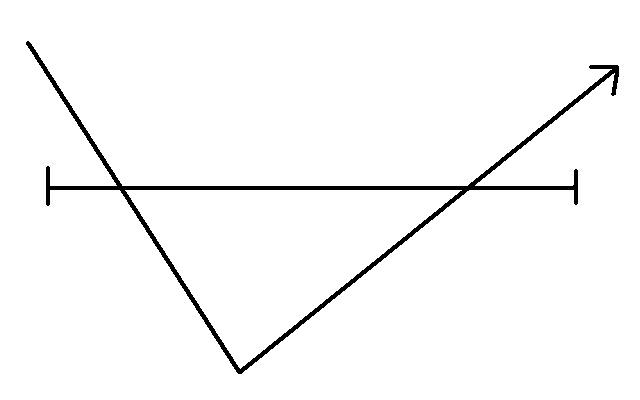
This is where the preacher is a little more aware of the context of the passage and moves through the passage noting highlights along the way.  Typically these highlights will reflect the best bits of Bible study done in preparation (often the best study moves out of the passage, so the message also can jump to other passages, but I did not want to complicate the diagram!)  This is better than Springboard Preaching, but let me show you a better way!

Approach 3 – “Plumbed” Passage Preaching (Preferable approach to preaching)

This is where the preacher has studied the passage in its context and is able to present the message of the passage to some depth.  This is not a series of mini-messages on various passage details, but it allows the details to work together to shape a single message that truly represents the passage in question.  The depth may vary according to time, skill of the exegete, etc.  But this approach to preaching will result in a coherent message, satisfying presentation of the passage and more accurate understanding of the meaning of the passage.  (Please note that it is never possible to fully “plumb” the depths of the passage, so the term is used relatively!)

For simplicity, I have presumed that each message is based in one text and that each message is making connection to the listeners by way of application.  I have assumed that there is a sense of progress in each message.  (None of these can be assumed in real life preaching!)  The simple focus here is on how the passage is handled.  Let’s strive to be Approach 3 preachers whenever possible.