Trustworthy Bible

Yesterday was the 59th anniversary of the death of Sir Frederick Kenyon.  Kenyon was a renowned scholar of ancient languages who took a keen interest in the authenticity of the Bible.  “Both the authenticity and the general integrity of the books of the New Testament may be regarded as finally established.”  Kenyon’s sentiment here is often lost today, not just in the attacks of liberal scholarship, but also in the silence of Christian preachers.

Kenyon, director and head librarian of the British Museum, showed in his day how archeology and the manuscript evidence supported the credibility of the Bible.  Of course there are many others who will argue the other way, all pointing to the agendas of those on the other side.  Yet in the church today, there seems to be a paranoid silence in some quarters.

Since the Christian position is under attack from very vocal and media backed atheistic thinkers, we are increasingly huddled in church corners believing almost superstitiously in the message of the Bible.  Why?  There is more evidence for the authenticity of the Bible today than ever before!  And while we are grateful for his legacy, we don’t have to just quote Kenyon for support.

Richard Bauckham has been doing some magnificent work in recent years, and Peter Williams et al of Tyndale House are doing a good job both advancing and communicating that work.  Do the people in your church know about the integrity of the personal names used in the Gospels?  That is, a level of accuracy in name selection that would be a level of sophistication utterly unparalleld in the ancient world if it were a forgery.  Do the people in your church know about the evidences for word perfect quotation in the Gospels?  Do the people in your church know about the frequency of accurate reporting of place names, as compared to the paltry place awareness in the non-canonical gospels?  I could go on, but there is a bigger question.  Not do they know, but, do you know about these things?

As preachers we do our listeners a disservice if we simply affirm the Bible’s truth without demonstrating its trustworthiness.  By our silence we could reinforce the perception of many that the Bible is an ancient book of myths and legends that we choose to consider as “true for us.”  If we won’t demonstrate and prove and affirm and show the integrity and trustworthiness of the Bible, who will?

——————————————

If you haven’t seen it, you won’t want to miss this lecture by Dr Peter Williams on “Eyewitness Evidence

Add to FacebookAdd to DiggAdd to Del.icio.usAdd to StumbleuponAdd to RedditAdd to BlinklistAdd to TwitterAdd to TechnoratiAdd to Yahoo BuzzAdd to Newsvine

Don’t Move Away From the Bible

Yesterday may have passed without you noticing the date, but it was the 766th anniversary of the death of Alexander of Hales.  I would have missed it too, except for a brief article I read that began like this:

A decisive moment in Medieval scholasticism came when Alexander of Hales substituted Peter Lombard’s Sentences in place of the Bible as the basic text for his teaching.

In his day he was called the king of theology.  Alexander (I won’t call him Alex as I can’t pretend to be too close to him), pioneered the dangerous habit of making a summary of Christian theology using Aristotle as the authority.  Summarizing the Christian faith in answer to numerous questions sounds safe enough, but when Aristotle is quoted as a reference in almost every question, something unhealthy might just be brewing.  In fact, it was Alexander’s fan, a certain Thomas Aquinas, who is best known for blending Aristotle and Christianity.

Now I am not suggesting that you or I are going to have the same long-lasting consequences as can be traced from Alexander of Hales and those he influenced.  Nevertheless, we will do damage if we make a move away from the Bible in our ministry.  But, you might say, where could we go from the Bible?  After all, we are committed to being biblical preachers . . . okay, some tempting avenues away from the Bible, in no particular order:

1. Theology – Don’t get me wrong, I care passionately about good theology, but I also see the temptation to become “sophisticated” and leave the Bible behind.  Don’t do it!

2. Philosophy – Speaking of sophistication, it doesn’t get much more tempting than leaving the Bible to become something of a philosopher.  Bad move for a preacher to make.

3. Mysticism – Other extreme, but still a speculative pursuit, some choose to leave the Bible behind in order to go after a greater mystical experience.  Oops.

4. Revelation – Along similar, but distinct lines, is the temptation to treat the Bible as passe in the pursuit of new revelation from God.  Careful!

5. Culture – Here’s a popular pursuit.  How about essentially moving beyond the Bible to being a cultural commentator.  Pas une bonne idee.

6. Coaching – Listeners, of course, crave relevant instruction for life in a complex world . . . so why not put the Bible aside and offer engaging applied training in “living life, for dummies.”  Well, let me give you six reasons that’s bad practice…

7. Entertainment – Let’s face it, we could always just go for numbers of happy people by squeezing out the Bible in order to offer entertaining sets of humour and anecdotal pulpit pithiness.  Yes, but did you hear about the preacher who did this and…

There may be some value in some of these pursuits, but keep your feet firmly planted in the Bible and don’t stray off down a dead end.

Add to FacebookAdd to DiggAdd to Del.icio.usAdd to StumbleuponAdd to RedditAdd to BlinklistAdd to TwitterAdd to TechnoratiAdd to Yahoo BuzzAdd to Newsvine

Friday Quote – The Bible Bit of Biblical Preaching

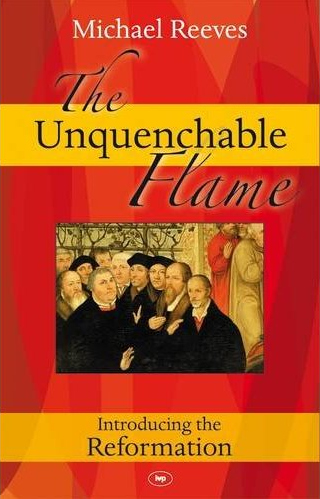
Here are some paragraphs that I read yesterday in Michael Reeves’ excellent book, The Unquenchable Flame (pp182-3).  Enjoy:

Erasmus was only ever able – and only ever wanted – to sponge down the system he was in.  He could take pot-shots at bad popes and wish people were more devoted, but because he was unwilling to engage with deeper, doctrinal issues, he could never bring about more than cosmetic changes.  He was doomed ever to remain a prisoner of where the church was at.  And so it must be in a world conquered by him.  For as long as doctrine is ignored, we must remain captives of the ruling system or the spirit of the age, whatever that may be.

Yet is all this fair to Erasmus?  Was he not the one who made the Greek New Testament available, so providing the coals for the Reformation?  Certainly he did, and yet his possession of the Scriptures (and his deep study of them) changed little for the man himself because of how he treated them.  Burying them under convenient assertions of their vagueness, he accorded the Scriptures little practical, let alone governing, authority.  The result was that, for Erasmus, the Bible was just one voice among many, and so its message could be tailored, squeezed and adjusted to fit his own vision of what Christianity was.

To break out of that suffocating scheme and achieve any substantial reformation, it took Luther’s attitude, that Scripture is the only sure foundation for belief (sola scriptura).  The Bible had to be acknowledged as the supreme authority and allowed to contradict and overrule all other claims, or else it would itself be overruled and its message hijacked.  In other words, a simple reverence for the Bible and acknowledgment that it has some authority would never have been enough to bring about the Reformation.  Sola Scriptura was the indispensable key for change.

However, it was not just a question of the authority of the Bible; the reason Luther started the Reformation, and Erasmus did not, was the difference in what they saw as the content of the Bible.  For Erasmus, the Bible was little more than a collection of moral exhortations, urging believers to be more like Christ, their example.  For Luther, this was to turn the gospel on its head: its optimism displayed its utter ignorance of the seriousness of sin.  As he saw it, what sinners need, first and foremost, is a saviour; and in the Bible is, first and foremost, a message of salvation.  As Richard Sibbes lamented, a century after Luther, it was all to easy to lose that controlling focus on Christ and his gift of righteousness, and yet that was the very heart of true reform.  For all that theBible was opened, without the message of Christ’s free gift of righteousness, there could be no Reformation.

Add to FacebookAdd to DiggAdd to Del.icio.usAdd to StumbleuponAdd to RedditAdd to BlinklistAdd to TwitterAdd to TechnoratiAdd to Yahoo BuzzAdd to Newsvine

Not a Fig

Oliver Wendell Holmes is credited with this great quote – “I wouldn’t give a fig for simplicity this side of complexity, but I’d give my right arm for simplicity on the other side of complexity.”

Preacher, where do your sermons sit?

Cheaper than a fig – This is preaching that is simple because it is shallow.  The preacher hasn’t wrestled with the text, hasn’t entered into the complexity of the passage, it’s theology, the interface between ancient text and contemporary listener, etc.  The preacher is just demonstrating shallow incompetence.  Technical commentaries have been ignored.  The text has received only scant attention.  The sermon is simple because it is simplistic.  It doesn’t engage listeners.  It doesn’t shed light.  It doesn’t stir hearts.  It has the nutritional value of a burger bun.

Complexity – This is preaching that has gone beyond the fig stage.  The preacher has started to wrestle with the text.  The preacher may have engaged in dialogue with some technical commentaries.  The preacher has mapped out some or all of the complexities of the theology and its interface with contemporary life.  It may be complex because the preacher hasn’t cut out unnecessary detail.  Or it may be complex because the preacher hasn’t really got to grips with the details.  Or it may be complex because the preacher is trying to impress.  Whatever the cause, it is complex.  Hard to listen to.  The listener has to really work to benefit.  Much nutrition, but as hard to digest as day-old steak.

Costly as a right arm – This is the goal.  The preacher has gone beyond the shallow into the depths.  The preacher has studied, and wrestled, and prayed, and thought themselves through to a place of clarity.  This isn’t simplistic, this is profound, yet accessible, relevant, clear, engaging.  They often say that the very best sportsmen and women make hitting the ball, shooting for goal, playing the game look so easy.  It isn’t because they are just natural at it.  It is because they have endured the work necessary to get to the other side of complexity.  That’s why we pay so much to watch them.  Too many preachers are worth less than a fig because they are simplistic, or so complex that the gold seems hard to mine.  If only more preachers were right arm types – having thought themselves through to a level of clarity that is blessing to all who hear.

Add to FacebookAdd to DiggAdd to Del.icio.usAdd to StumbleuponAdd to RedditAdd to BlinklistAdd to TwitterAdd to TechnoratiAdd to Yahoo BuzzAdd to Newsvine

Bible Handling Mirror 2

So we all think we’re biblical when we preach.  But how good are we at handling the Bible.  Yesterday I suggested five questions to ask in pursuing feedback on this matter – questions on observing the text closely, interpreting in context, awareness of historical background issues, grasping the flow of thought in a passage, and accurate interpretation of the details.  Having asked about context issues, let’s continue with questions relating to content, before returning to broader biblical context questions:

6. How sensitive am I to the tone of the author?  Do I treat the text as an ancient data dump, or have I tapped into the actual tone of the author?  Am I sensitive to his mood, his intent, his heart beating in the words that he wrote?

7. How appropriately do I point to the weightier details of the passage?  Every passage consists of details, and some are weightier than others.  Do I spend my time where it matters, or do I get bogged down with subsidiary details?

8. How aware am I of the earlier texts that feed into this passage?  If a passage is quoted, am I aware of that passage?  If a passage is alluded to or influential on the writer, do I seem aware of that?

9. How well do I place this passage in the full panorama of Scripture?  This differs from question 8 because that was only looking at what had come before.  This question is asking about the whole canon, all of it.  Am I alert to where this passage fits in the progress of revelation?  Do I make sure that this passage is preached appropriately for today?

10. How good is my summary of the passage, really?  I suppose we should ask if there was a summary statement of the passage . . . but assuming there is, how is it?  Does it reflect the nuances and uniquenesses of the passage, or is it too generic?  Does it capture the heart of the passage?  Would it get a knowing nod from the author as an accurate summary of his intended meaning?

Finding people who could give you feedback on these ten questions could make the difference between you being self-aware and being self-deceived.  Don’t be naive.  Try to find out how well you are handling the Bible, honestly.  Then let’s all grow more and more as preachers of the Word!

Add to FacebookAdd to DiggAdd to Del.icio.usAdd to StumbleuponAdd to RedditAdd to BlinklistAdd to TwitterAdd to TechnoratiAdd to Yahoo BuzzAdd to Newsvine

Bible Handling Mirror

Every preacher probably thinks their preaching is biblical.  Even that really bad preacher that you once heard.  Sadly, probably especially that really bad preacher that you once heard!  To put it bluntly, we all have a tendency to be naive about our level of biblical accuracy.  It is genuinely hard to know what you don’t know.  There is never a guarantee that you will spot poor Bible handling in the mirror.  So, what to do about it?

Well you can take courses from trustworthy instructors and see their feedback on your Bible handling.  Or more immediately, you can ask someone who knows what they are talking about for feedback.  (The only problem with this is that if you don’t what you don’t know, how do you know if they know . . . still, worth getting feedback, probably from multiple evaluators.)  Some probing questions to ask them:

1. How diligently do I observe the text?  Am I really careful to see exactly what it does say?  Do I notice the key details?  Do I represent what is actually said in the text precisely?  To put it another way, am I diligent to preach this text and not jump from it to say what I want to say?

2. How effectively do I interpret the text in context?  Am I obviously alert to, and influenced by, the context in which the passage sits?  Do I seem to be genuinely familiar with the book as a whole?  Do I show how the details of this passage make sense in light of the flow of the broader section in which it sits?

3. How familiar am I with the relevant historical and cultural background to the text?  Am I preaching the text demonstrating a natural familiarity with the historical background, the cultural background, the geography, the “world” of the text?  Or am I preaching the text at very long arms length with all the presuppositions of our individualistic, affluent, democratic, freedom obsessed culture firmly in place?

4. How alert am I to the author’s flow of thought?  Does the sermon feel staccato and bitty, or do I show the flow of thought?  Does it feel like separate thoughts bound together by a title, or does it feel coherent?

5. How accurately do I interpret the details in the text?  The words, the names, the grammar, the dialogue, the details.  Do I show a good level of precision when it comes to the analysis and close work in the text?

I’ll add another five tomorrow…

Add to FacebookAdd to DiggAdd to Del.icio.usAdd to StumbleuponAdd to RedditAdd to BlinklistAdd to TwitterAdd to TechnoratiAdd to Yahoo BuzzAdd to Newsvine

Torrents of Trite Truths

Little story.  Almost a decade ago I was teaching a class in a Bible college overseas.  I was teaching a wonderful group of enthusiastic church ministers how to handle the New Testament via a survey class.  It was such a delight to share with them in that setting.

One day during the eight-day course, we had the chapel time with all the classes and staff present.  A pastor was visiting from a church that had put a lot of funding into the institution, so naturally the “big church” pastor was invited to preach during chapel.  It was painful.

He wasn’t really preaching a text, so much as preaching platitudes.  Problem was that the enthusiastic students seemed to trigger something in him.  Swept away on the wave of vocal affirmation, the pastor noticeably “rose to the occasion.”  He went off on a wild safari of pithy alliterated lists and trite truths.  Each time he got a vocal response he cranked it up a level.  The room was electric.  I sank lower and lower in my seat, oscillating between anger and momentary depression.

As I left the chapel (time eventually ran out and he had to stop), my young travel companion made a discerning comment about the whole thing.  Unfortunately the students were different.  They processed the difference between what they were learning and what they experienced from the “great preacher” by dividing learning from preaching.

Oh yes, there is a right way to handle the Bible and honour the message that God inspired.  And there is a great way to preach so that listeners are stirred into a frenzy affirming trite truths and pithy epithets.  Disconnect.  One didn’t feed the other.

I feel like I say this regularly in as many ways as I can think of, but let me say it again: please please please preach the text you are preaching.  Anyone (including four year olds) can spurt the truths of the faith learned parrot fashion.  Surely God wants those mature enough to be sensitive to His inspired text to carefully and humbly be fed and feed others from the Word.

Add to FacebookAdd to DiggAdd to Del.icio.usAdd to StumbleuponAdd to RedditAdd to BlinklistAdd to TwitterAdd to TechnoratiAdd to Yahoo BuzzAdd to Newsvine

Preacher, Please Know What You Are Talking About!

This should go without saying, but apparently it doesn’t.  When you preach, please know what you are talking about!  There are few things that undermine integrity as quickly as a preacher making mistakes in what they say.

We all make mistakes, and there is grace, of course.  I’ve made mistakes.  You have too.  But the difficulty here is that ignorance is never obvious in the mirror.  It is really hard to know what we don’t know.

I would love to give some examples, but I’ll keep this slightly general.  Here are some categories:

1. Do you know the book from which your preaching text is drawn?  Now and then a preacher will come out with something about a Bible book that leaves those who know their Bibles thoroughly confused. Actually, they will see through the preacher, but the ignorant will swallow the error.

2. Do you know the context of the cross-referencing you are doing?  It is easy to spin off a text and dip into another part of the canon (either quoting or referring to content).  But do you know that area of the Bible?  If you only studied for your preaching text then you might easily make errors in regard to that other part of the Bible.

3. Do you know your theology as well as you think you do?  Sometimes preachers will make theological points that have no foundation in the preaching text (or any other text, for that matter).  This might be done when trying to show orthodoxy in some way – for example, wanting to affirm the full deity and humanity of Christ, but forcing that into an explanation of something to do with Christ’s ministry where it doesn’t fit.

4. Do you know the facts of the illustrative material you are using?  I heard a preacher apparently trying to quote a key figure in church history, yet his introductory comments about him betrayed a significant ignorance of that church history.  The same could be true when presenting a scientific or cultural example – getting the facts wrong, or even looking shaky, will undermine integrity.

5. Last but certainly not least, have you actually looked carefully at the text you are preaching?  There is nothing worse than a preacher going off on a point about something, apparently trying to link it to the text, but ignoring the adjacent phrase that undermines the entire point.

Know the text, know the context, know the book, the Bible, and any realm from which illustrative materials are drawn.  Hard work?  Of course.

Add to FacebookAdd to DiggAdd to Del.icio.usAdd to StumbleuponAdd to RedditAdd to BlinklistAdd to TwitterAdd to TechnoratiAdd to Yahoo BuzzAdd to Newsvine

Tone Deaf Preaching

You won’t hear me starting a chorus in public.  Tone deaf.  But what about preaching?  Is there a need for aural sensitivity in the preacher?  I think there is, absolutely.

What is the tone of the text?  Some preachers deal with texts as flat data sets offering them a set of information from which to draw a textually rooted sermon (which is better than those who use the text as a springboard to bounce off to reach the heights of their own constructed sermonizing!)  But if we are going to be genuinely biblical preachers, then we must develop a sensitivity for the tone of the text.  Galatians 1 is very different from Philippians 4, which is neither Psalm 51 nor Isaiah 40.  What is the tone of the text?  Without sensitivity to the tone, you aren’t grasping a text properly.

What is the tone of your preaching?  It doesn’t matter how good a sermon may be on paper, your congregation have to hear you preach it.  This means how it comes across is very important.  If you are consistently coming across as nagging, or edgy, or aggressive, or disrespectful, or patronizing, or prideful . . . and if you don’t know it, this is a problem.  Ask for honest feedback.  Listen to yourself.  Watch yourself.  Is the tone what you want it to be?  Is the tone what the text suggests?  Is the tone what they need it to be?

The tone of the text.  The tone of the preacher.  Some preachers seem tone deaf to both.  Good preachers aren’t.

Add to FacebookAdd to DiggAdd to Del.icio.usAdd to StumbleuponAdd to RedditAdd to BlinklistAdd to TwitterAdd to TechnoratiAdd to Yahoo BuzzAdd to Newsvine

So What You Are Saying Is . . .

So let’s say you are preaching on Ephesians 2:1-10.  And you happen to see on Facebook that the Apostle Paul is preaching at an event not far from you on that very text, just two days before you are due to preach.  Let’s assume he is not able to come and take your preaching engagement, but you can get to hear his.

After he preaches the passage, explaining his way through it, you decide to cut to the bottom line.  You approach him afterwards and get to him before any of the others who line up behind you.  “Thanks Paul, great to meet you, so you are saying, in Ephesians 2:1-10…” then you just decide to state your main idea of the passage to him, “that God saved us by grace, making us alive so that we can do good works?”

If Paul’s response might be, “uh, yes, sort of, but what I’m mostly saying is that it is all of God’s grace that he has made us who were dead, alive with Christ . . .” then you should change your message.  If your main idea is not what he’d say his main idea was in the passage, then your main idea should change.

Remember, as a preacher your task is not to come up with your own message somehow based on a text. Your job is to re-present the message of that text, targeted to a new audience and situation, but remaining genuinely faithful to the intent of the author.  Be nice to ask him in person, but let’s be sure to check our main idea against the text itself, and to do so more than once.  Feel free to ask someone else too, not the author, but someone who will look at the text carefully and test your idea.

Add to FacebookAdd to DiggAdd to Del.icio.usAdd to StumbleuponAdd to RedditAdd to BlinklistAdd to TwitterAdd to TechnoratiAdd to Yahoo BuzzAdd to Newsvine