 What did the Apostle Paul mean when he spoke of preaching Christ and him crucified? Here is a brief video response to this question.
Specific text
Legalism’s 5 Misses
 Legalism will always contain a rich dose of truth, but it will miss something far richer and more helpful. Here are a few of the great misses of legalism:
1. Legalism is a misunderstanding of the Gospel. God did not offer us pardon on condition of ongoing obedience to His law. God offered us life as the bride of Christ, the children of God, the friends of God, and as members of the body of Christ. We enter into the Sonship of Christ and so desire to obey as He does – not to fulfill an obligation, nor to merit the Father’s love, but rather as the natural response of a loving heart. In the Gospel we are offered that transformation of heart, that union by the Spirit, and that freedom to enjoy pleasing Him. Legalism pushes God into the distance and throttles the life out of our obedience.
2. Legalism is a misreading of the Galatian heresy. Paul was so strong in his critique of believers who were drawn away from Christ and toward the flesh-driven pursuit of maturity via law-keeping. Two thousand years on and many of us still live under the spell that says we get saved by faith, but then will grow by self-stirred effort. Galatians is not just a critique of this law-based approach to living for God, it is also a glorious presentation of the opposite – of life lived in response to Him who loved me and gave Himself for me, the promised One who gives the promised Spirit so that we can be sons rather than slaves.
3. Legalism is a misrepresentation of initiative. The Bible puts God’s grace up front as the initiator, but my legalism turns that around. Now God is seen to be reticently gracious. He is hesitatingly good. He must be conditioned into being kind by my initiative through a self-stirred obedience. God becomes the responder to us mini-gods who twist His arm by our self-starting acts of obedience.
4. Legalism is a misdirected gaze issue. When my life reflects an inner passion to gaze at the Law, or myself, or others, then I am living the lie that God himself, as revealed in Christ through the Spirit is not worthy of my loving gaze.
5. Legalism is a weird and twisted version of marriage. If I were to apply legalistic descriptors to a marriage, we would find it very strange. In a marriage we make a great effort for the sake of the other, but we don’t dwell on that effort. We do it gladly because we love the person. A marriage defined by my obsession with my own effort is weird. It is also weird in union with Christ.
John Piper wrote that “the essence of legalism is when faith is not the engine of obedience.” With that, let’s bring this series to a close.
Legalism and Preaching – part 3
 Legalism is not only possible for Christians, it is likely. The default leaning of our flesh is toward autonomy. That autonomy can manifest in overt rebellion (antinomianism) or in self-righteous religiosity (legalism), but both are manifestations of a separation of God’s Law from God Himself.
You probably see the label “antinomian” being used. It is a serious charge. It suggests that someone is anti-law and therefore, by implication, pro-sin. It tends to be used of those who don’t elevate the Law as much as they apparently should. Undoubtedly there are some antinomians who are genuinely pro-sin, but I haven’t met many. I have met a lot who might be labeled “antinomians” who do not see the Law as the solution to the profound reality of sin, and who, incidentally, live lives characterized by greater integrity and with more fruit of the Spirit evident than some who like to criticize them.
As preachers we need to wrestle with these issues. We stand and speak not only of how to be saved, but also about living the Christian life. For many those are two separate messages. We are saved by grace, they say, but we live the Christian life by determined obedience to the Law. Somehow this two-part message should feel very awkward for us.
We need to devour our Bibles and get a sense not only of the instructions in there, but also the source of those instructions. Jesus seemed to suggest that His way would mean a greater and a deeper holiness, one that would surpass that of the fastidious Pharisees. Yet we tend to think of the Old Testament folks as having a far more demanding legal code than we could cope with. Are we missing something? Should we demand more strongly that our listeners keep more laws? Or is there something implicit in the New Covenant that Jesus instituted that leads to a greater awareness of sin, and a greater victory over it?
The New Testament is clear that this life will be a struggle between the flesh and the Spirit, so perfection is unrealistic. But is there something in the New Covenant that means we can keep in step with the Spirit, that we can delight to please our God, that we can live lives of greater moral integrity out of a heart-stirred delight rather than through external pressure?
Let’s beware of an inadequate understanding of sin and a wholly inadequate approach to living lives that please God – for that is what legalism is: weak on the problem and a flimsy solution to it.
Perhaps it would do us preachers good to take a book like Galatians and read it through again and again. If we bring with us the question of what does it look like to live the Christian life, what is sin and what is the solution for the believer?, then these questions might gradually open up Paul’s teaching there and bring new life to our ministry. It cannot hurt. Twenty, thirty, fifty times through Galatians would help us all. Shall we?
Handling Old Testament Quotes in Preaching – Part 2
 So when you find an OT quote or reference in your passage, what do you do? Yesterday we started with two basic, but important, points – read the Old Testament a lot, and go back to check the source of the quote (don’t just assume you get what is going on). Let’s build on that with some exegetical thoughts for our benefit, then next time we can ponder how to preach these passages . . .
3. When you look at the source of the quote, take in the context. For example, when Jesus quotes Psalm 82:6 to support his own claim to equality with the Father and the use of the term “Son of God” (see John 10:34), what is he doing? A superficial look might suggest he is just being tricky with words. That is, since there is one obscure reference to humans being called “gods” by God, therefore Jesus could also get away with it. Not very convincing. But his argument made their poised throwing arms lower and the stones didn’t fly, so something about his use of this quote was more compelling than such an apparently weak argument might superficially suggest. Check the whole Psalm.
4. Be aware of the wider Old Testament context, not just the specific section. Here is where Kaiser’s concept of “Informing Theology” is so helpful. What informed the writer of the original passage. That is, what was Asaph aware of that fed into his writing of Psalm 82? For instance, is it obscure and unique to reference human kings as “sons of God”? Not really, this is found elsewhere.
5. Grasp the meaning of the Old Testament passage in its context. It is worth taking the time to understand the OT passage as well as you can. For example, Psalm 82 is a rebuke of unworthy leadership that culminates in anticipation of God himself stepping in to deal with the sin of the earth (specifically the failure of the human leaders).
6. Carry a sense of the whole passage forward to the New Testament quote and see how that fits. Suddenly John 10:34-36 doesn’t seem like a random verse plucked and used poorly. Instead, it fits as part of the extended argument that has carried over from the end of chapter 9 (and really since the conflict of chapter 5). Jesus is not making a desperate loophole defence of his claim to divinity. He is undermining the leadership of the nation and making a claim to be God who has come to judge and claim the nations as his own! They would likely have heard the force of the whole Psalm, rather than zeroing in on the short quote Jesus used – that was the link, but it was not full weight of his argument.
Bottom line: It is always worth taking time to study the Old Testament source of later quotations and references. Always.

Dangerous Resolutions
 The New Year is traditionally a time for new or renewed commitments. January is the busiest month of the year for gyms and health clubs . . . and February is often the quietest! New diets are typically added to personal fitness goals, and then perhaps there are personal productivity targets, or family scheduling ideals, etc.
In the church we can join in with another whole set of renewed commitments and resolutions – attendance goals, Bible reading goals, personal growth goals. I am sure most of us would be better off with improved Bible reading habits, prayer times, replacing internet “snack” reading with book reading, date nights with our spouses, regular together times with our children, better sleep hygiene, regular exercise, dietary self-control, etc.
But we need to be careful. There is a danger in resolutions. Don’t misunderstand me, I am not advocating a wholesale rejection of all good goals. I believe Christian leaders should be living lives characterized by heartfelt discipline and healthy physical, personal, relational and ministry habits. But we need to be careful. Why?
We need to beware because there is a goal that is so overwhelmingly significant, but we can become distracted from it and pay it mere lip service if we are not careful. Hear it in the words of the super-successful and disciplined converted rabbi and rising star of Judaism, the Apostle Paul:
But whatever gain I had, I counted as loss for the sake of Christ. Indeed, I count everything as loss because of the surpassing worth of knowing Christ Jesus my Lord. For his sake I have suffered the loss of all things and count them as rubbish, in order that I may gain Christ and be found in him . . . (Philippians 3:7-9)
This doesn’t sound like a momentary commitment renewal for Paul. He was genuinely gripped by Christ. This is not a passage suggesting we add in more consistent quiet times to our busy lives and call ourselves committed followers of Christ. This is describing an absolute dismissal of all that had been grounds for Paul’s identity before, and its replacement by an utter passion for knowing Christ, gaining Christ, being in Christ.
How easily I fall into the trap of decorating my life with Jesus. I don’t wear Christian jewelry or Christian t-shirts so much, but perhaps I sometimes just decorate my busy life with Christian ornaments. Can that be true for someone who is “full-time” in ministry? I believe it can. When the ministries we do, along with the personal growth we pursue, is done with our gaze distracted from the one great goal, then perhaps we are falling back into building our identity on something other than Jesus.
How easy it is to have “a righteousness of my own that comes from” . . . what I do. I can make all sorts of effort to live a moral life, to learn and grow for the sake of ministry, to be a good steward of my life, my resources and my opportunities, but to do all of this with my eyes looking in the wrong direction. I can be looking at myself, building my resume, or looking at the needs around me, and yet not be truly looking at Christ himself, my one great goal.
Isn’t it frightening how easily we learn to say the right things to dress up our lives and ministries so that they look consistently Christian? Sadly our sanctified selfishness, or sanctified worldliness – building the kingdom of me – might allow us to fool ourselves, but none of it fools God.
So as we head into another year, by all means make the kind of lifestyle tweaks that will enable you to be a good steward of relationships, life and ministry. Aim to get to bed earlier. Be more active. Watch less, read more. Spend less, give more. Speak less, listen more. But may every one of our resolutions and habits be utterly eclipsed by one great, overwhelming goal: that in 2016 I want to know Christ better.
Let’s pray that God, by His Spirit, would convict us of every way in which our devotion to Christ is superficial, or distracted, or false. Let’s ask God to shine a light on all that should be considered loss compared to knowing Him better this year. And let’s ask God, by His Spirit, to incline our hearts more passionately toward knowing Christ, and loving Christ, and gaining Christ, and being in Christ – that we may know Him and the power of His resurrection, and may share in His sufferings, becoming like Him in His death . . . the kind of absolute radical discipleship that makes complete sense in light of who He is and what He has done!
__________________________________________________

As you launch into 2016, Foundations is a one-hour read that will make a difference to everything else you read and do in 2016. Click here to find out more.

God With Us: A Nazarene?
 Would you carry the label, Nazarene? For some, it is just one of the more obscure labels for Jesus or His followers. For many believers in the Middle East today, it means the most extreme persecution and terrifying uncertainty. For all of us, it should prompt us to consider the One who invested the label with such profound significance.
Matthew’s infancy narrative ends with Joseph taking Mary and Jesus back to Nazareth, “so that what was spoken by the prophets might be fulfilled, that he would be called a Nazarene.” (Matthew 2:19-23) Is this a low-key transition to the rest of the Gospel, or is it a fitting climax for the whole birth narrative?
Moving Back To Nazareth
Joseph’s flight to Egypt was short-lived. The tyrant Herod died shortly after the massacre in Bethlehem. So God directed Joseph back to the land, specifically to Nazareth. Joseph knew of the challenges facing the family in the town that thought it knew Joseph and Mary all too well.
How could Joseph rebuild his business when everyone doubted his word on the circumstances surrounding Jesus’ conception? How would Mary face the comments as she returned, ‘the virgin’ with her baby boy?
Perhaps Joseph planned a fresh start in Bethlehem, but Herod’s replacement made that difficult. Maybe Galilee made sense after all. Still, it took divine direction for Joseph to go back to Nazareth.
Joseph was directed to Israel, the land of the Jews. Then he was directed to Galilee. Still Jewish territory, but Galilee had a high number of Gentiles and was scorned by the ‘better Jews’ of Judea. This Messiah was not just for the Jews, but for the Gentiles too. In fact, by growing up in Nazareth, we will see that He was for all of us.
The Place of No Good Thing: Nazareth
Matthew mentions Nazareth three more times. After a passing reference in 4:13-16, then comes 21:11. Jesus’ triumphal entry so stirred Jerusalem that the locals asked the crowds who He was. The visiting Galilean crowds replied that this was the prophet Jesus, from Nazareth. Probably not what the locals wanted to hear!
Finally, in 26:71, Peter was in the courtyard of Annas’ house when he was identified as an accomplice of Jesus of Nazareth. Was there venom in that label? Probably, since Peter was again confronted due to his Galilean accent. To be from Nazareth was not a positive thing in Judea. In fact, it was not a good thing, even in Galilee!
Nazareth was five miles from Sepphoris, the strongest military centre in Galilee. It was on a branch of the great caravan route to Damascus. For traders, soldiers and travellers, Nazareth was just a rest stop on the way to somewhere better.
Essentially, Jesus grew up in Nowhere, Galilee. Was this the next best thing since God’s plan A (Bethlehem) had been thwarted by troublesome Herodian rulers? Not at all. God directed Joseph so that Jesus was brought up in Nazareth. This meant that the Messiah born in Bethlehem would always be called the Nazarene.
The Prophets Fulfilled
Where does the Old Testament say the Messiah will be raised in Nazareth, or be called a Nazarene? Nowhere. Interestingly, Matthew refers to the prophets, plural, when he writes of prophetic fulfillment (2:23). Perhaps several options should be combined to get a composite sense of Matthew’s subtlety here:
Jesus was, perhaps, to be considered a Nazirite (Nazir)—a chosen holy one set apart for God’s service from His mother’s womb.
Furthermore, Jesus was the Messianic ‘branch’ (Neser)—the Davidic branch of Jeremiah 23:5/33:15, who would reign in righteousness; the branch who would be a priest and a king, rebuilding the temple, as in Zechariah 6:12; the branch from Jesse’s stump anticipated in Isaiah 11:1 (part of the great royal Immanuel section).
Maybe we don’t have to choose, perhaps Matthew is making two great themes converge: the deliverer is both priest and king. Perhaps we have come full circle back to the Immanuel prophecy of 1:22-23.
Joseph called His name Jesus in chapter 1, and by the end of chapter 2 Joseph brings Him to Nazareth so that all would call Him a Nazarene. This child, the son of
Abraham, son of David, son of God, is to be known by all people, forever, as the Nazarene!
Actually, was Matthew pointing to a location, rather than a subtlety in the name? After all, every Old Testament citation in Matthew 2 pointed to a location: Bethlehem, an allusion to ‘the nations’, Egypt, Ramah, and now, Nazareth.
Whether it is a reference to his person, or his hometown, the label is stunningly unimpressive. This priest-king is exceedingly lowly.
A Reputation Worth Carrying?
Jesus knew what it was to be poor. He was not sheltered in an ivory tower, protected from the ‘dross of society’. He lived in the midst of it all, and He carried it as His label.
Jesus was a very common name at that time, so He needed an identifier. Who was His Dad? That was complicated. What was His job? Again, not easy. So where was He from? Nazareth became the label typically appended to His name.
We see Nazareth mentioned in Jesus’ childhood (Luke 2:51); as He called His disciples (John 1:45-46) – remember Nathanael’s sarcastic question: ‘can anything good come out of Nazareth?’; as the location of choice for launching his preaching ministry (Luke 4:16).
His subsequent visit to a synagogue in Capernaum sees Him identified as Jesus of Nazareth by an unclean spirit, who also acknowledges that He is the Holy One of God. Jesus accepts the label, but silences the spirit once His heavenly identity is declared (Mark 1:24-25; Luke 4:34-35).
As Jesus headed toward Jerusalem, blind Bartimaeus recognizes the Nazareth label (Mark 10:47; Luke 18:37-38); then it is used in His arrest, (John 18:5); during Jesus’ trial it is used disparagingly of Peter (see also Mark 14:67); and even in His death, Pilate’s inscription reads, “Jesus of Nazareth, the King of the Jews.”
After His resurrection the two disconsolate disciples on the road to Emmaus refer to Jesus as being ‘of Nazareth’ (Luke 24:19). Fair enough, their hopes had been dashed.
But even the angel in the tomb used the label! Surely an angel sent from God could come up with something better!? (Mark 16:6)
Even after His ascension Jesus continues to bear the lowly label ‘of Nazareth.’ Peter’s Pentecost sermon climaxes with Jesus as Lord and Christ, but it launches with Jesus of Nazareth (Acts 2:22).
The lame man is healed, not in the name of the risen and ascended Christ, but in the name of Jesus of Nazareth (Acts 3:6; 4:10). Stephen’s accusers use the label (Acts 6:14). Peter tells Gentiles that God anointed and was with the Nazarene (Acts 10:38).
Then we discover that Jesus used the label of Himself when He appeared to Paul at His conversion (Acts 22:8)! This had been the name opposed by Paul in his days of Christian persecution (Acts 26:9), and indeed even Jesus’ followers bore the disparaging label (Acts 24:5).
Conclusion
God was with this Jesus of Nazareth. And in His willingness to carry this label in ministry up north and down south, in His arrest, His crucifixion, His resurrection and even in His ascension, this Jesus of Nazareth was most assuredly ‘with us.’
Immanuel, God with us. Not just near us, in some nice palace somewhere. But with us, like ‘in Nazareth’ with us. Jesus of Nowhere, Galilee. He came to be with us, so that He could be for us. And He is forever with us, for He still carries the lowliest of labels. It was all part of God’s plan, that He should be called a Nazarene.
________________________________________
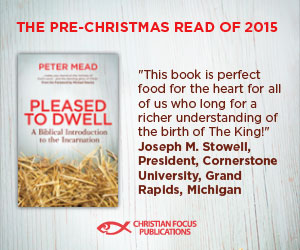
Adapted from Pleased to Dwell: A Biblical Introduction to the Incarnation, by Peter Mead (Christian Focus, September 2014). For more information on the book, please visit www.trinitytheology.net [Used with permission from Christian Focus.]
 Biblical Preaching