Overqualified! Trinity, Mystery.

Yesterday I quoted Andy Stanley on the tendency we have to qualify statements of God’s grace.  This got me thinking, where else might we offer unhelpful qualification?

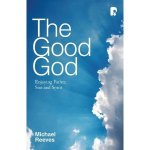
My mind jumps to Mike Reeves’ new book, The Good God.  I’ve heard Mike speak about the unhelpful habit we have of referring to the Trinity as a mystery.  Someone in a Bible study group notices a reference to the Father and Son or to the Spirit and the Father and makes a comment about the Trinity.  Worse, someone asks a question about the Trinity.

After a couple of brief comments, the group leader then flees for the hills by pulling out the big M-word.  “But of course, as we know, the Trinity is a mystery…!”  A knowing look, a gentle nod and everyone is supposed to say “aaaah!” and move on.

Mike makes the point that to use that approach with other questions would be bizarre.  “Can you explain how I can be saved?”  “Aaaah, the gospel, now that is a great mystery!”  Bizarre.

A mystery in the New Testament meaning of the word is not an Agatha Christie murder mystery kind of mystery.  It’s not a “keep you guessing until we get to heaven” kind of mystery.  It’s a previously hidden secret that has now been revealed.  Paul uses the term in reference to aspects of the church and the person of Christ, previously unknown, now revealed.

I can’t think of a New Testament use of mystery in reference to the Trinity, but in many ways this is exactly what we have.  Could humanity know God?  What He’s like?  Not unless He revealed Himself to us.  Has he done that yet?  Yes, through the Word inspired by His Spirit that points ultimately to the Word made flesh, His Son.

As preachers do we shy away from talk of the Trinity?  When the passage speaks of some aspect of Trinitarian revelation, do we default to throwing in the unhelpful qualifier “of course, we can’t know God, and the trinity is a mystery, after all.  Next point…”

Let’s stop doing that.  The text just communicated something, and all we’ve done is to communicate to people looking to us for guidance on understanding the Bible that the Bible is not understandable.

Instead of being embarrassed by the doctrine of the Trinity, perhaps we should experiment in our ministries and see how people respond when they taste of the delightfulness of God’s other-centred, graciously-loving, glory-giving, self-sacrificing, outsider-embracing and profoundly relational nature.

Like grace, perhaps we just don’t trust God’s revelation of the Trinity enough?  Like grace, perhaps the danger in preaching what is there in the text is the opposite of what we might expect?  Perhaps clear Trinity talk will wake people up and excite them spiritually, I suppose this also might be dangerous!

Add to FacebookAdd to DiggAdd to Del.icio.usAdd to StumbleuponAdd to RedditAdd to BlinklistAdd to TwitterAdd to TechnoratiAdd to Yahoo BuzzAdd to NewsvineLike This!

Overqualified! Grace, But.

Here’s a quote to start the week.  It’s a quote I found very encouraging last night.  Yesterday morning I preached the first message in a series on Galatians.  Paul pulled no punches and I reflected that somewhat in my message.  So this morning I’ve woken up pondering this quote from Andy Stanley:

“The church, or I should say, church people, must quit adding the word “but” to the end of our sentences about grace. Grace plus is no longer grace. Grace minus is no longer grace. We are afraid people will abuse grace if presented in its purest form. We need not fear that, we should assume that. Religious people crucified grace personified. Of course grace will be abused. But grace is a powerful dynamic. Grace wins out in the end. It is not our responsibility to qualify it. It is our responsibility to proclaim it and model it.”

I wonder what proportion of gospel preachers really preach the radical message of God’s grace, and how many feel the need to qualify it and augment it and protect it?  How do we over-qualify grace?

1. We preach grace, but insist on human commitment and responsibility in our gospel preaching.  It’s so easy to preach of God’s wonderful, amazing, life-transforming, gaze-transfixing, heart-captivating grace.  And then in the same breath speak of our need to make a personal commitment, to be diligent, to conform to standards, etc.  Either God’s grace is as good as we say it is, or it is lacking and needs human supply.

2. We preach grace, but quickly shift to focusing on our legal obligations as humans.  Grace plus works is not grace.  Grace minus relational freedom and delight is not grace.  Grace with a good dose of law is not more, but less.  People might abuse grace?  Indeed, so let’s put more effort into communicating how good God’s grace is, rather than feeling obliged to supply qualifiers that are somehow meant to stop people gratuitously sinning in light of the message of the gospel.  When a heart is truly gripped by God’s grace, then it is truly free to live a life of love for God and others – will such preaching lead to licentiousness and abuse?   Certainly not as much as preaching law will lead to rebellion and the fruit of the flesh.

All that I say here applies to both evangelistic and to edificatory preaching.  If the text speaks of our response in some way, or offers guidance on the difference this gospel will make, then of course we must preach the text.  But let’s not automatically feel the need to over qualify and potentially lose the impact of the message if the inspired author didn’t add qualification.

Preaching grace is dangerous.  It is dangerous because unlike overqualified human-centred preaching, it might actually stir a heart to be captivated by the abundant grace of God and lead to radical transformation!

Add to FacebookAdd to DiggAdd to Del.icio.usAdd to StumbleuponAdd to RedditAdd to BlinklistAdd to TwitterAdd to TechnoratiAdd to Yahoo BuzzAdd to NewsvineLike This!

Saturday Short Thought: Bible Story Both/And

So looking back on three weeks of posts about preaching Bible story…there’s so much more to be said!  Let me offer one more thought before I turn my attention elsewhere.

There is a tension between historical accuracy and literary artistry.

Some preachers are so concerned with historical accuracy that they are blind to the literary artistry.  Every narrative offers nothing more than a chance to probe the historical accuracy issues, an apologetic opportunity to reinforce our confidence in the biblical text.

Some preachers are so concerned with literary artistry that they seem unwilling to accept the possibility of historical accuracy.  Every narrative is so well written that it must therefore be playing fast and loose with the facts.  The listeners are impressed with the skill of the writer, but left with the distaste of deliberately fictitious presentation.

We don’t need to fall into one camp or the other.  It is not either/or.  It is both/and.

I believe we should be alert to all the evidence of historical accuracy, both within the text, and in biblical archeology, etc.  Let’s build the confidence of our listeners in the veracity of the biblical accounts.  Let’s not act as judge and jury over whether Jesus actually said this or did that.

At the same time as holding to the accuracy of the Word, we need to honour both the human author and the inspiring Spirit of God in recognizing the masterful communication that is the Bible.  It is brilliantly written.  We don’t have to lose one to affirm the other.

Let’s preach in such a way as to build confidence in both the accuracy and the artistry of the text.  It is true and it is effective, for the God who inspired it is a God of truth, and a God of great communication!

Add to FacebookAdd to DiggAdd to Del.icio.usAdd to StumbleuponAdd to RedditAdd to BlinklistAdd to TwitterAdd to TechnoratiAdd to Yahoo BuzzAdd to NewsvineLike This!

Narrative as Super-Genre?

While we tend to think in terms of seven biblical genres, I find it helpful to recognize three types of literature – narrative, poetry and discourse.  These types occur proportionately in that order.  Narrative is the most common, discourse the least.

In simplistic terms narrative consists of people in plots, poetry consists of parallelism and imagery, and discourse consists of direct speech or correspondence.

For the past weeks I’ve been bouncing around the field of preaching narratives, which I hope has been helpful.  But here’s a thought with which I’ll finish this extended series.  Maybe narrative should be considered a super-genre.

That is to say, the core features of narrative are not completely absent from the other types of literature.  Let’s say the core features include the development and resolution of tension in the situation of characters.  There are people with a problem in a plot.

What do we have with poetry?  Often we have a person reacting to life in the form of poetic writing.  If they are reacting to the threat of enemies, then we might find a psalm of lament.  If they have been delivered and are looking back on the experience, then we might have a psalm of praise and thanksgiving.  Poem’s often function as a snapshot into the response of an individual to the narrative of life lived in a fallen world, in response to our good God.  Most poems are not narratival or complete in terms of plot line.  But often poems are glimpses into the narratival nature of life’s experience.

What do we have with discourse?  Often we have a person addressing others who are facing the realities of life.  In the midst of a problem we might find the text offers guidance or encouragement.  In the aftermath of a problem we might find gratitude and thanksgiving.  Since no individual or church is ever beyond problems in this life, typically we will find the discourse to be engaging the realities of these tensions in some form.  Discourse rarely reflects a complete plot (except in review), but it does give a snapshot into an ongoing narrative.  Discourse offers a glimpse into the narratival nature of life for a person, nation or church.

We could go through the genres and see the narratival features of prophecy, apocalyptic, wisdom writings, etc.  Space does not permit, this post needs a conclusion:

So what?  Well, as preachers, this is important to recognize.  This means that we can bring some of the skills needed for effective preaching of story over to the other two types of biblical literature.  We don’t preach poetry or discourse as pure narrative.  But we miss an opportunity if we preach either as if there is nothing narratival about it.

Our listeners are also mid-story in the narrative of life.  They also struggle with the incomplete experience of tensions as yet unresolved.  Perhaps a narratival engagement with the emotion of poetry, or the wisdom of discourse, might prove invaluable.

Our listeners are living life in narrative.  There’s a reason that story engages listeners.  Let’s not miss opportunities to engage present story with biblical story, whether that be a full-blown narrative, or the snapshot offered in poetry or discourse.

This is why I consider narrative to be a “super-genre.”

Add to FacebookAdd to DiggAdd to Del.icio.usAdd to StumbleuponAdd to RedditAdd to BlinklistAdd to TwitterAdd to TechnoratiAdd to Yahoo BuzzAdd to NewsvineLike This!

Lessons from Bible Storying

In Cor Deo we have been enjoying the benefits of an approach to engaging biblical story known as “storying.”  Coming from the study of oral cultures and the field of orality, storying is a mine of ministerial potential currently somewhat restricted to missiologists in non-literate cultures.

Forgive my brevity in description, but storying involves bringing a group of people into the experience of a story through the process of telling the story and having them re-tell it so as to enter in to it.  In our setting we have found the Cor Deo participants discovering the interpretational value of extended exposure through the re-telling process.  We hear it, re-tell it, critique and correct together, then repeat the process.

What does this have to do with preaching?  Well, for one thing, it re-affirms the challenge we have when we seek to communicate a story to listeners and we only tell it once.  A cursory overview of a story is simply not enough.  People may get the bare bones, but storying tells us that a group needs greater exposure to a story before they are engaging it fully.  As preachers we may not be able to go through the group interaction of re-telling story, but we must tell story well enough, in sufficient detail, with enough time, so that listeners have a hope of the story forming in their hearts.

But maybe there’s more than a subtle reinforcement of my “please tell the story and tell it well” theme.  Perhaps we need to consider how to help listeners inhabit the experience of a specific character?  Perhaps one idea might be to re-tell a story within a sermon, inviting listeners to imagine the events from a different perspective.  Perhaps there is potential in this idea of re-telling stories within a sermon.  Perhaps there is scope for listeners being less passive in the re-telling process, even within a sermon.

You might enjoy chasing the various approaches to storying and orality-based ministries – not only as a prompt to prayer for the pioneer mission fields, not even just as a source of potential ministry ideas for outreach to certain subcultures on the fringe of your church, but also as a potential nuancing of approach and nudging toward creative effectiveness in your own preaching of narratives in the church.

Add to FacebookAdd to DiggAdd to Del.icio.usAdd to StumbleuponAdd to RedditAdd to BlinklistAdd to TwitterAdd to TechnoratiAdd to Yahoo BuzzAdd to NewsvineLike This!

Preaching Story: The Challenge of Acts

Are there specific challenges with preaching the narratives of Acts? I think so, but it’s a book I love to preach from.  Let me offer a few points to ponder:

1. Acts is not all action.  Every biblical narrative tends to lean heavily on dialogue as a key feature in the inspired telling of the story.  Ancient texts were often punctuated with the pause presented by means of speeches.  To see Acts in all its glory, it is vital to see how the speeches are not a pause in the action, often they are the action.  So let’s not skip Stephen’s great speech with a little summary statement in order to get to the stoning, let’s be sure to help listeners experience the power of his impressively targeted speech!

2. Acts is not mere history.  It isn’t uncommon to find folks who view the epistles as the source of our theology, but see Acts only as a record of what occurred in the early days.  Please don’t suggest such a notion in the presence of a Luke-Acts scholar!  Acts is absolutely theological, it is just that Luke was inspired to write his theology in the form of narrative with speeches, rather than discourse in letters.  Actually, I suppose Acts has the “discourse” feature of being addressed to someone – sort of an epistle with extended narratival content!

3. Acts is not all history.  Some elements of the early history of the church are unique.  The challenge for the preacher is to discern and then demonstrate the value of preaching non-normative history.  We don’t tend to be pressured by the problem of replacing a dead apostle.  We don’t need another Pentecost, whatever the hymn says.  I presume your church doesn’t typically experience an Ananias/Sapphira church discipline model.  I suspect the apostles aren’t still looking for a specific evidence of Gentile inclusion in the church, etc.  We have to prayerfully ponder how to preach the non-normative elements of Acts with relevance to our listeners.

4. Acts is all applicable.  So how do we preach Acts relevantly?  And how do we avoid using Acts labels for contemporary experiences that may or may not be the same thing?  How do we stir an excitement for the thrilling reality that is the church, without creating deep disenchantment with the myriad of ways in which our experience differs from theirs?

Acts is a phenomenal piece of inspired writing, and one I love to preach from, but it isn’t always easy.  Let’s be bold in deciding to preach Acts, and extremely sensitive in how we interpret and apply it for the maximum benefit of our listeners.  They need us to preach it, and to preach it well.

Add to FacebookAdd to DiggAdd to Del.icio.usAdd to StumbleuponAdd to RedditAdd to BlinklistAdd to TwitterAdd to TechnoratiAdd to Yahoo BuzzAdd to NewsvineLike This!

Preaching Story: The Challenge of the Gospels

Are there specific challenges with preaching Gospel narratives?  I believe there are, both in terms of the parables, and in terms of the accounts from the life of Christ.  Some points to ponder:

1. We are dealing with two “authors” when we preach from the Gospels.  We have Jesus telling the story to a specific audience in about AD30.  Then we have the inspired account from Luke or Matthew, etc., some decades later, potentially to a very different audience, and most likely in a different language!  The focus of the inspired writer is on the authorial intent of Jesus, so rightly we focus there.  But we must see that the writers were inspired to weave together these narratives so that in their arrangement there is meaning conveyed.  We need to keep both authors in view.

2. Sometimes we are dealing with more than one account of the same parable or life event.  If we don’t compare the accounts we may preach our specific text with inaccurate detail.  For instance, caught up in the presentation of the feeding of the 5000 we might get carried away with their plight and describe the terrain as arid or dry (and then have some avid listener point out that the grass they sat on was green from Mark’s rendition).  This detail in Mark is not incidental.  It fits with the emphasis Mark is conveying, but is irrelevant to the other gospel writers.  Be sure to check the others for accuracy.

3. The different accounts offer us more than accurate harmonization.  Checking two accounts will allow us to be more accurate in our telling of the story.  But more than that, careful comparison will enable us to spot the emphasis in our specific text.  What did our specific Gospel writer want to convey?  The details included and omitted will help us to determine this (as well as context, flow of narratives, etc.)

4. The different accounts may tempt us to preach the harmonization.  Generally I don’t think this is a good idea.  Our goal is not to make a composite sketch from apparently inadequate eye-witnesses in order to try and come close to the reality of the event itself (I do not believe they were inadequate at all).  Our goal is to faithfully preach the inspired text of a specific writer.  There is value in harmonizing, but the goal is to preach the text, for that is what is inspired.

Gospel stories, both life events and parables, can offer challenges to the preacher.  But they are so wonderful, I hope I don’t even need to encourage you to preach them, and to preach them as well as you can.

Add to FacebookAdd to DiggAdd to Del.icio.usAdd to StumbleuponAdd to RedditAdd to BlinklistAdd to TwitterAdd to TechnoratiAdd to Yahoo BuzzAdd to NewsvineLike This!

Preaching Story: The Challenges of the Old Testament

Are there specific challenges with preaching Old Testament narratives?  I think there are a few points worth pondering here:

1. Typically we have less familiarity with the broader flow of the Old Testament and may be tempted to only preach the familiar handful of Noah, Joseph, Joshua, Goliath, Jonah, Daniel narratives.  Take a look at some of the lesser known stories.  I am willing to guarantee that if you study an obscure story you’ll want to preach it.  More than that, if you really wrestle with it in its context, then you’ll probably preach it well!

2. Not only do we have less familiarity with the Old Testament world, but so do our listeners.  This means being sure to take some time to orient them to cultural features of the world in which the story is set.  For example, we have to help listeners understand what it was like to live in the world of the ancient near east, where the plurality of the gods of the nations made every battle into a playground tiff among the gods (and what it meant therefore to be defeated by a foreign power, and worse, exiled by them).

Typically I think a lot of the challenges here are in respect to two issues:

3. Recognizing the elements of continuity.  Even in a radically different world, we can resonate with ancient biblical narratives because human nature doesn’t change, and neither does God’s character.  The latter offers another set of issues since many are convinced by the Marcionite confusion that leads to Christians pulling away from the God of the Old Testament.  We have to help people see the fullness of who our God is, which isn’t always easy.

4. Recognizing the elements of discontinuity.  A lot has changed since back then.  For instance, their hoped for deliverer has now been and gone, more than that, he went to the cross, rose again, sent his Spirit, is building his church, etc.  So we have to figure out how to preach the text so that we see it in its fullness back then, as well as in its fullness for us today.

Old Testament narratives aren’t always easy, but they are so worth it.  Let’s not reduce them to illustrations or children’s talks, but preach them as well as we can!

Add to FacebookAdd to DiggAdd to Del.icio.usAdd to StumbleuponAdd to RedditAdd to BlinklistAdd to TwitterAdd to TechnoratiAdd to Yahoo BuzzAdd to NewsvineLike This!

Saturday “Short” Thought: Thesaurus Needed

These last weeks I have been blogging about preaching story – a vital skill in preaching, and sadly too easily neglected (either by avoidance of narrative sections, or by preaching as if they weren’t narrative.)  In Cor Deo this week we were looking at a monumental passage in the Gospels – John 5.

John is at the same time both the easiest writing to follow (thinking in terms of the Greek especially), and some of the most profound content to grasp.  What makes him “easy” to read includes his consistent use of recurring terminology, but this doesn’t make it easy to hear read.

For example, think of the places where Jesus gets going with a “me in you and you in me and us in them that the world may know…” rhythm.  Easy words, but not easy to hear read and make sense of it though.  Or the example this week in John 5 where Jesus uses the term “witness” about ten times in one paragraph.  Even the more formal translation committees were probably relieved to offer two glosses for some variation – witness and testimony.

So what happens when the listeners hear such overwhelming repetition?  Do they track with it, or do they roll their eyes and start to wonder when in church history the thesaurus was invented?

In the Gospels Jesus had continual run-ins with a “city gate legal system” over everything from Sabbath misdemeanours to blasphemy.  In that system anybody of standing could initiate proceedings, but this didn’t mean constant frivolous charges. So the Jews were not longing for an official trial.  They were looking for a charge that would stick, followed by the witnesses to make the charge stick.  In that system the key issue in prosecution was not so much the evidence (forget CSI), but the credibility and social standing of the witnesses.

So Jesus made a claim to equality with the Father.  That was a more serious charge (blasphemy) than the preceding sabbath breaking charge.  Now, witnesses.  They had their human witnesses, but what about Jesus, who could he call on?  How about the Father, and John the Baptist, and the works themselves, indeed the very word of the Father, speaking of which, how about the Scriptures, Moses?  Witness, witness, witness, witness, witness, witness, witness!

They didn’t get a conviction that day.  The chess game continued.

So what does this mean for the preacher?  Somehow you need to orient the listeners to the culture, the situation, the motivation, etc, and then they can hear the text singing instead of grating.  Whether you read it straight through or in bits with explanation, well that is a matter of preaching strategy, but please don’t just read it so their eyes are rolling and they look down on the writing ability of John and the Spirit!

_______________________________________

Next week: I’m enjoying this too much, so how about a record breaking series extension?

Preaching Narratives – I’ll look at some of the issues in different parts of the Bible and even suggest that narrative might be in a class of its own as a super-genre!

Add to FacebookAdd to DiggAdd to Del.icio.usAdd to StumbleuponAdd to RedditAdd to BlinklistAdd to TwitterAdd to TechnoratiAdd to Yahoo BuzzAdd to NewsvineLike This!