
Letter Frame – Preacher’s Treasure 5

PenInk2Yesterday we saw that there are a host of ingredients that could go into an epistle closing section.  One way to use the closing is to select an element and preach an overview of the whole epistle using that text.  Some examples:

1. Preaching Final Personal Remarks – Galatians 6:14-15

Paul keeps on reinforcing the big themes of Galatians: it is all about Christ crucified, the promised deliverer, and the work of the Spirit in making us new creatures in relationship with our Abba.  Here Paul gives a Christ and Spirit (New Covenant shorthand term) summation, just to reinforce the point already made in chapters 3-4, in the summary of 5:5-6, etc.  From these two verses you could effectively preach the whole letter.

2. Preaching Concluding Exhortations – Romans 16:17-20

Paul addressed the issue of a disunited Roman church from the beginning of the letter.  The applicational climax in 15:7-13 is brought back here in the final verses of the letter.  Romans could be preached or reviewed with this text, as it could with the doxology to follow in 16:25-27.

3. Preaching Closing Prayer – 1 Thessalonians 5:23

Again, the big themes of the body of the letter are clearly evident in this single verse: sanctification and anticipation of the Lord’s return.

4. Preaching Prayer Request – Colossians 4:2-4

Not only does Paul offer a “practical” prayer request, but it is focused on the key issue of the whole epistle – the person and mystery of Christ.

5. Preaching Greetings – Romans 16:3-16, 21-23

Paul’s list of connections in Rome gives an insight into the constitution of the church in Rome – several Jewish names among a predominantly Gentile group.  This is tricky, but if handled well, this could be a gateway into the issue that Paul has been addressing theologically throughout the letter.

Tomorrow I will almost wrap up the series by looking at doxologies, and then will offer a final post with some big letter-frame preaching suggestions.

Letter Frame – Preacher’s Treasure 4

PenInk2I have been looking at “standard” openings in New Testament epistles.  Let’s look at “standard” closings and ponder some of the value to be found:

“Standard” Closings – We should be especially hesitant to hold any letter to a standard closing since there is much variety to be found among the epistles.  However, seeing the kind of content that may be found might spur our thinking a bit, then next time I will probe the possibilities further.

1. Travel plans and personal situation – Never forget that epistles are not data-dumps, they are a glimpse into a gripping narrative.  These sections sit up to be preached effectively when we know the power of narrative.

2. Prayer – Often brief, but a glimpse into the writer’s thinking and often a summary of what has occupied him throughout.

3. Commendation of fellow workers – A meaningless list of names?  Not so fast, they are there on purpose and can reveal much of the situation and connections.

4. Prayer requests – This could be a personal and vulnerable glimpse, or an applicational grounding of what has come before.  Either way . . . useful.

5. Greetings – Typically a personal touch to reinforce the narrative force of the letter.

6. Final instructions and exhortations – Almost always a helpful summary of the main teaching re-applied in the closing inches of the papyrus.

7. Holy kiss – Not sure what to say about this bit, but maybe because I’m English.

8. Autographed greeting – Helps you realize that an amanuensis was writing, and importantly, that the author wanted to be identified.  Why?

9. A “grace” benediction – Perhaps Paul was just polite, or maybe he was happy to be known for preaching grace at every opportunity, including the final line of his letters?

Some combination of these elements will appear at the end of an epistle.  How to preach them is worth pondering because they are both inspired and sadly too often ignored.  I’ll probe some examples next time.

Letter Frame – Preacher’s Treasure 3

PenInk2So you can take the whole introduction and preach it to show the themes that will follow, as I suggested from 1 Corinthians 1:1-9.  But there are some other possibilities too:

2. Strategic Teaching Point – eg. Galatians 1:3-5

This is not the whole of Paul’s opening, it is just the grace and peace greeting.  But it could be preached as a gateway into Galatians.  If the point he is underlining here is made strongly, it sets up questions over his authority (go back to verse 1, or leave until next time and connect that with the biographical sections that follow at the end of chapter 1 and start of chapter 2), and questions over their move from this gospel (move on into verse 6 and following, or leave that until next time).  Interestingly, with the explosive content that follows, I suspect many readers miss the greeting, but notice what Paul says and doesn’t say:

He builds on the giving grace of the God with a Trinitarian reference to God the Father and Jesus Christ.  But don’t miss that this God is referred to as “our Father.”  Christ is the self-giving solution to our sin problem and Christ delivers, rescues, saves us from an evil world (Paul is not going light on sin!)   This rescue mission of Jesus is the plan and desire of the God who is now our Father, and it is all about Him, He gets the glory as we respond to this truth.

But notice what is missing.  The gospel is surveyed and it is all about God and the work of Christ.  There is no reference to our commitment, our diligence, our law-keeping, our fleshly efforts to be godly, etc.  Yet how easily we will corrupt the glorious grace of the gospel into something about us.  And that is the issue Paul will chase from verse 6 . . .

3. Biographical Instruction

Following the greeting and gratitude, many epistles will include a biographical section setting the scene for the letter.  Again, Paul tends to use this as an instructional opportunity.  As preachers let’s not skim this section either.  These sections allow us to establish epistles in a narrative setting, which has numerous benefits for a series of messages.  Here are a couple of examples:

* Galatians – After the explosive opening, Paul addresses the two critiques against his ministry by using biographical instruction.  First, that he is not a full Apostle (Galatians 1:11-24)  Second, that his is not the full Gospel, he is not preaching the whole truth (2:1-10).

* Philippians – Paul really takes advantage of his situational info to teach some key truths in 1:12-26, which then leads into the main proposition of the epistle for the final verses of chapter 1.

* 1 Thessalonians – Notice that Paul’s biographical section extends to the end of chapter 3!  The main body of the letter doesn’t arrive until the fourth chapter . . .

Letter Frame – Preacher’s Treasure 2

PenInk2Last time I looked at the “standard” opening of New Testament epistles.  I suggested we should look at what is added to the bare bones and where the bare bones structure is changed.  One other thought is to notice where the opening is entirely missing and ponder why that may be the case.  For instance, Hebrews is minimal when it comes to its letter frame (just an epistolary postscript added at the end) – many scholars would now agree that this is because Hebrews is really a sermon rather than an epistle.

Let’s ponder a couple of possibilities when it comes to preaching an epistle opening:

1. Preaching the Opening as Thematic Overview – eg. 1 Corinthians 1:1-9

Paul gives the normal sender, recipients, greetings and gratitude opening.  But what he adds at every point points the reader to themes that will follow in the letter itself.  After gently highlighting his apostolic authority and connection in verse 1, notice the following pointed material:

* Holiness – He identifies an apparently unholy church as sanctified and called to be saints. (v2a)

* Unity – To a church acting in arrogant isolation, he points out the unity of the global church. (v2b)

* Spiritual Gifts – He writes of the grace-gifts of God to them for their enriching when they were misusing spiritual gifts in a way that did not honour Christ. (v3-7a)

* Final State – To a church convinced they were already living in some sort of final state of “spiritual resurrection” and heavenly party, Paul mentions Christ’s future return. (v7b-8)

* Trinitarian Fellowship – He writes to a church that has misunderstood the role of the Spirit to be a marker of their spiritual arrival, rather than the One who is sent by God to bond them in fellowship to Christ the Son.

Preaching this opening with attention to content can offer a great introduction to the letter as a whole, and a sense of cohesion to a letter often treated as disconnected blocks of material.

Next time I’ll offer a couple of other examples of how a letter opening can offer more than a section to skim in order to get into the meat of the letter.

Letter Frame – Preacher’s Treasure

PenInk2The “letter-frame” is a jargon-laden way of referring to the opening and closing of the New Testament epistles.  I’d like to ponder these sections for a couple of reasons.  Firstly, because they are fully inspired text.  The words are worth just as much as the more familiar content of the epistles.  Secondly, because they are so often ignored.

Inspired and ignored.  Two words that should not be introduced!

“Standard” Openings – it is wise to be slightly wary of “standards” in biblical literature, as if the author was consulting a writer’s guide whenever he wrote.  A lot of research has been done on the nature of letters and epistles, and I don’t want to review that here.  But let me offer the normal view of the “standard” opening:

Sender, to the recipients, greetings, I thank God . . . 

This probably sounds familiar:  Paul, to the saints at…, grace and peace, I thank God every time I think of you . . . here are a few introductory preaching thoughts on preaching the introductory thoughts, or at least an introduction to the subject:

1. Notice what is added.  Paul could just write “Paul” at the start of each epistle, but typically he adds more.  In Galatians he dives in, third word, to address the critique against him.  He is an apostle!  And he gives details on how that is the case and that he is not alone in what he writes!  However, in Philippians, Paul sounds a different note – he and Timothy are servants.  To the Corinthians he adds a very generous saintly description of a profoundly unholy group of believers, and then drives straight into another theme by associating them with all believers (something they weren’t clear on!)

2. Notice when the pattern is changed.  On all but two occasions Paul is careful to use his opening prayer graciously and significantly.  But in Titus he presses into the heart of the matter, perhaps because the epistle is a brief reminder to close friend Titus, rather than a fully developed epistle to less connected friends?  And then there is Galatians.  Hold on tight!  Instead of thanking God on every remembrance of them, Paul is astonished that they are deserting the gospel.  They aren’t going to another religion, or giving up on being Christians, or going all worldly.  No, they are taking onboard a law-heavy entrance and development plan that is totally against the gospel he preached to them.  Result?  They are turning from God by their “greater” commitment to godliness (in the flesh).

It is one thing to recognize what is there, but what difference does it make to our preaching?  More ideas next time…

Preaching Defined cont.

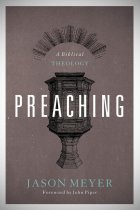
MeyerPreachingYesterday I shared Jason Meyer’s thesis concerning the ministry of the word:

The ministry of the word is stewarding and heralding God’s word in such a way that people encounter God through his word.

We looked a little bit at the stewarding and heralding elements of the definition.  Finally comes the intended result: that people encounter God through his word.

I am glad this element is included.  Too often preaching definitions settle for proclamation of principles and propositions and truths.  But the ministry of the word should result in personal encounter with a personal God.  Meyer rightly distinguishes his intent here from Blackaby’s intent in his term “experiencing God.”  Blackaby’s position is considered only a positive transformation, but Meyer rightly notes that an encounter with God can have positive or negative response.  He doesn’t probe Blackaby’s position, so I won’t add too much, except to say that encountering the Person of God is not about a mystical experience that cannot be described.  God is a communicative God who meets us in His Word rather than in a realm “beyond words” so we should be wary of teaching that treats the Bible only as a stepping stone or an entry point into an experience.

As Meyer points out, the same message will be the aroma of Christ to God . . . life to some, stench of death to others.  Some will find biblical preaching profoundly offensive (hence we need the courage to herald, rather than trying to please everyone).  But again, this is where I find myself nodding along with Meyer while pondering the places he hasn’t gone yet.  The emphasis in the early chapters is on encountering God reverently.  The focus is on trembling at the word of God.  Don’t get me wrong, we should be trembling and reverent, but there is more here than the limitations of militaristic heralding can convey.

What is profoundly offensive to some humans is not just the authority and judgment of God that holds them culpable and condemned.  It is also the tender other-centredness of the relationship between Christ and His Father.  The humility and self-giving of God is offensive to a humanity hell-bent on self-reliance and personal achievement – being “like God” if you will, albeit nothing like the true God!  Feuerbach referred to the human tendency to project our own ego on the clouds and call that God.  This is exactly why the revelation of the Triune God is so offensive to many.

Yet at the same time it is that self-giving otherness of God that is so delightful and sweet smelling to those who are being saved. It is not just that the King is victorious and I bow reverently in His presence.  It is also that the King picks me up, embraces me and brings me fully into the fellowship and love He shares with His Father.

In true biblical preaching we encounter the person of God reverently, and we encounter the persons of God delightedly . . . captivated by the wonder of being united to the Son by the Spirit as his bride, crying Abba by the Spirit to the Father as His child, the friend of God and thus fully embraced in the relationship of the Trinity!

Preaching Defined

MeyerPreachingI am always interested to read a different definition of preaching.  It is helpful to ponder what it is we do and definitions can help with that pondering.  So here’s a definition:

The ministry of the word is stewarding and heralding God’s word in such a way that people encounter God through his word.

This is Jason Meyer’s thesis in his book Preaching: A Biblical Theology.  Let’s probe it a bit and I think you will find it to be a helpful definition.

Stewarding – The preacher does not generate the message.  It is a stewardship entrusted to us by God.  It is His word, His revelation, His message, etc.  Our task is to faithfully handle the Bible as we faithfully steward that trust.  I like the image here.  Many preacher’s treat the Bible as if it is merely a source book of ideas, or an interesting data dump that we can mine for sporadic treasures.  Stewardship points to the sacred entrustment and to the value of the word of God.  Let’s be good stewards of a very precious trust – in how we handle it, in how we first respond to it (since we are lead-responders), in how we prepare to communicate it to others.

Heralding – The preacher is a representative who speaks.  Meyer points to the wartime imagery of a herald who conveys a message with the authority of the king whose message he brings.  Inasmuch as he heralds accurately, he heralds authoritatively, but it is not his own authority.  So our task is to fearlessly herald the message we’ve been entrusted with as stewards.  Again, I like some of the limits implied here.  We are not called to offer friendly suggestion or polite tips, we are called to herald God’s message boldly and courageously.  Some will respond to that message positively, others antagonistically, but our task is not to please everyone, even while trying to win everyone.  It does take courage to faithfully handle and fearlessly herald God’s word.

At the same time, I am slightly hesitant to restrict the imagery here to military proclamation for that implies something about the Person we represent: there is so much more to the Bible’s message than kingly authority and military conquest over sin, death and Satan.

I am only at the start of Meyer’s book, but I am thankful for the good work he has done so far.  A Bible-wide theology of the ministry of the word . . . this is something we should all be doing all the time.  I’ll look at the final element of the definition tomorrow.

Felt Relevance

UserManual2People want relevant preaching, but there are various ways to be relevant.

One way is to make the Bible a resource for advising listeners on how to be more successful in their attempts to live their lives.  This statement is loaded with theological concerns, but the approach is popular and for many, the end justifies the means.  So since people will respond positively to tips for life, and that will multiply attendees at church, then all is well.  But what if we find ourselves uncomfortable with offering this kind of preaching?  Are we forced to give up on relevance and instead switch to a heady theological and doctrinal type of preaching?

I don’t think so.

Another approach to relevance is to recognize the implicit relevance in inspired Scripture.  It is God-breathed and it is useful.  Our task as preachers is not to add relevance, but to make the relevance clear and felt.  When the Scriptures are not treated as a flat data bank from which to pluck truth statements or instructions or whatever, but instead as fully dimensioned interpersonal communication, then we are on the right track.  What I mean is that we need to make the Scripture clear, engaging with it in its historical and literary context so that its uniqueness is not only evident and clear, but also vivid and felt.  Not only should we invite listeners into the world of the text so that the narrative or poem or discourse is felt and experienced, but also we should be inviting listeners to engage with the God who is revealing Himself in the text.

The combination of vivid text and personal revelation of God makes for powerful and felt relevance.  Of course, some may not appreciate this approach.  For one thing, God’s self-disclosure can be offensive to those who hunger more for instructions for independent living.  But this should not put us off.

When we preach the Bible, let’s not settle for a tips-for-life kind of relevance.  Let’s instead be Bible preachers who give our very best to help listeners experience the full meaning of the text and encounter the self-revelation of God.

True biblical preaching is relevant, because the Bible is relevant.  True biblical preaching does not just use the Bible, or start with the Bible, instead it brings together two worlds, so that the God who is over all history can work glorious transformation in the world of the contemporary listener.

Responsiveness 2

Thermometers2Continuing the list of factors that influence the responsiveness of a congregation.  Some you can influence, some you just live with.  Actually, today they are all things to influence:

5. Subject – Some subjects will be more engaging than others.  If the subject seems less engaging, don’t settle for low engagement . . . what can you do to engage the listeners?  Is there a way to bring a narrative aspect to the message, either in organisation, in setting of biblical scene (i.e. preach the narrative setting of an epistle section), or at least in illustrative content.  A good preacher can make a dull subject engaging.  In fact, a good preacher will do so without hesitation, since only listening listeners will typically be touched by a message.

6. Level – Engaging content preached over the heads of listeners, or patronisingly offered, will not actually engage.  Too heady and people feel intimated and drift.  Too patronizing and people get frustrated and feel like their time is being stolen. Make sure you pitch things at an appropriate level.  Just because you have read technical material in your preparation does not mean that people need to know that.  Aim to communicate, not to impress.

7. Proxemics – Are you elevated above the listeners, are you on the same level, or are they looking down at you?  How far away are they?  Is there furniture separating you from them?  These things can all make a huge difference.  Sometimes something as small as standing beside the lectern instead of behind it can make a huge difference.

8. Spiritual Maturity – Perhaps this is the overall goal, but if you are preaching to a church over a period of time, then hopefully this will increase.  As maturity increases, people should be leaning in more to biblical preaching that offers Christ and engages hearts.  (Bear in mind that when temperatures increased in some, the New Testament always seems to show others that became harder . . . response will not be universally positive!)

What other factors would you add to the list?