I was away on Monday and didn’t put up the link to my Cor Deo post. So here it is, raising an issue about the kind of dutiful Christianity that is preached in many churches – click here to go to the article.
Religion
Sermons in Distant Memory
I am not too old, so distant memory for me is only 15-25 years. But as I think back on sermons that I can still remember from back then, what are some of the elements that seem to have made them memorable? (And what can I learn from that as I preach today?)
1. Vivid imagery – I still remember Wee Hian Chua’s vivid descriptions of New Zealand shepherds on their motorbikes as he contrasted that with the shepherd God of Isaiah 40. Vivid imagery makes an immediate and a lasting impression.
2. Unique Occasion – I remember messages I heard when I first left home and headed off to the mission field to serve with OM. This weekend I have been speaking at that same conference, and for these people, this is their memorable conference.
3. Pointed Relevance – I remember that sense of the passage being relevant to me as I listened to the Argentine preacher in Minehead. He spoke not as a historical lecturer, but as if God were speaking through His Word with relevance to me now.
4. Divine Touch – I remember heading outside to prayerfully ponder the cross after John Lennox spoke on the subject almost 20 years ago. The message was good and clear, but the mark seemed to be made by God’s Spirit putting a finger on something in my heart and life.
5. Contagious Passion – I remember all sorts of details about George Verwer preaching in that church in Bristol (including bizarre details like his enthusiasm that the church book stall sold stamps – not exactly the main idea, but contagious passion nonetheless!)
6. Stunning Clarity – I remember how the passage just became so obvious and lucid when that preacher humbly presented it that Saturday afternoon in my home church. Clarity is a weekly goal, but sometimes there is an astonishing clarity brought to a text.
I am sure I could list more items, and you could too. Here’s a point to note, though. Numbers 1, 3, 5 and 6 are somewhat in the hands of the preacher. We can, and should, work on these and many more aspects of effective preaching. But numbers 2 and 4 at least seem to be out of reach. That is, we can pray, we must pray, but we cannot manufacture occasion or divine touch. As ever, a reminder that in our pursuit of being good stewards of preaching ministry, we are always absolutely dependent on God to take up and use what we offer. It isn’t just up to you and me at all.
Trustworthy Bible
Yesterday was the 59th anniversary of the death of Sir Frederick Kenyon. Kenyon was a renowned scholar of ancient languages who took a keen interest in the authenticity of the Bible. “Both the authenticity and the general integrity of the books of the New Testament may be regarded as finally established.” Kenyon’s sentiment here is often lost today, not just in the attacks of liberal scholarship, but also in the silence of Christian preachers.
Kenyon, director and head librarian of the British Museum, showed in his day how archeology and the manuscript evidence supported the credibility of the Bible. Of course there are many others who will argue the other way, all pointing to the agendas of those on the other side. Yet in the church today, there seems to be a paranoid silence in some quarters.
Since the Christian position is under attack from very vocal and media backed atheistic thinkers, we are increasingly huddled in church corners believing almost superstitiously in the message of the Bible. Why? There is more evidence for the authenticity of the Bible today than ever before! And while we are grateful for his legacy, we don’t have to just quote Kenyon for support.
Richard Bauckham has been doing some magnificent work in recent years, and Peter Williams et al of Tyndale House are doing a good job both advancing and communicating that work. Do the people in your church know about the integrity of the personal names used in the Gospels? That is, a level of accuracy in name selection that would be a level of sophistication utterly unparalleld in the ancient world if it were a forgery. Do the people in your church know about the evidences for word perfect quotation in the Gospels? Do the people in your church know about the frequency of accurate reporting of place names, as compared to the paltry place awareness in the non-canonical gospels? I could go on, but there is a bigger question. Not do they know, but, do you know about these things?
As preachers we do our listeners a disservice if we simply affirm the Bible’s truth without demonstrating its trustworthiness. By our silence we could reinforce the perception of many that the Bible is an ancient book of myths and legends that we choose to consider as “true for us.” If we won’t demonstrate and prove and affirm and show the integrity and trustworthiness of the Bible, who will?
——————————————
If you haven’t seen it, you won’t want to miss this lecture by Dr Peter Williams on “Eyewitness Evidence”
Friday Quote – The Bible Bit of Biblical Preaching
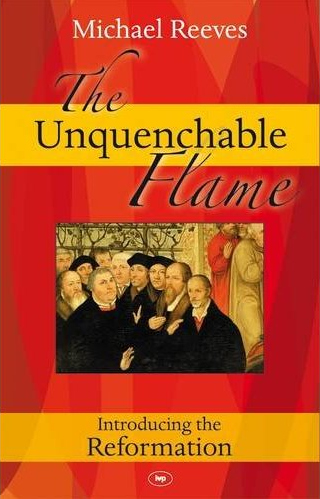
Here are some paragraphs that I read yesterday in Michael Reeves’ excellent book, The Unquenchable Flame (pp182-3). Enjoy:
Erasmus was only ever able – and only ever wanted – to sponge down the system he was in. He could take pot-shots at bad popes and wish people were more devoted, but because he was unwilling to engage with deeper, doctrinal issues, he could never bring about more than cosmetic changes. He was doomed ever to remain a prisoner of where the church was at. And so it must be in a world conquered by him. For as long as doctrine is ignored, we must remain captives of the ruling system or the spirit of the age, whatever that may be.
Yet is all this fair to Erasmus? Was he not the one who made the Greek New Testament available, so providing the coals for the Reformation? Certainly he did, and yet his possession of the Scriptures (and his deep study of them) changed little for the man himself because of how he treated them. Burying them under convenient assertions of their vagueness, he accorded the Scriptures little practical, let alone governing, authority. The result was that, for Erasmus, the Bible was just one voice among many, and so its message could be tailored, squeezed and adjusted to fit his own vision of what Christianity was.
To break out of that suffocating scheme and achieve any substantial reformation, it took Luther’s attitude, that Scripture is the only sure foundation for belief (sola scriptura). The Bible had to be acknowledged as the supreme authority and allowed to contradict and overrule all other claims, or else it would itself be overruled and its message hijacked. In other words, a simple reverence for the Bible and acknowledgment that it has some authority would never have been enough to bring about the Reformation. Sola Scriptura was the indispensable key for change.
However, it was not just a question of the authority of the Bible; the reason Luther started the Reformation, and Erasmus did not, was the difference in what they saw as the content of the Bible. For Erasmus, the Bible was little more than a collection of moral exhortations, urging believers to be more like Christ, their example. For Luther, this was to turn the gospel on its head: its optimism displayed its utter ignorance of the seriousness of sin. As he saw it, what sinners need, first and foremost, is a saviour; and in the Bible is, first and foremost, a message of salvation. As Richard Sibbes lamented, a century after Luther, it was all to easy to lose that controlling focus on Christ and his gift of righteousness, and yet that was the very heart of true reform. For all that theBible was opened, without the message of Christ’s free gift of righteousness, there could be no Reformation.
Preaching in Worship
I just read an article on Preaching in Worship from a 1979 edition of Themelios [this article, and others, is available here on theologicalstudies.org.uk – a growing and very useful source of freely accessible resources, see also biblicalstudies.org.uk].
In the article the author was contemplating the place of the sermon in the worship service. Without falling into a longer is better than shorter over-simplification, he focused on the value given to the sermon in the service. Too often a shorter sermon can feel like a PS at the end of the service. When the emphasis is placed on sung worship, at the expense of the preached Word, then people are forced to settle for mediated and second-hand worship. This is an interesting point. So often people focus on music because it gives a sense of immediacy to the service, and the message gives a sense of second-hand mediated worship (or often, no sense of worship at all), but the writer pointed to the contrary. The songs are second-hand to the listeners, but the response to the preaching of the Word should be immediate.
The author pointed back to the time when preaching was considered dangerous, and so laws were enacted to restrict public worship speech to that found in the Prayer Book. But later, meticulous following of the Prayer Book was no longer required because nobody was worried that preaching would do any harm. I wonder if those opposed to the work of the gospel in your community (locally and internally in the church) are concerned about the preaching in your church? Whether we are talking about spiritual opposition, or human, what would their perspective be? I suspect in some churches the preaching is considered deeply dangerous to those opposing God’s work, yet in others the platitudinous homilies make no difference whatsoever. If I were on the opposing side I wouldn’t be too concerned about the 14-minute homily I heard in one church not too long ago . . . not primarily because of the length, but because of the lack of impact, the lack of relevance, the lack of engaging the text deeply or the listeners meaningfully.
Interestingly the author writes about how to revitalize preaching and the general level of expectation in respect to preaching. Most people “today don’t want preaching partly because they haven’t heard it.” This is so true. I come across people who decry the value of expository preaching, but these same people are usually those without experience of genuinely biblical, clear, engaging and relevant preaching. What if more people approached the preacher(s) in their church and graciously asked for preaching that would help them learn more of God and His Word?
Preaching is central to worship and it is part of true worship, but more than that, the article suggests that it is not just an equal player in the team of elements that make up a worship service. True preaching has a level of immediacy that supersedes the perceived immediacy of sung worship. This is genuinely something to ponder!
An article from the late 70’s . . . dated in some respects, but helpful nonetheless.