Shotguns and Sniper Bullets

Generally speaking I urge preachers to stay in their preaching text as they prepare, and as they preach.  It is too easy to drift into another passage (or ten) and dissipate the impact of the passage we said we would preach.  However one of the exceptions that I do tend to mention is when the passage you are preaching quotes or alludes to or relies in some way on another Bible passage.  What then?

Actually, the more we know our Bibles, the more we see by way of allusion as we look at the text.  I did an exercise with a group of pastors where we worked through Ephesians 2 and thought about Old Testament passages that might have been in Paul’s thinking as he wrote, or even specific wording that he used.  We were coming up with Old Testament passages for almost every verse in the chapter!  What to do?

1. In preparation, go to OT passages that may be helpful, but don’t lose your focus on your preaching text.  It can be a rich exercise to go back and see the text and context of the fall in Genesis 3, the possible wording from Genesis 6, the session of Christ in Psalm 110, the far and near reference in Isaiah 57, the background of circumcision language in Genesis 17 and elsewhere, etc.  But remember that you need to be able to preach Ephesians 2!  I may feel like a sawn off shotgun has scattered marks all over the canon, but that is my blessing, not my listener’s burden!

2. In preaching, only go to one or two OT passages if they are genuinely helpful, but don’t lose your focus on your preaching text.  Listeners simply cannot handle masses of other references.  It turns a sharp and pointed message into an annoying multi-point prodding.  If one, or maybe two, are particularly helpful, then use them carefully.  In Ephesians 2:1-10, for instance, I’d be inclined to go to Genesis 3 in the early verses, but I wouldn’t chase multiple other references.  Perhaps Psalm 110:1 in reference to being seated with Christ.  Probably no more.  Better to hit home specifically than to scatter shot everywhere.

My personal goal includes getting to know the Word of God as much as possible (not as an end in itself, but since through the Word I can know God).  My goal in preaching is not to show that off, but to help people be impacted by this particular text.

Add to FacebookAdd to DiggAdd to Del.icio.usAdd to StumbleuponAdd to RedditAdd to BlinklistAdd to TwitterAdd to TechnoratiAdd to Yahoo BuzzAdd to Newsvine

Overemphasized Misrepresentation

Preaching is a balancing act.  You are always in danger of overemphasizing some element in a text so that you misrepresent the whole.  For example:

1.    A theologically weighty word can send you up like a rocket.  For example, I was working with a group of preachers looking at Ephesians 1:3-14.  We observed features of the text, including the references to God and the relationships within the Trinity, we saw the amount of grace, love, lavished, blessing language.  We saw all that God has done for us, in Him.  But then we saw the word that might light the fuse and obliterate everything else – predestined!  It would be so easy to take off and end up with a message bereft of intra-trinitarian relationality, stone cold and lacking in loving grace toward us, with some personal hobby horse message on predestination (in favour or against, depending on your position).  Of course one should preach about predestination in the course of preaching this passage, but not to the exclusion of all else that is so richly interwoven!

2.    A seemingly misplaced verse can take over the passage.  For example, we were looking at Ephesians 2:1-10.  Verse 10 is intriguing.  Should it be seen as part of what Paul is saying in 8-9, or does it stand alone?  Various groups processed the passage in different ways.  Those that included 10 with 8-9 seemed to recognize it as a sub-point (i.e. after affirming that we are not saved by works, Paul does cover himself in case any miss his point and neglect good works altogether, but the focus is on God’s saving grace).  Those that separated out verse 10 seemed to end up seeing the whole passage as culminating in the good works of believers, the goal of all that God did in our salvation.  In one approach the verse was a passing, albeit important sub-point.  In the other approach, it became the goal of all.  I’m not affirming one or either of these here, I’m just making the point that how we see a verse working with those around it will determine our understanding and explanation of the whole.

3.    A vivid image in a text can overwhelm the whole.  So there’s a term in your passage that is particularly vivid and preaches so well in terms of visual imagery.  Be careful that it doesn’t take over the message and end up becoming the dominant motif for the whole passage, when in reality it is a small part of a much bigger whole.

Understanding a passage is so much more than simply checking what words mean in a biblical dictionary and breaking the passage down into sections.  The whole issue of relative weight and flow of thought is a massively important element in studying a biblical passage.

Add to FacebookAdd to DiggAdd to Del.icio.usAdd to StumbleuponAdd to RedditAdd to BlinklistAdd to TwitterAdd to TechnoratiAdd to Yahoo BuzzAdd to Newsvine

Preacher’s Log – 2

Following on from yesterday’s post . . . Sunday is getting ever nearer!

Tuesday to Thursday before – I am busy all day each day with Cor Deo training, so don’t have time for sermon preparation, but am chewing over the passages and their implications during spare moments, praying for Sunday’s messages to go well.  I’m also pondering again the people to whom I’ll be preaching these passages, wanting God’s best for this church.

Friday before – Key preparation day.  I work on outline of the text, main idea of the text, and prepare to form the main idea and outline/strategy of the sermons.  I check a couple of commentaries.  Actually, three.  I check RT France’s NIGTC commentary, particularly to interact with some key sections of Greek exegesis (I simply haven’t had time to work through the whole section of Mark in Greek, but I do check a few key verses and decide whether I want to change anything based on his input).  I check Rikki Watts’ focused presentation of Mark’s reliance on Isaiah’s “new exodus” motif (this was massively helpful in some sections of Mark, less so in others).  I check Donald English’s very accessible BST (very good on seeing the big questions of Mark and the larger flow of the text).

Prayerfully thinking about the people to whom I am preaching on Sunday, I think through my strategy (outline) and message idea for Sunday’s messages.  I would have liked to get to the details of how I will explain, any illustrative/applicational elements, but have run out of time.

Saturday morning – I have an hour and so can try to catch up a bit and think through the details of the messages.  Actually, Sunday morning’s message comes first and so gets the attention.

Saturday evening – I don’t have time during the day (family are important ministry too), but in the evening I take some time and preach through Sunday morning’s message.  Couple of things need to change, so I make a couple of notes, then head to bed (better to have slept than to have worked through the night striving for a better message!)

Sunday morning early – I pray and preach through the morning message.  It is very hard to think about the evening message with the morning one looming.

Sunday afternoon – I take a couple of hours to look at my notes for the evening message on Mark 10, and then preach it through.  Couple of tweaks, but time runs out.

Message is preached.

Monday after the message – I listen through both messages as I prepare the files to put them online.  This is a chance to evaluate and also to be thankful to God for His help.  I think back on the feedback received and process that before the Lord in prayer.

I was very happy with the Mark 10 message.  Wasn’t perfect, they never are, but I am thankful for how that went.

Add to FacebookAdd to DiggAdd to Del.icio.usAdd to StumbleuponAdd to RedditAdd to BlinklistAdd to TwitterAdd to TechnoratiAdd to Yahoo BuzzAdd to Newsvine

Preacher’s Log

A friend asked me to offer something of a mini-log of a sermon preparation.  Here goes:

Several weeks before – So I know I’m going to preach on Mark 10 in a few weeks time.  I don’t have much time now, but I grab a few minutes to read it through and make a list of initial observations or questions about the text.  I also make the time to read the whole book of Mark (both because I’m preaching a series, and because I need that for understanding chapter 10).  I start outlining the series so I know which passage will be preached on which Sunday.  The calendar dictates Good Friday’s text, and Easter Sunday morning, and Palm Sunday, but otherwise I have some flexibility.

10 days before – I’m in the thick of preparing messages for the Sunday before, but I take a few minutes to look ahead at the passages coming up the following Sunday.  Again, just make the odd note, and pray for clear understanding and application of the passage (I’m starting to feel quite convicted as I see the contrast between Jesus’ resolute journey to the cross, and the disciples’ continual pyramid-climbing attitude – is that true of me, too?)

Monday before – Now that the previous two messages are done, I am more free to think and plan for this coming Sunday.  Spent some time outlining the text and looking at how the content flows together.  Am contemplating how to preach the passage around 8:27-30 in the morning, and then the third passion prediction in chapter 10, with the passage around it.  I’m pondering whether I should use the three passion predictions in the evening message, but also deal with the first passion prediction in the morning.  I feel I have to do that in both cases (no extra sermons to deal with other content in this section, unfortunately…looks like the transfiguration isn’t going to feature this time, shame).

Now it would be nice to have the rest of the week free to prepare the messages for Sunday.  No such luxury.  It will be Friday before I can give the messages any real attention again.

Add to FacebookAdd to DiggAdd to Del.icio.usAdd to StumbleuponAdd to RedditAdd to BlinklistAdd to TwitterAdd to TechnoratiAdd to Yahoo BuzzAdd to Newsvine

Images Right Before Your Eyes

Most preachers don’t aspire to being dull and lifeless, bland and black and white.  We want to preach vivid, full-colour, living messages from a truly living Word of God.  So why are we so quick to look beyond the Bible for every image and illustration in a sermon?  Sometimes it seems as if we have been preconditioned to believe the Bible itself is boring and dull, so part of our work is to find lively little pithy anecdotal marshmallows to make the Bible palatable.  Before we look outside the Bible (which is a legitimate option, of course), let’s be sure to check our passage carefully:

When preaching from biblical poetry – such as a psalm, the writer will usually give us some very helpful images.  Why go hunting for new images when the psalm provides a resting child, restless hours fretting in bed, God lifting His face toward us, climbing the mountain toward Jerusalem, entering the city gates in procession, etc.  We need to work on relevance and be sure to handle the imagery appropriately, but handle it, it is right in the passage.  It would be a shame to waste the head-start we are given right on the page.

When preaching a biblical narrative – such as a parable or event, then the passage itself is an image!  Too often I’ve heard preachers at pains to explain the story, but the preaching lacks zing because they forget to actually tell the story.  Don’t dissect a story to death, allow it to live in front of people and let them observe its power.  Be sure to explain and apply, of course, but don’t let the vivid imagery of the story itself get lost in your study.  Bring the story to the people.

When preaching biblical discourse – such as an epistolary paragraph, then you may have extra work on your hands.  Often the passage will be very effective and logical explanation, or even direct application.  But it may be so direct that it lacks imagery.  This will not be the case in most of James, but is true in parts of Paul.  Just because it is prose and perhaps plain in presentation, do not fail to look for images that will help the truth stick in the hearts and minds of your listeners. Sometimes alertness to word-study will help, other times simply reading the text carefully will do the job. Be a shame to preach a “put off, put on” passage and not utilize the visual impact of that imagery, or to preach a “love one another” and not paint the picture of what that looks like in vivid terms.  Abstractions don’t do the same work as concrete descriptions, so be sure to preach what it is saying in specifics so listeners can “see” what you mean.

Add to FacebookAdd to DiggAdd to Del.icio.usAdd to StumbleuponAdd to RedditAdd to BlinklistAdd to TwitterAdd to TechnoratiAdd to Yahoo BuzzAdd to Newsvine

The Power of God

Easter is a time for reflection, for prayer, for worship.  This is true for us first and foremost as the redeemed, but also for us as preachers.  What is it we preach?  We preach a message of foolishness to the wise, and a message of weakness to the power-hungry.  We preach not with clever trickery or manipulation, but with faithful representation of the wisdom and power of God.

Let us be sure to bow at the cross this Easter as preachers committed to preaching the crucified and risen Christ.  We won’t tickle ears. We won’t manipulate responses.  We won’t generate numbers.  We won’t entertain.  We won’t preach to please people who are not passionate about pleasing God.  We won’t preach in the power of our own gifting, or enthusiasm, or natural abilities.  We won’t preach to impress.  We won’t preach to earn money.  We won’t preach to fill time.  We won’t preach because we feel we should, we will preach because we know we must.

We won’t preach to affirm people in their independence from God, nor to give hints for successful living, nor to recite historical fact alone.  We won’t preach myth, or helpful tales with gentle morals, or strongly worded messages of morality.  We won’t preach watered down niceties, nor implore people to try harder, nor settle for human level transformation.

We will preach the Word of God, we will preach fact.  We will preach as those who know how little we bring to the salvation question, as those who know what an honour it is to represent God’s Word inspired and incarnate, as those who live in the shadow of the cross, and as those who live transformed by the Risen Christ.

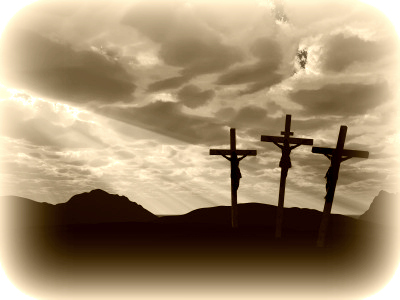
We are not ashamed of the gospel, because it is the power of God for everyone who believes.  So we bow before a God who would give everything on a horrifying Roman cross, and rise empowered by the Risen Christ to preach Him: Christ crucified, Christ risen, Christ alone.

Add to FacebookAdd to DiggAdd to Del.icio.usAdd to StumbleuponAdd to RedditAdd to BlinklistAdd to TwitterAdd to TechnoratiAdd to Yahoo BuzzAdd to Newsvine

Preach the Passage

Easter Sunday offers us all a temptation as preachers.  Whatever the passage being preached, we’re all tempted to actually preach something else.  For example, let’s say your passage is in Luke’s gospel.  Will you preach the pairs of witnesses that Luke scatters liberally throughout the passage from the death of Christ on?  Or will you just read that and preach 1Cor.15?

What if you are preaching Mark, as I am this weekend (short ending).  Will you preach Mark with his brief message of the resurrection, pointer back to Galilee where the ministry all began in 1:14-15, and the fear of the first followers?  Or will you read it and flee to 1Cor.15?

What if you are preaching John?  Will you preach the questions of Thomas and Jesus’ response to Thomas, and the uniquely Johannine commissioning of the disciples and the climactic statement of Thomas?  Or will you read it and essentially preach 1Cor.15?

Actually I have no problem with 1Cor.15.  It is familiar territory and that is why many of us easily end up there whatever text we think we are preaching.  If we are preaching 1Cor.15, then please let’s preach it in all its power.  But if we are preaching something else, let’s not miss what God inspired the writer to include.

Obviously there are other passages too, many in fact, from which to preach the risen Christ (obviously Matthew, but also Acts, numerous other epistles, earlier predictions of Christ, etc.)  Let’s be sure to let people benefit from whichever passage we are preaching this Sunday.  All Scripture is God-breathed and is useful!

Add to FacebookAdd to DiggAdd to Del.icio.usAdd to StumbleuponAdd to RedditAdd to BlinklistAdd to TwitterAdd to TechnoratiAdd to Yahoo BuzzAdd to Newsvine

Easter as Restricted Emotions

I remember being at a big Christian festival one easter years ago.  For three days everyone milled around in their own separate worlds (as British people are prone to do, if we’re honest).  Several thousand people avoiding and evading each other as if only the family unit or church group existed.  Then on Easter Sunday morning everyone had a strange skip in their step, a smile on their face, a greeting for every passer by.

I know that Easter Sunday is an amazing day, but it did strike me as being a bit strange.  How is it in your church?  Is everyone super-sombre on Good Friday and then buzzing with joy on Easter Sunday morning?  In one sense these emotions are appropriate, but isn’t the truth that emotions are massively mixed on both days?

Perhaps we should acknowledge the stirring of deep love and gratitude alongside the appropriate sombre feelings of Good Friday.  Perhaps we should pause to remember why Christ had to rise from the dead, instead of simply celebrating as if Friday never happened.

The first followers had massively confused emotions on the first Easter Sunday.  Fear mixed with delight and joy and sadness with celebration.  Maybe some in our churches are wracked with guilt like Peter was that first Easter?  Maybe some face uncertain futures as did the first disciples.

Easter is absolutely the emotional, as well as the event and truth core of Christianity.  Let’s prayerfully consider the text’s we’re preaching and the people we are preaching to this weekend, so that we can somehow be sensitive to the mixture of emotions that blend into such a key weekend in the church calendar.

Add to FacebookAdd to DiggAdd to Del.icio.usAdd to StumbleuponAdd to RedditAdd to BlinklistAdd to TwitterAdd to TechnoratiAdd to Yahoo BuzzAdd to Newsvine

Easter As Gory Story?

If you are preaching in the next few days then I would hope Easter is in the mix.  Of course the cross of Christ is at the very centre of global history and God’s salvation plan.  A question we face as preachers is just how gory does the presentation need to be?

Crucifixion was incredibly graphic and deliberately so.  In a culture where people killed their dinner, and where blood flowed freely in the temple courts, in a culture so far removed from the clean and sanitized version of life that we enjoy today, crucifixion was still a massive visual deterrent.  While some today might not fear a few months in prison for committing a crime, the Roman cross was massively feared.

So should we seek to paint the power of the deterrent by the words we use to describe what Christ went through?  Different preachers might lean in different directions.  Some seem to delight in the opportunity to make people squirm, describing in graphic detail just what the nails did to the wrists and feet, the agony of every breath, the ultimate cause of death, etc.  Others go to the other extreme and paint a picture as beautiful as the stained glass windows where Jesus seems barely marked by the whole process.

The truth is that if we saw what Christ went through at the hands of the mocking soldiers and then at Calvary, I suspect we would all feel sick to the core.  But is that the point of our preaching?

Perhaps it is a good idea to stun and shock people out of a religious view of the crucifixion.  Or perhaps it is better not to overwhelm people with gore so they miss the real issue.  A few brief thoughts:

1. Who are your listeners?  What do they need?  What would be most effective for them?  Might they feel like they experienced something unexpected and before any watershed times that may still exist on TV?  It is possible to be deeply moved by the cross without being made to feel ill.

2. What is the text?  Remember you are preaching the text or texts, so what is emphasized there?  It is too easy in “familiar” bits of Bible history to leap from the text to preaching the event itself.  Maybe in this case that is legitimate, but don’t give up the distinctive value of each inspired text too easily.

3. What is your purpose?  Remember that there is more to preaching the cross than stirring a gut reaction to the brutality of what Christ went through for us.  At the same time, perhaps you prayerfully decide that the offense of the cross is needed by those to whom you will be preaching.  No hard and fast rules here, just a plea for prayerful sensitivity to God and those present.

Add to FacebookAdd to DiggAdd to Del.icio.usAdd to StumbleuponAdd to RedditAdd to BlinklistAdd to TwitterAdd to TechnoratiAdd to Yahoo BuzzAdd to Newsvine