50 Summer Preaching Tweaks: 16-20

Summer50bA little pick and mix selection of fifty tweaks that you might want to ponder as we head into another school year of preaching ministry:

16. Smile.  If you know you do this, move on (but only if you actually know, not just if you think you do).  There are a surprising number of preachers that never seem to smile.  Implication?  Either there is no good news (we are called to preach good news), or no love for listeners (we are called to love listeners), or no delight in God (no comment necessary).

17. Use your preaching space effectively.  You may have a vast platform area, or a small cluttered space, but are you using it to maximum communication value?  I remember preaching Pilate with Jesus (one side of the pulpit) and the Jewish leaders (on the other side of the pulpit).  The use of space helped the message to be visualized, simply by my deliberate movement.

18. Step outside your preaching mode to communicate effectively.  Periodically drop the preaching mode and just be real.  Actually, you are still preaching, and deliberately so, but it offers another ethos.  If your normal preaching mode is too preachy, just drop it permanently and preach real!

19. Increase the vulnerability value.  Speaking of being real, how vulnerable do you get in your preaching?  Some think it is wrong to let any of you show in your preaching.  That’s fine.  You can continue to preach from another room via radio mic.  But for those who recognize that preaching involves communicating God’s truth through your personality and life (i.e. an incarnational view of preaching), then evaluate how vulnerable.  Where can you be appropriately, but helpfully, vulnerable?

20. Preach first-person at least once.  It is so different, you have to give it a go.  Pick a passage, study like crazy, write a message from the perspective of one character in the story or associated with the passage.  Decide if the listeners have gone back there, or if the character has travelled through time to today.  It is more work, but the impact is typically worth the effort (costumes and fake voices are not worth the effort!)


Gospel Dimensions 2

TapeMeasuresYesterday we pondered how small thinking about God will negatively shape our preaching.  What about our dimension estimates of humanity?  Again, this can really make a difference to our preaching.

1. When we see humanity as too elevated.  I suspect everything I will write in this post about humanity will really be leaning toward tomorrow’s post about sin.  I’m convinced that we simply don’t grasp how profound our problems actually are.  We swim in the brine of a post-Genesis 3 world and we are saturated to the core of our being, but don’t realize it.  Consequently our view of humanity can easily get too elevated, while losing sight of how special we are.  The issue is God’s image.  What does it mean to be made in God’s image?  When we corrupt the image language of Genesis 1 with notions of autonomy, authority and rule apart from relationality, then we end up with a mis-measured humanity.  The wonder of humanity is that we are made in the image of a relational God and we are made for relationship with Him.  Too much of our gospel-vision lacks a real grasp of how deep that design goes.  Instead we fall for a mis-measured human vision of autonomy, rule and authority.  Suddenly the image of God is about god-like qualities of abstract thinking and self-definition and self-determination and dominion over others and rule over creation . . . and our thinking about Genesis 1 (image) sounds and smells like Genesis 3 (hiss).

2. When we see humanity too individually.  This is another way of saying essentially the same thing.  I suspect many of us are better at spotting individuality in our reading of the New Testament than we are at spotting it in our reading of humanity.  That is to say, I suspect many of us know that the “you” of the epistles is usually “you all” rather than “you and you and you and you.”  It makes a difference.  Especially for us English speakers who don’t distinguish you singular from you plural.  We are saved into a corporate entity called the church, not given separate and distinct individual memberships for our own benefit.  So we hopefully see that on a horizontal level, but I suspect we still fall into seeing humans as stand-alone creatures.  It is the world that measures life and success by the items listed on a curriculum vitae or resume.  Our identity does not consist in our collection of capacities (education, experience, skills, references), but rather in the fabric of relationships with which we are enriched.  If we don’t grasp the difference, we will preach a gospel that tends toward personal benefits and relational disconnection.

3. When we see humanity as inherently good, but hindered.  I am out of words, but this can lead into tomorrow.  How bad is our problem?  Do we have a broken will that needs enabling?  Do we have a clouded mind that needs clearing?  Or is the problem much deeper and more devastating?

Paul’s Preaching Genius

genius billboardPaul finished his epistle to the Romans with a doxology highlighting his gospel and the preaching of Jesus Christ.  He affirmed the “foolish” preaching of Christ crucified to the Corinthians in the first chapter, coming back to it in the opening verses of the second chapter . . . Christ, crucified . . . combined with personal weakness rather than eloquence and oratorical power.  In Ephesians 3 he describes the grace of God given to him to preach to the Gentiles the riches of Christ.  In Galatians chapter 3 he summarizes his ministry among them as a public placarding of Christ crucified.

So was Paul dull and predictable, or did he grasp something profoundly significant?  I vote for the latter:

1. People are dead in sin, which means they are inwardly curved in on themselves.  They can’t “uncurve” their souls, and we certainly can’t prise open this deadly incurvature.  Only by the attractive force of a greater love can this self-love be captured and drawn out.  Jesus came and told us plainly that when he is lifted up, he will draw people to himself.  The drawing force of Christ and Christ crucified is therefore critical and central.

2. Preaching that promotes christian living, but doesn’t offer Christ, is not helpful at all.  If we simply instruct people how to behave and act like christians, then they will co-opt and corrupt that instruction to serve their incurvedness.  “If that is what it takes to get the benefits of church community or eternal heavenly blessings, then I will do what you say, in my independence from God.”  This is the danger of not grasping the heart-centred nature of humanity and the gospel.

3. Paul knew that true relationship with Christ is about transformative response, not pressured responsibility.  He was distressed that the Galatians had gone off after another gospel, which was no gospel at all.  He had preached and presented Christ crucified and they had responded.  But now they were being pressured by the law-preachers.  Paul didn’t call this a marginal mistake or a slightly wrong emphasis.  He called it deserting God!  Amazing statement.  How can taking the Law more seriously be akin to deserting God?  Let me urge you to read through Galatians and take a fresh look at this critical issue.  Paul offered a response-based gospel of the Promised One and the Spirit who brings us into intimate relationship with Abba and transforms our character as we walk with Him in relationship.  This has New Covenant stickers all over it, but if we get our eyes off Jesus and back onto ourselves, then we turn from God’s provision back to the self-orientation of our old “life” . . . a bad move in every way.  (And this is why Paul would keep coming back to preaching Christ and Him crucified, not christian values and us pressure-fied.)

The Gospel in Concrete 2

ConcreteWall1The epistles don’t assume full awareness of God and the gospel and proceed quickly into practical applications.  Instead God has given us many case studies of the apostles applying the gospel in concrete situations, and they don’t just dive into instruction, or assume that believers all have the basics in place.  Furthermore:

3.  The apostles never assume that God is a given.  This is a big problem in the church today.  Too many people assume that anyone talking about “god” is talking about God.  And I don’t just mean those outside the church.  Some of us do sniff out that there are different conceptions of “god” floating around, both in religious talk and in cultural use.  But even within the church, it is thoroughly naive to assume that anyone referring to “God” is necessarily speaking with a full biblical awareness of the one true God revealed in the Bible.  The epistle writers don’t just use a generic label and press on into practicalities.  They always clarify and specify.  Often we’ll find reference to the Father of our Lord Jesus Christ, or references such as “the God of all grace.”  Let’s be real about the fact that even within the church, the God described by some people sounds like a different God than we see revealing Himself in the Bible.

4. The apostles never offered a paper-thin gospel.  “God is the in-charge super-being who will judge you, so be sure you sort your relationship with him by praying this prayer.”  Not something we find in the New Testament.  The gospel they offer consistently communicates such realities as the intra-trinitarian relationships, the wonder of “in Christ” participation in that fellowship by the Spirit, inside-to-out transformation of a life by change of desires, the self-giving love of God as spotlighted by Christ’s atoning death on the cross, the divine countering of the Lie that still permeates this world through cosmic antagonism to the Truth, etc.

More could certainly be added (feel free to comment, of course).  Let’s be looking at the epistles and recognizing the wonder of having these case studies in applied gospel theology for us to learn from and use as we seek to address the down-to-earth complexities of specific local situations.

Jesus vs Religion – Introduction

StainedGlassJesus2Over the years I have generally enjoyed John Eldredge’s books.  Never completely, but always a lot.  Never completely because there tends to be some things in each one that I wish he would state differently.   Theologically I am not on the same page, and I know that he is strongly critiqued by some.  Since this blog isn’t intended to be a place of critique, I won’t go into any detail here, but will offer some interaction with this caveat in place.

The latest one I have read is Beautiful Outlaw.  This is a book about Jesus subtitled, Experiencing the Playful, Disruptive, Extravagant Personality of Jesus.

Eldredge’s portrait of Jesus will most certainly help the reader to enjoy Jesus, perhaps for the first time.  I am saddened by the thought that some of us claim to have known Jesus for years, but hesitate if we are asked if we like him.  We can determine whether we like a person within minutes of meeting them, but apparently we can know Jesus for years and not instinctively know whether we like him?

The majority of the book is given to personality traits of Jesus and is written positively.  But nearer the end of the book Eldredge sets his sights on religion as the great blanket that deadens our delight in our Lord.  He states:

By the way, this is the bottom line test of anything claiming to be of Jesus: Does it bring life?  If it doesn’t, drop it like a rattlesnake.  And you will find that the religious never, ever brings life.  Ever.  That is its greatest exposure. (209)

He points out that Christianity and Christian culture are by no means the same thing.  We need to hear this.  He points to the development of personal preferences that are then defined as the only right way to do church and to know Jesus.  He points out that a lot of Christian culture can get pretty weird, including a language and affected pronunciation that goes with it.  But “loving the culture of the church is not anywhere close to the same thing as loving Jesus.” (170)  We can’t forget that the Pharisees loved their religious culture, but hated Jesus.

This isn’t just a quaint quirkiness in churchianity.  Eldredge  suggests that religiousness is a ploy of the enemy.  In his words, “a wing nut talking about Jesus does far more damage than fifty atheists.” (171)  So true.  I’ve met a few.

He goes on to list the bad breath effect of those who claim some intimate connection to Jesus, but whose lives are so unappealing: “’Gifted Preachers’ who are mean to their children.  ‘Anointed Prophets’ who cannot sustain ordinary friendship.  ‘Servants of the Lord’ who need to be the center of attention.” (171)

Since people loved to be with Jesus, but are often repelled by the culture we’ve created around his name, I think it is worth prayerfully probing this subject over the next few days.

I’d like to take Eldredge’s ten tests of religiosity and walk through them for the rest of this week.  How are we doing, as preachers?  That is, as those often so visible to both believers and visitors.  And what is our preaching doing?  Are we pushing people toward Christian culture, or inviting them to know and enjoy a compelling Christ?

Ground-Zero Preaching (Easter in the Pulpit) 3

ChildShockedCrucifixion images tend to be sanitized.  The reality was so much more shocking than we tend to realise.  The frequency of reference, combined with serene artistic representations, has led many believers to have a altogether unrealistic mental image of the crucifixion.

If you are preaching in the next couple of days, before the celebration of Sunday, how should you handle the passion of our Lord?  It is tempting for some to try to be as graphic as they can.  The motivation may be good, but the net result can be lacking.  Turning peoples’ stomachs is not the goal of Easter preaching.  By all means be as biblical and historically accurate as you can be, but always keeping in mind that your listeners are a mixed bunch.

Some of them may fill their minds with horrific images from movie and video games.  But there will be others present who find the slightest hint of blood  brings about faintness and nausea.  The goal is to preach Christ and Him crucified, not to preach so that all people recall is the horror of crucifixion itself.  So beware of excessive medical detail, or overwhelming graphic description, or repulsive projected images.

It is important to remember that people will be drawn by the work of the Spirit, not by the effectiveness of our storytelling and vivid description.

We need to find the right balance this Easter.  Tell it well and help people to know the historicity and reality of Calvary.  But be careful to rely fully on the Spirit to stir the heart, as opposed to simply stirring the stomach by excessive and unhelpful shock and awe tactics.

Ground-Zero Preaching (Easter in the Pulpit)

Hammer

Easter is not like Christmas.  The latter tends to go unmentioned for most of the year, then people come out with expectations of hearing familiar content and carols.  Easter is the real ground zero of the Christian faith.  We tend to, or should, return to it week after week.  So what do we do when Easter comes around?

Some might try to get clever at Easter . . . excessive creativity, abundant gory description, shocking video clips, etc.

Remember that regular church attendees need to hear the basic Easter story.  Jesus left his disciples with a frequent reminder, an acted out parable that would help them remember Him: His body given, His blood shed.  So don’t think we have to get clever at Easter.  Those who know and love the Lord profoundly appreciate a carefully planned biblical presentation of the passion.  They will appreciate a Matthew shaped message, or one in the Mark mold, or Luke’s take, or John’s.  They probably won’t even notice a harmonized presentation from multiple gospels.  They appreciate Paul’s reflections, or those in Hebrews, or even a glimpse of the Lamb looking as though it had been slain from Revelation.  Pick a passage and preach it clearly.  No need to be clever.  Believers need to hear the ground zero Easter story.

Remember that visitors need to hear the basic Easter story too. Perhaps it is visitor season as families share holidays together.  They may be interested, or they may be being polite.  Whatever their motivation, what they need is clear and sim

ple.  They don’t need obfuscated “modern art” preaching or a creatively nuanced oblique side-reference to the gospel.  Pick a passage and preach it clearly.  Everyone needs to hear the Easter story.

I am not advocating being boring or predictable.  I am not critiquing creativity.  Let’s certainly seek to be as effective as we can be in our communication of Easter.  And let’s remember that effective can often mean simply preaching the basics: take people to ground zero and help them know the significance of what happened there.

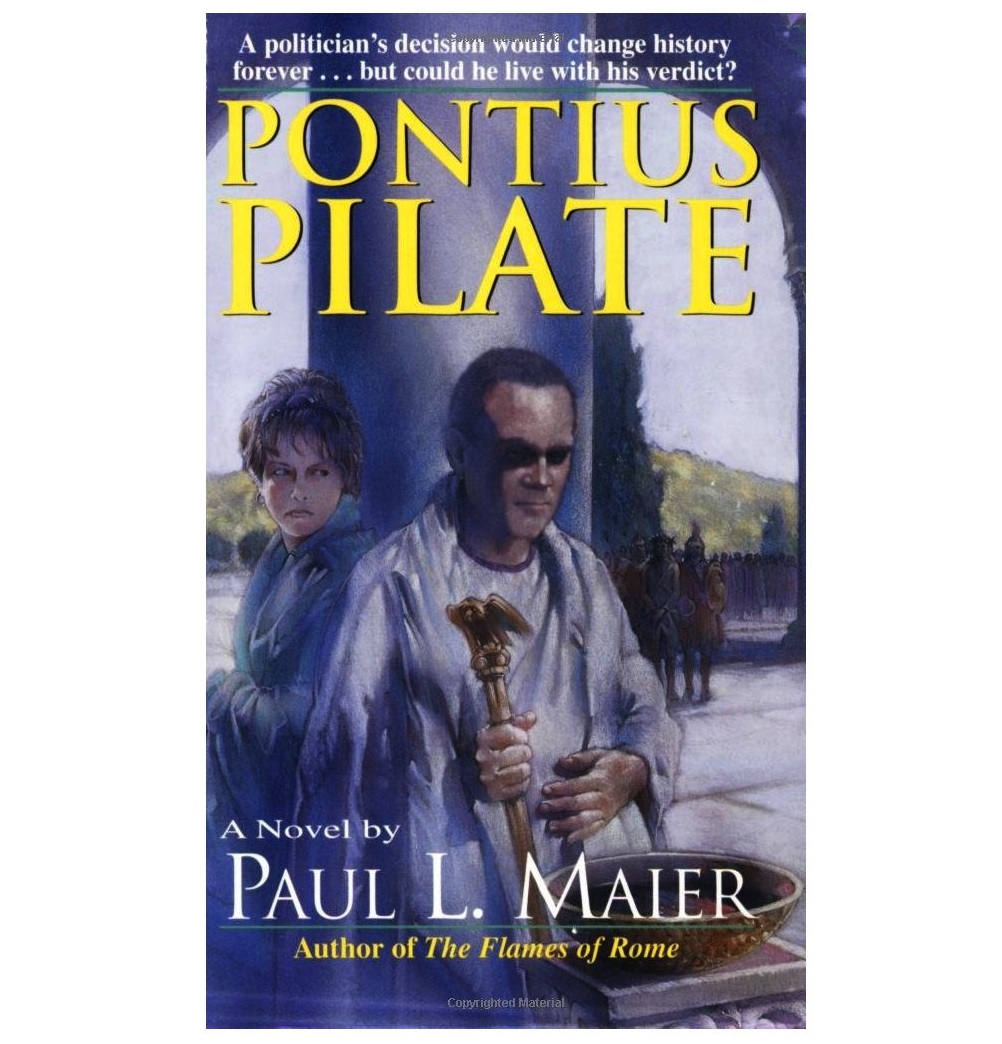
Book Review: Pontius Pilate by Paul Maier

PilateI am just re-reading a book I devoured a couple of years ago.  It is historical fiction, but don’t let that put you off.  This historically annotated piece of work is a brilliant read.  It presents a biographical insight into the life and career of Pontius Pilate–his background in Rome, his prefecture in Judea, his confrontations with the Jewish authorities, his history shaping encounter with Jesus of Nazareth.

I suppose this review is a little late for this year, but if you ever preach around Easter, then you must read this book.  It was originally published in the 1960’s, but the timeless content means it could have been written last week.  Paul Maier is a pre-eminent historian of the first century and this makes his reconstruction of character and event particularly insightful.

Why did Pontius Pilate feel so trapped?  He was two strikes down with the Jewish populous when Jesus was presented to him.  This man was clearly innocent, but Pilate could not afford another disaster.  He could not face another report to the Emperor about his failure to manage the pesky Jewish religious affairs.  His ring declared him a friend of Caesar, with all the rights that went with that.  But the Sanhedrin turned the Jesus trial into an ultimatum for Pilate.  Was he really a friend of Caesar, or were these Jewish leaders more concerned with peace in Judea than he was?

Even if it is too late for this Easter, Christianity is an Easter faith and so I would strongly encourage you to get a copy of Pontius Pilate.  Don’t read it to your children, but grab a drink, get comfortable and step back into the first century.  Any preacher will benefit from doing so.