The Preacher & Commentaries: Don’t Preach Them

Commentaries are resources for preachers, not sources for sermons.  They are tools that help us in the passage study phase of our preparation.  They are not a sermon bank of material waiting to be pilfered and preached.

If you read the introductory preface to a commentary (which would be unusual behaviour, I suspect!) you will see that the commentary or series is targeted toward a specific audience.  Perhaps it is aimed at non-Greek trained lay people, or at seminarians, pastors and Bible teachers with some Greek, or whatever.  In reality, these categories are so broad that I would prefer to view them not as targeted communication, but as descriptions of a range within which the writer offers his or her explanation.

Preaching is different.  When you preach your goal is not just explanation to a broad audience, but targeted transformation in a specific audience.  You can be much more specific in knowing who your listeners are and what they need to hear – not only by way of explanation, but also with an emphasis on application.

Here are three more related comments on preaching and commentaries:

1. Watch out for atomisation.  The vast majority of commentaries are highly atomistic.  While a good commentator will be aware of the discourse level unity of the passage, it is hard to find commentaries that are overtly aware of the macro level flow within a book.  It seems to me that often the commentator is so engrossed in the phrase-by-phrase explanation, that a stretch and coffee break before proceeding with the writing can lead to a sense of atomisation in the end product.  The preacher is not offering a book where the listener can go back and review the section introduction, or re-read complex sentences.  The preacher is offering an aural exposure to both explanation and application of a text.  Different.

2. Only quote a commentary if the quote is exceptionally valuable.  You don’t need to prove you read commentaries (or checked in with Calvin, or whoever).  You don’t need to feel inadequate to be the preacher (though we all are) – they invited you to preach, not Doug Moo or Tom Schreiner.  Study and prepare to the point that you can effectively explain and apply the text.  Only quote a sentence or two from a commentary if it really is uniquely pithy, arresting, compelling and gripping, not to mention helpful!

3. Don’t feel obligated to cite your sources.  If you do quote, no need to cite sources every time.  Preaching is not an academic essay.  Sometimes the reference to an unknown name can be unhelpful, sometimes (depending on the name), downright distracting or humourous!  If who it was makes a difference, cite them (i.e.Churchill), but if not, just say “one writer put it like this…” (anyone who cares can always ask you afterwards).

Tomorrow we’ll think about gathering good conversation partners around us.

Add to FacebookAdd to DiggAdd to Del.icio.usAdd to StumbleuponAdd to RedditAdd to BlinklistAdd to TwitterAdd to TechnoratiAdd to Yahoo BuzzAdd to NewsvineLike This!

The Preacher and Commentaries: They Shouldn’t Be Out Alone

Commentaries should not be out alone.  It’s much safer if they travel in groups of at least two.

Let’s say that I have done my work in the text and want to interact with a commentary.  I turn my chair and reach toward the shelf.  I tend to always grab at least two.  (Sometimes they are on the computer, but same principle applies.)  Why?  There are a couple of reasons:

1. Because different commentaries offer different strengths.  So I might choose to look at a single-volume commentary that will give me quick access to background matters and quick flowing summary of the passage.  But I also would benefit from looking closely at a key section in the passage, which I would get from a more technical exegetical commentary.  And I might go somewhere else again for slightly expanded applicational nudges.

So for a slightly overworked example, if I were working on a passage like Hebrews 11:13-16, I might find it helpful to get the overview of a single volume commentary like the Bible Knowledge Commentary or New Bible Commentary.  I might get slightly more coverage, but still not probing the text technically, from Expositors Bible Commentary or the Bible Speaks Today volume.  Then for technical wrestling with the text, I might grab for Ellingworth’s NIGTC, or Lane’s WBC, or Bruce in the NICNT series.  (Actually with Hebrews, I’d also be checking Koester’s ABC and maybe Attridge’s Hermeneia volume.)  Then there is Guthrie’s very good NIV Application Commentary too.  That’s quite the gang of scholars!  And I haven’t mentioned older ones like Owen or Calvin.

2. Because one voice tends to be more compelling than two in dialogue.  Ok, it is a bit unrealistic for most of us to have access to a library selection like that one, but we must be careful not to rely on a single voice.  Some people love MacArthur, or McGee, or Tom Wright, etc.  Even without raising concerns about single voice complete Bible series, I do want to raise concerns about just listening to one voice in a single book.  If you only read one, then they will probably seem compelling to you (or easily dismissed by your superior knowledge).  That is the main reason I always grab two from the shelf.  Compare and contrast, and you will reap more than double the benefit (as long as your collection isn’t completely mono-vocal in that it is all from the same theological camp).

Tomorrow I want to point out that commentary and preaching are not the same!

Add to FacebookAdd to DiggAdd to Del.icio.usAdd to StumbleuponAdd to RedditAdd to BlinklistAdd to TwitterAdd to TechnoratiAdd to Yahoo BuzzAdd to NewsvineLike This!

The Preacher & Commentaries: Don’t Lump Them All Together

I’d like to offer a few thoughts on the use of commentaries.  There are some extreme views around in Christian circles.  For instance, some seem to suggest that commentaries should be avoided at all costs, as if they have a sinister agenda.  Others will quote an interpretation and treat it as sacrosanct because it was in a commentary.

Two views, both with their unique issues, both making the same error.  The first view seems strangely oblivious to the unique privilege we have in our time of the accessibility of some very high quality resources, both in print and online.  They may prepare on an up to date computer and drive to church in a modern car, but be positively pre-modern in their non-use of scholarship.

The second view seems to be caught in the glare of flashbulbs as the wonder of publication seems to blind their discernment faculties.  Just because something is in print, doesn’t make it right.  We all know that with certain newspapers, but some lose that awareness when the book has a hard cover on it.

Both views are making the same mistake though – they both lump all commentaries together.  But, not all commentaries are created equal.   Some are devotional, others are technical; some are written for the preacher, others for the scholar; some take interpretation seriously, others seem to use the Scripture as a launch point for doctrinal or precious thoughts; some believe God inspired the Bible, others don’t; some are written by Reformed, others by Arminian, others by Dispensational, others by Roman Catholics, others by … you get the point.

Some don’t lump them all together.  More than once I’ve come across people who will quote Matthew Henry’s commentary as if it were second only to the Bible, yet express deep distrust of contemporary evangelical commentators.  Perhaps this is the power of the familiar, and therefore, perceived to be trustworthy?

So let’s be careful not to subconsciously treat all commentaries as equal – either by dismissing all, or automatically trusting all.  Even in a specific series, there will be stronger and weaker commentaries.  So when buying paper commentaries it makes most sense to pick and mix to get the best from different series (although with software options, it may make sense to buy complete series due to cost).

There are so many commentaries, but whatever we do, let’s not just lump them all together.  Some are worth their weight in gold, some quite simply aren’t. Tomorrow I will offer a safety warning for commentaries.

Add to FacebookAdd to DiggAdd to Del.icio.usAdd to StumbleuponAdd to RedditAdd to BlinklistAdd to TwitterAdd to TechnoratiAdd to Yahoo BuzzAdd to NewsvineLike This!

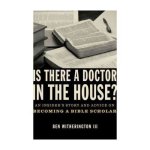
Book Review: Is There a Doctor in the House?, by Ben Witherington III

Is There a Doctor in the House?  An Insider’s Story and Advice on Becoming a Biblical Scholar, 2011, Zondervan.

I picked up this little book thinking it would only appeal to my interest in academia, but found it to be of value to all involved in Bible handling – students, preachers, teachers, scholars.

The label “scholar” gets thrown around a little too easily.  If one person in the church is starting to learn biblical Greek, they get labelled a scholar.  They may  barely even be a student yet!  In this book, Witherington reflects on his experiences as a student, pastor, teacher and writing scholar.  His manner is winsome, his sometimes amusing experiences shine through, and his insight helps the reader to see just what is involved in being truly earnest about God’s Word.

He begins with an excellent illustrated guide to a PhD, before explaining his own experiences getting a PhD in Durham in the 1970’s.  It is great to read of his exposure to such scholars as C.K. Barrett, C.E.B. Cranfield, T.H.L. Parker, etc.

Even if you don’t care to understand the differences between the British and American doctoral systems, the book quickly moves into a survey of the necessary fields of study required of biblical scholars.  While brief and maintaining momentum, these chapters give helpful insight into language study, historical/cultural background study, literary sensitivity, as well as integrating biblical research into theological and ethical studies.

The latter chapters address the necessary subject areas of research and writing, hermeneutics, key skills in lecturing and teaching, as well as the character issues that can easily get lost in the mix.  The book ends with a brief survey of the sacrifices involved (not just for the scholar, but also for the spouse), and a resounding, “I would do it all again!” from a man delighted by the privilege of his study, his career, his vocation.

I interact with folks who hold to a kind of self-taught piety.  They have their library of 66 and the Holy Spirit and consider themselves to be un-credentialed scholars.  Maybe some are, in some way.  But where their attitude becomes derisory toward academic biblical scholarship, I do get concerned.  This book should be required reading for all who care to sit in judgment over the academy, as well as those fascinated by it.

Most of all, this book graciously raises the bar on our commitment to really doing the work involved in handling the Bible well, and offering the fruit of that study to others in ministry.

(If you are in the UK, click here to go to the book on Amazon.)

Add to FacebookAdd to DiggAdd to Del.icio.usAdd to StumbleuponAdd to RedditAdd to BlinklistAdd to TwitterAdd to TechnoratiAdd to Yahoo BuzzAdd to NewsvineLike This!

Saturday Short Thought: Ajith Fernando on Technology & Theology in Preaching

This week I have been thinking out loud about technology and sermon preparation.

Later today I will be adding a book review of a book on biblical scholarship by Ben Witherington III.  Let me quote a brief segment that is relevant to our subject this week:  “We begin to believe we can find anything on the Internet if we are just computer and web savvy enough.  This is false.  You can waste a lot of time searching for things on the Internet, when what is needed is to travel to an actual library or consult with scholars in person.”  (Witherington, Is There a Doctor?, p85).

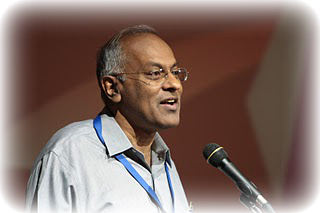
The LinkedIn preacher’s group has also had a bit of a discussion going on this subject – if you are on LinkedIn, please join the group.  I asked Ajith Fernando if I could quote his comment on this site, and he graciously agreed.  Ajith is the Teaching Director for YFC in Sri Lanka and is a regular expositor at well-known Christian conferences around the world.

Technology could be a help or a hindrance to good preaching. One of the biggest problems in the church is that our leaders are technicians when they should primarily be thinkers, theologians–that is, with everything they do coming from reflecting on the teaching of the Scriptures. For example, the great John Stott who was in every way a great theologian of the Christian life applied to contemporary life was not computer savvy. I use technology a lot. But I try to make it something that helps me do technical work (e.g. exegesis) faster and more efficiently than before so that I will be freed to give extra time for thinking, meditating, applying etc, etc.

Add to FacebookAdd to DiggAdd to Del.icio.usAdd to StumbleuponAdd to RedditAdd to BlinklistAdd to TwitterAdd to TechnoratiAdd to Yahoo BuzzAdd to NewsvineLike This!

The Downside of Technology and Sermon Prep

Sermon preparation does not require technology.  A Bible, maybe some paper and a pen, time and the Holy Spirit.  These seem to be the necessities (and it would be possible without the pen and paper, if necessary).  But this week I’ve been looking at various technological helps for sermon prep.  Undoubtedly all that has been mentioned has value and can be very helpful.  Yet it would be remiss to end the week without waving these four flags of caution:

Time – Using technology can undoubtedly save time.  Reorganizing a message using cut and paste is much quicker than rewriting the whole message.  Almost instant access to the right page in a commentary, or almost instant concordance searches are amazing innovations in our generation.  But technology can also sap time.  My mind immediately jumps to two, one of which I haven’t mentioned this week.  Social networking can be a massive time sapper.  So can preparing Powerpoint.  I haven’t mentioned Powerpoint because it is really a technology designed to help presentation, rather than preparation.  I will say this though – it is worth pondering whether the two or three hours (and more!) had been spent in improving the oral clarity of the message, would the message have been more compelling, gripping, clear, etc.?  In many cases, the answer is a definite yes in my opinion.  Anyway, I’ll leave powerpoint and similar for another series.

Distraction – Using technology offers instant access to so much, but it can also offer distraction from the task at hand.  I’m not saying we shouldn’t use computers (and alarm clocks, phones, etc.)  I am saying that we shouldn’t be naïve to the distraction that technology, especially the connected technologies online, can bring to our week.  Maybe it would be worth keeping an accurate time log to discover just how distracted you get in a typical week!

Booklessness – I mentioned this earlier in the week.  With all the benefits gained from online libraries and electronic books, etc., there does seem to be something lost when we don’t have a physical, tangible, real paper book on the desk before us.  It may be hard to explain, but there does seem to be something about actually looking at paper, rather than being gradually blinded by the screen.  There is something about actually retaining information, rather than merely being an expert in where to find it.

Prayerlessness – I pray when I’m working on the computer.  But not always.  Sometimes the combination of overwhelming information and the urgent though not always important needs, not to mention the noise of social media . . . well it can add up to seasons of prayerlessness.  Even if that season is an hour, it seems to me that that is too long.  If I weren’t using technology, would I be prayerless for an hour?  Our churches need preachers who are walking very closely with God, who pray, who read . . . people that used to be referred to as “divines.”  I don’t think it is just the label that has gone out of fashion.

Add to FacebookAdd to DiggAdd to Del.icio.usAdd to StumbleuponAdd to RedditAdd to BlinklistAdd to TwitterAdd to TechnoratiAdd to Yahoo BuzzAdd to NewsvineLike This!

Bible Software and Sermon Prep

This post isn’t a fair comparison of Bible software, but it is a suggestion that you look into the value of something beyond the free options.  I shared a free option on Monday, and others have followed in the comments.  If you are in a position to invest financially in software, then Bible software is well worth considering.

There are three “big boys” that I’ll mention.  Feel free to add your experience with any of these, or others you’d care to mention too.

 Available on PC and Mac, Logos offers an impressive array of content.  I’ll be honest, I’m still getting used to the pure Bible functions of Logos, as I have been a Bibleworks user for so long (and still reach for it on my netbook at times).  But it seems to me that Logos is improving and at least catching up in terms of exegetical function.  Where Logos seems to stand alone is in the array of commentaries and research materials you can get on it.  My suggestion is to prioritize the quality commentaries and resources so that they are the ones that you automatically go to when you are looking at a passage (i.e. there are plenty of resources on Logos that you shouldn’t feel bad about ignoring – it’s still worth the price for the quality ones!)

 In simplistic terms, if you want lots of books, go to Logos.  If you want to work with the text itself rather than commentaries, especially in the original languages, then Bibleworks is fantastic.  It is a PC based software (although some do run it on an emulator on the Mac, I haven’t gone down that route).  Truth is that Bibleworks is probably capable of much that you will never use.  I would say that people with any original language knowledge probably need something beyond the free options, and this is definitely one to consider for PC folks.  If you don’t use Greek and Hebrew, then Bibleworks will still prove very helpful, but you may find the cost prohibitive (as with all three).

 I can’t speak for this one as I haven’t gone there.  Accordance is the Mac based Bible software.  Users I know seem to delight in it, primarily for its intuitive Bible-handling interface, but it also has Logos-like collections of resources that can be added at a cost.  I suppose Accordance would argue: what is the point of emulating a PC on a Mac?  If you have a Mac, you know how it works, and so do the Accordance folks as they’ve always designed their software for this platform.

For many, these software options represent a luxury that is simply out of reach financially.  For that reason I am thankful that the gap between free and expensive is not as big a gulf as it would be in most purchases.  For those who have experience of any of these, I’m sure others would appreciate your comments.

Add to FacebookAdd to DiggAdd to Del.icio.usAdd to StumbleuponAdd to RedditAdd to BlinklistAdd to TwitterAdd to TechnoratiAdd to Yahoo BuzzAdd to NewsvineLike This!

Disconnected Technology and Sermon Prep

Yesterday I blogged about some of the ways we can be connected to others as we prepare a sermon.  Today let’s unplug the router and think about disconnected technology that may be helpful:

Word Processor – I suspect this is by far the most popular sermon prep tool.  Recording notes in our biblical study, cutting and pasting information in, typing out manuscript or outline, being able to format for fading eyes, etc.

Recording Equipment – While the word processor records through the input of our deftly moving fingers, there are other recording devices that can be useful.  I mentioned audio recording on smartphone apps yesterday, and the same would apply to any type of dictation device.  Sometimes you may not have, or be able to safely or efficiently use, a pen and paper.  And speaking of paper, every time I fly and look in those shopping catalogues in the sky, I’m always drawn to the scanner pens.  Scanning sections of a book to then transfer into the word processor, seems like a nifty gadget.  Anyone use one?  Worth it?

Bible Software – This is a big category, so I’ll post on this separately tomorrow.

Alarm Clock – Here’s a clever little piece of technology.  Some of my most productive hours are early, but without my alarm I often wouldn’t see them!  And for “bi-vocational” preachers, I suspect this is a must.

Square Scolls – Talking of all this newfangled gadgetry and advanced technology, let’s not forget one innovation that surpasses everything listed so far this week – the book.  There is a very real danger that preachers get caught up in contemporary technology and miss the powerful combination of some earlier advances in technology – the codex and the printing press.  What a privilege to own even a single book!  It is intriguing how technology is supposed to save time, yet sometimes it seems to create noise and squeeze out time from things that really matter.  Preach well this week, get your nose back in a book!

Add to FacebookAdd to DiggAdd to Del.icio.usAdd to StumbleuponAdd to RedditAdd to BlinklistAdd to TwitterAdd to TechnoratiAdd to Yahoo BuzzAdd to NewsvineLike This!

Connectional Technology and Sermon Prep

This week I am looking at the use of technology in sermon preparation.  Yesterday I shared three online research tools that I find helpful, but there’s more to “connected” technology than accessing articles and notes.  Here are a few more possibilities to consider:

Social Media – I see some real advantages and disadvantages to the use of social media like Facebook, Twitter and LinkedIn (if you are on any of these, please click the link and let’s connect there).  Sometimes asking a question on one of these sites can get a helpful response from folks in your network, which may be useful in sermon preparation.  I certainly don’t use this as much as some do.  I have seen the Facebook page associated with this site used a bit along these lines, and the LinkedIn group for Biblical Preachers is certainly growing as a helpful venue for pre-sermon discussion.  But if I’m honest, I see the main pro and con on a fairly simplistic level: good connections tend to post helpful links to resources that may be useful, but the noise generated by all social media can very easily become a significant distraction and time waster.

Quick Book Access – I don’t have a kindle or equivalent e-reader, but I do see one big advantage (apart from the benefits in travel) . . . instant access to a book. Generally, of course, it is better to be planning ahead and have what you need. But I’m sure I’m not alone in getting into situations where I suddenly realise a specific book would be really helpful and the clock is ticking.  A couple of times I have bought a book for access on a free Kindle app, just so that I can have instant access.  Luxury?  Absolutely.  But at the same time it is good to give our very best in sermon prep.

Note Taking – Smart phones can be just another source of noise and distraction, but they can be helpful too.  I’ve taken audio notes while out and about.  And I know some preachers delight in the free app Evernote, for example.  I think this does have good potential in terms of logging observations and illustration ideas, as well as capturing research information.

Telephone – Don’t miss the obvious!  Sometimes there’s nothing like getting on the phone to someone you trust and talking through your prep with them.  What can be achieved in twenty minutes in conversation with someone on your wavelength can sometimes break open a log jam in your thinking and save hours of low productivity preparation.

What other connectional technology do you find useful?

Add to FacebookAdd to DiggAdd to Del.icio.usAdd to StumbleuponAdd to RedditAdd to BlinklistAdd to TwitterAdd to TechnoratiAdd to Yahoo BuzzAdd to NewsvineLike This!