Preaching to the Heart

Just for a change, I’d like to offer a list of posts relating to this subject.  I think it is so important that we preach to the heart and not just fill the mind or press the will.  So here are some past posts on the subject:

Profound preaching involves profound preparation, profound application, profound presentation, all working toward profound transformation.

10 Biggest Big Ideas of the Bible made much of the central role of the heart, both God’s and ours.  Here are the links – God, Creation, Sin, Grace, Faith, Redemption, Community, Spreading Goodness, Hope, Christ.

Our View of the Bible is critical in respect to the heart.  This post on the clarity of Scripture pointed to the issue of the heart.  We don’t need to add force, we need to feel the force of what is there.

Preaching to the heart goes beyond guilt – four-part series – one, two, three, four.

How often do we hear the terminology of the Bible being overqualified.  Here’s a post from a while back on confusing the heart and the head.

Preaching from the heart?  Here’s a post.  Depends on your motive.  What about when the preacher is passionless?  What if there were a thermal imaging camera?  When should the message touch the preacher’s heart?  One thing I’ve said more than once is that we shouldn’t de-affect the text.

Preaching to touch the heart?  Images matter, especially biblical ones.  And so does vivid description.  How will you touch the heart?  Beware of manipulation though, or troublingly distant preaching, and one more.  Mentoring is critical to truly marking hearts.

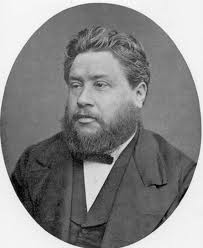
Some historical thoughts on preaching and the heart?  How about Wilberforce.  Or Jonathan Edwards.  Even Chrysostom.  And Thielicke on Spurgeon, and more of that gold.

A series on the preacher’s heart.  Part one, two and three.

And an article on heart-centred hermeneutics.  (And a recipe to finish.)

Why Being Natural Feels Unnatural

I hope you’ll forgive another oldie from the archives – this is from 2007:

While this may not be true in every culture, many have little time for “pulpiteering” these days.  The appearance of performance is significantly off-putting to those who place high value on genuine, vulnerable, honest and natural speaking styles.  People do not appreciate the sales patter of a car dealer or the obvious reading of a script in a phone conversation.  And in many churches the ranting, prancing or different enunciation of earlier generations is long gone.  But the key to being both natural and effective is not simply to relax.

As a general rule, the bigger the congregation, the bigger the gesture.  This can feel unnatural.  Yet the goal is not for you to feel natural, but for the listeners and observers to feel that it is natural.  Consequently a “natural” small gesture might look ridiculous to those in the pews.  It may feel natural to point to the left in reference to the past and gesture to the right when speaking of Christ’s return, but this is not effective as it looks awkward to the congregation.  After a while, the gesturing from right to left for time or logical progression starts to feel natural to the speaker, but only after thought and repetition.

As a general rule, a group of people require more repetition and restatement for concepts to formulate in their consciousness.  This can feel unnatural.  In a conversation with a friend it may be enough to say something once, but in a group you must allow several sentences for an initial thought to register, and then several minutes of careful work for the thought to form into something they can see in their minds.  This feels unnatural to you as the speaker, but that’s not the point.  The point is to come across as natural and to be effective in your speaking.

I am not advocating performance.  I am saying that effective preaching takes hard work, thought and much prayer.  Just relaxing doesn’t cut it.  Perhaps the real test of naturalness is the one that comes when the service is over.  As a listener approaches for a conversation, do they get the sense that you are a different person out of the pulpit?  Hopefully not.  Hopefully the switch back into conversational mode will not reveal that you are somehow acting when preaching, and a different person when not preaching.  Effective God-honoring preaching calls for real integrity in the pulpit, in conversation, in private . . . and we should learn our own appropriate communication approaches in each setting.

Our Core Vision

This week I am travelling and adjusting to a new time zone.  So I thought I’d pull out an oldie from five years ago.  Here’s a good reminder for me:

“We shall never have great preachers until we have great divines.” That was C.H.Spurgeon’s opinion. In the busy world we now inhabit, a world of phone calls, emergencies, emails, travel, financial complexities, family responsibilities and ministerial intricacies, we need to freshly recommit ourselves to the core vision of the preacher. Our core vision is not a philosophy of ministry, a theological stance or sense of calling. Our core vision is God Himself.

We have the privilege of being so captivated by the greatness and grace of our Lord that every moment of our lives is lived in the shadow, no the glory, of that vision. A deep awareness of who God is will continue to drive us back to His Word, diligently pursuing more of Him so that we might respond further.

This is not about discipline and effort, this is about delight and response. We dive into His Word so that we might see Him more clearly, be captured more fully, and be stirred more deeply. Then we will preach more effectively.

Our preaching should flow from a personal intimacy with God and a personal commitment to His Word. That is what our people need.

Misdistillation

The study of the passage should lead to the passage idea.  This is a single sentence summary of the passage.  Or to put it another way, it is the passage distilled into a single sentence.  There are several ways to mis-distill a passage.  For instance:

1. Misdistillation by searching for the best verse.  This is a relatively elementary error, but not too unusual.  The passage is read and the preacher decides, “Verse 7, that’s the one, I’ll make verse 7 the passage idea!”  Now there are occasions where a particular verse, or phrase, or sentence, may function as a passage idea.  But typically this is not the case.  The goal is to summarize the whole text, not just pick out a part that stands out to you.  You should be able to test the passage idea against the rest of the passage and find that it is all feeding into the idea.

2. Misdistillation by scouting for commands only.  This is a common mistake, driven by theology as much as anything.  A theology that says people need to be informed and exhorted will probably be looking for the imperatives in the passage.  Again, the passage idea may well tie in to an exhortation in a passage, but it is to be the summary of the whole, not just an imperatival mood filter.  Be sensitive to what the passage is trying to do in the context of the whole book.  This may not be a commanding passage at all.  Take off the coloured glasses and try to see the passage on its own terms.

3. Misdistillation by spotting a meaty doctrinal truth.  This is a tempting error.  You scan the passage and notice a reference to a truth you’d love to expand at length.  Voila.  Main idea!  But that idea may only be part of the whole, or even a minor player in the choreographed presentation of all the players.  For instance, sometimes Paul makes a theologically meaty reference in the introduction to a prayer.  Be sure to study the whole and distill the whole, don’t just get excited because there is a passing reference to sovereignty, or whatever.

When you are wrestling with a passage, be sure to distill the whole passage down into the passage idea.  Any other approach and you won’t be preaching the whole passage.

Growing as a Preacher

Many have made the point that the day you stop learning is the day you stop teaching.  The day you stop growing is the day you stop truly leading.  So let me ask the simple question, are you growing as a preacher?  What does that mean?

I suppose there are basically two areas to be considered, as well as two paths to pursue growth.

Preachers need to grow in their preaching, but not as much as they need to grow in their relationship with Christ.

How do we pursue spiritual growth?  Two options.  One is to pursue growth in our own strength – the self-moved effort to mature and learn, etc.  The other is to pursue growth in our responsiveness to Christ’s work in our lives.

I’ll keep this short and nudge you toward my Cor Deo co-mentor’s post on Growing . . . please click here to go there.

Word Studies 5 – Using the Fruit pt. 2

Yesterday I offered three suggestions on using the fruit of word studies in our preaching.  I urged us to default to a smooth integration – just let the fruit show through accurate explanation, rather than excessive demonstration of exegetical labour.  There are times to underline and show the process a bit more, but they should be strategically selected.  And I think we should think twice and then again before letting the original languages show.  Three more thoughts:

4. Beware of cross-reference overload.  The nature of word study done properly is that you will end up chasing a lot of texts in their contexts to make sense of the author’s use of the particular term.  The danger is that when you preach you give people a quick dose of cross-referencing that is simply too much to bear.  You had time to pause and think about each one.  But if you fire them out like a machine gun, your listeners will have the tendency to be overwhelmed by other passages and stop engaging.  Alternatively they will try to follow and get bogged down in the process.  Or they will think that Bible study is about rapid cross-referencing without looking at texts in context.  None of these are good.  Better to keep hearts and minds in one passage as much as possible.  Venture outside of your preaching text on purpose and carefully.  Make sure you bring everyone back in with you.

5. Don’t fall into the etymological fallacy.  The process suggested this week shouldn’t lead you into this arena, but I know some reference resources will.  The word the writer uses here comes from two terms – butter and fly.  Butter is a dairy product made with churned milk.  Fly is the term used for pesky insects like bluebottles.  Interesting, isn’t it?  The butterfly is a creature that . . . well, that has nothing to do with butter or fly.  The key issue in word study is how the term is being used at that time, and ideally, by that writer.  Where it came from typically isn’t a key issue.

6. Pursue whole passage clarity.  This is the goal.  Do your best in your passage study to make sense of the passage.  Then do your best in the message preparation to make the message clear.  That is a big goal not easily achieved.

Words are little things, but the ones in the Bible are critically important.  God inspired them.  All of them.

Word Studies 4 – Using the Fruit

This week we have been pondering the importance of word studies.  It is vital that we take the words of Scripture seriously, and thereby make our preaching as accurate and effective as possible.  So let’s say we’ve identified key words in a passage, pivotal terms on which the passage turns, and we’ve studied them to get a good sense of what the author meant by choosing those particular terms.  How do we use the fruit of the study in our preaching?  Here are some suggestions:

1. Default to smooth integration.  The majority of word study work that you do in your study need not show in your preaching.  By show, I mean overt reference to it.  The default should be that the study you’ve done is hidden, but the explanation you give is accurate.  Sometimes I would even go for smooth integration when I think the translation isn’t the best.  So I will read it as is, and then subtly state a preferred translation.  No fuss, no critique, just staying on track for effective explanation.  I think this is a good default.

2. Underline word studies sparingly and strategically.  There are advantages to sometimes letting some of the word study show overtly.  Perhaps you go to a couple of familiar or enlightening uses of the term, to give a taste of the process and help people see why you explain it as you do.  If this is done too much it will lose its impact.  Choose to show the word study more overtly in strategic moments – perhaps when the term is critical to the passage as a whole, or at least to a major point in the passage.

3. Avoid original language flaunting.  I know it is tempting to let your Hebrew or Greek hang out.  And if you haven’t studied it, it may be even more tempting to show you’ve read heavy commentaries.  I also know that some people will shake your hand and thank you for the wonderful insight into the original language.  What neither of us know is how many in your congregation are sitting there feeling linguistically inadequate, assuming that you can find things in the Word they never could, and therefore feeling less motivated to read the Bible between now and when you preach again.  Typically there is no need to refer to the actual term, just say “in the original” or “the word Paul uses here . . . ”

Tomorrow I’ll finish the list with three more suggestions on using the fruit of Word Studies.


Word Studies 3 – The Process

Once you have identified a specific term that you want to study, what do you do?  There’s a short answer and a longer one.  The longer one will always feed your soul more, so go there when you can.

Short answer – Look it up in a dictionary.  Don’t use a contemporary English dictionary.  If you look up “glory” in Oxford or Collins you won’t quite get the nuance of “glory” in John’s Gospel!

Some Bible related dictionaries will give various aspects of meaning, along with various terms used in a translation.  Warning – do not dump all the possible aspects of meaning into the specific instance you are studying.  The word “chip” does not mean everything it could mean whenever it is used, it means something specific.

Other dictionaries will give much more information (some even have pictures!)  The point is, whatever you see in a dictionary is new information to bring back to the text.  But don’t stop thinking.  Think about how the word is being used in light of that potentially helpful (or potentially distracting) information.

Long answer – Do the work the dictionary folks should have done.  This means chasing the term through a set of uses to see how it is used.

1. Determine the underlying term in your focus verse.  Let’s take “glory” as a working example.  A concordance (or software) will help you discover that the underlying term is probably “doxa” or 1391 (in Strong’s numbers).

2. Find every use of that term in the surrounding context.  Be careful you don’t limit yourself to the English term because there may be some uses of “doxa” that aren’t translated as “glory,” or some uses of “glory” that don’t translate “doxa.”  The first choice of context parameters would be the book in which you are studying.  So let’s say you look at John’s Gospel.  Are there enough uses of “doxa” to give you a good sense of its use by John?  Yes indeed.  If there weren’t, then you’d want to go to John’s other four books before spilling over into other writers.  You might find John’s use of “glory” is slightly different than other writers.

3. Look at each use in its context and see what observations you can make.  Try not to import your preconceived notions of “bright shiny-ness” or “weightiness” or whatever.  You might find John uses the term in a slightly nuanced way!

4. Collect your observations of how the writer uses it, and write something of a broad definition.  This is like the options in a dictionary.  It gives a sense of the range of meaning.  Feel free to check with a dictionary or two at this point, but remember that they may not have better content than your work has produced.

5. Bring that understanding to the specific verse and see how he is using it here.  Don’t dump all the possibilities into the term’s use here, but recognize the specific aspect in light of the full range in his writings.

This longer approach takes time, but it is so enriching.  Try it with “glory” in John’s gospel and see what you find!  I love Bible software and thank God for the time it saves.  But not all time saved is good stewardship.  Be sure to soak in God’s Word and let this kind of chase mark your life and ministry.

Word Studies 2 – Identifying Key Terms

This week we are pondering the specific skill of word study in preaching.  Today I’ll focus on identifying key terms, then tomorrow we can consider the actual processes involved.

So how do you identify words to define more carefully?

1. Prayerfully read and study the passage.  Sounds silly, but until you get some decent familiarity with the passage, you can’t start identifying words.

2. Recognize that not every word is equal.  All words are equally inspired, but not all words are equal in a passage.  You might assume this is obvious.  After all, a weighty word like justified or righteous must be worth studying, while a normal word like in or of is obvious, right?  Sometimes wrong.  A “weighty” word may not be a key term in a particular passage (it may be given in the build up to the point of a prayer, for instance), while an obvious word may be the key to the whole section.

3. Recognize that your time is restricted.  It would be great to do a full chase on every term in a passage.  Actually, hypothetically it might be great in your study phase, if you had infinite time.  But in reality studying every word equally will distract you from the force of the passage in your study, and it will certainly confuse people in your preaching.  For instance, in Ephesians 1:15-23, I would cover the first 47 words fairly briefly.  Why?  Because I want the focus to be on the point of the passage, which is what Paul is actually praying from the end of v17 onwards.  If I give detailed explanations of faith, Lord, love, saints, prayers, God, Father and glory in my sermon, people will be numb by the time I get to Paul’s actual request.

So how to identify key terms?

A. Look for repeated terms.  In Ephesians 3:1-13, the term mystery is repeated and seems important. (Dynamic equivalent translations may hide repetition of terms, prefer formal equivalence for focused study.)

B. Look for structurally important terms.  Down in verse 8, grace was given to Paul with the results being the rest of verses 8-10.

C. Look for key connections or little words.  In this passage, the as, of verse 5 feels significant when the passage is read carefully (even better, when the passage is broken down to a phrase by phrase structural outline, or disagrammed if you have that skill from Greek).  Incidentally, once you start looking at the structure of epistle text like this, a good formal translation needs to be the working text, not a dynamic equivalent text.

D. Look for key terms in the wider context.  A term may only be used once in the passage, but be critical in the flow of the book.  For example, stewardship in verse 2 is important in the flow of Ephesians 1-3.

E. Look for key terms that are missed by the other guidelines.  Here’s the catch all.  It forces you to keep looking and observing the text.  In this case, it allows you to notice that glory in verse 13 is massively significant.  Doesn’t look it structurally, but actually Paul digressed in verse 1, so completing that thought in v13 is a big deal here.

Preaching and Word Studies

These things tend to go in cycles.  For preachers trained in one era, preaching almost amounted to communicating the fruit of word studies.  Some years later and there is almost no evidence of skill in this area.  Let’s ponder some issues of methodology and implementation.

1. Word study is only one part of the passage study process, which is only one part of the message preparation process.  That means that we shouldn’t see preaching as a sequence of interesting definitions.  “…the next word I want you to notice is the word rock in the third verse. The word rock that David uses here means…”  This is not really preaching.  We need to thoroughly integrate our word study insights into our understanding of the passage as a whole, which then needs to be shaped into a message as a whole.

2. Word study matters because words matter.  We need to keep this skill in context, and we also need to keep it in view.  That is to say, as a student of the Bible, I need to take every word seriously.  In bibliology we may refer to “verbal plenary inspiration of Scripture.”  This means that we affirm God’s inspiration of the words (verbal), all of them (plenary).  To dismiss word study in favour of discourse analysis is to swing the pendulum too far.  To dismiss word study in favour of not studying the passage indicates a deeper issue in our view of God and the Bible.

3. Words hunt in packs.  To put that another way, a word on its own is not that helpful.  It has been fun to observe my children learning to read (and helping, of course).  Once they are set loose into the world of books there is no limit to what they can learn.  But suddenly they get past the “Bobby hit the ball to Suzie” stuff and start to meet words they’ve never met before.  “Daddy, what does snuff mean?” or “Daddy, what’s a cue?”  Like all good parents, my response is  to ask a question in response: “Can you tell me the whole sentence?”  This context allows me to make sense of that word for them in that place.  As we study individual words , we must always remember that we are studying them to make sense of them in a particular sentence, in a particular paragraph, in a particular unit of Scripture.

Tomorrow we’ll get into some more specifics on the how-to side of things . . .