Preaching Myths – Part 3

The whole idea of a “good sermon” is a tricky one.  While some feel it is inappropriate to evaluate, others base that evaluation purely on positive fruit.  Here is another evaluation myth:

3. If a sermon is really good then listeners will not be offended

This is not so much the presence of positive fruit, but the absence of apparently negative fruit.  There are many conflict avoiders amongst us.  Probably most of us would rather not see people upset or offended in the church – it certainly makes ministry easier when everyone is smiling.  But we need to probe the premise here: is a sermon really failing if some get offended by it?

By that measure, Jesus’ ministry was incredibly ineffective.  Jesus knew what was going on inside people and therefore seemed very willing to offend by what he said and what he did.  We certainly do not have perfect insight into human hearts, but it would be utterly naïve to assume that everyone is in some sort of happy neutral state.  Good preaching should disturb the comfortable and not just comfort the disturbed.  There are people in our churches who should be profoundly bothered by the gospel.

But there are some important caveats to make explicit here:

A. Make sure that people are offended by the right things.  If people find the grace of God scandalous, or the glory of the gospel, or character of God, or the depth of their need, then it is probably a good offense.  But if people are being wound up by your personal ministry soapbox issues or legalistic preferences, if people are being upset by the promotion of a certain Christian sub-culture, then I would argue that the offense is not life-giving.

B. Make sure that people are offended by the right person.  If people find your tone objectionable, or your manner distasteful, or your character un-Christ-like, then they are being offended by the wrong person.  Good preaching will offend some, and they may well pin the blame on the preacher, but at the heart of the offense is the Holy Spirit’s work of conviction and shining a light into their hearts.  They may lash out at you, but the bothering is being done by God.  It is so hard to evaluate this as we have a seemingly infinite capacity to self-protect and justify what we do.  Ask God, and ask trusted others, and make sure that your ministry has a graciousness and gentleness befitting a spokesman for Christ (as well as the courage and boldness to speak the truth that His spokesperson should demonstrate too).

C. Make sure that offense is a text-response. If people are angry at your illustrations, your anecdotes, your explanations and your applications, then there may be an issue.  Ideally, the offense should be caused by the biblical text itself rather than your departure from it.

A positive-response-only expectation is not realistic for true biblical preaching.  We should be seeing some apparently negative-responses, but we need God’s help to make sure that what provokes these responses is life-giving biblical preaching rather than our personal rudeness, pastoral insensitivity, or whatever else we can manage as a misfire from the pulpit.

Preaching Myths – Part 2

Last time we thought about the idea that godly preparation precludes the possibility of evaluation.  This time let’s take an idea that is related to that:

2. If it bears good fruit then it is a good sermon.

This is a good follow up to the previous myth.  Maybe you’ve had the experience of struggling through a sermon only to discover that someone else loved it.  Fair enough, there is certainly subjectivity involved in hearing a message.  But what about when the sermon you hear is not just not to your taste, but actually contains error, and then … someone trusts in Christ at the end.  That can be perplexing!

So many things need to be taken into account here.  You could have misheard the preacher.  You could have been biased in your critical view of the message.  Your evaluation criteria may be completely off.  At the same time, the fruit that seems so surprising could be the fruit of other ministry rather than this particular message.  Or the fruit could not be genuine.  Or the fruit could be the glorious grace of God working despite a weak or flawed sermon (praise God for that if you are a preacher, you’ve probably preached some shockers too!)  There are so many unknowns in this.

However, accepting all the multiple layers of complexity, there seems to be a double-edged bottom line here.  On the one hand ministry will be judged by its fruits and this is right.  Good, faithful, Christ-centred, biblically-driven, Spirit-dependent ministry will bring genuine and eternity-changing fruit over the course of time.  On the other hand, there is not a one-for-one correspondence here: apparently positive fruit (conversions, feedback, etc.) does not mean this particular sermon was solid, neither does apparently negative fruit (no response, negative feedback, etc.) mean this particular sermon fell short.  God does a lot of unseen work through messages while preachers press on in faith without knowing if it is making the slightest bit of difference.

How have you experienced this tension?

Preaching Myths – Part 1

There are plenty of myths floating around.  You may have heard of some.  You may have thought of others.  Here are a few that bear a little bit of scrutiny.  Let’s start with this one:

1. Since the preacher was led by God in the preparation, it would be wrong to evaluate the sermon.

Here is one I heard a few years ago.  Astonishingly, it was spoken by a church leader in reference to a visiting speaker.  The speaker had preached a message that was technically wrong in some details, but more overwhelmingly unhelpful as a whole.  I gently mentioned this to a more senior leader in the church who made it clear that it was not his place to evaluate what this godly man had been led to by God in his preparations.  Huh?

Here’s one reason why this dear brother was wrong.  The pastoral leadership of a church has the biblically defined role of shepherding the flock, which includes at least four elements.  The shepherds, that is, the pastors or elders, are responsible for the feeding and leading of the flock, as well as making sure it is protected and cared for.  All four elements of the leadership role come into play when a sermon is preached.  Whether the elder/pastor is preaching or not, he is responsible.  Therefore, if a visiting preacher is unhelpful in any of these areas, it is the spiritual responsibility of the leadership to evaluate that message and determine whether something needs to be done retrospectively or just in anticipation of any future visit.  Non-evaluation is not a spiritual option, it is pastoral abdication.

That is specifically in respect to the pastoral leadership, but what about the average listener?  Acts 17:11 is informative for us: The Bereans were of more noble character than the Thessalonians – they listened intently to the apostles and they checked the Scriptures to see if what they heard was so.  There is no footnote or marginal comment that adds, “but if the preacher has prayerfully prepared then the above referenced eagerness and Scriptural evaluation does not apply.”

Next time we will look at another sermon evaluation myth.

What Kind of Leader?

The first days of the year are typically days of anticipation and planning.  All around us people will be making their resolutions.  Even in the world of Christian ministry it is easy to get caught up the annual cycle of planning and scheming, often with unchecked values driving fine-sounding aspirations.  This year I want to be fitter, better informed, more productive.  This year I want to start a book, finish a book, see the church grow, etc.  All good things, but potentially all reflections of a set of values that may be dressed up in Christian language, but deep down are very much in line with the competitive culture of this world.

How about something a bit different?  This year I want to think about Jesus so much that I become more like him.  That would be a leadership resolution worthy of our investment!

Just in case you like the idea, let’s kick start the year with a few verses from Isaiah 42.  This is the first of the so-called “Servant Songs” – four songs that are clearly speaking of the Messiah himself, and not the nation of Israel as a whole.  This first song speaks of Jesus as a leader.

42 Behold my servant, whom I uphold,

my chosen, in whom my soul delights;

I have put my Spirit upon him;

he will bring forth justice to the nations.

He will not cry aloud or lift up his voice,

or make it heard in the street;

a bruised reed he will not break,

and a faintly burning wick he will not quench;

he will faithfully bring forth justice.

He will not grow faint or be discouraged

till he has established justice in the earth;

and the coastlands wait for his law.

Three times Isaiah refers to the Servant’s great task of bringing justice to the nations (Isa.42:1, 3, 4).  This is no mean task.  This calls for all the strength, all the power, all the political acumen, and all the gravitas to achieve such a task.  Surely the passage is going to speak of the Servant’s power, his presence, his charismatic personality, and so on?  Actually, no.  Surprisingly it speaks of the Messiah’s relational tenderness.

1. In the first verse, we see the Trinitarian rootedness of the Messiah.  Here the Father speaks of his delight in his chosen servant.  He speaks of putting His Spirit upon him.  It is easy to bypass this introductory image, but we would be theologically poorer if we did bypass it.  Actually we should be rejoicing that our God is the Trinity.  We should be delighted beyond words that we are not serving a self-serving despot, but instead we get to also serve a God who gives of himself, a God who exists in delightful communion.  Later in John 13:3-5(??) we see how Jesus’ rootedness in his relationship with his Father enable him to give sacrificially of himself as he took on the role of the slave at the feet of his disciples.  The Christ-like leader will always be one whose life and ministry is planted deep in the soil of fellowship with the Triune God.  If God being Trinity does not thrill you, stop whatever else you are doing and lay your heart before God, pursuing the delight that can only be found in fellowship with Him.

2.  In the second verse, we see the Messiah in respect to himself.  The striking thought here is that he does not boldly announce his arrival.  He chooses no fanfare, no elaborate introduction, no impressive biographical details.  We exist in a world of self-promoters, and sadly the church offers little respite from this scourge.  Maybe it will be through spending time looking at Jesus that we will lose our appetite for self-promotion and impressive introductions.  Maybe your leadership is marred by a spectacular obsession with self of which you alone are unaware.  Jesus is refreshingly different.

3. In the third verse, we see the Messiah relating to his subjects.  Just as there is a subtle tenderness and humility in the preceding verses, so that becomes explicit in how he deals with others.  So many in our churches and ministries are bruised reeds and faintly burning wicks.  So many are on the edge of collapse in one form or another.  So easily we can stamp all over the people around us, leaving a trail of crushed spirits and broken souls.  Look past the praise of your strong leadership and ask God for sensitivity toward the weak who you may have trodden on in recent months.  Time spent gazing on Christ will result in a radically different manner with people.  Perhaps if we spent more time with Jesus we would invest less praise in the shooting star heroes of the faith who leave a burning trail of destruction behind them.

4. In the fourth verse, the Messiah’s tenderness is not seen to be a lack of endurance.  His task was great, and yet that did not mean he created casualties.  Tenderness is no reason for giving up, nor is endurance an excuse for hurting others.  As it says in Hebrews 12, we should fix our gaze on Jesus so that we also will not grow weary and be tempted to give up.

Maybe a good 2018 for you is not to be measured in new projects, increased productivity or amplified praise.  Maybe a good 2018 will mean more time spent with Jesus, greater tenderness toward others, and simply pressing on with what God has already given to you.  I don’t know what my year looks like, nor even yours, but I know that if our leadership looks Christ-like, then it will be a year well worth living.

Is the Genealogy Really Such a Let Down?

To the first-time reader, the Old Testament can feel like a confusing collection of laws and awkward stories.  Before too long it becomes an amazing epic retelling of God’s preparation for the arrival of his Son into our world.  If you have eyes to see, then the Old Testament becomes a treasure trove of God’s presence and God’s promise.  It is certainly not about heroes of the faith, for God’s people were consistently faithless, and yet God’s faithfulness outshines their wretchedness.  Where God had every right to declare his promises null and void, instead he kept adding to the promise and moving toward the arrival of the Messiah.

Then there is a blank page.  This is it.  This is the moment in a Bible read through that should make your heart leap.  So, you arrive in Matthew’s Gospel, chapter 1.  Here it is!  This is the good news!  And then you find . . . a genealogy.  Disappointing to say the least.  Surely God could have launched the New Testament with something more exciting than a list of old names?

Actually, the genealogy at the start of the New Testament is a reason to celebrate.  More than that, it gives us reason to press on in our ministry.  Here are three reasons to be thankful for the genealogy that launches our New Testaments:

1. The good news that we proclaim is not a fairy tale, it is rooted in history.  

The arrival of God the Son into our world is not announced with a “Once upon a time,” introduction as we would expect of a fantasy tale.  It is announced with a “This is the genealogy of…” that we would expect of a historical figure.  This is so important.  In the midst of our preaching and pastoral care of souls we can forget how alien the good news of Jesus actually sounds to people.  It can sound like a fairy tale that we think might offer hope in the “real world.”  But let us never forget that the Gospel is not a fairy tale, it is rooted in actual events.

The Gospel is not a mythical tale that we speak into the real world to give people a purer perspective by which to live, or a touching tale that sets an example for us to follow in our infinitely more complex experience.  The Gospel is not a suggestion for how we should live.  It is an announcement of what God has done.

Real historical figures had real flesh and blood children who gave birth to actual children, and so on.  This genealogy offers forty-two touchdown points in history as preparation to the touchdown point that transforms history.  If Jesus was merely a myth, or only an example, or somehow just a fairy tale to inspire us, then all this would be so unnecessary.  If Jesus were a fairy tale, then he need be no more than a heavenly interruption in our normal world.  Instead, he really entered right into our normal world.

It is important to note that Matthew’s genealogy is carefully crafted.  He is deliberately selecting generations in order to build a shaped list, rather than an exhaustive one.  He is also tracing a line that diverges from the line that Luke includes in his Gospel.  It is not a contradiction, after all, your genealogy could also take any number of lines down through the centuries.

Read through the genealogy and ponder your ministry.  They faced struggles and uncertainty, yet they were part of God’s great story in ways most could hardly imagine.  We too don’t see the end of our story, but we know we are part of his story.  Thank God that the Gospel is rooted not in myth, but in history.  He came into our world and now we can live and serve him in that same history.  Real people, living real lives, facing real struggles, and always part of his story!

2. The good news that we proclaim is not shaped by our culture’s needs, it is shaped by God’s promise plan.

If we were to try and write the story of a God-sized fix to our hellish plight, we would probably make it a story of an other-worldly super-hero coming to our aid.  We wouldn’t have that hero becoming one of us, and a lowly one of us at that.  We would surely not trace a line down through two millennia of dysfunctional families, men who gave their wives away, men who stole other men’s wives, women of ill-repute, and disobedient nationals humiliated by deportation.

And yet there is a shape to this genealogy.  It is a deliberate shape that Matthew introduces in verse 1 and underlines with summary sums in verse 17.  This is the Abraham to David to Exile to Jesus genealogy.  What is significant about Abraham, David and the Exile?  Surely it is not the giving wife away (twice), stealing a wife and having her husband killed, and the humiliation by deportation … surely these are not the high points of the story?  Actually, no, but as we will see in the next point, this background certainly adds a unique colour to it all.

What is significant about this shaping of the genealogy is that these are three points in history where God leaned forward and added detail to his great promise plan.  God had promised to rescue humanity from sin back in Genesis 3:15.  That promise was developed when God promised to make Abram’s name great and to bless all the families of the earth through his seed.  Tick, tock, the clock was counting down.

King David was blown away by further development on that promise, that his throne would endure forever and his greater son would ascend to it in the future.  Tick, tock, the clock continued to count down.

The prophets spoke in the context of national failure, in the context of Israel’s flaws being fully revealed by the Old Covenant that the day was coming when God would establish a New Covenant that would change everything.  Tick, tock, the clock was counting down and this genealogy shows us where it ends.

Jesus.

The fulfillment of God’s great sin-conquering, life-giving, problem-solving, Satan-defeating, promise plan was Mary’s son, baby Jesus.

What an encouragement this is to us as we continue to minister two thousand years later.  It is easy to see the mess of humanity.  And it is easy to miss that God has a greater plan being worked out in his own timing.  We can trust him, we must trust him.  We have no other hope besides him.

3. The good news that we proclaim is not coloured by human success, it is coloured by God’s grace for sinners.

We could put on rose-tinted spectacles and see the good in this list.  After all, Abraham was eventually a man of faith.  David was a man after God’s own heart.  Jacob was at least productive when it came to building a nation, and Boaz was an all-around good egg.  There are others we could name in the list, people of noble character, including Ruth, not to forget Joseph and Mary, of course.  Definitely some good people, or in many cases, some good moments.

Nevertheless, the more you study the list, the more you see the sin.  This is not a list of Israel’s finest and greatest.  This is a list of ordinary people who stumbled and messed up and blew it and sinned.  This is not a bland list of empty suits – positions celebrated without recognition that it was real humanity in those roles.  This is not a list brightened by human success, but rather a list coloured in by God’s grace to fallen people.

Did Abraham, Isaac and Jacob deserve to receive God’s good promise?  Obviously not, if you read through Genesis.  Did David deserve to have his throne established over the whole world forever?  Definitely not, if his story is heard in full.  Did Israel deserve the New Covenant?  Not in a million years.

God’s grace transforms human mess.

And perhaps the greatest colour in the genealogy?  Surely it is the colour added by the unusual inclusions … Tamar, Rahab, Ruth, and the wife of Uriah.  Four women. Probably four foreign women.  Most importantly, four women with significant question marks over their moral purity.  Tamar dressed up as a shrine prostitute to trick her father-in-law into giving her a son.  Rahab’s name always comes with the title of her profession.  Ruth was a wonderful women, but she did get a man drunk and slip under the covers at midnight.  And Uriah’s wife, Bathsheba, was involved in the greatest scandal ever seen in Israel’s royal court.  They weren’t all bad, in fact, all of them were women of faith.  But they all had that question mark hanging over them.

And that is the colour that sets up the final woman in the list – Mary.  A woman of faith.  And yet a woman with her moral purity questioned by all.  She was pregnant before her wedding.  It was a scandal, even in a sin-stained place like Nazareth.  But this was not more of the same human mess.  This was God’s answer to the human mess.

The genealogy might first appear dull, then at a closer look it seems to contain some great names, but if you keep looking you see the mess of those lives, and if God opens our eyes to see, we start to see the glorious grace of God shining through it all.

That is where this post ends, but it is where hope begins.  When God gives us eyes to see the beauty of his glorious grace shining in the mess of humanity.  The genealogy prepares us for the coming of Jesus, the Christ.  Maybe this genealogy prepares us to press on in our messy ministries too – knowing that God’s great promise plan and glorious grace has already entered our world and brought the hope we all so desperately need.

__________________________________________________________________
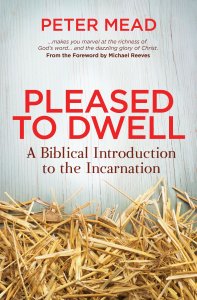
A couple of years ago I wrote Pleased to Dwell: A Biblical Introduction to the Incarnation – I hope you can get hold of a copy and enjoy a light biblical read on this critical subject of God’s Son becoming one of us so that we could be one with Him!  It is not just a subject to study at Christmas.  The incarnation is in the very DNA of the Christian faith.

Redirecting the Challenge

When we prepare to preach a passage we will find ourselves wrestling with the text, and often we will find the text wrestling with us.  This is good and it should be this way.  The Spirit of God should be doing a work in us through the text that we are studying.

But there is a complexity here.  As a preacher, you are probably, and hopefully, a relatively mature believer.  This means that you will more naturally find yourself challenged by the aspects of the passage that are applicational or doxological.  This will not be the case for some, or even for many, of your listeners.

When you preach in your church there will be some present who cannot see past the challenge of believing the text.  There may be some aspects of it that seem far-fetched or fanciful.  You may have overcome those obstacles years ago and no longer see them when you look at a text, but be sure to put yourself in the shoes of a contemporary unchurched listener.

Until a text does not seem fanciful or far-fetched, the applicational and doxological implications will only have minimal impact in the listener’s heart and life.  This is why we need to spot all the challenges and help our listeners be able to hear the ones that will really help them!

Perspective on Sermon Response

Howard Hendricks wrote The Seven Laws of the Teacher, in which he refers to an English bishop who said, “You know, wherever the apostle Paul went, they had a riot or a revival. Wherever I go, they serve tea.” (p165.)

I am sure all of us have experienced the soaring anticipation of a sermon, as well as the crashing experience of being crushed by non-response on the day.  Someone famous (probably Spurgeon, but I can’t remember), said that we should not over-estimate what can be achieved in a single sermon, but also never under-estimate what will happen through several years of faithful biblical preaching.

Somehow we have to hold two tensions together.  On the one hand, we know that God can and does work in a single sermon to bring about radical life change.  On the other hand, we know that often the change God is working into the lives of a congregation are imperceptible and we will regularly be tempted to despair.

When you see genuine response and transformation, document it.  Keep that document somewhere safe, but easily accessible.  There will be lots of weeks where you will value the reminder.

The Power of Testimony

Hearing how God has worked in a life can be very powerful.  Having someone “give their testimony” can also backfire.  Before I explain how we do testimonies in our church, here are a few of the problems that can create the tension:

1. Nerves.  Public speaking is a frightening prospect for most people.  Talking about self so overtly should be a challenge for believers.  Therefore nerves are normal.  While everyone in the audience will understand that the person feels nervous, this doesn’t change the fact that nerves can lead to losing track of the story, or saying something that is not intended, or to shifting into teaching rather than giving testimony, or to losing all awareness of time.  To stand and give a crafted testimony in a set time without reading a script takes the skill of a preacher.

2. Timekeeping.  Some will rattle through their story and be done in a fraction of the time available.  Others will barely be out of their childhood before the time is done and threaten to drift into the work week unless someone steps in.  Keeping to time is a real challenge (even preachers can struggle with this!)

3. Instructing.  So many good testimonies become awkward because the person feels some compulsion to instruct the listeners.  Where the story of God at work is so powerful, the pointed finger and some generalized imperatives are awkwardly blunt.  Once someone drifts into unplanned teaching they can make theological errors, assume something they don’t understand yet is unexplainable, make promises that their experience is how God always works, or whatever.  It can be a minefield.

And yet, despite all that can go wrong, testimonies can be so powerful.  Why?

1. They can stir worship.  Isn’t God amazing?  What a wonderful story of His faithfulness and persistent love!

2. They can generate hope.  I am not the only one who struggles like that, and they have seen God bring change, maybe there is hope for me?

3. They can foster understanding.  I had no idea they had gone through all that.  I am so glad they are now part of the family and God is still at work.

4. They can unite the church family.  I used to struggle with that person, but now I know their story I can actually celebrate God’s goodness instead of feeling so bothered by their quirks.

5. They can convict unbelievers.  Where you were, that is where I am … I need to respond to God’s convicting work in my life.

And so much more.  Testimonies can have such impact, either positively, or negatively!  Next time I will explain how we incorporate testimonies in our church – it might be helpful.

God’s Great Evangelistic Plan

God’s plan to reach people with the gospel is not primarily evangelists or apologists, although both are vitally important.  God’s plan to reach people with the gospel is the church.  We can make no greater investment of our resources than to help churches become infectious communities of gospel-gripped people motivated and equipped to bring others into God’s family.

So what does a church need in order to be this kind of evangelistic tool in God’s hands?  It seems like there are three vital ingredients in the mix.  These could be seen as three legs on a stool, and the stool needs all three legs to be used as it was intended

1. People need to ENJOY God and the gospel.

It is easy to encourage or pressure believers to share their faith with others.  Many Sunday sermons end with the call to read our Bibles every day and witness to somebody this week.  The problem is that pressure without motivation will produce poor results.  Many will simply default to doing nothing.  Those that try to do as they have been instructed will often give a clear sense of their own obligation and reticence.  The best witnesses and evangelists will always be those that are truly gripped with the goodness of the good news of who God is and what God has done for us in Christ.

We do not want a church full of reticent and obligated witnesses.  We do want as many as possible to be so enjoying God and the gospel that they can’t help but spill that good news out to others.  This is why simply telling Christians to evangelise is never very effective.  We would achieve much more evangelistically if we invest more time in showing them Christ that their hearts become enflamed with love for him.  When someone gets engaged they can’t help but smile big and show off the ring to anyone around them.  O for churches full of people thrilled that they are more than engaged to Christ!!

2. People need to CONNECT with people outside the church.

A highly motivated community of Christians will not have much impact on their local culture if they live in isolation from it.  The New Testament does not instruct us to purposefully make connections with the people around us because it was automatically happening.  Not only is the church in the book of Acts an example to us, so is Jesus himself.  He was known as a friend of sinners.  Sadly too many churches are full of people that feel their main job is to find ways to avoid contact with non-Christians.

As leaders of churches let us lead by example and let us encourage through our teaching.  God is relational and outwardly focused to the core of his being.  Christianity has a missionary and evangelistic inclination in its very DNA.  Many Christian leaders can easily spend all their time with Christians.  Set an example by joining a club or taking a class, finding some way to connect with people that may have no other contact with true Christians.  If you are working alongside not-yet-Christians, set an example to your church by guarding time to invest in those relationships.  Invite a colleague to your home for a meal, socialize together, move the conversation beyond the superficial.  Many Christians seem to have lost the art of conversation, and asking questions seems to be a dying art.  Set an example and even teach believers how to ask questions and care about the answers.  Our local churches need to be communities that connect with those around.

3. People need to be able to COMMUNICATE the gospel when they have opportunity.

We may have motivated and connected believers in our churches that are unclear on how to present the core gospel message.  We can be overt here – tell them the value of a personal testimony that includes the three elements of before conversion, how I became a Christian, and the difference it has made since.  The power of the personal testimony is massively under-utilized by many Christians.

And why not instruct our churches with a simple gospel presentation.  I heard a famous preacher suggest the simple use of John 3:16 with four key points some years ago.  It is still my go-to explanation if the opportunity suddenly crops up.  Obviously I will adjust the explanation in light of what I know about the person I am speaking to, but still it is a useful presentation.  1. God loved so (2) God gave.  3. If we believe, then (4) we have eternal life.  It starts with the kind of God we are presenting, moves naturally into what God did for us in sending Christ to go to the cross.  It keeps the invitation unencumbered with unhelpful baggage by calling us to believe in – that is, not just believe that, but believe in … to entrust the full weight of our lives onto the person and work of Christ, with no backup plan!  And it allows us to define the Christian offer not as a free pass or a ticket to heaven, but rather as coming into the forever relationship that we were designed to enjoy.

So that is the three-part recipe for helping a church to be more effective in its evangelism.  There are other things that could be added.  For instance, it is important for a local church to establish an evangelistic baseline (for our church it is about making every Sunday accessible to guests, and running a regular evangelistic course – we use Glen Scrivener’s 321).  Then there are special events that can be highly effective.  But first and foremost, the church is not the program, it is the people, and if we can help the people in our churches to enjoy God more, be intentionally connected, and be able to communicate the gospel, then we are unleashing God’s great evangelistic strategy on the world: the local church!

The Reformation and Preaching

I invited my good friend Dr Mike Reeves, president of Union School of Theology, to speak in the Bible Teachers Network at the European Leadership Forum back in May.  Here are some nuggets on preaching and the Reformation for us.

What did the Reformers believe about the power of preaching?

How did the Reformation change our view of the content of preaching?

What can we learn from the Reformers about the goal of preaching?

(The videos are courtesy of foclonline.org, Mike is President of Union School of Theology)