Preaching Elsewhere

Here’s a mighty little quote from Walter Brueggemann – “If we are to bring a word from elsewhere, then we have to live, to some extent, elsewhere.”

With the huge demands on church leaders and bi-vocational preachers, we have a real challenge.  Too many of us are preparing to preach with the fuel gauge indicating nearly empty.  We run around like headless chickens giving ourselves away in therapeutic care and meetings management and budget discussions and endless emails and emergency crises and fire fighting and political church squabbles and more emails and then when we are almost wiped out, we prepare a sermon.

But what people need is the kind of creativity, focus, passion and “word from God” that can only come from a preacher who has resisted distractions and spent time doing what most needs to be done in preparing to preach.  Reading.  Study.  Thinking.  Prayer.  Time alone.  Time with God.

I’m sure you are asked how long it takes to prepare a sermon now and then.  What’s the answer?  A specific number of hours?  I suppose that technically it depends on how well the text is known, etc.  But the health of the church will not depend on whether you can crank out an acceptable sermon in fifteen hours, or eight, or three.  It is about time in preparation that isn’t rushed and squeezed and forced.

Somehow it is hard to imagine rushing into God’s presence, all frantic and breathless, “Lord, I need help, I need a sermon and I need it fast!” and then to have God get stressed and out of breath as we rush to pull something together.  Somehow that image doesn’t seem right, does it?

God does care, and He does gladly get involved when we aren’t ignoring Him.  And in a genuine emergency He is more than able to help us when we are absolutely stuck.  But God doesn’t seem to live at our frantic pace.  He is with us, indeed.  But somehow by going to Him, we are enabled  to get closer to His pace.  And then, after spending time with Him, we can come back to preach.  Breathless, perhaps.  But for a different reason.  Let’s preach a message from elsewhere.

Add to FacebookAdd to DiggAdd to Del.icio.usAdd to StumbleuponAdd to RedditAdd to BlinklistAdd to TwitterAdd to TechnoratiAdd to Yahoo BuzzAdd to Newsvine

Reasons to Just Preach

In many churches this post would be considered irrelevant or even bizarre.  In others to suggest otherwise might raise an eyebrow or two.  But in some, the choice can go either way.  Should the preacher lead the whole service?

I’ve known a few people who insist that as the preacher they want to lead the whole service.  It allows them to craft a whole package that fits together.  It allows them expand the impact of their message beyond the official sermon time.  And, I’d agree with this, it allows them to control how long they have to preach.  But there are some reasons to just preach, if another service leader is available.

1. Increased focus in the preacher on the sermon.  Instead of losing energy on earlier elements of the service, the preacher can prayerfully compose themselves so they are 100% focused on the sermon.  No need to worry about introducing hymns, remembering the right people to mention in the prayers, covering the announcements adequately, and in many UK churches, no need to have a mini-sermon that is hyper-engaging for the children.

2. Increased focus on the preacher in the sermon.  From the listeners’ perspective, when the preacher stands to preach, they haven’t already heard multiple snippets of the same voice.  In some cases a preacher may undermine their impact by overdoing their involvement before the sermon.  This is especially true if the preacher is not appropriately gifted or able as a service leader.

3. Opportunity for other gifts to develop and be used.  Some people are exceedingly capable when it comes to public reading of Scripture, or addressing children, or leading singing, or praying publically, etc.  Why do some assume that the whole package of diverse gifting and ability will reside in one person?  The Bible does not teach the exclusive gifting of a clerical class, but the gifting of all for the good of all.  Why not unleash folks in their area for the good of the church?

From my perspective, as a preacher, I would much rather not lead the entire service when I am preaching.  If it is requested or preferred, then I can do so (and I console myself with controlling the time allowed for the sermon).  But give me the option of just preaching, following capable and trustworthy people, and I would bite your hand off for that option.  What do you think?

Add to FacebookAdd to DiggAdd to Del.icio.usAdd to StumbleuponAdd to RedditAdd to BlinklistAdd to TwitterAdd to TechnoratiAdd to Yahoo BuzzAdd to Newsvine

Post Sermon Text Test

We preach hoping and praying for the message to mark and transform lives as it is preached.  But what about after?  I want to preach in such a way that the following things are true:

1. The listener will continue to be transformed by the text in the coming days.  If the text were merely a source for data and sermonic stuff, then chances are the listeners will lose track of where the message came from.  For the text to linger in their hearts and minds, the preacher needs to shine light on the text and shine the message of the text on the screen of their hearts.  If they have only heard about it, there is less chance they will remember it than if they have “seen” the text painted vividly during the sermon.

2. The listener will be able to go back to the text later and understand it.  If the listener were to look up the text later, then I want them to be able to understand it.  That means that they have had it clearly and effectively explained.  Not only what does it mean, but why does it mean that?  Knowing that I take it a certain way is nowhere near as good as them seeing that that is what it is saying.

3. The listener will want to go back to the text later to read it.  This is a biggie.  If we assume that listeners go home and re-read the preaching text and carefully work through the notes they took, then we are naive to say the least.  The preacher has to stir motivation for them to want to go back to the text.  That motivation will come from an effective message, including instilling a confidence in them that they can see the why behind the what of the text.  Why does it mean what the sermon said it means?  They also have to be convinced of the relevance of the text to their lives.  Irrelevant or inaccessible texts are least likely to be return destinations in the days after a sermon.

4. The listener will know how to make sense of it when they go there.  This is like number 2, but slightly more than that.  Number 2 was about them being able to understand the text itself.  This one is about them being equipped to handle the text.  That comes down to the instruction given in the sermon (and many sermons over time).

Add to FacebookAdd to DiggAdd to Del.icio.usAdd to StumbleuponAdd to RedditAdd to BlinklistAdd to TwitterAdd to TechnoratiAdd to Yahoo BuzzAdd to Newsvine

Knowing the Unknowable?

Yesterday I wrote about thinking through how your listeners will hear what you say so you can pre-empt misunderstandings.  Dave commented and asked what to do with a new/unknown group of listeners?  Great question.  I don’t have the answer, but I do have some thoughts.  Please comment to add yours.

1. An unknown congregation is not unknown to God.  So pray.  Pray for them. Pray for the preaching.  Pray that God will help you to find the information that will help you!  This is no substitute for the three ideas that follow, but it is foundationally important.

2. An unknown congregation can become known by enquiry.  That is, you might be able to ask and learn about a church ahead of time.  Ask the person who invited you to speak.  Call and speak to someone in leadership and express that you simply want to get a pulse in order to communicate more effectively.  Look at their website (don’t judge a church by its website, even though others will).  When you arrive, talk to the person who gets you wired up with the mic, and the person who meets you at the door, and the person sitting next to you, etc.  Ask questions and you will get to know a church more.

3. An unknown congregation can become more known by observation.  It is amazing what you can deduce by observing during the twenty or thirty minutes before a meeting, as well as during the first part of the service.  Good observation skills make the world of difference.

4. An unknown congregation have some things in common with known congregations.  The first two may be neither possible nor fruitful, but this one is.  I think preachers need to be good students of human nature.  Bryan Chappell writes about the Fallen Condition Focus in his book on preaching.  His point is that when you see the influence of the Fall in a narrative, then the contemporary listener will find that narrative relevant, no matter how obscure it might be.  The same applies here.  People tend to fall into similar patterns of error, of misunderstanding the gospel, of church behaviour, of needing encouragement, of hunger, yet inadequacy, stressed, uncertain, etc.

I’d love to hear more on this.  How do you, when you are preaching to an unfamiliar group, overcome the unfamiliarity?

Add to FacebookAdd to DiggAdd to Del.icio.usAdd to StumbleuponAdd to RedditAdd to BlinklistAdd to TwitterAdd to TechnoratiAdd to Yahoo BuzzAdd to Newsvine

Selective Hearing

A while back I preached a message.  When it was over I felt a little bit drained, as many of us do after preaching.  A couple of people made comments about one aspect of the message which only added to my low feelings.  Obviously I had not communicated well.  Perhaps I had been out of balance in what I said.  It must have come out poorly.

So a couple of days later I got round to listening to the file, contemplating perhaps deleting some before putting the file online, or maybe choosing not to put it online at all.  When I listened to it, I was surprised to find that I had no desire to try to edit the file.  The message was good and I stood by it as being solidly biblical and accurate. So why the comments?

People will selectively hear what it said.  Now I am the first to point out that what they hear is what matters, not what the preacher meant to say.  But that is my point in this post.  The preacher needs to think through the message from the perspective of the listeners ahead of time and spot where they will selectively mishear.  Then the preacher can pre-empt this with a more overt form of communication.  Perhaps instead of just saying the right thing, the preacher should say the right thing, ask a clarifying question, and then answer it.  Perhaps the preacher should repeat, restate, underline, emphasize, clarify, etc.

If I had stopped to think ahead of time, I could have guessed both comments and both individuals who might make them.  I could have overcome the problem ahead of time.  Now I have a message that I am happy with, but they will probably never listen to the message again to check what I actually said, and the opportunity is lost.

Plan ahead and overcome the selective hearing that you probably know will happen!

Add to FacebookAdd to DiggAdd to Del.icio.usAdd to StumbleuponAdd to RedditAdd to BlinklistAdd to TwitterAdd to TechnoratiAdd to Yahoo BuzzAdd to Newsvine

Preaching As

I was enjoying conversation with a good friend yesterday.  Together we were reflecting on the role of preaching in the life of the local church.  It is such a full-orbed role, isn’t it?  After all, as preacher this Sunday, you have the opportunity to preach as . . .

Teacher – The flock needs to be fed, and the preacher has the privilege of offering the food of God’s Word.  This is certainly an educational role, but it is much more than education.  Hearts and well as minds need to be fed.  Lives need nourishing on the Word of God.  As the text is expounded, there is massive opportunity for God to be presented (although some manage to preach the text without presenting God!)  Teach, or they starve.

Leader – The flock needs to be led, and the preacher has the privilege of offering direction and example from God’s Word.  Too easily we separate leadership from preaching.  Either different people fulfill the roles, or different types of communication are used to lead than to preach.  Why?  The preacher has a unique opportunity to offer leadership to the congregation.

Shepherd – The flock needs to be cared for, and the preacher has the privilege of caring as the Word is presented.  It is easy to think of pastoral care as a function of visitation, but how much can also be done from the pulpit?  As a listener you can tell the difference between being cared for and being talked at.  The preacher should care and let it show.

Defender – The flock needs to be protected, and the preacher has the privilege of defending the flock with the offering of the Word.  Some don’t like this notion.  They want all preaching to be sugar sweet and positive.  But the reality is that there are false teachers and false teachings that are a definite threat to the flock, the preacher can defend as they preach the Word.

Evangelist – The flock needs to be growing, and the preacher has the privilege of offering the gospel as they preach the Word.  Again, don’t assume that another person, another time, another role or office should take care of this.  The preacher has the opportunity to clarify the gospel and call on listeners for response.

Add to FacebookAdd to DiggAdd to Del.icio.usAdd to StumbleuponAdd to RedditAdd to BlinklistAdd to TwitterAdd to TechnoratiAdd to Yahoo BuzzAdd to Newsvine

Small and Strategic?

The pressure in church world is almost always expansive.  Bigger buildings, bigger programs, bigger numbers, etc.  This is not all bad, of course.  If you wouldn’t want another person added to the church then something has broken in your heart, and if that’s true for one more, why not fifty more?  Still, not everything about bigger is better.

We need to make sure that in our preaching ministry we are not drawn into thinking purely in a “bigger is better” model.  For instance, is it better to speak to fifty or five hundred?  It depends what you are speaking about, and even more, who the respective groups are.  Five hundred conference hoppers going from one event to the next are not worth ten times more than fifty strategic leaders who will influence thousands.

I served for a year on an ocean-going ship-based ministry, a life changing experience for me.  That ministry began back in the 1960’s with a little group of people praying around a world map in a little converted pub in Bolton, England.  Today millions around the world have visited the ships and received the gospel in some form.

As an Englishman I am very thankful for the “little” conversations that took place at the White Horse Inn in Cambridge.  Cranmer, Latimer, Barnes, Bilney, Gardiner, Coverdale, Tyndale, et al . . . men discussing Lutheran thought, “Little Germany,” . . . a group that changed the history of England and the world.

The Apostle Paul had a massive ministry and a massive impact.  But let’s not forget the amount of time he invested in a relatively small group of companions – Timothy, Titus, Silas, Luke, Epaphras, etc.  God changed the world through Paul.  Paul marked the world through these men and others.

The Lord himself seemed to value a deeper mark on fewer people.  He was second-to-none in reaching the masses (although after John 6 some might question that).  Yet how much did he do that was “small and strategic” with twelve, with three, with one?  He has truly built his church on that foundation.

So here’s the question: as a preacher, what are you doing that is small and strategic?  Not the big stuff.  Not the big crowds.  The small stuff.  The strategic.  It could be a phone call.  It could be a small group praying together.  It could be a leisurely dreaming session in a tavern.  It could be inviting some into your ministry to value a deeper mark on fewer lives in order to make a greater mark in eternity.

What are you doing that is small and strategic?

Add to FacebookAdd to DiggAdd to Del.icio.usAdd to StumbleuponAdd to RedditAdd to BlinklistAdd to TwitterAdd to TechnoratiAdd to Yahoo BuzzAdd to Newsvine

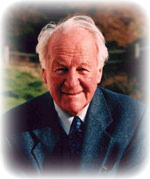
John Stott, Biblical Preacher

John R W Stott died yesterday afternoon after listening to Handel’s Messiah and hearing 2nd Timothy.  The fight well fought.  The race well run.  The faith well kept.   Converted in 1938, ordained in 1945, promoted to glory at 90 years of age.  This man was a biblical preacher par excellence.  I never had the privilege of meeting him, but I’d like to share some reflections on his ministry in his honour today.  One of the books I am reading at the moment is one of his lesser-known works, but well worth getting hold of – Christ the Controversialist.  So for seven brief reflections:

1. A Biblical Preacher.  Stott didn’t try to be the original thinker, instead he modeled being the Bible miner.  His ministry was always marked by faithfulness to the sacred text, clarity in its presentation, and relevance to the situation in which he was preaching. Stott gave us the metaphor of the Bridge-Builder in his wonderful book on preaching, Between Two Worlds. Christianity Today’s editor in 1981, Kenneth Kantzer, once wrote, “When I hear him expound a text, invariably I exclaim to myself, ‘That’s exactly what it means!  Why didn’t I see it before?”  

2. An Evangelistic Global Preacher.  Stott spent his entire career at All Souls, Langham Place, yet his influence was genuinely global.  His passion for evangelism has ofted been noted, and his statesmanlike role at the 1974 Lausanne Convention was massively significant.  His global ministry goes on today through Langham Partnership International, a ministry supporting leaders, publishing and preaching in the developing world.  Local and global ministry are not mutually exclusive.

3. A Multiplicative Ministry.  I’m not sure what word to use here, but when the story of the evangelical church in post-war Britain is told, it will always have Stott at its centre.  At a time when evangelicalism seemed to have “dropped the ball,” the rebuilding seemed to occur around the humble but determined influence of Stott in the Church of England, and Lloyd-Jones in the free church.  It is possible to be an intellectually rigorous evangelical.  Stott proved it, and in his humble determined way, he multiplied himself.

4. A Cumulative Ministry.  While taking opportunities to serve the global church, Stott demonstrated the value of cumulative ministry in his home church.  He famously turned down the opportunities to climb the power pyramid and become a bishop, but instead showed what cumulative preaching can do over the decades in a single church.  If only more preachers would stop pyramid climbing and playing ecclesial politics, and instead give themselves to faithfully preaching the Word!

5. A Writing Ministry.  Not every preacher can write, but those that can provide a real service to others.  I remember reading The Cross of Christ at a formative time in my life.  I’ve turned to Stott’s commentaries numerous times.  Many will attest to the help received from Stott’s clear yet profound mining of Scripture.  The faithfulness, clarity and relevance of his preaching showed through in his writing.  In an era of fluffy books lacking biblical substance that fail to make the cut when we need more shelf space, Stott has continually produced solid works, large and small, to serve the church.

6. A Retiring Ministry.  How many great movements and churches have suffered at the hands of the power figures unable to let go?  Stott seems to have had the faith, the courage and the humility to hand over the reins in the church, and in the global ministry, with a passion to see things improve.  Some people have to move away to leave room for the next generation to move on.  Stott has been able to remain as a sage supporting subsequent leaders, Uncle John to all who knew him personally.  If only more older leaders would have the courage to not cling onto control, but know when the baton should be passed.

7. A Ministry with Integrity.  Stott, apparently, was a shy man who would be happy in his own company writing for weeks on end, or enjoying his ornithology.  Yet he gave himself to others, he prayed, he cared.  He lived his life with a deep devotion to Christ to the end of the journey.  Truly one of the most influential leaders of our time, Stott is a wonderful example of a plain ordinary Christian, mightily used by a wonderful Christ.

Add to FacebookAdd to DiggAdd to Del.icio.usAdd to StumbleuponAdd to RedditAdd to BlinklistAdd to TwitterAdd to TechnoratiAdd to Yahoo BuzzAdd to Newsvine