The New Birth – UK Release

I am very pleased to announce that my new book, The New Birth, has been released in the UK. (It will be released in the USA next month.) See the links at the bottom of this post if you want to buy it from my affiliate link so that I receive a small amount from the sale (thanks!)

Coincidentally, on the day the book was released, my eldest daughter (whose testimony is in the book) went into labour with our first grandchild! So we enjoyed two new births in less than 24 hours!

If you would like a copy of the book and will see me in person, please ask. To order the book from my affiliate link in the UK/Europe – click here. And to pre-order the book from my affiliate link in the USA – click here.

Thanks so much! I hope you enjoy the book! (Please comment on this post if you’ve read the book already, but I would also greatly appreciate any positive reviews on 10ofthose, Amazon, GoodReads, etc.)

Endorsements

“Peter Mead presents this essential doctrine in a way that warm, clear, rich, and readable. The book is accessible and engaging, and the addition of stories and reflection questions at the end of each chapter enables us to consider and imagine the way that the truth of the gospel can and should shape our lives. This is a lovely and helpful book—a great introduction to those new to or exploring faith, and a refreshing encouragement to those who have been Christians for a while.”

Ellidh Cook, Student Worker at All Souls Langham Place, London

“This tiny book conveys a huge reality: that Jesus came to raise spiritually dead people into abundant life! Peter Mead’s insights into the new birth that Jesus offers are both pastorally wise and profoundly helpful.”

Philip Miller, Senior Pastor, The Moody Church, Chicago

“When I became a Christian, I didn’t really grasp what had happened. It was an infinitely bigger deal than I realised-it was (and is) beyond my wildest dreams. Peter has given us an excellent primer into this huge adventure. This lovely, heart-warming book opens up the foundational truth of the new birth. As with the rest of the Essentials series, it is short and simple, yet full of deep and delightful teaching.”

Jonathan Thomas, pastor, author & broadcaster

“I found Peter Mead’s The New Birth contribution to the Essentials’ series most helpful, because it weaves together our story with the big story of Scripture through the lens of the work of the Holy Spirit. Taking as its anchor point Jesus’ encounter with Nicodemus, it wonderfully explains the theology and the felt experience of Christian conversion, and all along there are thrilling stories of how the Spirit transformed the likes of Spurgeon, Whitefield, C.S. Lewis, and modern men and women.”

Rico Tice, Co-Founder of Christianity Explored

Needed: An Army of Mary/Marthas

At the end of Luke 10, the little story of Jesus’ visit to Bethany is a witness against much of evangelical activity.  Jesus had nowhere to lay his head during those ministry years, but he did have a home away from home in Bethany.  Just a few miles from Jerusalem, Jesus seemed to have a familiar place to stay with his close friends Mary, Martha, and Lazarus.

On this occasion, Martha was interrupted making dinner for two or three by a knock on the door.  Thirteen tired men had just arrived.  Dutifully, she returned to the kitchen to turn a meal for two or three into a meal for fifteen or sixteen people.  I’m sure Martha was pretty adept at performing miracles in her kitchen.  Still, on this particular day, nothing was working as it should.  The fire gave off smoke but no heat.  The salt had run out.  The flour spilled.  The onions had gone past their point of usefulness.  Martha was frustrated.

Looking for Mary, she found her sitting at Jesus’ feet in the main room.  Martha lost it.  In one quick outburst, she rebuked the guest of honour and then inappropriately issued a command at him.  Everyone would have felt the tension in that room.

But Jesus responded with grace and clarity, “Martha, Martha, you are upset about many things, but only one thing is necessary.  Mary has chosen the good portion, and it will not be taken from her.” (Luke 10:38-42)

What Was Martha’s Mistake?  Everyone knows that Martha got it wrong, but many seem confused by her error.  Was Martha simply wrong for being busy?  Not at all!  Before you preach against a Martha spirit in your church or ministry, be careful; your ministry would not exist if it weren’t for the hard-working pragmatists who carry so much on their shoulders.  It is not wrong to be busy with ministry work.  In fact, we need more people to be motivated to join the church’s efforts.

Now, this portrayal of Martha as busy and bitter is common.  Some children’s Bible storybooks paint Martha as sour and driven, with a stern look and her hair tied back in a tight bun.  Meanwhile, Mary often looks like a young model, lounging with a big smile near Jesus.  This depiction is so unfair.

Martha’s mistake was not being busy.  It was a matter of priority.  In the previous passage, Jesus meets a lawyer who wants to know about eternal life.  They discuss “love God, love neighbour” – the Jesus ethic the lawyer had picked up on.  (That episode focused on the lawyer clarifying who his neighbour was.)  In the following passage, Jesus teaches his disciples to pray with this pattern: God first, neighbour second.  So what about the Martha incident?  Well, she was loving her neighbours – all thirteen of them! 

The problem was not that Martha was loving her neighbour, but she had not first prioritized loving her Lord.  Mary sat at Jesus’ feet and let him minister to her.  Martha busied herself, loving her neighbours.  Such an approach was unsustainable, and the cracks soon started to show.

The Signs of “Doing a Martha” will soon show when we do what Martha did.  The pressure rises, and the steam starts to whistle.  A little comment from the side gets a sharp response.  A little setback in our task unleashes the tension that others feel.  It doesn’t take much.  When you or I are doing ministry in our own strength, people will sense it because they will be on the receiving end.  It could be a little practical task or a big ministry duty.  It doesn’t matter.  When we are running on empty, those around us will start giving us extra space.  They will avoid getting in our way.  They might even start to ask us if we are okay. 

Doing a Martha ongoingly will go beyond sharp responses to emotional and spiritual burnout.  But praise God that the signs will tend to show much earlier.  The question is, are you willing to hear when others raise concerns with you?  It is easy to dismiss the little tensions.  After all, you have thirteen extra people to feed.  And nobody else is doing it!

When you bring tension to a room, the atmosphere becomes thicker.  When you find yourself “justifiably” rebuking and commanding the guest of honour, it is time to think of Mary and Martha.  Specifically, it is time to think of Jesus’ gracious response to Martha.

The Evangelical Excuse Does Not Cut It – I am sure Martha would have been an excellent evangelical, and she would have probably said what most of us would say if challenged about this.  “Yes, I know I need to spend time with God, but you need to understand that I am loving God by loving my neighbour!”  It sounds good, but it does not change the point of the story.  We all need to get these things in order. 

Suppose we allow God to minister to us first by sitting at Jesus’ feet and listening to him.  In that case, we will be like a bucket filled from above, filled to the brim, and running over to others.  That makes for sustainable ministry!

Suppose we do not allow God to minister to us first but insist on being busy.  In that case, we will love our neighbours from an emptying bucket.  We will run out of fuel.  We will start to burn those around us with our tension releases.  And ultimately, we will grind to a halt.  We cannot self-sustain any ministry!

Conclusion – It is so simple, but we must learn this lesson!  Love God first by listening to him.  Spend time in his word.  Spend time sitting at his feet.  Let the Lord minister to you before you head out for the day to minister to others.  Love God, then love your neighbour.  Get that out of order, and everyone around you will spot it before you do.  What we need today, as always, is a whole army of pragmatic Marthas, ready to serve and prepared to love their neighbour because they have first been an army of devoted Marys.  Love God, then love your neighbour.

______________________________________________________________________________________

Now released in the UK, available from 10ofthose.com

Not a Guilt Trip

When Christians talk about the need for purity, it can easily sound like a guilt trip.  If part of our goal in ministry is tangible life change, does that make ministry a glorified guilt trip?  Or is there a more powerful motivation available?

1 John is a glorious letter written by Jesus’ disciple, John, to a church that was shaken by a church split.  The group that had left claimed to have a superior spirituality, but the genuine believers left behind were feeling bruised and doubtful about the authenticity of their faith.  Were they somehow missing out on the “real thing?”  John wrote this letter to assure them of their standing with God, their fellowship with the Trinity, and the reality of their less spectacular spiritual experience.  He writes gently and with a pastoral sensitivity.  But still, he writes with plenty of theological truth and perspective.  Then comes the beginning of chapter three, when suddenly there seems to be an emotional explosion:

“See what great love the Father has given us that we should be called God’s children—and we are!” 1 John 3:1a

In the first three verses of chapter three, John gets them to look back and to look forward.  Looking back, it is clear that we are already extravagantly loved as God’s children.  Looking forward, we discover that our revelation as the bride of Christ is still to come.  God’s “exotic” love for us provokes a purifying love in us.  Here is a motivation that far outstrips any guilt trip. Let’s look at these three verses.

Looking Back – We are already extravagantly loved as God’s children (v1). It is striking that as John is pondering great truths, it is as if the riverbanks of his intellect burst, and his heart gets flooded.  We must remember that intellectual curiosity alone is never the goal of theological or biblical study.  The truth of the gospel should regularly flood our hearts and bring its cleansing power to our motives, values and affections.  The Bible is not pushing us towards a sterile intellect and will-centred faith.  Behold the love of God!  As the hymnwriter put it: The love of God is greater far, than tongue or pen can ever tell!

The word John uses to ask the question in verse 1 is intriguing.  See what “great love” God has given us.  He uses the word that carries the sense of “Where is it from?”  After the Second World War, I imagine what it was like when some foreign foods were reintroduced after years of restrictions.  What it must have been like for those children to see and taste a banana for the first time, mango, or whatever.  “Where is this from?!”  Everything must have seemed so exotic and exciting.  That’s the thrill of looking at God’s love for us –an out-of-this-world exotic love!

For example, what would we see if we looked through John’s Gospel and thought about what God’s “exotic” love had given to us?  He gave us the right to be his children (1:12).  He gave us his Son (3:16) and the Holy Spirit (14:16).  Through Jesus, God gives us living water that satisfies (4:14) and the bread of life that fills us (6:32).  He gives us eternal life (10:28); his peace (14:27), and his word (17:14).  We also receive his Son’s name (14:27), and whatever is asked in that name (15:16; 16:23).  God gives so generously!

Could we with ink the ocean fill,
  And were the skies of parchment made;
Were every stalk on earth a quill,
  And every man a scribe by trade;
To write the love of God above
  Would drain the ocean dry;
Nor could the scroll contain the whole,
  Though stretched from sky to sky.

And this is not something we are working on or trying to achieve.  We either are God’s children, or we are not.  John continues to underline the fact for his readers, “And we are!”  What a privilege to be loved with this out-of-this-world love as God’s children!

Looking forward – we are not yet revealed as the bride, but the wedding is coming (v2-3).  Here, we have one of the most thrilling verses to ponder.  When he appears, we will see him, which will do something to us that reveals something astonishing.

Dear friends, we are God’s children now, and what we will be has not yet been revealed. We know that when he appears, we will be like him because we will see him as he is. And everyone who has this hope in him purifies himself just as he is pure.  (1 John 3:2-3)

These verses describe the final and complete sanctification experience that lies in store for every believer.  Right now, we are living in the midst of a process.  It is described in 2 Corinthians 3:18.  As we look at Jesus, we are gradually being transformed from one degree of glory to the next.  But when we see him, that ultimate vision will be so glorious it will mean a total transformation for us!

Notice that in 1 John 2:28, John writes about shrinking in shame from Jesus at his coming.  That would make sense, since we are all still marred by sin.  But he is writing to give them assurance, not condemnation. 

So, what is it about seeing Jesus fully that will bring about such a total transformation?  I believe the full realization of every longing will burn away every possible alternative.  Just imagine every appetite you have, every craving, every hope, every desire, every taste, every hint of what is good.  Try to picture how our hearts have been stirred by creation – a stunning sunset, a breathtaking thunderstorm, a beautiful frosted spider web.  Try to imagine how your very human heart has been stirred by feasting with friends and family, by the touch of poetry, by travel shows on TV, or by picturesque country living magazines—a lifetime of longings.  But then we will see him as he is and discover that Jesus is more than enough to satisfy every last longing of our hearts!  After all, he has satisfied the Father’s loving heart for all eternity; how much more will he satisfy ours?  Seeing Jesus is our ultimate hope!

The anticipation of seeing him is the motivation we need to put our energy into living a pure and godly life now in this age.  It is not a guilt trip – ‘you should do, or else!’  It is a motivated heart – ‘I get to because my hope is in seeing him, not in any of the idolatrous replacements I can invest in now.’

The motivation for this hope is like when a guest comes to visit your home.  You are excited to see them, so you clean and tidy the house before they arrive.  Actually, it is greater than that – it is like your grown child coming home from a year abroad.  No, more than that, it is like when your spouse has been away for a few days, so you invest time and energy into cleaning the house before they arrive.  Actually, biblically speaking, our hope motivates us in the same way that someone is motivated by the approaching reality of their wedding day!  After all, we live as children of God now, waiting for the return of our bridegroom to take us to be with him – the marriage supper of the lamb and the arrival at the home prepared for us, and being together forever.

“Everyone who has this hope in him purifies himself.” (1 John 3:3)

____________________________________________________________

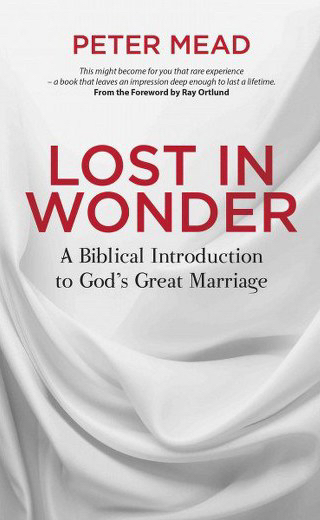
Please see Peter’s book, from Christian Focus, looking at the great theme of God’s marriage throughout the Bible:

Review: Preaching, by Michael Reeves

Subtitled, A God-Centred Vision, this is a little gem of a book from Union Publishing.  It is not about preparation techniques.  Reeves writes, “I want to press deeper. For a rich, biblical theological understanding of preaching dramatically enhances preaching far more powerfully than any practical tip. . . . I want to cast a vision for preaching that is nourished by the very being of God, the glory of his Word, and the power of the gospel.” (p17-18)

As you can imagine, Reeves builds his book on both a theological and historical footing.  There are clear trinitarian foundations: “This is what the living God is like: not silent or speechless, but a God who speaks.” (p21)  And there are also historical insights worthy of note: “Preaching was the real engine room of the Reformation. . . . the Reformation demonstrated the astonishing, transformative power of the regular and clear preaching of God’s Word.  It stands as historical evidence that there is nothing inevitable about church decline.  The spiritual darkness of our day can indeed be checked and turned back.” (p24-25)  

The goal of preaching, theologically, is not just to learn about God, but to encounter him, to enjoy him, and be united to him.  And biblically?  True preaching must be expository, “in that it exposes the Word of God and makes that the food on which the church grows.” (p30)  Reeves is clear, true preaching must point us to the person of Christ.  While this is not a book of the mechanics of sermon construction, Reeves offers some critical advice.  “Preach Christ, not an abstraction.”  “Proclaim the reality, not a mere idea.”  “Show, don’t tell.” (p52-57)

While many preaching books will encourage preaching to the heart, and not just the head, this book explains what that actually means.  The preacher must convey more than mere information or emotion.  “(Preaching) is a heart-shaking assault on darkness and the very gates of hell, trumpeted forth so that sinners tremble and saints quake in wonder.” (p62)  And true preaching must lead to heartfelt worship, for “the triune God, who is love, is not truly known where he is not truly loved.” (p64)

We all know that preaching can tick many boxes, yet remain essentially shallow.  Reeves offers a simple cure for shallow preaching: get to the root of the issue.  We are not simply needing exhortation to better conduct.  We need heart transformation.  The affections are the key target in ministry– “Affections are deeper and more constant (than emotions): they make up the very grain of the heart and its inclinations.” (p73)

When the gospel is truly preached, “It is that gospel that will melt and renew hearts of stone.  It is that sight of the Son of Man, lifted up on the cross, proving the love of his Father, that realigns affections. . . . The sin that pleased us becomes odious. The God we flinched from becomes entrancing.” (p78-79)

This book really is a gem.  A book to read and read again for your ministry, and a book small enough to distribute to other preachers in your circle.   

The Thirties – Part 9 (Final Thoughts)

As the allied leaders appeased Hitler in the later 1930s, ACG noted how this played into his hands. “The peace of Munich is a complete victory for Hitler.  The Munich pact replaces the Versailles Treaty. Germany has won the [First World] war after all. An unforgettable lesson has been taught to the whole world, namely that nothing can be expected from lawful agreement, arbitration and peaceful negotiations. All that matters is power and might. What you can grab by force and threat is yours by right. It is a lesson that will not be forgotten by the Germans within and without the Fatherland. It will continue to plague the world in years to come.” (p350-351)

The Allies simply needed to call Hitler’s bluff.  However, the British and the French gave up on their treaty with Czechoslovakia and tried to pursue peace.  Hitler lacked the strength and public support needed to wage a new war.  But sadly, his lies won him the extra time he needed. “The great Swedish Chancellor Count Axel Oxenstjerna was right when he said to his son: ‘Don’t you know, my boy, with what little intelligence the world is run?’  Oxenstjerna’s words are as true today as they were 300 years ago.” (p354)

As ACG came to the end of his book, preparing for publication in 1939, he wrote, “At the apex of the German pyramid stands a dictator drunk with success and surrounded by a horde of daring adventurers. He and they live in a world of their own. Germany, they believe and make others believe, has become the hub of the universe. . . . It is a sad commentary on our times that the forces of progress, suffering from a strange malady of inertia and moral paralysis, have permitted a dictatorship to bring limitless misery to millions of people who once were happy.” (p356)

It is pretty sobering to read the final pages, knowing all that was to follow in the subsequent six years of Nazi tyranny.  “I have no intention of defending that which can not be defended. I have testified in previous chapters to the all too many sins of omission committed by the democratic state, statesmen and national leaders, and their failure to take timely and energetic action against the enemies of democracy and progress. Yet to arrive at a conclusive answer one must not look around for individual scapegoats. It is necessary to realise the collective responsibility and the collective guilt of the German people; that collective guilt which can perhaps best be explained by the lack of political instinct and political common sense of the Germans.” (p360)  As we look at threats to society today, we could soon be writing the same thing of our nation, or of the west.

“If individual guilt and responsibility have to be apportioned, then certainly all those are guilty who allowed things to come to such a pass.”  (p365)  ACG referred to Reich Chancellor Bruening in 1930 and others who made influential decisions with devastating consequences.  But what about a broader view?  What about the population, the foreign leaders, community influencers like the church leaders, etc.? 

“The longer National Socialism rules in Germany, the greater becomes the danger of a new and all-devastating war.  It is the sacred duty of all those within and without Germany to whom justice and law, humanity, democracy and peace are not matters of mere lip service, to co-operate in the fight for the preservation of mankind.” (p368)  This is still true today . . . totalitarian, globalist takeover agendas are flagrant, and too many heads remain firmly buried in the sand. 

So, to come full circle, common decency dictates that we should not liken anything today to 1930’s Germany.  In light of what has happened in recent years and what may lie ahead of us, maybe it would be wiser if we did.

The Thirties – Part 8 (Points to Ponder)

In this series, I have considered ACG’s book, Inside Germany.  Published in 1939, it is a fascinating account of the Nazi takeover of Germany that brought the world to the brink of disaster.  In light of reading that book and reflecting on our own times, what are some takeaway points to consider as preachers?

1. Only one message can change hearts.  It is not a political message nor driven by headlines in the newspapers or social media.  It is the message of the Gospel, and it comes from the Bible.  We must preach the gospel as loud and clear as possible in tumultuous times.  It may be that the turbulent times stir previously comfortable hearts to a new level of openness.  When those moments come, we must offer Jesus to a needy world. 

2. Only saying one thing can be a sign of weakness.  I know that our ministry is to preach the Gospel.  However, we also have some clauses in our job description that relate to being people of the truth.  In an age of disinformation, misinformation, malinformation, etc., we must speak the truth.  In an age of censorship, controlled media narratives, and the silencing of independent thinking, we need to promote informed and free thought.  Suppose our default position in public speech is to hide behind what is culturally acceptable.  For now, we can quote Bible verses because it is still safe to do so.  Why do we think we will later become bold clarions of truth when the societal pressure to conform becomes so much greater once tyranny takes a tighter grip on our throats?

3. We need to grow in discernment.  Too many are proclaiming a media-shaped worldview with some Bible verses attached.  There is probably a church in your town that is already fully there – sounding like their pulpit is a marginally more religious version of a BBC TV presenter.  God has not called us to offer insipid commentary on society with the odd tip of the hat to contemporary ideology.  We were called to think and proclaim biblically.  So read the Bible, then read the culture through the lens of the Bible (and not vice versa). 

We wouldn’t only read theology books from one agenda-driven publishing house, so don’t read society simply through the lens of the mainstream media’s agreed narrative.  Neither should we only read society through just one or two social media voices.  Let’s look for trustworthy sources.  That doesn’t mean checking to see if they are on the BBC, even if it once did.  Censorship should be a red flag to any thinker.  Look for who is being paid and who is losing their livelihood.  Look for who stands to gain and who is being silenced.  Let’s look for multiple trustworthy sources of information and set an example of being informed, thoughtful, and biblical in our discernment.

4. Have the courage to speak when silence is easier.  Can I be candid?  There have been times during recent years when I have found that many Christian leaders seem to be hiding behind the mantra of only preaching the Gospel.  It is easy to quote John 3:16 on social media.  But how many churches have gone along with the media narrative every step of the way, only to wonder later why they didn’t question more?  The easy choice today can mean I have reduced my credibility in a year or two.

5. What is our territory?  We have to be careful with politicised issues.  But don’t fall for the simplistic idea that every political matter is off-limits to us.  Last week, I was in a room where some people were asked what it was like to live under Soviet rule.  One answered about how they could not trust anyone.  Another spoke about never showing gladness outwardly.  Then an older man said, “We can never explain to our children what it was like because it was a spirit.”  There was a spiritual reality behind Communist rule.  There was an evil spirituality in Nazi rule too.  And if there is a “spirit of the age” at work in the ideological agenda of our day, then we cannot say that preachers should stay quiet.  Politics may be largely off-limits, but speaking God’s truth in the midst of a spiritual battle certainly is our territory.

6. Having courage does not negate the need for gentleness.  Sometimes, people hear a call for courage as a call for bombastic shouting.  Not at all.  We represent Christ, and we need to convey the nature of his character, as well as truth, in society.  But we should not underestimate what can be achieved in this world with gentle forcefulness.  (See my post on Solzhenitsyn’s “Live Not By Lies” from January.)

7. Pray and pray boldly.  As well as saying little to challenge the media narrative, it is also easy to pray as if that media narrative dictates reality.  God can do immeasurably beyond all that we ask or imagine.  In our private and public prayers, let us boldly pray for God to bring down those who exalt themselves, for God to expose those whose plans are for evil rather than good, and for God to break open hearts that seem so solidified against him.  The Third Reich was supposedly going to last a thousand years, but it was done in twelve.  Many prayed for that.  The impregnable Iron Curtain was brought down in my younger years.  Many prayed for that too.  And so it is with every variation of Communism, globalism, or religious takeover. Let’s pray that God would bring it down so that more can be spared the suffering and freely come to know him.

The Thirties – Part 6 (Contemporary Shifts)

In the last post, we brought out the question sitting in the shadows throughout this series of posts.  What part did the church play in allowing the Nazi takeover of Germany?  We can never know what would have happened if more stood up and overtly resisted.  But that is one of the critical questions we must wrestle with in our day.  First, when will we stop supporting the general direction of travel?  Second, how will we resist?

Whatever we may feel is the driving force behind the changes, we surely must get our heads out of the sand and recognise the shifts that are taking place.  There are moral shifts regarding gender, sexuality and crime.  There are human rights shifts regarding free speech, free movement, the right to assemble, and bodily autonomy.  There are ideological shifts in respect to traditional religions, cult-like agendas, and globalist unaccountable power grabs.  The world could be a very different place in a very short time.

Morality and change – Even before the full extent of their atrocities were revealed, people knew the Nazi morality. “The Nazis claim that all that is beneficial to the German people is right.” (p192)  This, of course, meant that they could do whatever they liked.  When right and wrong are redefined, a culture is under threat.  We live in a culture where you are judged to be a threat to progress if your actions, words, and even thoughts do not support the approved narrative, the dominant ideology, or the power imposing religion. 

Why do people assume that the freedom of speech, freedom of religion, and freedom to disagree will persist when those asserting their power are committed to a different morality?  If any try speaking against certain sanctions and medications, kneeling ceremonies, well-known religions, or theories in climate science, then they soon discover that there are consequences in our day.  There has been a major shift in the ethical foundations of our society – we must not pretend otherwise.

Democracy and change – People naively believe that societies change from good to bad in free and fair elections.  Sometimes that has happened.  But revolutionary change tends to require a crisis. “On the day after the Reichstag fire, a new law ‘for the protection of the people and the state against communist acts of violence’ was made public.  It had been obviously prepared beforehand. … This law deprived every citizen of his few remaining civil rights and left him at the mercy of the new masters and their heavily armed sluggers now elevated to the rank of authority. Person and home were no longer inviolate. Privacy of mail, telephone and telegram had ceased to exist. Freedom of speech, press and assembly was a thing of the past.” (p215)  It was not an election that changed everything but a manufactured crisis.  A crisis means that change can be imposed ‘for the good’ of the people. 

Individuals as the threat to change – As with every tyrannical takeover and revolutionary moment, the free-thinking individual is an instant threat to the people in power.  Germany had “confined itself to the deliberate destruction of the rights of all those who think independently and come to conclusions different from those of the masters of the Third Reich.” (p230)  We see the same thing when Communist revolutions grab hold of a country – immediately the useful idiots who helped create the crisis are a threat to be discarded, along with the educated, the religious leaders, the writers, the influencers.

The Nazis considered the “fourth battlefield” to be enemies from within the state.  So, they used the SS troops to bear arms freely as they brought terror and control to the nation.  The SA “brown shirts” were more of an accessory to the Nazis but were used either in uniform or in everyday clothes “to arouse enthusiasm among the masses.” The jubilant masses described by foreign press correspondents were usually “well-rehearsed SA formations.” They would create disturbances outside Jewish-run businesses, where the Gestapo would sweep in to arrest the owners for their own protection and dispatch them off to concentration camps.  Then, the SA performance would quiet down.  (See p250-251)

The recurring theme of thought crime came out strongly in the book: “None of those imprisoned under the pretext of protective confinement had committed crimes. Their only guilt in the eyes of the Nazis was to have opinions contrary to Nazi creed.” (p338)  A society can never be considered free when people are punished for holding specific opinions.

Is change a surprise? It is easy to assume that the German people were unaware of the evils of the Nazi regime until the secrets were revealed after the end of the Third Reich and the humbling death of Hitler in his bunker. “Again it must be emphasised, that everything that has taken place within the last five years has been publicly and repeatedly proclaimed by the Nazi regime long before it came to pass.  Only the degree in which early predictions have been fulfilled is a matter of surprise.” (p267)  I can’t help but wonder if such published predictions were also disparagingly called conspiracy theories a century ago.  There does seem to be a pattern – troubling things are proclaimed and published, the media run a different narrative, people quote those troubling things, the media decry those people as quacks and conspiracy nuts.  And then, sometimes very quickly, those troubling things turn out to be true.

In the next post in this series, we will consider more parallels to our time.

The Thirties – Part 5 (What About The Church?)

The question I brought into my reading of ACG’s book was more specific than society.  I wanted to know what was happening in the church during those years of transition to tyranny.  And is there anything we can learn for our tumultuous times?

The Catholic Church agreed a concordat with the Nazi party in 1933.  It gave the church a lot of freedom and protection.  But at a cost. “Catholic clergy were deprived of their civil rights. Political activity was forbidden.” (p205)  Ironically, they kept their position of influence in society, while relinquishing their ability to say anything constructive.  I have watched many wrestle with this tension in recent years.  Should we strive to keep our “voice” in society by following the rules imposed by the media, or do we speak out about concerns and thereby invite society’s opposition? 

“To oppose the encroachments by the Third Reich, the churches should have united and fought jointly the common danger, but here as in the political field, the spirit as well as the prerequisites to such unity were sadly lacking. As to the Protestant Church, the wealthy parishioners and the Protestant middle class were in favor of the Nazi regime. …Neither then nor later did the Protestant clergy show a common will and determination in defense of their rights.” (p206)  It is intriguing that those with some societal standing (in terms of their wealth status) are identified as supporting the regime.  Surely, if the benefits are to be weighed in terms of income and status, that should be a warning flag that the motives may be somewhat corrupted.

Is it possible to imagine a church in our time that goes along with a rogue government or popular narrative in order to keep its voice in society?  But what if it already has little to no voice?  What is it protecting?

“The Nazi aim in the field of religion is the establishment of a co-ordinated German church under party supervision. … Their publicly proclaimed thesis is “The word of Adolf Hitler is the word of God and has the authority of God.” (p206)  It was not just moral madness that should have been opposed, but also the religious heresy of the time.

Even within the 1930’s, there was a growing religious fervor in silent protests against the Nazi regime.  What if they had not capitulated initially to take the easy path and keep their influence?  What if the church had been willing to take a stand from the start?

There was a concerted effort to undermine the church’s influence in society.  The black-shirts, the elite guards, were forbidden to belong to any religion.  The Hitler Youth movement estranged a generation from churches. “Church services are held under observation of the Gestapo, the state secret police. Clergymen who have held services outside the church confines in order to escape police supervision have been arrested and sent to concentration camps.” (p208)

Church leaders and members were subjected to every possible charge and slander. “They are accused of immorality, corruption and violation of government regulations. . . . Occasional cases of law violations are blatantly generalized.” (p208)  It is hard to stand for what is right and true, but is that not what all believers are called to do in this fallen world?  We represent Jesus and the Gospel.  Always with grace and love, but sometimes with courage and a willingness to pay the ultimate price.  And when we capitulate in order to have a voice in society, what happens when society wakes up to the truth and then wonders why the church didn’t say anything? 

Is it better to have a voice, or to use it? 

I don’t want to condemn the church in the 1930s without acknowledging how easily cowed the church in the 2020s might prove to be.  As Dietrich Bonhoeffer famously wrote, “Silence in the face of evil is itself evil: God will not hold us guiltless. Not to speak is to speak. Not to act is to act.”

The Thirties – Part 4 (How Did it Happen?)

The tyrannical Nazi Reich toppled the German Republic in just fourteen years.  It is historically fascinating to trace the transition.  More than that, we must learn from history to avoid repeating it.  So, how did it happen? 

There were all sorts of players involved.  Lots of people had vested interests.  There was plenty of historical baggage everywhere you look.  And complex political wranglings tugged at the emerging storyline.  It would take a long book to lay bare the complex reasons for the change.  However, there are some pertinent points that a series of blog posts can consider to enlighten our thinking for our world today.

ACG repeatedly points to a critical underlying issue – a lack of willingness to resist.  For example, he writes, “Yes, it ought to be said again and again, that the iron will necessary to maintain the authority of the state, to guard jealously the inalienable rights of the people, and to fight in defense of democracy, was sadly lacking.” (p142)

When people were openly attempting to destroy democracy and bring in a dictatorship, there should have been a response from “energetic authorities” – but there was not.

While the outside world was concerned about the “saber-rattling speeches” from the Nazis, “The republic, however, and its statesmen continued to view the manifestations of reaction and renewed militarism with unconcern.” (p145)

“When Nazis took power, people had done nothing, but felt it was too late to take a stand.” So sad.  And yet, it is so believable as we watch human nature in recent history.  In the early 1930s, they still had the numbers and the means to stop it, but the will to resist had already dissipated. 

Once the Nazis were in power, the rules changed.  They introduced a worker’s passport to control the labour force for government purposes.  People couldn’t change jobs without permission, which kept the masses from moving to the cities and away from the armaments factories.  Tyranny, by definition, needs to impose control over individuals.

It would be unfair to say that the people merely turned away from reality. “Everything is prepared in the Third Reich by means of a thoroughly co-ordinated press and radio.” (p192)  There was massive propaganda pressure against the people.  The most heinous example of this was the national pressure against Jews and the normalization of hatred against a class of people.  During 1936-37, 870 Jews were convicted of racial crimes, turning the screw even more.  They could not receive protection because of the hostility of the police and the courts.  In our times, we are repeatedly seeing how quickly a society can be turned against a race, class or group of people (consider medical dissenters since 2021 or Jews in recent months, for just two examples).  And sadly, the majority of people either do not see it or refuse to see it. 

“The annexation of Austria was accompanied by all the horrible happenings known from 1933 when Nazism conquered power in Germany.  At that time the world was unwilling to believe its own eyes and prepared to forget the horrors as quickly as possible.” (p336-7)  I wonder how often the combination of narrative control by the media and self-imposed blindness in key people leads to greater harm to the world.

I started ACG’s book expecting only to find hints of what was to follow during the Second World War, and especially the horrors of the holocaust.  But the concentration camps, the numerous “suicides”, and the killing sprees were all already present and known in the thirties.  Living in a world that is unwilling to believe its own eyes is scary!

Society may be conditioned to support an approved narrative, but we are called to be men and women of truth.  In the next post, I want to get to the heart of my concern: what was the church doing in the transition to Nazi rule?  Does the church matter?  Do our voices make a difference?

The Thirties – Part 3 (The Threats Identified)

In the last post, I noted a few parallels between the 1930s and our times.  But what about the threat itself?  The Nazi threat was totalitarian, oppressive, ideological and quasi-religious.  Since the fall of the Third Reich, the world has been more focused on Communism, supposedly coming from the opposite end of the political spectrum.  Also, on the expansion of militant religion, and latterly, activist agendas driven and funded by globalist ideologues.   While the media seems to scream “Nazi!” quite freely as an insult, there appears to be an eerie ignorance of where the threat lies for our society today.  What would be the cost in both freedom and lives if we continue to push in the direction of the utopian dreams being touted?

Interestingly, the ideologies swirling in the 1930s seem to come from both ends of the traditional political spectrum as people understand it. 

“Hardly had the republic been established, when the enemies started to attack in earnest.  From the left . . . the communists savagely pounded away at the people’s state and its institutions . . . fighting and belittling everything created by the republic. . . . Propelled by the insane belief in a world revolution, the communists caused millions of gold rubles to flow into Germany for the fight against the republic.” It is interesting to read how “time and again [the communists] joined forces with the Nationalists and Nazis in parliament.  They cast their vote against democratic government and, together with the Nazis, did immeasurable harm to the dignity of parliament by turning it into a place of political rowdyism and unheard-of brawls.” ACG was not surprised to see communists joining the brown-shirted storm troop army by the thousands, nor “the most radical communist districts . . . becoming strongholds of the National Socialist movement and its sluggers.” (p361) 

In another place, he notes how “Some SA formations had as many as thirty per cent communists in their ranks.  This was not at all surprising. Both the Nazi SA and the communists had much in common; above all, their hatred of democracy and especially of the social democracy.” (p252)

Wait, we are constantly told that the Nazis and the Communists represent opposite extremes on the political spectrum.  Instead of focusing all our attention on Left versus Right, we should instead contrast control and freedom.  Tyranny is tyranny, whatever uniform it wears.  And perhaps tyranny is the threat to liberal democracy and human freedom that lingers and re-asserts itself time and again.

Suppose the constitutional rights of the individual are not protected. In that case, any solution offered for any actual or imaginary crisis will prove to be a force of control.  In other words, self-proclaimed saviours tend to become tyrants.

 ACG finished his 1939 book with a prescient finale:

“National Socialism stands for the propagation of a system aimed at the destruction of individualism, the enslaving of other peoples, and barbarism. Civilization gives way to the law of the jungle. Wherever Hitler goes, the four horsemen of the Nazi Apocalypse follow. National Socialism is synonymous with war, devouring uncounted millions of lives, destroying culture and civilization. Hitler consciously or unconsciously is driving toward this goal. He is taking Germany and with her, all Europe and the whole world on the road to disaster.” (p367)

We would do well to understand what is meant by the political “left” and “right” but also to grasp that the real battle might be between control and freedom.  As preachers, our calling is not to preach a party political message.  The pulpit is not a soapbox; we have something much more important to proclaim.  But let us not bury our heads in the sand and live in ignorance of what is happening in the world around us. 

In the next post, I want to explore how the great shift happened so quickly and whether that may be helpful for our awareness today.