Preach To Your Listeners

In my experience there is a clear division among sermons preached.  Two categories, and almost every sermon falls cleanly into one or the other.  There are sermons preached to the people listening, and there are sermons preached to some other group.

Here are some of the indicators:

1. People in the crosshairs.  Sometimes the preacher seems to be focused very fully on me, the listener.  He seems to know about my circumstances, my life, my local culture, etc.  The preacher seems to care – it comes through demeanor, content, warmth, smile, etc.  It is great feedback when people say, “it felt like that was just for me!”  Some of that is definitely a God-thing, but don’t miss the difference your love makes! Other times the preacher seems to have the target fixed on some other people – those who don’t go to church, or the New Atheists, or the gang culture, or media moguls, or some high profile Christian leaders, or another denomination.  That can be hard to take for listeners when they get the sense we are preaching to someone else.

2. Purpose of message.  It may be that the preacher feels we need to be equipped to understand and handle the arguments of New Atheists.  That could be very helpful.  But sometimes it can feel like the preacher is having a go at certain people in their absence.  It’s like when a preacher looks up from their notes and only looks over your head at the clock or the door.  After a while you start to wonder why you are there.

3. Content of message.  It seems so obvious that we should target our communication at those people we want to understand what we are saying.  I wouldn’t preach in English without translation while visiting Japan (unless, of course, it were an English speaking gathering).  So why offer content that is inaccessible to your listeners?  Good communicators always make their listeners feel connected and focused on.  It is true in conversation.  It is true in preaching.

It is such a simple question, but so important.  Am I preaching specifically to these listeners?

Add to FacebookAdd to DiggAdd to Del.icio.usAdd to StumbleuponAdd to RedditAdd to BlinklistAdd to TwitterAdd to TechnoratiAdd to Yahoo BuzzAdd to Newsvine

Like This!

Wear the Right Strait Jacket

This week I had the joy of leading a group in consideration of what it takes to be growing as preachers.  I told them we need to wear the right strait-jacket.  I also told them that most preachers wear the wrong one.

Actually, when it comes to biblical preaching there aren’t as many rules as people tend to think.  The preacher has all sorts of freedom that should be instructed through experience of what works effectively, what achieves communication goals, etc.  But there are not as many rules as people tend to think.  As I wrote on here some time back:

Some like to impose significant amounts of structure on the preaching event, but in reality there are few limits involved.  There may be some limits imposed by the culture and heritage of a church – congregational traditions – and it is wise to think carefully before smashing through those expectations in an attempt to be creative.  However, these limits vary from place to place and it is possible, once trust is established, to carefully adjust such expectations.

So is there any constraint, or is it all freedom?  And how is it people (in this age of freedom!) tend to choose to wear a strait jacket?  And the one they choose to wear is the one that could well be cast aside? Here are the two strait jackets:

Wear This One – “To have integrity as a biblical preacher, I must be constrained by the true meaning of the passage I am preaching.” Each passage is saying something.  When we preach, we need to say the something the passage is saying.  We cannot say anything from anywhere in the Bible.  While we can tailor and target and re-order and re-emphasize, we cannot say whatever we want from a passage.  Some people, in the pursuit of “interesting” and “relevant” and especially “original,” will undermine the exegetical integrity of their preaching by saying what the text simply isn’t saying.  Be constrained by the text you preach.

Don’t Wear This One – “To be considered a preacher, I must preach in a certain manner, using a certain form that qualifies as a real sermon.”  While the first strait jacket guarantees our integrity as Bible handlers, this second jacket can sometimes undermine our effectiveness as biblical preachers.  What shape should a sermon take?  What style of delivery should be used?  Matters of form are matters of freedom for the preacher to evaluate strategically.  Different texts, different circumstances, different occasions, different strengths as a preacher, different personalities, different listeners, can all prompt different sermon shape and delivery style.  At this level our goal is effectiveness in communication.  We do not need unnecessary limits in place to hinder our effectiveness.

Sadly too many preachers settle into a predictable pattern where actually there could be considerable freedom – in matters of form and delivery.  And too many show a wild freedom where there is a limit – in the meaning of the text.  Let’s be sure to wear the right strait jacket, but throw away the other!

Add to FacebookAdd to DiggAdd to Del.icio.usAdd to StumbleuponAdd to RedditAdd to BlinklistAdd to TwitterAdd to TechnoratiAdd to Yahoo BuzzAdd to Newsvine

Like This!

PS One More Critical Concern With Gospel Presentations

I thought I might need to add more.  Here’s one:

11. The Gospel requires clarity about the true nature of sin.  Since the gospel of grace is good news about the solution to a problem, we have to be clear on the nature of the problem.  What is the sin we are saved from?

Sin results in ignorance, but sin is much deeper than that.  The gospel is not simply an education programme.

Sin means people don’t choose well, but sin is much deeper than that.  The gospel is not really about God empowering our wills to choose rightly.

Sin means people broke and break the law – lawlessness, but sin goes deeper than that too.  The gospel is not simply about God enabling us to become law-keepers again.

In the Fall, humanity didn’t just shift the moral prerogative from God to themselves, they shifted their entire affection.

Sin, at its core, is about rebellious rejection of the love of God in favour of love for self that influences every facet of our life and being.  Our first parents turned from a love relationship with God to the death of self-love (a deathly curvature of the soul).  The gospel has to address this deepest motivational reality of sin.  In the Gospel, God needs to somehow captivate our hearts and overcome our powerful self-affection with a greater and more compelling affection, thereby drawing us back into fellowship with Him, which is life itself.

If we aren’t clear about the depth and extent of sin, then our Gospel  presentations will be inadequate.  People will listen and compare themselves with the depraved individuals that make the TV news, presuming their need is less since they don’t break the law quite that much.  But when sin is seen as a heart issue at its core, then people can start to see that the manifestation might be lawless rebellion, or it might equally be self-righteous religiosity.

We must be clear on the bad news, in order to be clear on the good news.

Add to FacebookAdd to DiggAdd to Del.icio.usAdd to StumbleuponAdd to RedditAdd to BlinklistAdd to TwitterAdd to TechnoratiAdd to Yahoo BuzzAdd to Newsvine

Like This!

Final Critical Concerns With Gospel Presentations

To wrap up this mini-series, three more critical concerns with gospel presentations (I’m sure you and I could add more too!)

8. The Gospel is about God giving life to the spiritually dead and the Satanically blinded.  The people to whom we present the gospel are not just uninformed, or weak, or sick, they are dead.  And the god of this age has blinded the minds of unbelievers.  This is more than a little obstacle.  That is to say, we must never rely on our cleverness, our apologetic sophistication, our smooth presentation or any particular “this is the only way to evangelise” kind of presentation.  Let’s benefit from all that is available apologetically, and let’s do the best we can, but let’s do that completely in dependence on, and in prayer to, the God who brings people from death to life.

9. The Gospel is about both personal and communal realities.  Many of the contemporary critiques of ecclesiastical blind spots tend to push us toward a less individualistic and more corporate view of salvation.  This is a vital need in an overly individualistic worldview.  However, don’t lose one at the expense of the other.  We are saved into dynamic relationship with the Trinity and the body of Christ  . . . but we are brought into this reality individually.

10. The Gospel is about both present and future concerns.  Again, many contemporary critiques of traditional evangelical Christianity focus their attacks on the traditional emphasis on the future and eternity.  It is true that the Bible also speaks much about the present transformation brought about by the gospel, and about the present experience of eternal life, but the key term here is “also!”  The Bible does say a lot about the future and eternity too.  Both and.  End of.

Well, probably not end of, since there are other things to add.  Any thoughts?

Add to FacebookAdd to DiggAdd to Del.icio.usAdd to StumbleuponAdd to RedditAdd to BlinklistAdd to TwitterAdd to TechnoratiAdd to Yahoo BuzzAdd to Newsvine

More Critical Concerns With Gospel Presentations

So yesterday I raised four concerns relating to who God is and what the gospel involves.   Here are some more concerns with how the Gospel is packaged and presented, that I raised recently in a lecture I offered in Bristol.

5.  At its core, the gospel is an issue of trust, not commitment.  We tend to have very imprecise language in some churches.  We speak about people committing to, or dedicating to, or promising to follow, or giving their life to, or inviting Jesus into their hearts, etc.  All of these phrases might be defended in some way, but equally all are open to the charge of imprecision since they can be massively misunderstood.  What must I do to be saved?  Believe on the Lord Jesus Christ.  At its core, the gospel asks us to do nothing, promise nothing, achieve nothing, it asks us to respond to Christ’s work by trusting in Him.  That is, placing the full weight of our lives and eternity fully on him.  That is, fixing the gaze of our hearts and souls on him, not on ourselves, our effort, our commitment or our decision.

6.  The Gospel is centred on a cross and an empty tomb.  I have heard too many gospel presentations that feel completely metaphysical and have no historical rooting in reality.  Too many times I’ve heard that God loves us and we need to come to him.  How?  The cross has to be included.  Actually, I’ve heard even more gospel presentations (including my own), that include the cross but omit the resurrection.  Somehow we seem to have lost sight of the Acts emphasis on being witnesses of the Risen Christ!

7. The Gospel points us to Christ, not ourselves.  This is following on from point 5, but pushing it further.  Let’s not be offering people assurance by turning their focus back onto themselves again.  It is a cul-de-sac to think that our primary source of assurance comes from looking at ourselves, at how we’ve changed, at what we’ve prayed, at the date in our Bibles or any such thing.  Our assurance is Christ Himself.  The Spirit gives us assurance by pointing us back to Christ and pouring out the love of God into our hearts.

Ok, three more tomorrow to finish this mini-series of posts.

Add to FacebookAdd to DiggAdd to Del.icio.usAdd to StumbleuponAdd to RedditAdd to BlinklistAdd to TwitterAdd to TechnoratiAdd to Yahoo BuzzAdd to Newsvine

Critical Concerns With Gospel Presentations

I recently gave a lecture on the subject of Salvation to a great group of folks from various churches.  I spoke candidly about some concerns I feel regarding how the gospel is preached in our churches.  Let me share my concerns here.  Some of these might be worth pondering further:

1.  The Gospel is about Christ.  As one writer has put it, it is about being brought into the intimate circle of God’s knowing himself in the Trinity.  The focus is theocentric and Christocentric.  It is not supposed to be me-o-centric, or behave-o-centric, or even creed-o-centric.

2. The Gospel requires clarity about which God we are referencing.  As I have written on this site (and elsewhere), there is too much assumed awareness in terms of the identity of the God we are speaking about.  The gospel often doesn’t feel like good news because listeners have zero desire to be brought into relationship with a distant despot (often their view of God is closer to a biblical understanding of Satan than the true God).

3. The Gospel is about relationship.  It is not primarily about behavioural reform, or creedal assent, or social conformity.  Don’t get me wrong, what people believe matters, and the gospel will bring transformation to a life.  My concern is with the number of people in our churches who believe the right things, live the right way, and yet apparently, or admittedly, have no real love for Christ.  1Corinthians 16:22 – selah.  Love cannot be forced, but functions via invitation and response.

4. The Gospel is, and is more than, justification by faith.  This biblical truth has to be part of our gospel presentation, but it is not the full extent of the presentation.  Whether we focus purely on justification, or on other aspects of the gospel, there is a danger that our message reinforces the very sin problem we believe the gospel solves.  That is, listeners who are absolutely self-obsessed, can be offered the solution to their worst fears (hell), so that they get to go to a nice future (heaven) . . . all without any repentance toward Christ, without any change of heart, without any transformation from death to life.

More tomorrow . . .

Add to FacebookAdd to DiggAdd to Del.icio.usAdd to StumbleuponAdd to RedditAdd to BlinklistAdd to TwitterAdd to TechnoratiAdd to Yahoo BuzzAdd to Newsvine

How Long, O Preacher?

I’ve written before about sermon length debates, and may do so again.  But this post is not about sermon length.  It is about the ticking clock.  From the moment the sermon begins, how long until . . .

Tick. . .

Tick. . .

Tick. . .

1. Relevance – That is, until the listeners get the sense that this message is relevant to them.  Don’t leave application until a little section at the end, that is way too long.  Show them from the very beginning that this preacher, this message, this text, is relevant to them.

2. Grace – That is, until the listeners are clear that Christianity is not about our performance and diligent dutiful behaviour.  Don’t preach behavior and conformity and religiosity and law for most of the message and then throw in a bit of grace at the end.  It is easy to do a law before grace approach that doesn’t just short-change grace, it positively rips it off.  Undermine the religious misunderstanding, don’t reinforce it.  Too many are still convinced the Bible is all about the rules we need to strive to obey, but are sadly unaware of the radical grace that stirs inside-out life change.

3. Delight – That is, until the listeners get a sense from your demeanour or expression that knowing Christ is a good thing.  It is easy, in the seriousness of the preaching event, to fail to show the joy of the Lord.  The pulpit is not the place for crass humour or inappropriate levity, but if we don’t have reason to be joyful, then nobody does!

4. Smile – That is, make sure number 3 shows in more than your words.  Just saying you are joyful doesn’t convince anyone if there is no other hint of it!

5. Shuffling – Ok, changing category slightly, but how long until your listeners are shuffling, coughing, looking around, fidgeting, etc.?   If this happens during your message, presume the problem is your preaching, not their level of maturity and spirituality.  In fact, this may occur sooner that you’d like, because 1, 2, 3 and 4 have not come as soon as they should have.

This is a random list, but I’m sure other things could be added where the clock is really ticking!

Add to FacebookAdd to DiggAdd to Del.icio.usAdd to StumbleuponAdd to RedditAdd to BlinklistAdd to TwitterAdd to TechnoratiAdd to Yahoo BuzzAdd to Newsvine

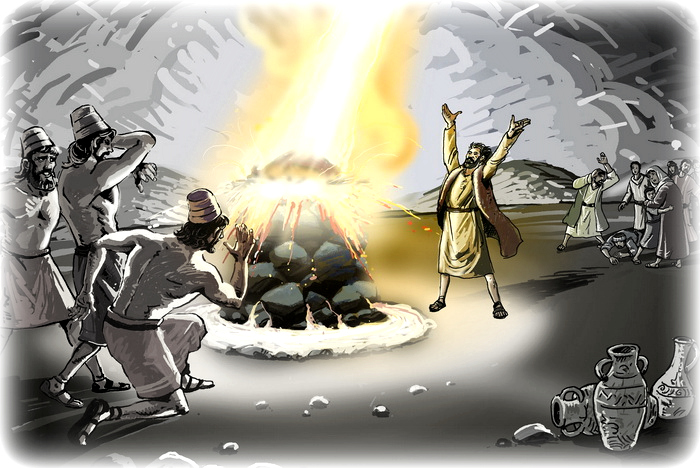
Bring Back Ba’al?

Following a recent set of posts on this site, I’ve added a further piece on the Cor Deo blog.  Should we bring back Ba’al?  I have no desire to promote any despotic and demonic deities, but I do wonder if we are too quick to assume that people are on the same page when it comes to the term “God.”  As preachers this is critical.  I was listening to Mike Reeves again recently at Transformission (click here to find Mike’s talks), and he made a very clear point in his first talk about why the good news isn’t typically perceived to be good news by the world around us: because of the god they think we are inviting them to.  Anyway, should we bring back the ba’als?  Click here to see today’s post . . .

Add to FacebookAdd to DiggAdd to Del.icio.usAdd to StumbleuponAdd to RedditAdd to BlinklistAdd to TwitterAdd to TechnoratiAdd to Yahoo BuzzAdd to Newsvine

Not Even a Hint – Racism in the Pulpit

The last couple of weeks have seen two high profile footballers accused of making racist remarks to opponents.  The world is rightly disgusted by this, even in the context of highly competitive and even combative sporting battle.  How much more should we in the church avoid all hints of racism?

If you are an overtly racist preacher, this post will not get to the heart of the issue.  I am writing more for those who don’t try to support a race discrimination position by twisting Scripture and becoming defensive.  I am writing for preachers who may accidentally give a hint of racism without intending to do so.

Here are three ways I have seen preachers fall into hints of racism that might prove helpful.

1. Cut out references to a “black heart” – Maybe in the context of a mimed drama it might be ok, but probably not.  Because of the way “black” and “white” are used as race markers, we have to be careful in using them as references to sinfulness and righteousness.  The Bible does speak of white robes, but a black heart?  Though your sins be as scarlet, sure, but not a black heart.  I heard one preacher make reference to “your disgusting black heart.”  He did so seemingly oblivious to who was sitting in front of him.  And to make things worse, he himself was from a place associated with racism in the past.  Probably best to just avoid the use of “black” as a reference to sin.  Not even a hint.

2. Generally don’t mimic accents from the pulpit – Again, I haven’t heard this done in a mocking way.  But it can feel mocking nonetheless.  I have experienced this with US folks faking a British accent, and with British folks faking a US accent (neither are very successful, which can lead to the feeling of implicit mockery).  When preaching Bible stories we are preaching about people in the Middle East, or Africa, or Mediterranean Europe.  Don’t fake an accent if it could be taken as mockery. Not even a hint.

3. Watch out for easy targets – In the English context there is much talk about racism and wanting to kick it out of sports, TV, etc.  Yet there seems to be open season on anti-American comments, or anti-French jokes.  I’m fully English and patriotically so, but I find myself reacting inside to anti-US comments from preachers.  In the context of the body of Christ united across Jew/Gentile lines, it just doesn’t seem appropriate.  Let’s go for a “not even a hint” approach, why not?

Are there other ways preachers inadvertently give a hint of racism in their preaching?

Add to FacebookAdd to DiggAdd to Del.icio.usAdd to StumbleuponAdd to RedditAdd to BlinklistAdd to TwitterAdd to TechnoratiAdd to Yahoo BuzzAdd to Newsvine