Personal Paraphrasing: Practice Preaching?

It’s been said many times before, probably because it is true.  The best way to learn something is to have to teach it.  People tend to think they understand something in their minds, but then find it difficult to explain what they claim to understand.  That’s why teachers test students by requiring something more than a signature to state they understand what they’ve been taught!  This is one of the great blessings of preaching.  It forces you to study a passage or subject beyond the normal threshold and then consider how to effectively explain and communicate that to others.  In preaching, we learn.

It is possible to get a small taste of the same by paraphrasing passages of Scripture.  When you force yourself to express the meaning of the text in your own words, you do a small version of preaching.  Without the multiple channels of communication, without the complexities of pastoral ministry, without so much of the process, but the core skill of expressing explanation of a text is replicated by paraphrasing.

I would encourage this among non-preachers to get at least one of the benefits of preaching.  But I would encourage preachers to do it too.  Perhaps in a passage you aren’t planning to preach, just one you are looking at for yourself.  Trying to restate the passage in your own words forces you to think about what the author meant, and it forces you to craft your own sentences.  Both of these skills are core skills for a preacher, so in a tiny microcosmic way, this exercise is a form of practice preaching.

The Bigger Picture

For most people in our churches today, the big picture is a mystery.  Their experience in the Bible is like being dropped in a huge forest.  They recognize some trees, they even like those trees, but what they know and recognize seems as random as trees in a vast forest.  We should not take for granted that people understand the bigger picture, the broad storyline of the Bible.

This is why Walk Thru the Bible was such a huge success a generation ago.  It gave people, in five hours, an overview of the storyline of the Old Testament, then later of the New Testament.

As preachers it is our privilege to help people understand how particular passages fit in the flow of the Bible story.  We don’t help by giving obscure links to random and questionable types and shadows elsewhere (unless they are clear and legitimate ones), but we do help by placing texts and stories in their context in the broad flow of the Bible story.

Preaching to People Who Need Counseling – Part 2

So as well as excuses and lack of discipline, two more obstacles are worthy of note.  As preachers preaching for life change, we must be aware of these obstacles in the listener, obstacles well known to counselors, but relevant to preachers too:

3. Complicating problems. One area of change may be hindered by a related area that complicates matters.  For instance preaching on joint prayer in marriage will likely be hindered by general communication problems in marriage.  Perhaps another sermon (or series) is needed as a first step, before addressing the first issue.

4. Failure to repent. People may want to be different, but resist repenting for the present sin.  Many may desire a life of purity, but persist in impure habits.  Many may want to be truth tellers, but still live with unconfessed deception in their lives.  Failure to genuinely repent is a common issue, and an obstacle to life change.

Interdisciplinary studies are fashionable these days.  Here we see input from the field of Christian counseling for preachers.  What others interdisciplinary overlaps do you find helpful as a preacher?

Preaching to People Who Need Counseling

If you’ve ever studied counseling at any level, you will have discovered fairly quickly that counseling is not just for the few.  In fact, the case could be made that we are all in need of counseling.  We all have inner issues that influence how we live, how we respond to God, how we relate to others, etc.  Jay Adams is known for his writing in the area of “Biblical Counseling” or “Nouthetic Counselling.”   He makes an interesting point in his chapter on “Counseling and Preaching” in Preaching with Purpose.  Whatever school of counseling you ascribe to, I think his point is worth taking onboard.

When we preach applicationally for change in listeners’ lives, there are certain obstacles to overcome.  Obstacles well known to the counselor, but just as real for the preacher.  Adams lists four in his chapter.

1. Excuses. People resist impetus to change by making excuses.  As a preacher it is worth thinking about what excuses may come up, and then rhetorically addressing those excuses biblically during the sermon.  It would be a shame to preach a great message, only to have listeners resist change by an excuse that could be easily overcome with a little planning.

2. Lack of discipline. Many preachers experience the polite platitudes of the many, but the definite response of the faithful few (or should I say, the disciplined few?)  Most people don’t only need instruction on what to do, but also on how to go about doing it.  Since it takes discipline to create new habits, perhaps the preacher needs to help people see the path to change more clearly.

Tomorrow I’ll share the other two obstacles to life change that need to be considered for preaching to be ultimately effective.

Crises Don’t Hit Everyone Equally

The current “crisis” in our news is an economic one.  I’m not going to post any comment on this (you probably don’t care what I think the cause was or the best way out of it!)  But from a preaching standpoint I have a comment to make.  While the media present things a certain way, the reality may touch the lives of listeners in different ways.  Perhaps the current economic crisis is a disaster for some, only a worry for others, and maybe even a help for some.  I spoke recently with someone working “in the city” who is busier than ever due to the present “crisis.”

At other times the crisis has been different.  A war in a foreign land may be a foreign policy issue for many, but for some in the church it may be a significant concern since they have loved ones in that land, or in the armed forces.

It is easy to take the media perspective on current events (a habit worthy of significant questioning in itself), but fail to recognize the more diverse implications for listeners.  It would be a great shame to allow popular opinion shifts to become insensitive comments to some listeners.  For example, people may tire of a war or ongoing news story and grow complacent, critical or dismissive – but for some listeners with vested interest, it may be a reality that they live with each moment.

All that to say . . . we need to know our listeners.  We preach to them, not to the television.

The Two-By-Four Rule?

I was just listening to some training materials on delivery and public speech.  Interesting, although largely familiar material.  I haven’t gone back to double check this, but I think it was called the two-by-four rule: The impact of the first two seconds takes four minutes of further presentation to equal.

If that is true, then perhaps it’s worth giving more attention to such matters as personal grooming, dress, body language, smile, voice and so on . . . especially that initial impression.  Incidentally that initial impression in a church setting is often not the same as in a business setting where the speaker emerges from nowhere to begin the speech.  In church people see you in the car park, in the corridor, during the first part of the service.  Maybe the “I’m-so-stressed-because-Sunday-is-no-Sabbath-for-me” look is unhelpful?

Just Write Them A Letter Instead?

Some people naively think there is no difference between written and oral communication.  Many of us would agree that there is a significant difference.  Yesterday I was interacting with someone who believes these two forms of communication are polar opposites.  Written communication is linear, it is single channel, it is the way to go when the goal is to inform.  Spoken communication is complex, it involves dozens of channels and it is the way to go when the goal is to motivate, to influence, to persuade.

With all the added channels of communication such as energy, eye contact, posture, body language, intonation, etc., preaching is an ideal opportunity to do what preaching is supposed to do.  Go beyond informing listeners to influencing and motivating response to the Word of God.  Preaching involves explanation of the text, but it is to be applicational explanation.  If all you plan to do in your next sermon is inform, then perhaps it would be better use of your time and theirs to just write them a letter instead?

Preach Deeper

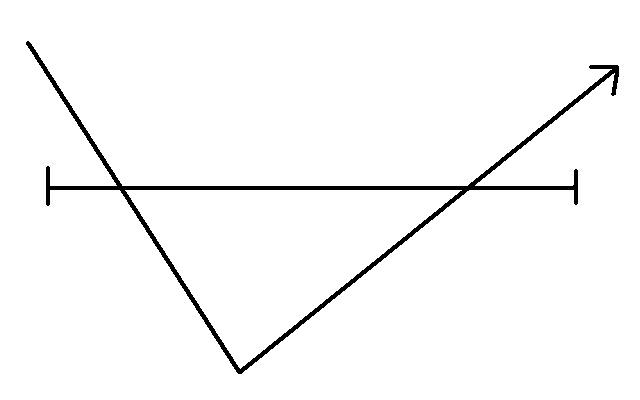
I just came across some notes I made a while ago.  It’s a three part description of preaching that I hear.  This is simplified, but perhaps helpful as a stimulus to move from approach 1 to 2 and from 2 to 3.

Approach 1 – Springboard Preaching (Inadequate approach to preaching)

This is where the preacher touches down in a passage just long enough to bounce out of it and into their own thoughts.  A word or phrase may be taken on the journey through the message, but it has long since been ripped out of its passage context.

Approach 2 – Highlight Bounce Preaching (Adequate, but “amateur” approach to preaching)

This is where the preacher is a little more aware of the context of the passage and moves through the passage noting highlights along the way.  Typically these highlights will reflect the best bits of Bible study done in preparation (often the best study moves out of the passage, so the message also can jump to other passages, but I did not want to complicate the diagram!)  This is better than Springboard Preaching, but let me show you a better way!

Approach 3 – “Plumbed” Passage Preaching (Preferable approach to preaching)

This is where the preacher has studied the passage in its context and is able to present the message of the passage to some depth.  This is not a series of mini-messages on various passage details, but it allows the details to work together to shape a single message that truly represents the passage in question.  The depth may vary according to time, skill of the exegete, etc.  But this approach to preaching will result in a coherent message, satisfying presentation of the passage and more accurate understanding of the meaning of the passage.  (Please note that it is never possible to fully “plumb” the depths of the passage, so the term is used relatively!)

For simplicity, I have presumed that each message is based in one text and that each message is making connection to the listeners by way of application.  I have assumed that there is a sense of progress in each message.  (None of these can be assumed in real life preaching!)  The simple focus here is on how the passage is handled.  Let’s strive to be Approach 3 preachers whenever possible.

Revisiting Preaching Style

I’ve written about style before, but it’s worth revisiting.  Not surprisingly, I am resonating with much of what Jay Adams wrote about style back in ’82.  The reason I resonate is that I still come across pockets of preaching activity that fall into the three inadequate styles he lists in his book (I will quote and condense):

Preacher’s Style – This is a stilted style pockmarked with King James’s terminology and Elizabethan constructions (beloved, unto, beseech, the person of, babe, vale, etc.)  This sort of style, unknown to the apostles, who spoke an elevated (by their content) fish-market Greek, or even the translators of the KJV/AV who wrote exactly as they talked.  This style is a modern travesty totally without previous history or biblical warrant.  Cleanse your preaching of all such “preachy” language.

Scholastic Style – This technical, super-sophisticated and bookish style is equally unhelpful.  The great biblical, theological terms must be used, but not without exlanation, nor should be be used in profusion.  Don’t sound like a theological treatise (or an academic essay).

Chatty Style – This approach majors on the slang and jargon of the day and lacks all form and order.  Again, Adams sees this as unhelpful to effective communication.

Good preaching style is a plain (but not drab), unaffected (but not unstudied) style that gets in there and gets the job done without calling attention to itself.  It should always be clear and appropriate to both content and mood.  The best analogy Adams sees is the news reader on TV.  Our preaching style should not be lower than this, but should be elevated by its content slightly above this standard style with its standard use of language.

That’s Adams take a generation ago, what now?  I know some still choose preachy, scholastic or chatty styles.  Is there a better standard than the TV newsreader?

Practice Preaching With Senses

In yesterday’s post I highlighted a helpful point from Jay Adams’ book, Preaching with Purpose, in which he emphasized the need for preaching to all five senses.  For some of us this may come easy.  For others of us, this will take some real work.  Here are a couple of practice exercises that may help.

The Study Search – Adams suggests working within the confines of your study.  Touch, smell, taste, listen, and look at everything around you.  What does that wood feel like?  What does that old book smell like?  How does the painkiller tablet taste?  What about the sound of the door opening?  And that pile of stuff on your desk, what does it look like?  Take a few minutes and observe carefully.  Perhaps in the process you will come up with numerous similes and anecdotes to vivify your preaching.

The Scripture Search – Take a poetic passage – a psalm or song.  Carefully comb through it looking for sensory language or allusions (direct or implied).  Make note of ways to preach that text so that the senses are fully engaged.  For instance, try Psalm 113 or 133 for starters.  Then consider a narrative passage – life is lived with five senses, so this shouldn’t be too hard.  What sensory language could be used to communicate this narrative vividly?  Perhaps try Luke 15, or Genesis 39.